 |
 |
 |
 |
 |
 |
 |
 |
 |
-New-Guinea-1942-01.jpg) |
 |
 |
 |
 |
 |
 |
 |
 |
 |
 |
 |
 |
 |
 |
 |
 |
 |
 |
 |
 |
 |
 |
 |
 |
 |
 |
 |
 |
 |
Pacific Theater of Operations PTO slideshow
5th Bombardment Group
Authorized as 2nd Group (Observation) on 15 Aug 1919 and organized in Hawaii. Redesignated 5th Group (Observation) in Mar 1921, 5th Group (Pursuit and Bombardment) in Jun 1922, and 5th Group (Composite) in Jul 1922. Used DH-4, MB-2, B-12, LB-5, LB-6, PW-9, P-12, O-19, and other aircraft. Activities included training, participating in Army-Navy maneuvers, staging aerial reviews, sowing seeds from the air for the Territorial Forestry Division, and bombing a stream of lava flowing from Mauna Loa to divert it from the city of Hilo. Redesignated 5th Bombardment Group in Mar 1938, 5th Bombardment Group (Medium) in Dec 1939, and 5th Bombardment Group (Heavy) in Nov 1940. Equipped with B-17's and B-18's by Dec 1941. Assigned to Seventh AF in Feb 1942. Engaged primarily in search and patrol missions off Hawaii from Dec 1941 to Nov 1942.
Left Hawaii in Nov 1942 and, operating from bases in the South and Southwest Pacific with B-17 and B-24 aircraft, served in combat with Thirteenth AF during the Allied drive from the Solomons to the Philippines. Flew long patrol and photographic missions over the Solomon Islands and the Coral Sea, attacked Japanese shipping off Guadalcanal, and raided airfields in the northern Solomons until Aug 1943. Then struck enemy bases and installations on Bougainville, New Britain, and New Ireland. Raided the heavily defended Japanese base on Woleai during Apr and May 1944 and received a DUC for the action. Helped to neutralize enemy bases on Yap and in the Truk and Palau Islands, Jun-Aug 1944, preparatory to the invasion of Peleliu and Leyte. Flew missions to the Netherlands Indies, receiving a DUC for an attack, conducted through heavy flak and fighter defenses, on oil installations at Balikpapan, Borneo, on 30 Sep 1944. Completed a variety of missions from Oct 1944 until the end of the war, these operations including raids on enemy bases and installations on Luzon, Ceram, Halmahera, and Formosa; support for ground forces in the Philippines and Borneo; and patrols off the China coast. Remained in the theater as part of Far East Air Forces after the war, but all personnel evidently had been withdrawn by early in 1946. Redesignated 5th Bombardment Group (Very Heavy) in Apr 1946, and 5th Reconnaissance Group in Feb 1947. Remanned in Mar 1947, equipped with FB-17's and F-2's, and engaged in mapping areas of the Philippines, Formosa, and the Pescadores.
Moved to the US in May 1949. Assigned to Strategic Air Command. Redesignated 5th Strategic Reconnaissance Group in Jul 1949. Equipped with RB-29's. Redesignated 5th Strategic Reconnaissance Group (Heavy) in Sep 1950. Began converting to B-36's. Inactivated on 16 Jun 1952.
Squadrons. 6th Pursuit: 1919-1927. 19th Pursuit: 1924-1927. 23d: 1922-1930, 1938-1947, 1947-1952. 26th Attack: 1930-1938. 31st: 1938-1947, 1947-1952. 38th: 1947-1949. 72d: 1923-1930, 1938-1947, 1949-1952. 338th: 1947-1949. 394th (formerly 4th): 1920-1922, 1927-1938, 1939-1946. 431st (formerly 50th, later 5th): 1930-1938, 1946, 1947.
Stations. Luke Field, TH, 15 Aug 1919; Hickam Field, TH, 1 Jan 1939; Espiritu Santo, 1 Dec 1942; Guadalcanal, 19 Aug 1943; Munda, New Georgia, 4 Feb 1944; Momote Airfield, Los Negros, 7 Apr 1944; Wakde, 17 Aug 1944; Noemfoor, 22 Sep 1944; Morotai, Oct 1944; Samar, 5 Mar 1945; Clark Field, Luzon, Dec 1945-6 May 1949; Mountain Home AFB, Idaho, 26 May 1949; Fairfield-Suisun AFB, Calif, 9 Nov 1949-16 Jun 1952.
Commanders. Unkn, 1919-1938; Col Shepler W FitzGerald, c. Sep 1938-unkn; Lt Col Edwin B Bobzien, 1941; Col Arthur W Meehan, 1942; Col Brooke E Allen, 1 Nov 1942; Col Marion D Unruh, 10 Aug 1943; Lt Col Joseph E Reddoch Jr, 31 Dec 1943; Col Thomas C Musgrave Jr, 4 Apr 1944; Col Joseph E Reddoch Jr, 21 Apr 1944; Col Thomas C Musgrave Jr, 15 Aug 1944; Maj Albert W James, 28 Feb 1945; Col Isaac Haviland, 15 Mar 1945; Lt Col Albert W James, 5 Jul 1945-unkn; Col Herbert K Baisley, 16 Jan 1947- unkn; Col William E Basye, 1949; Col Walter E Arnold, 27 Feb 1950-16 Jun 1952.
Campaigns. Central Pacific; Guadalcanal; New Guinea; Northern Solomons; Eastern Mandates; Bismarck Archipelago; Western Pacific; Leyte; Luzon; Southern Philippines.
Decorations. Distinguished Unit Citations: Woleai Island, 18 Apr-15 May 1944; Borneo, 30 Sep 1944. Philippine Presidential Unit Citation.
Insigne Shield: Party per pale nebuly vert and sable a death's head argent winged or. Crest: On a wreath of the colors (argent and vert), a bull's head caboshed azure and armed or. Motto: Kiai O Ka Lewa – Guardians of the Upper Regions. (Approved 21 Jun 1924.)
7th Bombardment Group
Organized as 1st Army Observation Group on 1 Oct 1919. Redesignated 7th Group (Observation) in Mar 1921. Inactivated on 30 Aug 1921.
Redesignated 7th Bombardment Group in 1923. Activated on 1 Jun 1928. Redesignated 7th Bombardment Group (Heavy) in 1939. Trained, participated in aerial reviews, dropped food and medical supplies to persons marooned or lost, and took part in maneuvers and experiments. Aircraft included B-12's, B-18's, and B-17's.
The group was on its way to the Philippines when the Japanese attacked Pearl Harbor on 7 Dec 1941. The ground echelon, on board ship, was diverted to Australia and later sent to Java. Six of the group's B-17's, which had left the US on 6 Dec, reached Hawaii during the enemy attack but were able to land safely. Later in Dec the remainder of the air echelon flew B-17's from the US to Java. From 14 Jan to 1 Mar 1942, during the Japanese drive through the Philippines and Netherlands East Indies, the group operated from Java, being awarded a DUC for its action against enemy aircraft, ground installations, warships, and transports.
Moved to India in Mar 1942 and assigned to Tenth AF. Resumed combat with B-17's and LB-30's; converted to B-24's late in 1942. Operations were directed primarily against the Japanese in Burma, with attacks on airfields, fuel and supply dumps, locomotive works, railways, bridges, docks, warehouses, shipping, and other targets. Also bombed oil refineries and railways in Thailand, hit power plants in China, attacked enemy shipping in the Andaman Sea, and ferried gasoline over the Hump to China. Received second DUC for damaging the enemy's line of supply in southeast Asia with an attack against rail lines and bridges in Thailand on 19 Mar 1945. Returned to the US in Dec 1945. Inactivated on 6 Jan 1946.
Redesignated 7th Bombardment Group (Very Heavy). Activated on 1 Oct 1946. Assigned to Strategic Air Command. Equipped first with B-29's, later with B-36's. Redesignated 7th Bombardment Group (Heavy) in Jul 1948. Inactivated on 16 Jun 1952.
Squadrons. 9th: 1919-1921; 1928-1946; 1946-1952. 11th: 1919-1921; unkn-1942. 22d: 1939-1942. 30th: 1928-1931. 31st: 1919-1921; 1928-[1939?]. 436th (formerly 88th): 1939-1946; 1946-1952. 492d: 1942-1946; 1946-1952. 493d: 1942-1946.
Stations. Park Field, Tenn, 1 Oct 1919; Langley Field, Va, 28 Oct 1919-30 Aug 1921. Rockwell Field, Calif, 1 Jun 1928; March Field, Calif, 30 Oct 1931; Hamilton Field, Calif, 5 Dec 1934; Merced Field, Calif, 5 Nov 1935; Hamilton Field, Calif, 22 May 1937; Ft Douglas, Utah, 7 Sep 1940-13 Nov 1941; Brisbane, Australia, 22 Dec 1941-Feb 1942; Karachi, India, 12 Mar 1942; Dum-Dum, India, 30 May 1942; Karachi, India, 9 Sep 1942; Pandaveswar, India, 12 Dec 1942; Kurmitola, India, 17 Jan 1944; Pandaveswar, India, 6 Oct 1944; Tezpur, India, 7 Jun 1945; Dudhkundi, India, 31 Oct-7 Dec 1945; Camp Kilmer, NJ, 5-6 Jan 1946. Ft Worth AAFld, Tex, 1 Oct 1946-16 Jun 1952.
Commanders. Unkn, 1919-1921. Capt Frank H Pritchard, 1928-unkn; Maj Carl A Spaatz, c. May 1929-c. Oct 1931; Col Clarence I Tinker, c. Dec 1935-1938; Col Ralph Royce, 1938-unkn; Maj Stanley K Robinson, unkn-29 Jan 1942; Maj Austin A Straubel, c. 29 Jan-3 Feb 1942; Col Cecil E Combs, 22 Mar 1942; Col Conrad F Necrason, 1 Jul 1942; Col Aubrey K Dodson, 27 Mar 1944; Col Harvey T Alness, 6 Nov 1944; Col Howard F Bronson Jr, 24 Jun 1945-unkn. Col John G Eriksen, 1 Oct 1946; Col Hewitt T Wheeless, 16 Dec 1946-unkn; Col Alan D Clark, c. Nov 1947-unkn; Col Charles D Farr, 7 Feb 1949; Col John A Roberts, 17 Aug 1949; Col Richard T Black, c. 24 Oct 1950; Col John A Roberts, Feb 1951; Col George T Chadwell, c. May 1951; Col John A Roberts, Apr-Jun 1952.
Campaigns. Burma, 1942; East Indies; India-Burma; China Defensive; Central Burma; China Offensive.
Decorations. Distinguished Unit Citations: Netherlands Indies, 14 Jan-1 Mar 1942; Thailand, 19 Mar 1945.
Insigne Shield: Azure, on a bend or three crosses pattee sable. Crest: On a wreath of the colors (or and azure) a drop bomb palewise sable piercing a cloud proper. Motto: Mors Ab Alto - Death from Above. (Approved 30 Jan 1933. This insigne was modified 12 Sep 1952.)
11th Bombardment Group
Constituted as 11th Observation Group in 1933. Redesignated 11th Bombardment Group (Medium) in 1938. Activated in Hawaii on 1 Feb 1940. Redesignated 11th Bombardment Group (Heavy) in Nov 1940. Assigned to Seventh AF in Feb 1942. Trained with B-18's; received B-17's for operations. Flew patrol and search missions off Hawaii after the Japanese attacked Pearl Harbor. Moved to the New Hebrides in Jul 1942. Became part of Thirteenth AF. Struck airfields, supply dumps, ships, docks, troop positions, and other objectives in the South Pacific, Jul-Nov 1942, and received a DUC for those operations. Continued operations, attacking Japanese airfields, installations, and shipping in the Solomons, until late in Mar 1943. Returned to Hawaii, reassigned to Seventh AF, and trained with B-24's. Resumed combat in Nov 1943 and participated in the Allied offensive through the Gilberts, Marshalls, and Marianas, while operating from Funafuti, Tarawa, and Kwajalein. Moved to Guam in Oct 1944 and attacked shipping and airfields in the Volcano and Bonin Islands. Moved to Okinawa in Jul 1945 to take part in the final phases of the air offensive against Japan, bombing railways, airfields, and harbor facilities on Kyushu and striking airfields in China. After the war, flew reconnaissance and surveillance missions to China and ferried liberated prisoners of war from Okinawa to Luzon. Remained in the theater as part of Far East Air Forces but had no personnel assigned after mid-Dec 1945 when the group was transferred to the Philippines. Redesignated 11th Bombardment Group (Very Heavy) in Apr 1946. Transferred to Guam in May 1946, remanned, and equipped with B-29's. Terminated training and operations in Oct 1946. Inactivated on Guam on 20 Oct 1948.
Redesignated 11th Bombardment Group (Heavy). Activated in the US on 1 Dec 1948. Assigned to Strategic Air Command. Equipped with B-36 aircraft. Inactivated on 16 Jun 1952.
Squadrons. 14th: 1940-1941. 26th: 1940-1948; 1948-1952. 42d: 1919-1948; 1948-1952. 98th: 1941-1948; 1948-1952. 431st: 1942-1946.
Stations. Hickam Field, TH, 1 Feb 1940; New Hebrides, Jul 1942; Hickam Field, TN, 8 Apr 1943; Funafuti, Nov 1943; Tarawa, 20 Jan 1944; Kwajalein, 5 Apr 1944; Guam, 25 Oct 1944; Okinawa, 2 Jul 1945; Manila, Dec 1945; Guam, May 1946-20 Oct 1948. Carswell AFB, Tex, 1 Dec 1948-16 Jun 1952.
Commanders. Lt Col Walter F Kraus, Feb 1940; Lt Col St Clair Streett, 15 Jun 1940; Lt Col Albert F Hegenberger, 1 Apr 1941; Col LaVerne G Saunders, Mar 1942; Col Frank F Everest, Dec 1942; Col William J. Holzapfel Jr, 26 Apr 1943; Col Russell L. Waldron, 7 Jul 1944; Col John Morrow, Mar 1945-c. Dec 1945; Col Vincent M Miles Jr, 20 May 1946; Capt Thomas B Ragland Jr, Nov 1946; Capt Thomas B Hoxie, 27 Dec 1947-20 Oct 1948. Maj Russell F Ireland, Dec 1948; Lt Col Harry E Goldsworthy, 11 Jan 1949; Col Richard H Carmichael, May 1949; Col Bertram C Harrison, 4 Mar 1950; Col Thomas P Gerrity, 3 Apr 1950-16 Jun 1952.
Campaigns. Central Pacific; Air Offensive, Japan; Guadalcanal; Northern Solomons; Eastern Mandates; Western Pacific; Ryukyus; China Offensive.
Decorations. Distinguished Unit Citation: South Pacific, 31 Jul-30 Nov 1942.
Insigne Shield: Azure (Air Force blue), on a bend or (Air Force yellow), three grey geese volant proper (in their natural colors). Crest: On a wreath or and azure a grey goose proper with wings displayed and inverted. Motto: Progressio Sine Timore Aut Praejudicio - Progress without Fear or Prejudice. (Approved 11 Jun 1941.)

43rd Bombardment Group
Constituted as 43rd Bombardment Group (Heavy) on 20 Nov 1940. Activated on 15 Jan 1941. Trained with B-17, B-18, A-29, and LB-30 aircraft. Flew some antisubmarine patrols along the New England coast, Dec 1941-Feb 1942.
Moved to the Southwest Pacific, via Capetown, Feb-Mar 1942. Became part of Fifth AF. Equipped first with B-17's, but converted to B-24's, May-Sep 1943. Operated from Australia, New Guinea, and Owi Island, Aug 1941-Nov 1944, making numerous attacks on Japanese shipping in the Netherlands East Indies and the Bismarck Archipelago. Experimented with skip bombing and used this method for some shipping strikes, including attacks on Japanese vessels during the Battle of the Bismarck Sea, 2-4 Mar 1943; received a DUC for participation in this latter action in which repeated air attacks destroyed a large enemy convoy carrying reinforcements to New Guinea. Other operations during this period included support for ground forces on New Guinea; attacks on airfields and installations in New Guinea, the Bismarck Archipelago, Celebes, Halmahera, Yap, Palau, and the southern Philippines; and long-range raids against oil refineries on Ceram and Borneo. Capt Jay Zeamer Jr, pilot, and 2nd Lt Joseph R Sarnoski, bombardier, each won the Medal of Honor for action during a photographic mapping mission over the Solomon Islands on 16 Jun 1943: when the mission was nearly completed, their aircraft was assaulted by about 20 interceptors; although painfully wounded, Lt Sarnoski remained at the nose guns and fired at the enemy until he died at his post; sustaining severe injuries, Capt Zeamer maneuvered the plane until the enemy had broken combat, then directed the flight to a base more than 500 miles away. After moving to the Philippines in Nov 1944, the group atttacked shipping along the Asiatic coast; struck industries, airfields, and installations in China and Formosa; and supported ground forces on Luzon. Moved to Ie Shima in Jul 1945 and conducted missions against airfields and railways in Japan and against shipping in the Inland Sea and the Sea of Japan. Returned to the Philippines in in Dec 1945. Inactivated on 29 Apr 1946.
Redesignated 43rd Bombardment Group (Very Heavy). Activated in the US on 1 Oct 1946. Assigned to Strategic Air Command. Redesignated 43rd Bombardment Group (Medium) in Jul 1948. Equipped first with B-29's, then with B-50's. Trained and conducted long-range test missions, including the first nonstop flight around the world (26 Feb-2 Mar 1949), accomplished in "Lucky Lady II," a B-50 commanded by Capt James G Gallagher. Inactivated on 16 Jun 1952.
Squadrons. 63d: 1941-1946; 1946-1952. 64th: 1941-1946; 1946-1952. 65th: 1941-1946; 1946-1952. 403d: 1942-1946.
Stations. Langley Field, Va, 15 Jan 1941; Bangor, Maine, 28 Aug 1941-17 Feb 1942; Sydney, Australia, 28 Mar 1942; Torrens Creek, Australia, c. 1 Aug 1942; Port Moresby, New Guinea, 14 Sep 1942; Dobodura, New Guinea, 10 Dec 1943; Nadzab, New Guinea, 4 Mar 1944; Owi, Schouten Islands, 2 Jul 1944; Tacloban, Leyte, c. 15 Nov 1944; Clark Field, Luzon, 16 Mar 1945; Ie Shima, 26 Jul 1945; Ft William McKinley, Luzon, 10 Dec 1945-29 Apr 1946. Davis-Monthan Field, Ariz, 1 Oct 194616 Jun 1952.
Commanders. Lt Col Harold D Smith, 15 Jan 1941; Lt Col Francis B Valentine, 1 Mar 1941; Maj Conrad H Diehl Jr, 18 Feb 1942; Col Roger M Ramey, 21 Oct 1942; Lt Col John A Roberts, 30 Mar 1943; Col Harry Hawthorne, 24 May 1943; Lt Col Edward W Scott Jr, 18 Nov 1943; Col Harry Hawthorne, 8 Feb 1944; Col James T Pettus Jr, 18 Sep 1944; Maj Paul B Hansen, 8 Sep 1945-unkn. Col James C Selser Jr, 5 Oct 1946; Col William E Eubank Jr, Apr 1948; Col Dalene Bailey, Jul 1948; Col Alvan N Moore, 3 Jan 1949-16 Jun 1952.
Campaigns. Antisubmarine, American Theater; Air Offensive, Japan; China Defensive; Papua; New Guinea; Bismarck Archipelago; Western Pacific; Leyte; Luzon; Southern Philippines; Ryukyus; China Offensive.
Decorations. Distinguished Unit Citations: Papua, [Aug] 1942-23 Jan 1943; Bismarck Sea, 2-4 Mar 1943. Philippine Presidential Unit Citation.
Insigne Shield: Per fess nebuly or and azure, a drop bomb counterchanged. Motto: Willing, Able, Ready. (Approved 31 Jan 1942.)
3rd Air Commando Group
Constituted as 3rd Air Commando Group on 25 Apr 1944. Activated on 1 May 1944. Moved to the Philippines late in 1944. Assigned to Fifth AF for operations with P-51, C-47, and L-5 aircraft. Attacked Japanese airfields and installations in the Philippines, supported ground forces on Luzon, provided escort for missions to Formosa and the China coast, made raids on airfields and railways on Formosa, and furnished cover for convoys. Also transported personnel, dropped supplies to ground troops and guerrilla forces, evacuated casualties from front-line strips, adjusted artillery fire, and flew courier and mail routes. Moved to the Ryukyus in Aug 1945. Flew some patrols over Japan, made local liaison flights, and hauled cargo from the Philippines to Okinawa. Moved to Japan in Oct 1945. Inactivated on 25 Mar 1946. Disbanded on 8 Oct 1948.
Squadrons. 3rd Fighter: 1944-1946. 4th Fighter: 1944-1946. 157th Liaison: 1944-1946. 159th Liaison: 1944-1946. 160th Liaison: 1944-1946. 318th Troop Carrier: 1944-1946.
Stations. Drew Field, Fla, 1 May 1944; Lakeland AAFld, Fla, 5 May 1944; Alachua AAFld, Fla, 20 Aug 1944; Drew Field, Fla, 6-24 Oct 1944; Leyte, Dec 1944; Mangaldan, Luzon, c. 26 Jan 1945; Laoag, Luzon, Apr 1945; Ie Shima, Aug 1945; Chitose, Japan, c. 27 Oct 1945-25 Mar 1946.
Commanders. Maj Klem F Kalberer, May 1944; Col Arvid E Olson Jr, Jun 1944; Lt Col Walker M Mahurin, Sep 1945; Lt Col Charles H Terhune, 20 Oct 1945-unkn.
Campaigns. Air Offensive, Japan; China Defensive; Western Pacific; Leyte; Luzon; China Offensive.
Decorations. Philippine Presidential Unit Citation.
Insigne. None.
35th Fighter Group
35th Fighter Group
Constituted as 35th Pursuit Group (Interceptor) on 22 Dec 1939. Activated on 1 Feb 1940. Trained with P-35, P-36, P-39, and P-40 aircraft. Two squadrons (21st and 34th) moved to the Philippines in Nov 1941. Headquarters and another squadron (70th) sailed for Manila on 5 Dec but because of the Japanese attack on Pearl Harbor they returned to the US where the squadron flew some patrols. Headquarters and the 70th squadron sailed for Australia on 12 Jan 1942. Three days later all the combat squadrons were relieved and three others, still in the US, were assigned. Headquarters reached Australia in Feb 1942 and moved on to India. Meanwhile the squadrons had moved from the US to Australia and were training for combat with P-39's. Headquarters was transferred back to Australia, without personnel and equipment, in May 1942.
Redesignated 35th Fighter Group. Served in combat with Fifth AF, operating successively from bases in Australia, New Guinea, Owi, Morotai, and the Philippines. First used P-38's and P-39's; equipped with P-47's late in 1943 and with P-51's in Mar 1945. Helped to halt the Japanese advance in Papua and took part in the Allied offensive that recovered the rest of New Guinea, flying protective patrols over Port Moresby, escorting bombers and transports, attacking Japanese airfields and supply lines, and providing cover for Allied landings. In 1944 began long-range missions against enemy airfields and installations in the southern Philippines, Halmahera, and Borneo, preparatory to the US invasion of the Philippines. Beginning in Jan 1945, operated in support of ground forces on Luzon. Also escorted bombers and completed some fighter sweeps to Formosa and China. Bombed and strafed railways and airfields in Kyushu and Korea after moving to Okinawa in Jun 1945. Moved to Japan in Oct 1945 and, as part of Far East Air Forces, trained, took part in maneuvers, and flew surveillance patrols over Honshu. Redesignated 35th Fighter-Interceptor Group in Jan 1950. Equipped with F-80's.
Entered combat in the Korean War in Jul 1950 and almost immediately began converting from F-80's to F-51's. Operated from bases in Japan and Korea in support of UN ground forces, bombing and strafing enemy supply lines, troop concentrations, and communications. Transferred without personnel and equipment to Japan in May 1951. Remanned and equipped with F-51's and F-80's. Provided air defense for Japan. Converted to F-86 aircraft in 1955.
Squadrons. 18th: 1940. 20th: 1940. 21st: 1940-1942. 34th: 1940-1942. 39th: 1942-. 40th: 1942-. 41st: 1942-. 70th: 1941-1942.
Stations. Moffett Field, Calif, 1 Feb 1940; Hamilton Field, Calif, 10 Sep 1940-5 Dec 1941 and 9 Dec 1941-12 Jan 1942; Brisbane, Australia, 1 Feb 1942; New Delhi, India, Mar 1942; Sydney, Australia, 4 May 1942; Port Moresby, New Guinea, 22 Jul 1942; Tsili Tsili, New Guinea, 15 Aug 1943; Nadzab, New Guinea, 5 Oct 1943; Gusap, New Guinea, 7 Feb 1944; Owi, Schouten Islands, 22 Jul 1944; More tai, 27 Sep 1944; Mangaldan, Luzon, c. 20 Jan 1945; Lingayen, Luzon, c. 10 Apr 1945; Clark Field, Luzon, 19 Apr 1945; Okinawa, 28 Jun 1945; Irumagawa, Japan, Oct 1945; Yokota, Japan, 16 Mar 1950; Ashiya, Japan, 8 Jul 1950; Pohang, Korea, 14 Jul 1950; Tsuiki, Japan, 13 Aug 1950; Pohang, Korea, 3 Oct 1950; Yonpo, Korea, 18 Nov 1950; Pusan, Korea, c. 3 Dec 1950; Johnson AB, Japan, 25 May 1951; Yokota, Japan, 14 Aug 1954-.
Commanders. Maj O R Strickland, 1940; Col George P Tourtellot, 1940-unkn; Col Richard A Legg, 12 Mar 1942; Lt Col Malcolm A Moore, 26 Jul 1943; Lt Col Edwin A Doss, 23 Oct 1943; Lt Col Furlo S Wagner, 12 Feb 1944; Col Edwin A Doss, 4 May 1944; Col Harney Estes Jr, 27 Jul 1945; Col Raymond P Todd, 22 Mar 1946; Lt Col Richard D Dick, c. 13 Sep 1946; Col James R Gunn Jr, c. 11 Feb 1947; Col Ford Lauer, 28 Apr 1947; Col Ray W Clifton, 1 Sep 1947; Col Edgar M Scattergood Jr, 21 Jun 1948; Lt Col Bert W Marshall Jr, Aug 1948; Lt Col Archie M Burke, 13 May 1949; Lt Col Jack D Dale Jr, Nov 1949; Col William P McBride, 22 Feb 1951; Lt Col Homer M Cox, May 1951; Col John C Habecker, 25 Jun 1951; Col John R Propst, 6 Jun 1952; Lt Col Albert S Aiken, Feb 1955; Col Maurice L Martin, Jun 1955; Col Raymond M Gehrig, Aug 1955-.
Campaigns. World War II: East Indies; Air Offensive, Japan; China Defensive; Papua; New Guinea; Bismarck Archipelago; Western Pacific; Leyte; Luzon; Ryukyus; China Offensive. Korean War: UN Defensive; UN Offensive; CCF Intervention; 1st UN Counteroffensive; CCF Spring Offensive.
Decorations. Distinguished Unit Citation: Papua, 23 Jul 1942-23 Jan 1943. Philippine Presidential Unit Citation. Republic of Korea Presidential Unit Citation: 7 Sep 1950-7 Feb 1951.
Insigne Shield: Azure, a dexter cubit arm or grasping a dagger point to base gules. Motto: Attack To Defend (Approved 21 Feb 1941.)
348th Fighter Group
348th Fighter Group
Constituted as 348th Fighter Group on 24 Sep 1942 and activated on 30 Sep. Prepared for combat with P-47's. Moved to the Southwest Pacific, May-Jun 1943, and assigned to Fifth AF. Operated from New Guinea and Noemfoor until Nov 1944. Flew patrol and reconnaissance missions and escorted bombers to targets in New Guinea and New Britain. Col Neel E Kearby was awarded the Medal of Honor for action over New Guinea on 11 Oct 1943: after leading a flight of four fighters to reconnoiter the enemy base at Wewak, Col Kearby sighted a Japanese bomber formation escorted by more than 30 fighters; despite the heavy odds and a low fuel supply, and although his mission had been accomplished, Kearby ordered an attack, personally destroying six of the enemy planes. For covering Allied landings and supporting ground forces on New Britain, 16-31 Dec 1943, the group was awarded a DUC. In 1944 began to attack airfields, installations, and shipping in western New Guinea, Ceram, and Halmahera to aid in neutralizing those areas preparatory to the US invasion of the Philippines. After moving to the Philippines in Nov 1944, provided cover for convoys, flew patrols, escorted bombers, attacked enemy airfields, and supported ground forces. Received a DUC for withstanding assaults by enemy fighters to cover bombers raiding Clark Field on 24 Dec 1944. Also attacked shipping along the China coast and escorted bombers to Formosa and the Asiatic mainland. Moved to the Ryukyus in Jul 1945 and completed some escort and attack missions to Kyushu before the war ended. Moved to Japan in Oct 1945 as part of Far East Air Forces. Inactivated on 10 May 1946.
Redesignated 108th Fighter Group. Allotted to ANG (NJ) on 24 May 1946. Extended federal recognition on 16 Oct 1946. Called to active duty on 1 Mar 1951. Redesignated 108th Fighter-Bomber Group. Assigned first to Strategic Air Command and later to Tactical Air Command. Equipped with F-47's. Relieved from active service on 1 Dec 1952 and returned to the control of ANG (NJ).
460th Fighter Squadron
Squadrons. 149th: 1951-1952. 153d 1951-1952. 340th: 1942-1946. 341st (later 141st): 1942-1946; 1951-1952. 342d: 1942-1946. 460th: 1944-1946.
Stations. Mitchel Field, NY, 30 Sep 1942; Bradley Field, Conn, 4 Oct 1942; Westover Field, Mass, 29 Oct 1942; Providence, RI, c. 3 Jan 1943; Westover Field, Mass, 28 Apr-9 May 1943; Port Moresby, New Guinea, 23 Jun 1943; Finschhafen, New Guinea, 16 Dec 1943; Saidor, New Guinea, 29 Mar 1944; Wakde, 22 May 1944; Noemfoor, 26 Aug 1944; Leyte, 16 Nov 1944; San Marcelino, Luzon, 4 Feb 1945; Floridablanca, Luzon, 15 May 1945; Ie Shima, 9 Jul 1945; Itami, Japan, Oct 1945-10 May 1946. Newark Mun Aprt, NJ, 1 Mar 1951; Turner AFB, Ga, 14 Mar 1951; Godman AFB, Ky, 9 Dec 1951-1 Dec 1952.
Commanders. Col Neel E Kearby, Oct 1942; Col Robert R Rowland, 17 Nov 1943; Lt Col William M Banks, 8 Jun 1945; Maj Walter G Benz, 26 Nov 1945-unkn. Maj J D Zink, Mar 1951; Col Alvan C Gillem II, Jun 1951; Col Carl W Stapleton, c. Nov 1951; Col Donald J Strait, 14 Jan 1952; Col George Laven Jr, 4 Aug-1 Dec 1952.
Campaigns. Air Offensive, Japan; China Defensive; New Guinea; Bismarck Archipelago; Western Pacific; Leyte; Luzon; China Offensive.
Decorations. Distinguished Unit Citations: New Britain, 16-31 Dec 1943; Philippine Islands, 24 Dec 1944. Philippine Presidential Unit Citation
Insigne Shield: Azure, within a bordure dimidiated, gules, hand gauntleted in armour proper, encircled with wreath of laurel, vert, grasping a torch argent, flamant proper. Motto: Per Caelum Victoriae - Through the Skies to Victory. (Approved 15 Aug 1951.)
Pacific Theater Operations - 5AF
The Fifth Air Force (5 AF) is a numbered air force of the United States Air Force Pacific Air Forces (PACAF). It is headquartered at Yokota Air Base, Japan. It is the U.S. Air Force's oldest continuously serving Numbered Air Force. The organization has provided 80 years of continuous air power to the Pacific since its establishment in September 1941.
Fifth Air Force is the Headquarters Pacific Air Forces forward element in Japan, and maximizes partnership capabilities and promotes bilateral defense cooperation. In addition, 5 AF is the air component to United States Forces Japan.
Its mission is three-fold. First, it plans, conducts, controls, and coordinates air operations assigned by the PACAF Commander. Fifth Air Force maintains a level of readiness necessary for successful completion of directed military operations. And last, but certainly not least, Fifth Air Force assists in the mutual defense of Japan and enhances regional stability by planning, exercising, and executing joint air operations in partnership with Japan. To achieve this mission, Fifth Air Force maintains its deterrent force posture to protect both U.S. and Japanese interests, and conducts appropriate air operations should deterrence fail.
History
Fourteen Boeing B-17 Flying Fortresses that survived the Battle of the Philippines left Mindanao for Darwin, Australia, between 17 and 20 December 1941, the only aircraft of the Far East Air Force to escape. After its evacuation from the Philippines on 24 December 1941, FEAF headquarters moved to Australia and was reorganized and redesignated 5 Air Force on 5 February 1942, with most of its combat aircraft based on fields on Java. It seemed at the time that the Japanese were advancing just about everywhere. The remaining heavy bombers of the 19th Bombardment Group, based at Malang on Java, flew missions against the Japanese in an attempt to stop their advance. They were joined in January and February, two or three at a time, by 37 B-17Es and 12 LB-30s of the 7th Bombardment Group. The small force of bombers, never numbering more than 20 operational at any time, could do little to prevent the invasion of the Netherlands East Indies, launching valiant but futile attacks against the masses of Japanese shipping, with six lost in combat, six in accidents, and 26 destroyed on the ground.
The 7th Bombardment Group was withdrawn to India in March 1942, leaving the 19th to carry on as the only B-17 Fortress-equipped group in the South Pacific. About this time it was decided that replacement B-17s would not be sent to the southwest Pacific, but be sent exclusively to the Eighth Air Force which was building up in England. By May, Fifth Air Force's surviving personnel and aircraft were detached to other commands and the headquarters remained unmanned for several months, but elements played a small part in the Battle of the Coral Sea (7–8 May 1942) when the 435th Bomb Squadron of the 19th Bomb Group saw the Japanese fleet gathering in Rabaul area nearly two weeks before the battle actually took place. Because of the reconnaissance activity of the 435th Bomb Squadron, the US Navy was prepared to cope adequately with the situation. The squadron was commended by the US Navy for its valuable assistance not only for its excellent reconnaissance work but for the part played in the battle.
Headquarters Fifth Air Force was re-staffed at Brisbane, Australia on 18 September 1942 and placed under the command of Major General George Kenney. United States Army Air Forces units in Australia, including Fifth Air Force, were eventually reinforced and re-organised following their initial defeats in the Philippines and the East Indies. At the time that Kenney had arrived, Fifth Air Force was equipped with three fighter groups and five bombardment groups.
Fighter Groups:
8th FG (P-39) Townsville, Australia
35th FG (P-40) Port Moresby, New Guinea
49th FG (P-40) Darwin, Australia
Bomber Groups:
3rd BG (B-25, A-20, & A-24) Charters Towers, Australia
19th BG (Non-Operational. Battle scarred from Philippines & Java) Mareeba, Australia
22nd BG (B-26) Woodstock, Australia
38th BG (B-25) Charters Towers, Australia
43rd BG (B-17 until 1943; B-24 1943–1945) Port Moresby, New Guinea
In addition, Fifth Air Force controlled two transport squadrons and one photographic squadron comprising 1,602 officers and 18,116 men.
Kenney was later appointed commander of Allied air forces in the South West Pacific Area, reporting directly to General Douglas MacArthur. Under Kenney's leadership, the Fifth Air Force and Royal Australian Air Force provided the aerial spearhead for MacArthur's island hopping campaign.
US Far East Air Forces
On 4 November 1942, the Fifth Air Force commenced sustained action against the Japanese in Papua New Guinea and was a key component of the New Guinea campaign (1942–1945). Fifth Air Force engaged the Japanese again in the Philippines campaign (1944–45) as well as in the Battle of Okinawa (1945).
Fifth Air Force along with Thirteenth Air Force in the Central Pacific and Seventh Air Force in Hawaii were assigned to the newly created United States Far East Air Forces (FEAF) on 3 August 1944. FEAF was subordinate to the U.S. Army Forces Far East and served as the headquarters of Allied Air Forces Southwest Pacific Area. By 1945, the three numbered air forces were supporting operations throughout the Pacific. FEAF was the functional equivalent in the Pacific of the United States Strategic Air Forces (USSTAF) in the European Theater of Operations.
Order of battle, 1945
5AF Order of battle, 1945V Fighter Command Night Fighter Units V Bomber Command Photo Reconnaissance 54th Troop Carrier Wing 3d ACG (P-51, C-47) 418th NFS 3d BG (L) (B-25, A-20) 6th RG (F-5, F-7) 2d CCG 8th FG (P-40, P-38) 421st NFS 22d BG (M/H) (B-26 – B-24) 71st RG (B-25) 317th TCG 35th FG (P-47, P-51) 547th NFS 38th BG (M) (B-25) 374th TCG (1943 only) 49th FG (P-40, P-47, P-38) 43d BG (H) (B-24) 375th TCG 58th FG (P-47) 90th BG (H) (B-24) 433d TCG 348th FG (P-47, P-51) 312th BG (L) (A-20) 475th FG (P-38) 345th BG (M) (B-25) 380th BG (H) (B-24) 417th BG (L) (A-20) LEGEND: ACG – Air Commando Group, FG – Fighter Group, NFS – Night Fighter Squadron, BG (L) – Light Bomb Group, BG (M) – Medium Bomb Group, BG (H) – Heavy Bomb Group, RG – Reconnaissance Group, CCG – Combat Cargo Group, TCG – Troop Carrier Group
When the war ended, Fifth Air Force had an unmatched record of 3,445 aerial victories, led by the nation's two top fighter aces Major Richard Bong and Major Thomas McGuire, with 40 and 38 confirmed victories respectively, and two of Fifth Air Force's ten Medal of Honor recipients.
Shortly after World War II ended in August, Fifth Air Force relocated to Irumagawa Air Base, Japan, about 25 September 1945 as part of the Allied occupation forces. The command remained in Japan until 1 December 1950 performing occupation duties.
Korean War
In 1950, Fifth Air Force was called upon again, becoming the main United Nations Command combat air command during the Korean War, and assisted in bringing about the Korean Armistice Agreement that formally ended the war in 1953.
In the early morning hours of 25 June, North Korea launched a sudden, all-out attack against the south. Reacting quickly to the invasion, Fifth Air Force units provided air cover over the skies of Seoul. The command transferred to Seoul on 1 December 1950, remaining in South Korea until 1 September 1954.
In this first Jet War, units assigned to the Fifth Air Force racked up an unprecedented 14.5 to 1 victory ratio. By the time the truce was signed in 1953, Fifth Air Force had flown over 625,000 missions, downing 953 North Korean and Chinese aircraft, while close air support accounted for 47 percent of all enemy troop casualties.
Thirty-eight fighter pilots were identified as aces, including Lieutenant Colonel James Jabara, America's first jet ace; and Captain Joseph McConnell, the leading Korean War ace with 16 confirmed victories. Additionally, four Medals of Honor were awarded to Fifth Air Force members. One other pilot of note was Marine Major John Glenn, who flew for Fifth Air Force as part of an exchange program.
With the end of combat in Korea, Fifth Air Force returned to normal peacetime readiness Japan in 1954.
Cold War
Not only concerned with maintaining a strong tactical posture for the defense of both Japan and South Korea, Fifth Air Force played a critical role in helping the establishment of the Japan Air Self-Defense Force as well as the Republic of Korea Air Force. These and other peacetime efforts lasted a decade before war clouds once again developed in the Pacific.
This time, the area of concern was Southeast Asia, beginning in 1964 with the Gulf of Tonkin Crisis. Fifth Air Force furnished aircraft, aircrews, Support personnel, and supplies throughout the eight years of combat operations in South Vietnam and Laos. Since 1972, the Pacific has seen relative calm, but that doesn't mean Fifth Air Force hasn't been active in other roles. The command has played active or supporting roles in a variety of issues ranging from being first on the scene at the Korean Air Lines Flight 007 shoot down in 1983 to deploying personnel and supplies for the Persian Gulf War in 1990.
During this time span, the size of Fifth Air Force changed as well. With the activation of Seventh Air Force in 1986, fifth left the Korean Peninsula and focused its energy on continuing the growing bilateral relationship with Japan.
The Fifth Air Force's efforts also go beyond combat operations. Fifth Air force has reacted to natural disasters in Japan and abroad. These efforts include the Great Hanshin earthquake in 1995 and Super Typhoon Paka which hit Guam in 1997. Fifth Air Force has reached out to provide assistance to victims of floods, typhoons, volcanoes, and earthquakes throughout the region.
The 432d Tactical Fighter Wing flew F-16s from Misawa Air Base from July 1, 1984 – October 31, 1994. On the inactivation of the wing, its personnel, aircraft, and other assets were used to reform the 35th Fighter Wing.
Present Day
Today, according to the organization's website, major components include the 18th Wing, Kadena Air Base, Okinawa Prefecture, Japan; the 35th Fighter Wing at Misawa Air Base, and the 374th Airlift Wing at Yokota Air Base. Kadena AB hosts the 18th Wing, the largest combat wing in the USAF. The Wing includes F-15 fighters, KC-135 refuelers, E-3 Airborne Warning and Control System aircraft, and HH-60G Pave Hawk rescue helicopters, and represents a major combat presence and capability in the Western Pacific. The 35th Fighter Wing, Misawa Air Base, Japan, includes two squadrons equipped with the most modern Block 50 F-16 variant, dedicated to the suppression of enemy air defenses. The final formation is the 374th Airlift Wing, at Yokota Air Base, Japan.
According to a 2017 study by two US Navy commanders, in case of a surprise Chinese ballistic missile attack against airbases in Japan, more than 200 U.S. aircraft would be trapped or destroyed on the ground in the first hours of the conflict.
Lineage, assignments, stations, and components
Lineage
Established as Philippine Department Air Force on 16 August 1941
Activated on 20 September 1941
Redesignated: Far East Air Force on 16 November 1941
Redesignated: 5 Air Force on 5 February 1942
Redesignated: Fifth Air Force* on 18 September 1942.
Fifth Air Force is not to be confused with a second "Fifth" air force created as a temporary establishment to handle combat operations after the outbreak of hostilities on 25 June 1950, in Korea. This numbered air force was established as Fifth Air Force, Advance, and organized at Itazuki AB, Japan, assigned to Fifth Air Force, on 14 July 1950. It moved to Taegu AB, South Korea, on 24 July 1950, and was redesignated Fifth Air Force in Korea at the same time. After moving, it apparently received command control from U.S. Far East Air Forces. The establishment operated from Pusan, Taegu, and Seoul before being discontinued on 1 December 1950.
Commands
V Air Force Service: 18 June 1943 – 15 June 1944
V Air Service Area: 9 January 1944 – 15 June 1944
5 Bomber (later, V Bomber): 14 November 1941 – 31 May 1946
V Fighter: 25 August 1942 – 31 May 1946
5 Interceptor: 4 November 1941 – 6 April 1942
Became Army Air Force Infantry unit during Battle of the Philippines (1941–42) (20 December 1941 – 9 April 1942)
Far East Air Service (later, 5 Air Force Base; V Air Force Base): 28 October 1941 – 2 November 1942
Divisions
39th Air Division: 1 September 1954 – 15 January 1968
41st Air Division: 1 September 1954 – 15 January 1968
43d Air Division: 1 September 1954 – 1 October 1957
313th Air Division: 1 March 1955 – 1 October 1991
314th Air Division: 31 May 1946 – 1 March 1950; 1 December 1950 – 18 May 1951; 15 March 1955 – 8 September 1986
315 Air Division (formerly, 315 Composite Wing): 1 June 1946 – 1 March 1950.
Wings
8th Fighter Wing, later 8th Tactical Fighter Wing, 1950s
18th Wing: 1 Oct 1991-.
35th Fighter Wing: 1 Oct 1994-.
51st Fighter Wing: 1955-September 1986
374th Airlift Wing: 1 Apr 1992-.
432d Tactical Fighter Wing, Misawa Air Base, Japan: July 1, 1984 – May 31, 1991; 432d Fighter Wing from June 1, 1991 - October 31, 1994 (wing personnel and assets thereafter used to reactivate 35th Fighter Wing)
6100th Support Wing, Tachikawa Air Base, Japan: "Brigadier General Thomas R. FORD Replaced Col. Lewis B. MENG as commander of 6100th Support Wing effective" 11 June 1962. "6100 Support Wing was Major Air Command control (MAJCON) unit directly subordinate to Headquarters (HQ) 5 Air Force. Contains.. functions of various subordinate elements of 6100 Support Wing (Kanto Base Command)."
Groups
2nd Combat Cargo Group: October 1944-15 January 1946
Assignments
Philippine Department, U.S. Army, 20 September 1941
US Forces in Australia (USFIA), 23 December 1941
Redesignated: US Army Forces in Australia (USAFIA), 5 January 1942
American-British-Dutch-Australian Command (ABDACOM), 23 February 1942
Allied Air Force, Southwest Pacific Area (SWPA), 2 November 1942
Far East Air Forces (Provisional), 15 June 1944
Far East Air Forces, 3 August 1944
Redesignated: Pacific Air Command, United States Army, 6 December 1945
Redesignated: Far East Air Forces, 1 January 1947
Redesignated Pacific Air Forces, 1 July 1957—present
Stations
Nichols Field, Luzon, 20 September 1941
RAAF Base Darwin, Australia, 31 December 1941
Bandoeng, Java, 18 January 1942
Brisbane AAB, Australia,c 1 March 1942
Nadzab Airfield, New Guinea, 15 June 1944
Owi Airfield, Schouten Islands, Netherlands East Indies, 10 August 1944
Bayug Airfield, Leyte, Philippines, c. 20 November 1944
McGuire Field, Mindoro, Philippines, January 1945
Clark Field, Luzon, Philippines, April 1945
Hamasaki (Motobu Airfield), Okinawa, 4 August 1945
Irumagawa AB, Japan, c. 25 September 1945
Tokyo, Japan, 13 January 1946
Nagoya, Japan, 20 May 1946
Seoul AB (K-16), Korea, 1 December 1950
Taegu AB (K-2), Korea, 22 December 1950
Seoul AB (K-16), 15 June 1951
Osan AB, Korea, 25 January 1954
Nagoya AB (later, Nagoya AS; Moriyama AS), Japan, 1 September 1954
Fuchu AS, Japan, 1 July 1957
Yokota AB, Japan, 11 November 1974–present
5th Air Force (5th AF) "Forgotten Fifth" U.S. Army Air Force (USAAF)
The 5th Air Force (5th AF) was part of the U.S. Army Air Force (USAAF). On February 5, 1942 the prewar Far East Air Force (FEAF) was redesignated the 5th Air Force (5th AF) in Australia. Also known as the Fifth Air Force (Fifth AF) or V Air Force (V AF). Unofficially dubbed the "Forgotten Fifth" as forgotten in the South West Pacific Area (SWPA) at the end of the supply chain.
On September 3, 1942 the 5th Air Force (5th AF) was assigned to Major General George C. Kenney becomes Commanding Officer (C.O.) with its Headquarters in Brisbane and retains command of the Allied Air Forces in the Southwest Pacific. On October 15, 1942 promoted to the rank of Lieutenant General and was the the highest ranking officer under General Douglas MacArthur.
As the leader of the 5th Air Force, Kenney fought an innovative and creative war against the Japanese using available aircraft and weapons effectively. Officers under his command created strafer variants of aircraft adding forward firing extra machine guns to the nose of A-20 Havocs and B-25 Mitchells. The 5th Air Force used ordnance including the daisy cutter (wire wrapped bombs) and parachute-retarded fragmentation bomb (parafrag bomb) that were suited for destroying parked aircraft and inflicting damage in jungle areas. Officers under his command pioneered "skip bombing" flying bombers at low level to skip bombs off the surface of the sea to hit an enemy ship instead of ineffective high altitude bombing runs that allowed the target to maneuver away once bombs were released.
On June 15, 1944 the Far East Air Force (FEAF) was reformed and combined the 5th Air Force (5th AF) in the South West Pacific Area (SWPA) and 13th Air Force (13th AF) in the South Pacific (SOPAC) under the command of General George C. Kenney. The FEAF continues until the end of the Pacific War.
Fighter Group (FG)
8th Fighter Group (8th FG) "Cyclone's Flying Circus"
35th Fighter Group (35th FG)
49th Fighter Group (49th FG)
58th Fighter Group (58th FG)
347th Fighter Group (347th FG)
348th Fighter Group (348th FG)
475th Fighter Group (475th FG) "Satan's Angels"Bombardment Group (BG)
3rd Bombardment Group (3rd BG) "The Grim Reapers"
19th Bombardment Group (19th BG)
22nd Bombardment Group (22nd BG) "Red Raiders"
38th Bombardment Group (38th BG) "Sun Setters"
43rd Bombardment Group (43rd BG) "Ken's Men"
90th Bombardment Group (90th BG) "Jolly Rogers"
312th Bombardment Group (312th BG) "Roarin' 20's"
345th Bombardment Group (345th BG) "Air Apaches"
380th Bombardment Group (380th BG) "Flying Circus"
417th Bombardment Group (417th BG) "Sky Lancers"hotographic Reconnaissance Group (PRG)
6th Photographic Reconnaissance Group (6th PRG)
Tactical Reconnaissance Group (PRG)
71st Tactical Reconnaissance Group (71st TRG)
Night Fighter Squadron (NFS)
418th Night Fighter Squadron (418th NFS)
421st Night Fighter Squadron (421st NFS)Troop Carrier Wing (TCW)
54th Troop Carrier Wing (54th TCW)
Troop Carrier Group (TCG)
63rd Troop Carrier Group (63rd TCG)
317th Troop Carrier Group (317th TCG)
374th Troop Carrier Group (374th TCG)
375th Troop Carrier Group (375th TCG)
433rd Troop Carrier Group (433rd TCG)Service Group (SG)
Far East Air Force - Combat Replacement Training Center (FEAF-CRTC, 360th Service Group, 8th Service Group)
Commanding Officers (C.O.)
Lt. General George C. Kenney
source: https://pacificwrecks.com/units/usaaf/5af/index.html
Thirteenth Air Force
Formed on December 14, 1942. Operated primarily in South Pacific Area (SPA) of the Pacific Theater of Operations (PTO)
5th Bombardment Group
Unit formed in 1915. Large number of B-18s and B-17C/Ds destroyed during Pearl Harbor Attack. Surviving B-17s sent to New Hebrides in 1942. Re-equipped in Hawaii with B-24s and redeployed in August 1943. Stationed in Solomon Islands, Admiralty Islands, Netherlands East Indies, Schouten Islands, Molucca Islands, Philippines. Transitioned to RB-29s in 1946.
23d Bombardment Squadron
31st Bombardment Squadron
72d Bombardment Squadron
394th Bombardment Squadron
307th Bombardment Group
Established with B-17s in April 1942; transitioned to B-24s at Hickam Field, November 1942. Stationed in Solomon Islands, Admiralty Islands, Netherlands East Indies, Philippines. Transitioned to B-29s in 1946
370th Bombardment Squadron
371st Bombardment Squadron
372d Bombardment Squadron
424th Bombardment Squadron
4th Reconnaissance Group
Constituted as 4th Photographic Group on 14 Jul 1942 and activated on 23 Jul. Trained for overseas duty with F-4's. Moved to the South Pacific late in 1942. Assigned to Thirteenth AF in Jan 1943. Redesignated 4th Photographic Reconnaissance and Mapping Group in May 1943, 4th Photographic Group (Reconnaissance) in Nov 1943, and 4th Reconnaissance Group in May 1945. From Dec 1942 to May 1945 the group, based successively on New Caledonia, Espiritu Santo, Guadalcanal, and Morotai, flew reconnaissance missions over enemy territory to supply air force units with target and damage assessment photographs and to provide army and navy units with intelligence on Japanese troop concentrations, installations, shore defenses, supply routes, and shipping. It also produced maps of Allied and enemy-held territory and prepared navigation charts for US units. During the last three months of the war the group photographed Japanese positions and installations on Mindanao and Borneo to aid US and Australian operations. Moved to Leyte in Sep 1945. Inactivated on 15 Jan 1946. Disbanded on 6 Mar 1947.
17th Combat Mapping Squadron
18th Combat Mapping Squadron
19th Combat Mapping Squadron
20th Combat Mapping Squadron
38th Combat Mapping Squadron
Squadrons. 17th: 1942-1946. 18th: 1942-1944. 19th: 1942-1943. 20th: 1942-1943. 38th: 1945-1946.
Stations. Colorado Springs, Colo, 23 Jul-24 Oct 1942; New Caledonia, 22 Nov 1942; Espiritu Santo, 22 Jan 1943; Guadalcanal, 6 May 1944; Morotai, 12 Dec 1944; Leyte, Sep 1945-15 Jan 1946.
Commanders. 2nd Lt Everett E Shaw, 23 Jul 1942; Lt Col Francis L Rivard, 10 Aug 1942; Lt Col Charles P Hollstein, 3 Sep 1942; Col Paul C Schauer, 18 Jul 1943; Lt Col Hillford R Wallace, 7 Jun 1944; Maj Sidney L Hardin, 4 Aug 1944; Lt Col Hershell E Parsons, 20 Jan 1945-unkn.
Campaigns. Guadalcanal; New Guinea; Northern Solomons; Bismarck Archipelago; Western Pacific; Leyte; Southern Philippines.
Decorations. Philippine Presidential Unit Citation.
Insigne Shield: Azure, three piles and three like ordinaries transposed conjoined in honor point or. (Approved 28 Nov 1942.)
868th Bombardment Squadron
Established in July 1943 with SB-24 RADAR aircraft; assigned directly to 13th AF Headquarters. Flew low level, anti-shipping strikes under the cover of darkness. Also flew as pathfinders for high-altitude bombers. Special missions were flown against land targets at night and one of the intentions was to prevent the Japanese from sleeping. Stationed in Solomon Islands, Admiralty Islands, Schouten Islands, Netherlands East Indies, Philippines, Okinawa. Inactivated December 1945

The Thirteenth Air Force
HENDERSON FIELD had been won in the violent air, sea,and land battles which had occurred in the hectic days of October and November. There would be more fighting on Guadalcanal, more battles at sea in the Slot, many more in the air, too, but henceforth there would be far less doubt as to the outcome. In October and November there had been little margin for error or miscalculation. The race had been far too close for comfort. But now from November forward, the Allied potential began to show under the energetic leadership of Admiral Halsey; men, ships, guns, and planes reached Guadalcanal in numbers sufficient to provide a modest margin of safety.
When the smoke had cleared away and the pressure had eased somewhat, the men who sent the planes on their missions took stock of their weapons. By the end of November, General Harmon's heavy bombers had been in operation four full months. They had gone out from Espiritu Santo almost daily, staging through Guadalcanal as often as possible, and now their commanders and aircrews had gathered sufficient operational data to permit an assessment of their achievements and an analysis of the employment of heavy bombardment aviation in the theater. Of 610 of all types of Japanese planes contacted, B-17 gunners had claimed twenty-one aircraft destroyed and fifty-seven damaged. On the debit side, twenty-one bombers had been lost while executing their missions, but more than half this number could be attributed to operational losses. No more than six could be recorded as combat losses, excluding the three additional planes which were badly damaged by naval gunfire while parked on Henderson Field. Altogether these aircraft had carried down with them a total of 101 officers and men of the 5th and 11th Groups, of which number a third could be charged to operational causes rather than to combat with the enemy.
Pilots, crews, and commanders had learned many lessons during the first sixteen weeks of continuous operations. There was complete confidence in the B-17 as a combat weapon; antiaircraft fire repeatedly had hurt the bombers, and so had the 7.7-mm. machine guns and 20-mm. cannon of the Japanese Zeros, but the toughness of the B-17 had enabled most of the planes to return to their bases. They were highly durable and pilots respected them. That this toughness would be needed was evident from a marked improvement in enemy fighter tactics since the initial contacts in July and August. Zero pilots always fought more aggressively over their own bases, and it was believed that fresh pilots with considerable experience were reaching the Solomons from other fronts.
Certainly, the B-17 crews were having trouble in meeting effectively the frontal attack so often employed by the Zero pilots. To combat this menace General Harmon had requested, as early as 31 August, modification of all 11th Group B-17's after the pattern completed on one of his heavy bombers by the Cheyenne Modification Center. This operation involved the installation of two .50-cal. nose guns and another in the radio compartment, together with new mounts for the waist guns and larger waist ammunition boxes to provide flexible feed. Initial experience with these improvements had shown a material contribution to the defense of the B-17 against frontal attack, but the field of fire still remained badly restricted and it was doubted that anything short of a nose turret would solve the problem.
Colonel Saunders in his own analysis cited the toughness and aggressiveness of the fighter unit encountered over Buin, where enemy fighters seemed much more difficult to shoot down, indicating the presence of armor in the planes. He granted the need for a nose power turret and for installation of armor plate in the entire nose compartment.
Had his B-17's been so equipped, several bombardiers and navigators would not have been killed, but beyond this, his observations of operations and enemy tactics in the South Pacific indicated that the time had come for a radical change in the design of heavy bombers. The B-17, he felt, had been developed to the extreme limit, and now a completely new aircraft should be built.
Nevertheless, only two aircraft were known to have been lost to enemy fighters, one on 24 September over Buin and the other on 18 November after a running fight of seventy miles. Thus far, and in most cases, formations of three or more B-17's had proved sufficiently strong to prevent serious damage at the hands of enemy fighters.
If the record of the heavy bombers against enemy aircraft was outstanding, the statistics turned in by Saunders' aircrews indicated quite a different performance against enemy ships. Since 31 July a total of 1,163 surface craft of all types had been contacted, of which 60 were attacked with a total of 828 bombs. Of this number, the pilots claimed 4 sunk and 15 damaged, exclusive of 9 others believed damaged as a result of close misses.
General Harmon had presented to Admiral Halsey on 22 October a statistical analysis of the effect of search activities upon the striking power of the B-17's, concluding that on a basis of eight planes flying daily search missions, each of eleven hours' duration, approximately 78 per cent of the group's total effort was devoted to reconnaissance work. The remaining 22 per cent of flying time was available for strike missions. Harmon conceded that this view of the problem was somewhat academic, but nevertheless he believed it emphasized the necessity for preserving the offensive effort of the bombers. He accordingly had recommended that no more than 25 per cent of the heavy bomber effort should be expended thereafter on reconnaissance, that a careful survey be made of all equipment and its employment in order to secure a reduction of the current figure, and that Hudsons be placed in service to supplement the search effort of the PBY's and B-17's. As for targets, he recommended that the heavy bombers be concentrated upon important objectives lying beyond the range of other types of aircraft, or in force upon vital surface objectives at all ranges. But the planes should not be assigned definite strike missions against small detachments of cruisers and destroyers at long range because of the improbability of obtaining hits on such highly maneuverable targets, except by employment of more planes than the target was worth.
On 20 November, Harmon submitted to COMSOPAC another extensive analysis of the difficulties confronting Colonel Saunders. He had discovered that the attacks by B-17's against the convoy on the 14th had resulted in no more than 1.1 per cent direct hits, which he viewed as less than a distinguished performance. The action of the following day had yielded a better score, since 12.5 per cent of the bombs dropped were hits, but the record was weakened somewhat in view of the fact that the hits had been made in part upon a beached transport or on a vessel lying motionless upon the surface of the sea. Of all bombs dropped against maneuvering enemy surface craft during the early months of the campaign, slightly less than 1 per cent was classified as hits, although the inclusion of those listed as probable hits would bring the figure up to 2.5 per cent.
Colonel Saunders was fully aware of his chief's reaction to the results thus far obtained. Early in November, Harmon had advised the 11th Group commander of the necessity of inflicting more damage upon the enemy if "we are to justify the type and volume of effort we are putting into our B-17 operations for long range strike against enemy surface objectives."He did not urge a prodigal expenditure of planes and crews, but in view of the remarkably light loss sustained from enemy fire, the planes must be prepared to bomb from dangerously low altitudes. It was a pressing matter. Vital enemy land installations at this stage of the war lay beyond the reach of any considerable bombing force, and it was only through his seaborne tentacles that the enemy could be hurt seriously. General Harmon was not prepared to accept the doctrine of skip bombing with 4-second fuzes, but he did feel that Saunders should be ready to employ the B-17's in this manner if the emergency should warrant action which might be sacrificial in nature.
Harmon offered his suggestion in a spirit of objective examination, in the hope that he and Saunders might advance the effectiveness of the air weapon against the Japanese. The tremendous handicaps under which the heavy bombers had operated from Espiritu Santo received full recognition, and Harmon assured Saunders that he had exerted his utmost effort to develop a suitable airfield on Guadalcanal.
Back in Washington, General Arnold had observed closely bomber operations in the South Pacific and he, too, was perturbed over the failure to strike in strength at surface targets during the great convoy action of mid-November, even though he expressed pride in the general performance of the heavy bombers.
The limitations which had contributed to the low score of the bombers were more apparent to the Army's airmen than to the theater commander, Admiral Halsey. Practically all targets had been at maximum range and the majority of them lay in excess of that range, thereby necessitating a reduction in the bomb load carried by the B-17's. Furthermore, the extreme length of the missions, coupled with frequent necessity for exhaustive search by striking forces to locate targets, necessarily induced crew fatigue and strain, which in turn exerted an unfortunate effect upon bombing accuracy. In Harmon's view, as he explained to Admiral Halsey, the power of bombardment stood in inverse ratio to the distance to the target.
In the Solomons operations, always it was the maneuverable surface craft which defied the bombardiers. Few of the latter had entered the area with much experience against this type of objective, and only rarely was it possible to assign specific targets to the aircrews in advance of the mission.
Even the choice of bomb load was sharply curtailed. During the first three months of operations there were only two fuze selections available-instantaneous and 1/10-second delay--of which the former was preferred because it would penetrate the water only some fifteen feet prior to detonation, thereby creating a mining effect in the case of near misses.
Perhaps most serious of all the problems was the tactical employment of the heavy bombers, a factor dictated by forces quite beyond the control either of General Harmon or the 11th Group commander. Colonel Saunders had gone out from Hawaii with bombing plans based upon attacks by nine planes-three flights of three planes each. Yet in practice he found that it was quite impossible to apply this technique; not enough planes could be put into the air to produce a pattern of nine bombers, nor were the experienced flight leaders available who could have effected perfect timing. Over and above the heavy claims upon his resources for search operations, the airdrome facilities at Espiritu Santo simply would not permit takeoffs in sufficient force-there were no circulating taxiways and there was no traffic control. Three months had passed before sufficient lumber arrived to permit erection of a control tower that extended up above the coconut trees. For these several reasons the air commanders felt reasonably satisfied if they could put six bombers together in the air.
It was pointed out to COMSOPAC that even in November clearance of twelve B-17's from Espiritu's bomber strip consumed one hour, while landing the same flight cost an additional hour and a half if it should return after dark, and obviously all this time must be deducted from the maximum flying time--and therefore range--of the formation.
It is of interest to note that shortly before the Battle of Midway, Maj. Gen. Robert C. Richardson in Hawaii informed the Chief of Staff that in order to achieve a mathematical probability of 7 per cent hits on a maneuvering Japanese carrier under ideal conditions and from 14,000 feet, a minimum force of eighteen to twenty bombers per carrier would be necessary. Anything less would produce only the most meager results.
But it was not Colonel Saunders' lot to have twenty B-17's per carrier. He revised his bombing plan to a 5-plane Vee, and the results were what might have been expected. In the period 31 July to 15 November, only six formations went over their targets with more than six aircraft, and as late as 18 November nine or more bombers never had bombed simultaneously a single surface vessel steaming at high speed. General Harmon advised Halsey not to expect high scores from such small flights, stressing his belief that a minimum of nine planes should be employed and confessing that the results obtained thus far were "disappointingly low."If the score was low, operating conditions had contributed to it, and General Harmon wished his critics to bear this in mind; he had no desire to see his figures interpreted as a blanket indictment of high-level bombardment. He was willing both to indicate the limitations of the B-17 and to stress its potentialities when properly employed. It was a bomber capable of driving its way through heavy fighter opposition to a fixed objective such as the air installations at Bulta Passage, but against maneuvering targets the lesson was obvious-the plane must be used only in numbers sufficient to produce a pattern which would cover the possible maneuvering area of the vessel under attack. Perhaps this was an expensive employment in terms of hits per bomb released, but nevertheless worth while against important naval objectives. And despite the low number of hits there was evidence that the Japanese naval commanders did not relish contact with the bombers; Harmon stressed the fact that since 24 August no carrier had approached within a 500-mile radius of Espiritu. If only Guadalcanal had been operable for B-17's and B-26's during the past sixty days, General Harmon believed that the enemy would have encountered serious interference with his construction efforts at Buin and Bulta and with his invasion fleet based in the Faisi-Tonolei area. Once these bombers could move into Guadalcanal, the reduction of enemy naval and air bases at Buin and Tonolei might begin, but until such a time arrived, heavy and medium bombardment would be unable to throw full weight into the task of defeating the enemy.
Harmon reviewed all these problems for General Arnold a few days later. He praised the 11th Group, believing that it had been of inestimable value in limiting enemy naval action despite its rather slim box score. He believed, too, that Halsey was cognizant--as McCain was of the difficulties the bombers faced, and he decried the current sniping at high-level bombing. The B-17 had proved itself against fixed objectives; granted that it was less effective against surface targets under way, nevertheless it would be premature to pass judgment on the bomber's suitability for attack upon this type of objective. For his chief he listed some of the factors which had contributed to the low scores achieved by the bombers in the South Pacific: "COW pasture fields, lack of maintenance and relief combat crews, adverse weather, inaccurate intelligence reports, no opportunity for training due to shortages of fuel, engines and operational necessity, inadequate maintenance of bomb sights and instruments, occasional operational misdirection, and always extreme ranges." Such were the formidable obstacles complicating Colonel Saunders' operation of the 11th Group, but there were others to be considered, i.e., the enemy's elusiveness, his knowledge of effective B-I 7 range, and his well-known propensity to use adverse weather conditions to his own advantage. Although Harmon did not regard the results to date as entirely satisfactory, he felt that they provided an indication of what could be achieved from adequate bases against targets within range of fully loaded aircraft.
Part of the difficulty besetting Saunders lay in the virtues of the B-17, rather than in any deficiencies. It was most irksome for the local air commanders to watch their heavy bombardment crews devoting so much time and energy to reconnaissance activity, yet no other aircraft on hand could press home an effective search in the face of air opposition. The obligation varied from week to week. On occasion it had been necessary to send up as many as nine search planes simultaneously. In the early days these planes were not permitted to carry bombs, but their crews begged for them in order to strike at the ships moving down the Slot, and in response to these pleas the B-17's were given a half load of four 500-pounders. Henceforth, with full radio compartment tanks it was possible to maintain a complete search pattern and at the same time to carry something for the bombardier.
By the end of November, strike missions had been curtailed, but four search planes were running each day up from Espiritu to cover the area east of the Solomons, while two others now went northwest from Guadalcanal for a distance of 400 miles. Below Bougainville these two parted, one passing up each side of the island, but both planes flew as far north as Buka. Over the Shortland area the B-17's could expect both flak and fighter opposition; the former was often quite substantial and the fighter unit now based near Buin was very aggressive.
Harmon urged Halsey to employ Hudsons to supplement the PBY's and B-17's, and that he move the Hudsons forward to Guadalcanal at the earliest opportunity.
Yet, there remained the inescapable fact that no plane available could match the B-17 for long-distance sea search. Originally, it had been assumed that the PBY's would carry the burden of patrol missions-this at least was their designed function-but the great vulnerability of the Catalina rendered it less reliable than the B-17; if it approached an enemy carrier it could not maintain the contact, and often it could not even establish contact. Enemy radar would reveal the presence of the PBY, whereupon the air combat patrol would destroy the lumbering flying boat before it could sight the Japanese task force. In contrast, on the afternoon of 12 November a B-17 sighted a carrier 350 miles north of Guadalcanal and maintained the contact for two hours, during which time it shot down six Zeros before returning to its base.
It was not surprising that COMAIRSOPAC valued highly the ability of the heavy bombers to search the area stretching 800 miles northwest of Espiritu Santo. These planes could stay in the air and trade blow for blow. Admiral Fitch credited the B-17's with a significant share in the success of the last two major battles, and Colonel Saunders felt considerable pride in their work, even though searching was less spectacular than the strike missions.
Regardless of the outstanding performance of the B-17's in this direction, it represented a serious diversion from the available striking power and created a most unsatisfactory situation in the eyes of the air commanders, who agreed that heavy bombardment requirements for the South Pacific should rest on the assumption that B-17's constituted primarily a striking force and not tools for reconnaissance. Air search properly should be carried out by patrol planes, or by shore-based reconnaissance aircraft and float planes; not only would this lighten the burden upon the bombers but it would relieve the congestion of the airdromes.
In Washington, General Arnold was reluctant to accept what he believed to be a misdirection of his offensive strength. Seriously disturbed by Harmon's reports, he undertook to persuade Admiral King to throw more of the South Pacific's sixty-eight PBY's (an estimate later revised downward to fifty-two) into reconnaissance.
Arnold reviewed for King the problems facing local commanders of the B-17's, urging the further use of the Navy's Catalinas. He admitted the limited nature of results achieved by the Army's land-based bombers in the recent air-sea actions but pointed to the extenuating circumstances. Because failure to employ mass strength could not be attributed to lack of familiarity on the part of the theater commander with the basic principles of air employment, Arnold concluded that three factors had and were interfering with proper utilization of heavy bombardment.
Of foremost importance was the dissipation of striking force aircraft and crews as a consequence of routine patrol missions; fuller exploitation of PBY's, under conditions of acceptable risk, would substantially augment the availability of the B-17's.
Arnold admitted the justification for an occasional diversion of bombers and their combat crews to reconnaissance missions, but such a diversion should be necessary only if the presence of enemy fighters was anticipated. He reminded Admiral King of a factor too often overlooked: that successful performance of high-altitude precision bombing missions might reasonably be expected only if equipment functioned perfectly, and if the crews were in excellent physical condition and at the peak of their technical proficiency. Without adequate rest, without sustained practice in bombing technique, something less than successful performance might be anticipated. Secondly, General Arnold pointed to the inadequacy of base facilities, and specifically to the delays in the program for improving the airfields at Espiritu Santo and Efate. Finally, he pointed to the lack of aviation fuel on Guadalcanal, which prevented the staging of strike missions through Henderson Field against the concentrations of shipping at Buin and Faisi. But fundamentally, it was a fuller utilization of the PBY's for routine patrol missions that would release the land-based bombers for their proper function.
This effort on the part of General Arnold to secure proper employment of the B-17's did not bring immediate relief, and out in the South Pacific General Harmon continued to press the point with Admiral Fitch.
Arnold's air planners assumed a more detached and long-term view of the whole question: to them there never would be enough bombers at any time during the war to justify indiscriminate use of these offensive weapons for "diversionary" purposes.
Perhaps not. Perhaps the employment of B-17's on search missions was of a diversionary nature; but the information brought back by the aircrews was absolutely vital to the theater commander and could have been obtained in no other way. Coast watchers were able to observe enemy movements on shore, and they recorded the arrival and departure of Japanese shipping, but only the B-17's could cling to contacts made with powerful task forces at sea, as they had so ably demonstrated during the great actions of November.
So the bombers continued their searches. The burden would be lightened in time, but not until 1943 when the PB4Y's (Navy B-24's) arrived in the theater, and not until it was discovered that the P-38 served as an excellent search plane for the daylight run over Rabaul.
A New Air Force
Meanwhile, what could be done to increase the effectiveness of the air effort? General Harmon saw slight hope for improvement under existing circumstances-only by personal and constant contact with operations could he insure that missions would be planned and executed in conformance with proper AAF doctrine. There was need for a competent staff which understood the various categories of Army aircraft, led by an air commander intimately aware of the capabilities and limitations of his forces. In short, Harmon argued for recapture by the AAF of operational control, which he came to regard as "the heart and soul and guts of the whole business." General Harmon was not a man to complain, but he argued that "no one can build up a force, train it, dispose it and supply it and be held responsible for its operational effectiveness without some direct contact and influence on its operational control."The command structure of the South Pacific was at fault, for it had made him partially responsible for whatever deficiencies the B-17's might turn up, without adding the operational control necessary to remedy the errors.
The solution, as Harmon assessed the situation, was to push hard for the authorization of a South Pacific air force. Already he had outlined a plan for General Arnold; now on 29 November he submitted to the Chief of Staff his recommendations for authorization of a new Army air force, expressing his inability, arising from the command structure, to insure preparedness, proper distribution, and effective employment of the Army air forces assigned to his area and for which he was responsible.
Harmon proposed that the new force be designated a part of his own organization, the U.S. Army Forces, South Pacific, and that Brig. Gen. Nathan F. Twining be named commander, as the best qualified officer available. He suggested, too, that the new air force should include a bomber and a fighter command whose leaders would be selected from officers already in the South Pacific.
The proposal had no intention of capsizing the accepted principle of unity of command, nor could it aim at gaining for the AAF full operational control of its own aircraft, But Harmon did ask for a closer coordination with COMAIRSOPAC in drawing up plans for operational employment, for general supervision of all air activities exclusive of a few administrative agencies, and for distribution of air units and forces according to the plan of operational employment as determined by COMAIRSOPAC, in addition to control of all training activities and regular command inspection to determine the status of training and to insure the proper execution of combat missions. Beyond these tasks the new air force commander should serve in an advisory capacity to COMAIRSOPAC in the preparation of plans and issuance of orders, and as an intermediate agency in the chain of command for operational employment as determined by COMSOPAC.
If these objectives could be attained, Harmon believed they would aid in eliminating the Navy's continued practice of dealing directly with subordinate AAF units, thus permitting the new air force to achieve genuine unity of command.
There was reason enough to cause Army air commanders in the South Pacific to seek the establishment of an autonomous air force. Since all air operations, regardless of service, were under the direct control of COMAIRSOPAC, General Harmon exercised no operational control over the AAF units and no formal air organization existed. Both combat and service units were under the commanders of the various island bases, who controlled training functions as well as the defenses of the particular base. Such an arrangement inevitably led to numerous difficulties, but one of the most critical was that of supply; because Harmon lacked advance information on future movements of units, neither he nor his air staff were in any position to know what supplies would be required for forward areas.
By early December, General Harmon was most anxious to further the development of his plan for the new air force, urging the Chief of Air Staff to push it along. Much could be achieved with an air force working closely with Admiral Fitch, he believed, even though full operational control was lacking; under existing conditions he found "too little imagination being exercised in the employment of our Air Force."Fortunately for Harmon, the Chief of Staff wasted little time in debate. On 5 December, General Marshall sent out a dispatch informing COMGENSOPAC that the AAF units in the South Pacific now were designated the Thirteenth Air Force.
No details had as yet been elaborated, and in fact Washington had not yet received General Harmon's own outline of 30 November. But at least the first step had been taken toward creation of a new Army air force for the South Pacific theater. Once before-early in June-a similar plan had arisen, one based on a separate air force for the "Five Islands" of Canton, Christmas, the Fijis, New CaIedonia, and Tongatabu, but the idea had never matured.
Only the experience gained from active operations against the enemy had brought home to all concerned the necessity for such an organization. General Harmon reported that both Halsey and Fitch were sympathetic to the idea, and that he would establish Twining's headquarters on Espiritu Santo immediately adjacent to Admiral Fitch, who was moving ashore. Thus, there should be an improvement in the employment of aircraft as a result of the opportunity for joint planning and supervision of activities.
Little time was lost in preparing the ground for the new air force. Constitution of headquarters and headquarters squadrons for the Thirteenth Air Force, XIII Bomber Command, and XIII Fighter Command occurred on 14 December 1942, and General Harmon was so informed on the following day.
Personnel for the force, at least most of it, would have to come from units in the field, but Harmon anticipated no real problem in this respect. Responsibilities of both bomber and fighter command would necessarily be restricted because of the wide dispersion of air units and their position on the various island bases. As opportunities arose for increased operational control, he would call for appropriate augmentation.
Even before the new air force could be activated, Harmon was deep in the process of reorganizing the units under his command, which were then operating under earlier and inadequate tables of organization. His pleas were recognized, General Marshall granted the necessary authority, and Harmon prepared for the activation orders soon to come.
With his eye focused upon global requirements as well as upon the South Pacific, Marshall found it advisable to modify downward some of Harmon's original suggestions. Headquarters of the XIII Fighter and XIII Bomber Commands must be limited to bare cadre strength, Harmon could not requisition equipment for them until the situation warranted and until the War Department granted its approval, nor could he borrow similar personnel from his USAFISPA force with the expectation that replacements would be forthcoming. However, the restrictions were sweetened with the admission that a change in the tactical situation might necessitate a standard air force organization in the South Pacific.
It was obvious that these paper preliminaries had cleared the way for a field air force, albeit a bare-boned force. All its personnel must come from sources already under control of Harmon, who was enjoined from requesting fresh replacements, a restriction which undoubtedly served to hold the area's air commitment down to levels agreed upon by the Joint Chiefs of Staff. But a happy solution for the Joint Chiefs did not necessarily indicate a similar one for Harmon, who now faced a major problem in his efforts to provide the commanders and personnel necessary to fight and maintain the Thirteenth Air Force. By the end of December, Harmon noted rapid progress in the construction of office and housing facilities for General Twining up on Espiritu Santo, immediately adjacent to Admiral Fitch's headquarters.
But the question was not one of facilities only, and very quickly Harmon was obliged to report that his hard pressed organization no longer could furnish additional officers to fill the needs of the Thirteenth Air Force, the I and II Island Air Commands, as well as a number of service units scattered over the South Pacific. He appealed for help, Operations Division in Washington investigated, and on 13 May, General Marshall reversed his original intention, directing that Harmon be permitted to requisition fillers and replacements for his source units. This action would help, to be sure, but meanwhile the new air force had launched its career on a very spare basis.
On 13 January 1943, General Harmon activated the Thirteenth Air Force and General Twining, as the new air force commander, established his headquarters on Espiritu Santo. The new bomber commander was Col. Harlan T. McCormick, fighter command went to Col. Dean C. Strother, and the new chief of staff was Col. Glen C. Jamison, who had served as G-3 at USAFISPA since July 1942.
These men worked with an organization far more potent on paper than in actuality; in truth no real air force yet existed. Much of the administrative and supply service of the Thirteenth would remain with USAFISPA for some time to come because of the absence of an air service command, and only gradually would the new air force be able to assume the position of a self-sustaining unit. The conditions surrounding its birth were not wholly unfamiliar to military organizations, but to the men directly concerned they seemed a bit more stringent. With no authorization for basic equipment or for anything else, they did what military men usually do in similar circumstances: they borrowed, they begged, or they stole what was needed to establish their headquarters and get under way.
What this youngest air force might accomplish was not at all clear, since its establishment in no way altered the basic pattern of operational control of aircraft in the South Pacific. This remained, as before, with COMAIRSOPAC. General Harmon stressed the fact that the Thirteenth Air Force was distinctly a part of his command and that he must retain direct responsibility for and control of all matters affecting administration, supply, movement, and training, together with the right to insist upon observance of sound principles, doctrines, and techniques of employment.
Legally, he could do all these things, but one vital item remained quite beyond either his reach or that of General Twining-operational control. For the immediate future the Thirteenth's control over its own operations must remain upon an advisory basis, dependent in large measure upon the relations between General Twining and Admiral Fitch.
Supply and Operating Conditions
The South Pacific combat units had lacked more than operational control. Throughout the Guadalcanal campaign they operated without benefit of an air service command within the theater. Facing Harmon after his assumption of command in July 1942 was a twofold supply and service problem. First and most important, there was the necessity for moving materiel to thetheater and placing it on shore; secondly, there was the question of what to do with the boxes and crates, once they arrived on the docks at Noumea. The first difficulty was eased somewhat when initial operations indicated that Hawaii should be substituted for San Francisco as a more advantageous supply point for air force supplies.
To be sure, because of the ever-present shortage of shipping, this shift covered only items that might be shipped from Hawaii by air. And selection of a proper source of supply provided only a partial solution. More difficult was the task of moving supplies out to the island bases and carrying them ashore. While it was obvious to all that an acute shipping shortage prevailed, it was somewhat less apparent that wise counsel always directed the shipping that was available. Port facilities at Noumea were highly inadequate; and with the usual perversity of war, at the very time the transport burden was extremely heavy there arose the necessity for a vast amount of feverish construction of wharves, docks, loading and storage facilities, and connecting roads.
It was not uncommon to find twenty to thirty cargo vessels lying in the harbor and at times the number rose to seventy or eighty; moreover, some of them lay at anchor more than three months before they could move alongside a dock. Up at Espiritu and Guadalcanal conditions were even more primitive and remained so long after improvements appeared at Noumea; it was reported that at Espiritu Santo some vessels lay in Segond Channel over three months before they could be touched.
Part of the trouble lay in improper scheduling. It was estimated, for example, that Noumea could discharge twenty-four vessels per month when properly spaced, yet twice that number were dispatched without regard for schedule. Accordingly, during the month of November there were instances when twenty-three cargo vessels were waiting to load or unload, and this accounted at least in part for the many overdue shipments of AAF supplies.
Investigation of the situation placed responsibility for these conditions with the Naval Transportation Service and Naval Operating Force, and after the case had been carried to the Joint Chiefs of Staff, a directive was finally issued placing the responsibility for unloading vessels in the Army's Transportation Corps, a practice which prevailed in other ports.
Meanwhile, additional difficulties continued to crop up. Vessels arrived with heavy deck loads whose weight surpassed the capacity of the unloading gear; some radar units, for example, exceeded twenty tons per package, yet the ships' cargo booms could handle nothing beyond seven tons. In the absence of unloading cranes at Espiritu, the vessel would swing at anchor in Segond Channel many weeks with its vital cargo on deck or stowed away in the hold. It was this type of practice which led to serious shortages of B-17 engines badly needed by the 11th Group.
Fortunately, at Noumea it was possible to deliver fighter aircraft already assembled except for the wings, which were attached at near-by Magenta Field. From this small strip the P-39's and P-38's were flown to Tontouta in order to avoid the slow haul by truck over thirty-odd miles of hilly country.
Paradoxically, it was even simpler to land completely assembled fighters at Espiritu than at Noumea. At Pallii Kula Bay there were cranes capable of handling the P-39's, P-40's, and P-38's, and the dock lay only 200 yards from the airfield, to which it was linked by a satisfactory airstrip. But despite the fact that all types of assembled fighters could be set ashore at Pallikula, General Harmon recommended that the planes normally be handled at Noumea because of the central location and better maintenance facilities.
All these physical difficulties slowly smoothed out, permitting COMGENSOPAC by the end of November 1942 to anticipate definite improvement in fuel and airdrome facilities on Guadalcanal. In marked contrast to his earlier experiences in the area, Harmon could advise General Arnold of his satisfaction with the service forces then reaching him; they were the product of a long campaign to secure an adequate body of service personnel to maintain his planes and shops.
Even prior to his departure from Washington Harmon had placed a request for an air depot group capable of performing fourth echelon repair, assuming that without such a unit a substantial portion of his air strength would remain out of commission. He knew that he could not depend upon facilities in Australia in face of the shipping shortage.
Although General Harmon quite promptly obtained authorization for his requested units, including the 13th Air Depot Group and two air service groups, the 6th for New Caledonia and the 29th for Fiji, a long wait lay ahead. By October there still were no facilities in the South Pacific for fourth echelon repair; major repair work had to be sent over to Australia. Even as late as November, Brig. Gen. Robert G. Breene, commanding general of Services of Supply, USAFISPA, was advised to send all engines requiring complete overhaul either to the Hawaiian or the Sacramento Air Depot, and this awkward system would necessarily prevail until the arrival of the 13 th Air Depot Group.
This painful lack of engineering and air base groups plagued General Harmon throughout the critical months of the Guadalcanal campaign and it was perfectly apparent to the many visitors to his theater. Both Generals Emmons and Arnold personally observed the improvisation forced upon the South Pacific commander-improvisation which so often is the subject of postwar praise but which can chew up time and manpower in prodigious amounts. Often combat troops were compelled to perform a very large amount of construction and noncombat work, activity for which they were neither trained nor equipped and which properly should have been done by air base groups.
But despite the evidence of need, it seemed very difficult for Harmon to speed the shipment of his service units. At one point the promised 13th Air Depot Group was threatened by OPD with diversion to Townsville in Australia, on the grounds that there it would be located near the center of operations in the South and Southwest Pacific, and thus could serve both areas.
Harmon again marshaled his arguments, citing the terrible shortage of shipping which made it highly desirable to place the repair depot on New Caledonia, and this time he gained his point. OPD informed the South Pacific commander that the 13th Air Depot Group would sail early in November, accompanied by the two service groups, each of which was capable of supporting two combat groups. Thus, after many weeks of preparation the 13th Air Depot Group, plus the 6th and 29th Service Groups, sailed from San Francisco on 3 November and reached Noumea on the 22d.
Harmon was ready for them but he had altered his plans for their employment. The 29th Service Group would go to Espiritu Santo rather than to Fiji, for which he planned to form a special unit from the two service groups. This was a move which violated organizational unity, but General Harmon had discovered very early that the nature of island warfare had prevented rigid maintenance of unit integrity either of combat or of service organizations located on the widely scattered bases. As a general rule of thumb, many small units met his needs better than fewer large ones, a factor which forced him to plan to break up the service squadrons and shift their fragments from point to point as needed. He lacked ground service units to provide for the needs of combat squadrons which had been separated from their own ground echelons; already the experience of the 11th Group and of the 67th Fighter Squadron on Guadalcanal, where combat crews performed their own service work. indicated that something less than full efficiency would result. For this reason Harmon urgently requested six of the special airdrome squadrons then being trained to maintain combat squadrons based on airdromes distant from their parent organizations.
Unfortunately the need ran in advance of the solution. The new units could not reach him prior to April 1943, and meanwhile he would have to fill the gap with the personnel of the one depot and two service groups which had arrived in the theater in November.
One lesson was obvious. South Pacific air warfare could not be waged by adherence to the rule book.
The service units taking station on New Caledonia and Espiritu Santo were destined to replace the primitive supply system which had prevailed since February 1942. Facing the 13th Air Depot Group were mountains of repairable aircraft supplies of all types, including engines, accessories, tires, propellers, and hundreds of other items, many of which might have been placed in service had their presence been known, and which now were pilcd in pyramidal tents or lay in the open exposed to the elements.
Very quickly the warehouses sprang up, shelves and bins were installed and inventories compiled for the benefit of the using units.
Of vital importance to the repair program was the 13th Depot's engineering department, which had arrived on 26 November with full expectation of an extensive program of engine overhead. By 15 January, personnel were ready and the shops were erected, but the necessary parts and equipment had failed to arrive.
Some cleaning vats had turned up, but no boiler for them. Not a single engine stand for any engine was yet available, nor was there any demagnetizing equipment, nor any cylinder hones.
Most disturbing was the knowledge that many of the missing items even then were stowed away in the holds of vessels swinging at anchor in the harbor of Noumea. Still more exasperating was the fact that the vessel might already have been there for a month or more, but because Air Corps parts lacked the necessary priority they could not be moved ashore. Further to complicate the problem, no lists of equipment shortages could be submitted until the ships were unloaded and cargoes checked; ships' manifests merely indicated so many boxes of machinery, and hence failed to inform supply personnel as to particular items.
The inevitable consequence of a policy which placed lower priority upon spare equipment was to force aircraft to operate unsupported by spare parts. Ships arriving in Noumea with aircraft as deck cargo quickly moved alongside the dock to discharge their planes, since these carried a high priority. But immediately after removal of the deck load, the vessel was pulled back out into the harbor without discharging its cargo of "machinery," there to remain many weeks while fighters and bombers went into combat minus the support of spare engines and parts.
If many of these difficulties seemed nearly insuperable at the time, it is possible to note steady improvement despite the vexations. Here it was a case of personal intervention by General Breene on behalf of some squadron's ordnance supply officer; there it was a case of guarding against short-stopping--that is, the disappearance of items stripped from aircraft en route to the combat area.
But with improvement in the general supply system, depredations and needless wastage diminished. Repair machinery finally arrived and by early May 1943 newly overhauled engines were leaving the test blocks of the 13th Air Depot Group. Small service detachments went out from New Caledonia to Efate, Espiritu, back to Fiji, on up to Guadalcanal; and by July, six AAF supply stations were in operation and furnishing local issue for the several island bases.
There were still shortages--many of them--and each new advance would raise fresh ones. One which had long disturbed the air commanders was the absence of the so-called dinghy radio sets; equipped with balloons and kites, these compact senders were designed for use in rubber rafts when aircraft were forced down at sea. They were badly needed. By November, when Harmon placed his request for 100, they could have been used in at least eight rescues since August 1942, yet nearly three months later only thirty-six sets had arrived. The critical value of these items was highlighted by the disappearance at sea of General Twining and his crew of fourteen on 27 January between Henderson Field and Espiritu. Although there was a happy ending six days later, the rescue of the entire crew was not the result of radio contact; Twining's rubber rafts carried no radios. After this event, action came rapidly and 100 sets moved out early in February.
Such was the rough pattern of supply operations in the early days of the air campaign of the South Pacific. By the spring of 1943, Harmon and Twining could handle most of their repair needs locally and were able to leapfrog forward as new bases were acquired by Army and Marine troops.
Guadalcanal Secured
Throughout the first four months of the Guadalcanal campaign it had been impossible to carry out anything like a sustained offensive against enemy positions in the central and northern Solomons. Not until late November was there any assurance that fuel and supplies could reach Henderson Field with regularity or that heavy bombers would not be destroyed on the ground during one of the regular nightly shellings. Then, with the defeat of the enemy in the series of naval, air, and ground actions in October and November, Japanese commanders lost their freedom of action in the lower Solomons. General Harmon now could concentrate upon increasing the intensity of long-range operations out of Guadalcanal.
Early in December, the island was reasonably secure. U.S. forces held a beachhead running some seventeen miles north and south, extending inland to a depth varying from three to four miles. Henderson Field, now converted to a bomber strip, was in good condition, 6,000 feet in length, well protected by automatic weapons and supported by two fighter strips. One, lying just to the east, was a muddy affair in rainy weather--and there was much rain--but the new strip across the Lunga River to the west of Henderson was a great improvement. It was constructed of coral for the most part and it was nearly ready for operations.
Despite these improvements air operations on Guadalcanal continued to labor under the handicap of constant observation by the Japanese, who were in a strong position around Mt. Austen, a series of hills dominating Henderson Field from the upper Matanikau River. From this vantage point the Japanese could report the movement of aircraft from all three airfields. Already in November, Harmon had foreseen the necessity of taking over the Mt. Austen area and had proposed it to General Vandegrift, but the Marine commander's responsibility came to an end on 9 December. On this day command of the Guadalcanal-Tulagi area passed to General Patch of the Americal Division, who henceforth would direct the offensive.
The work of the First Marine Division on Guadalcanal was over. As this worn division withdrew from the island during December, it left behind under Army control the 2d and 8th Marine Regiments, together with artillery battalions of the 10th and 11th Marines. But the bulk of the ground combat forces consisted of the Americal Division, whose 164th and 182d Regiments already had pushed along the coast until by 24 November they had reached a position immediately south of Point Cruz. Beyond this point they did not advance until a general offensive could be prepared, following the arrival of reinforcements.
Throughout these preliminary operations the P-39's continually hammered at enemy ground positions and troops all along the coast, flying on some days as many as eleven missions.
December was a month of preparation. From Hawaii came the fresh 25th Division and from New Zealand the 6th Marine Regiment, and by 4 January General Patch had three divisions. The two Army divisions were joined in the XIV Corps, to which the Second Marine Division was attached.
Meanwhile, the Japanese worked the Tokyo Express overtime. After the disaster of mid-November, the enemy seemed to have consigned his forces in the lower Solomons to outright extinction, but on 24 November search pilots reported substantial numbers of destroyers and cargo vessels in the harbor at Buin, and subsequent sightings raised these figures.
Obviously there was in the offing another desperate attempt to push down the Slot and save Guadalcanal. The try came on the last day of the month, only to be beaten back by a U.S. Navy task force in the Battle of Tassafaronga. U.S. losses were severe, as were those of the enemy, but the Express continued to operate with considerable freedom of action, frequently slipping past the air screen to put troops ashore at Kokumbona, at Doma Cove, or in the vicinity of Cape Esperance.
Admiral Halsey was aware of the difficulties facing the forces on Guadalcanal, and in the latter part of December he directed Harmon to take necessary action for elimination of all Japanese forces from the island. Proceeding to Guadalcanal, Harmon approved of General Patch's plan to send his Americal Division, together with some units of the Second Marine Division, westward along the north coast of the island, while the 25th Division was to carry out an enveloping movement to the south and westward of the Japanese forces.
All this was rather a large order, involving three steps. First was the reduction of Mt. Austen. Secondly, the enemy must be driven west of Kokumbona, thereby preventing him from using artillery against the airstrips. And finally, it would be necessary to block the trail that crossed the island from Kokumbona south to Beaufort Bay, thus preventing the escape of enemy troops trapped east of the Poha River.
On 17 December the preliminaries to the final phase of the Guadalcanal campaign were opened by the 13 2d Infantry, which attacked the Mt. Austen positions. Shortly after the opening round, elements of the two Army divisions and of the Second Marine Division joined in the task of driving the Japanese off Mt. Austen. Much of the terrain was nearly impassable, and as often as possible the enemy had organized the ground in such a way that it was necessary to deliver the attacks upward, Resistance was bitter; often the strongpoints fell only after violent hand-to-hand combat.
Throughout the early stages of the offensive the AAF participated directly in the battle. Now on the island were detachments from the 339th, 70th, 12th, and 68th Fighter Squadrons, all operating under the control of Brig. Gen. Francis P. Mulcahy, USMC, who had come up with the forward echelon of the 2d Marine Aircraft Wing on 26 December.
The burden of much of this work fell upon the P-39's, which had proved themselves well in their close cooperation with the Marines and now were to carry on with the two Army divisions.
During the preliminary stages of the offensive, P-39's and Marine SBD's struck regularly at the enemy's bivouac areas and supply dumps around Kokumbona, causing Marine intelligence officers to log the work of the AAF planes as "P-39's harassed the enemy all day."But on D-day the P-39's did more. With each plane carrying one 500-pound bomb, they teamed with SBD's, each of which held three depth bombs, and thus equipped, they helped to prepare the way for the successful infantry attack upon the hills of Mt. Austen. In this difficult ground assault, the AAF fighters attempted to isolate the area by cutting off the Japanese from their coastal supply points, breaking up reinforcements moving through the jungle, and by destroying munition dumps. Down on the beach at Kokumbona two P-39's strafed troops early on 13 January, five more hit Visale later in the day, and as often as targets appeared the strafers were out to strike them down. On the 14th they flew all day long, this time carrying improvised gasoline bombs, and two days later the B-26's from Espiritu were called in to lend their weight against Tassafaronga?
One unforeseen problem arose in the attempt to supply the troops around Mt. Austen, particularly in the sector held by the 35th Infantry of the 25th Division. Both the 1st and 2d Battalions met powerful resistance, and their extended supply lines outran the capacity of some 300 native carriers. The temporary solution lay in calling upon the B-17's from Henderson Field for unorthodox assistance; for three days the burden of furnishing rations, water, and ammunition was thrown upon the bombers. Cargo parachutes were improvised to the extent of the local supply, but some drops were made simply by wrapping the items in canvas or burlap and heaving them out. The loss rate was excessively high.
To be sure, the scale of these operations was exceedingly modest when measured by the standards of other theaters; here the total for a day's delivery did not exceed 8,000 pounds, but small and inefficient as they were, these efforts helped to keep alive a battalion of hard pressed troops until the ground supply lines could be reopened on 17 January.
Under the blows of artillery, hand-to-hand combat, and depth bombs dropped by P-39's and SBD's, the pockets of enemy resistance slowly collapsed, so that by 23 January the 25th Division had driven up the coast to take Kokumbona and the Poha River valley as well. Thus the enemy had lost control of the nearest good landing beach west of the airstrips. With the beach went the artillery positions and the guns which were a constant menace to Henderson Field and to the ground troops in the Mt. Austen area. Lost, too, were the enemy's supply routes to the south and east which led to the Matanikau, then on around to Henderson Field; gone were the main radio station, the principal ammunition dumps, and the painfully gathered stores of materiel.
The final phase of the offensive consisted of a pursuit of the enemy along the northwest coast of the island toward Cape Esperance, a procedure ordered by General Patch on 25 January and complicated-for the enemy-by the landing of a U.S. battalion at Verahui, about seven miles southwest of Cape Esperance. Now there could be no retreat. Both American forces made rapid progress, and by 8 February, General Harmon could submit to Washington the happy report that his opponents were on the run.
So they were. The enemy was learning the full weight of the phrase "isolation of the battlefield," as he retreated up the coast past the skeletons of the vessels intended to bring in his reinforcements. To be sure, Halsey recognized that it had not been possible completely to seal off Guadalcanal from the enemy's supply depots extending up the Solomon chain. But the measure of achievement in this direction was in large part the product of the growing air strength upon the island. As soon as the supply lines into Guadalcanal had been secured in November, it became possible not only to defend the airfield more effectively but to mount an increasing number of B-17 strikes against enemy shipping points on Bougainville. No longer was long-range air activity limited to sporadic and weak raids; henceforth Japanese air bases and cargo carriers would feel the presence of heavy bombers, of B-26's, and of a growing number of SBD's and TBF's.
The enemy did not supinely accept all this without a countereffort. He too was racing to solidify his holdings throughout the Solomons, and he had selected New Georgia as a major block to Guadalcanal. By late November his supply ships were sighted off Munda, on the southwest point of New Georgia, and almost simultaneously he developed Rekata, on Santa Isabel Island, as an advanced reconnaissance base.
Both points became frequent targets in December and January, but Munda offered the prime example of Japanese persistence in the face of almost daily bombing by all types of aircraft from Guadalcanal. Here the P-39 pilots, strafing from an altitude of fifty feet on 6 December, found trucks, steam rollers, carts, and ample evidence of two strips under construction, strips whose completion was made almost impossible by the constant hammering from the air.
In the month of December alone, B-17's of the 5th and 11th Groups, now operating under a joint headquarters, struck Munda twenty-one times, although they moved out against the Bougainville strips and harbors whenever the searchers' reports indicated profitable targets. And in retaliation for the incessant night work of "Washing Machine Charlie," the enemy's nightly disturber of th‘e peace on Guadalcanal, the B-17's began to operate over Kahili and Munda during the early morning hours in an attempt to harass Japanese flying personnel.
By the end of December the Japanese were strongly entrenched in the central Solomons. To the north Buka showed increased activity; in the Buin area of Bougainville the 2,200-foot strip on Ballale Island appeared to be surfaced, and at Kahili the airstrip was enlarged and strengthened, probably to accommodate two-engine bombers.
But always it was Munda which caused the Guadalcanal air commanders their chief concern. The place was of great importance to the enemy. Its coral construction indicated rapid repair, and lying only 196 miles from Henderson, it was close to the extreme range of SBD's operating from Guadalcanal. If only it could be developed, Zero fighters could cover the movement of surface craft down to the lower Solomons and hold off the devastating air attacks upon the Tokyo Express.
But Munda was never to fulfil its mission, despite all the heavy sacrifices. Any type of combat plane could hit it from the Lunga strips, and hit it they did, both by day and by night. B-17's and PBY's would hang over Munda for three or four hours on a night mission, dropping one or two 100-pound bombs every quarter-hour to harass the defenders, alternating with mortar shells and with beer bottles, which added their eerie wail as they fell. By day strafers would hit the field, but never so profitably as on the morning of 24 December, when P-39's, F4F's, and SBD's caught some two dozen Zeros attempting to take off. Total claims ran to twenty-four enemy fighters destroyed on the ground or in the air; whatever the actual score may have been, every attacker returned unhurt.
The Japanese retaliated as best they could. Small patrols occasionally threatened to leak through the defense lines to destroy aircraft standing on Henderson and the fighter strips, but more serious by far was the constant annoyance of Washing Machine Charlie. For months, small raids by enemy planes at night had caused much annoyance to troops and air personnel on Guadalcanal. Pilots rapidly felt the loss of sleep, and even though enemy bombing was never very accurate--and some of the missiles were bottles--nevertheless the mental hazard was constant. Furthermore, the increase in exposure to malaria during the dark hours in the foxholes offered a constant threat to the combat efficiency of all personnel.
To check Charlie's depredations a request for a flight of night fighters went in to Washington, but these--Detachment B of the 6th Night Fighter Squadron-would not arrive from Hawaii until the last day of February, and even then the unit's P-70's proved no match for the enemy.
Meanwhile night defense of Guadalcanal was provided by searchlights, antiaircraft, and fighter searchlight teams. Very rarely did the defending fighters have the success achieved by Capt. John W. Mitchell, whose P-38 sent an enemy bomber flaming into the sea before dawn on 29 January.
The solution to the night fighter problem lay well in the future.
When General Harmon went up to Guadalcanal at the end of December, he found conditions much improved, at least insofar as they concerned air activities. The fighter pilots impressed him, and the P-38's were giving excellent service with a minimum of maintenance difficulties; in fact, of all planes then operating, he singled out the P-38 for special praise. It provided cover for bombers, performed excellently as a reconnaissance plane, and Harmon admired its potentialities as a second bomber. Very soon he would have 41--he could easily use 100. He found the airstrips on Guadalcanal coming along at a good pace, and soon there would be a second bomber strip down at Koli Point.
All this was most heartening, yet operations from Guadalcanal still fell far below ideal. Weather conditions were extremely severe, imposing a heavy strain upon all flying personnel. Strikes were executed under low ceilings with limited visibility and amid driving rain squalls; and pilots landed or took off during the hours of darkness whenever the need arose. Some fighter pilots on escort duty were averaging five or six hours' flight each day, and when Charlie prevented opportunity for sleep and rest each night, the rate of physical exhaustion was high.
There were other obstacles to smooth operations, one of the most pressing being provision of adequate fighter escort for the bombers. This affected the operations of the B-26's, which came up to Guadalcanal with the 69th Bombardment Squadron (M) on the afternoon of 31 December. Only the P-38 could stay with the B-26 to the bomber's full range, yet this fighter operated at a most serious disadvantage when forced into combat at the B-26 altitude, or even lower. In strikes against Kahili and the Buin area P-38's could furnish high cover to the target, while P-40's, held fifty miles short of Buin, could cover withdrawal of the bombers, but no fighter then available could escort B-17's to Rabaul. This development could occur only after seizure of more advanced bases.
Throughout the campaign Harmon had to watch his aircrews carry on without adequate replacements, and he made a special plea for some relief for his bomber crews. Observing the squadrons of the 11th and 5th Groups, he found them tired, almost too tired to carry on, and he could give them no reasonable assurance that there would be any relief. "To them there appears no end-just on and on till the Jap gets them."The best that he could do was to send the crews on an occasional rest trip to Auckland, but the lack of air transport did not permit even this on a regular basis.
Much had been asked of these pioneer aircrews and they had given much. Some of them back in September had flown as many as seventeen consecutive days on missions which averaged eleven to thirteen hours each, and many had gone to bed hungry after flying combat missions all day. Flight surgeons recognized their fatigue, but were forced to close their eyes to the physical condition of pilots and crewmen.
Harmon did what he could to call for relief, and General Arnold initiated a modest replacement program, but by 8 January there remained in the 11th Group only nineteen of its original thirty-five crews, and Harmon doubted that the scheduled flow of eight new crews per month would save the group.
By February, arrangements for relief had matured. The new 307th Bombardment Group (H) would move south from Oahu with its B-24's, the 5th Group would remain with Harmon, and the 11th would return to Hawaii for reconstitution as a B-24 group. All this was over the vigorous protest of General Emmons, who was reluctant to denude Hawaii of his remaining heavy bomber squadrons, but in view of the critical condition of the 11th Group, the risk to Hawaii was accepted. By 4 February Admiral Nimitz had ordered the first fifteen B-24's south.
And so the 11th Group drew its South Pacific tour to a close. It carried on through February, then early in March its aircraft passed to the 5th Group. Finally, on 28 March, all remaining personnel embarked on the President Polk, reaching Oahu on 8 April after an absence of nine months, Henceforth its affairs were those of the Seventh Air Force and the Central Pacific.
A happy solution to the problem of the exhausted 11th Group was not enough; General Harmon badly needed help in other directions as well. Not only were his planes and personnel carrying a heavy burden but the flow of aircraft to his theater had fallen well below the total allotted to the South Pacific by the Joint Chiefs of Staff.
The agreement with the Navy had committed to the South Pacific a total of 72 heavy bombers, 57 mediums, and 150 fighters, all of which were to reach the theater by 1 January 1943. But by the end of 1942 actual replacements stood far behind this schedule in medium and heavy bombers, although shipment of fighter aircraft had more than met the minimum designated in the original agreement.
This gap between plan and performance had its dangers. OPD called General Arnold's attention to the fact that it exposed the War Department to criticism by the Navy, and at the same time Harmon sent in his own plea for help, pointing out that as of 2 January he had in commission no more than twenty-five B-17's' of which twelve had been sent off to Port Moresby for operations against Rabaul under General Kenney. Moreover, many of his heavy bombers were too old and war-worn to carry on much longer.
Halsey, too, joined in the struggle for more planes, hoping to put them on the expanded Guadalcanal fields, but Arnold doubted the need. Acting upon his suggestion, AAF Headquarters surveyed the order of battle in the South and Southwest Pacific and came up with a total of 405 Japanese aircraft opposing 959 Allied planes, a number which seemed to provide a substantial margin of preponderance.*Statistical proof of Allied superiority did little to relieve the strain upon General Harmon's men and equipment. He needed planes. He soon had them. Arnold agreed to bolster the medium bomber situation, and in response to his orders the 390th and 75th Bombardment Squadrons (M), together with the 42d Bombardment Group (M), were withdrawn from the Western Defense Command. These units were on their way south by March, bringing with them new B-25's now destined to replace all B-26's in the Pacific. They would join the veteran 69th and 70th Squadrons, permitting Twining to operate a full medium group.
*With reference to these figures on the order of battle, General Kenney has commented that the figures used for Japanese strength were restricted to combat types depending upon an LOC which permitted their replacement and reinforcement within from twenty-four to forty-eight hours. On the other hand, figures for Allied strength included transports and other noncombat types in forward areas, planes committed to such tasks as antisubmarine patrol in rear areas, and aircraft undergoing overhaul or modification in depots. Hence, he has estimated that the actual number available in forward airdromes was seldom over one-third the strength advertised by Washington, while losses had to be replaced by planes sent out from the United States.
All along the line there was general improvement, even though Harmon still regarded the flow of replacements as meeting only the barest minimum needs. And in the case of one plane, the P-38, he simply could not get enough of them.
But both Twining and Harmon now could see light ahead, and they knew that AAF Headquarters was aware of their difficulties and deficiencies.
On the afternoon of 9 February organized enemy resistance came to an end on Guadalcanal; except for cleaning up isolated bands of Japanese, division commanders now could rest their men.
A fresh division, the 43d, took over the burden of advance up the Solomons, landing without opposition on Banika Island in the Russells on 21 February. Construction of a fighter strip followed immediately and by 15 April this new strip, only sixty-five miles north of Henderson Field, was ready for operation in the defense of Guadalcanal and the assault upon Munda.
Although the ground forces could relax temporarily, the air forces could not. Their campaign continued to gather momentum as the search planes revealed feverish enemy activity in the northern Solomons. Everywhere there were more antiaircraft installations, searchlights, and most dangerous of all, many more fighters.
Throughout February every type of combat plane on Guadalcanal continued to hammer at Munda, where enemy capacity for punishment seemed phenomenal. But over all these operations the AAF exercised only limited control, despite activation of the Thirteenth Air Force.
Instead, there was developing on Guadalcanal a peculiar hybrid control organization stemming from the "Senior Naval Aviator" on the island. On 26 December 1942, General Mulcahy, of the Marines, had assumed this rank, exercising direct operational control not only over the Second Marine Aircraft Wing but also over all other aircraft on Guadalcanal regardless of service.
Apparently this initial arrangement proved unsatisfactory; on 1 February, General Mulcahy assigned to the commanding officer of Marine Aircraft Group 12 the additional duty of fighter commander, a position held by the latter till 25 July. The fighter commander was charged with operational control of all Army, Navy, Marine, and New Zealand fighter squadrons based on Guadalcanal and later on the Russells.
A further step in the growth of the unique air organization occurred on 16 February when Rear Adm. Charles P. Mason assumed command of all aircraft on the island. Known as Air Command, Solomons, the unit soon acquired the abbreviated title of COMAIRSOLS. It rested initially upon the old 2d Marine Aircraft Wing but later it developed a more independent structure, including on its staff representatives of all three services.
This was the command unit which now sent heavy bombers up to Bougainville and the astonishing mixture of planes against Munda. With increasing frequency the services were pooled so that AAF fighters flew alongside TBF's, SBD's, the New Zealand P-40's, and the Marines' Wildcats and Corsairs. The task of welding this conglomerate air force into a smoothly functioning organization was not an easy one nor was it achieved at once, but no problem proved insoluble and COMAIRSOLS represents a notable achievement in interservice cooperation.
By the end of February, AAF units had been engaged in the Solomons for slightly more than seven months. The pioneer period was drawing to an end-what were its lessons? Whatever was accomplished must be judged in the light of two major factors: at no time did the AAF exercise operational control over its own aircraft, and at no time were the air and ground personnel able to escape the damaging effects of combat amid primitive conditions.
For the first factor there is a ready explanation. The South Pacific was a Navy theater; admirals commanded both its air and surface forces, regardless of parent service of the units involved. As often as necessary General Harmon attempted to advise and guide the naval commanders with respect to the proper operation of AAF aircraft, and from Admiral Halsey he secured excellent cooperation.
There were AAF representatives on Halsey's staff, while others were affiliated with the nascent organization of COMAIRSOLS, but never was there operational autonomy for the AAF units and never did they possess any control over the supply lines which kept them alive.
In the second case, there arose the simple problem of keeping physically fit amid the primitive conditions of the forward areas. Malaria was the primary scourge, but much more than malaria lowered the efficiency of fighter pilots and ground crews on Guadalcanal during the early months of the campaign. On Henderson there were the shellings, the nightly bombings by Charlie, and the limited food supply. With little rest at night--or none at all--and with physical comforts nonexistent, pilot fatigue was all out of proportion; here men flew in combat who under normal conditions would have been grounded.lZG The Navy pilots who had been sent ashore on Guadalcanal from their carriers understood better, perhaps, than anyone else, the full effect of the hardships upon combat efficiency; the carriers afforded them ample rest, but Guadalcanal did not. They estimated a maximum tour of three weeks on the island, but the early tours ran to six or more weeks, with damaging effects upon flight personnel.
A large portion of the AAF's record in the early campaign for the Solomons is a series of pleas for reinforcements, all of them urgent and some of them mingled with a note of desperation. There was nothing unique in this. Commanders in every theater clamored for more men and materiel, as they had in earlier wars. But in the South Pacific the margin was painfully slim. Air commanders in the field faced the enemy and thought in terms of their immediate problem. Their counterparts in Washington were interested no less in the theater, yet they could not forget that the South Pacific was but one of many theaters, each with its role to fill in the global strategy, and all pleading for planes and aircrews. There were not enough of either to go around.
Within the framework of the above limiting factors, it is possible to conclude that the heavy bombers could not halt the Japanese advance in the South Pacific. Here were no strategic targets in the European sense; the enemy's centers of production lay far beyond reach of any bomber based upon Guadalcanal. Here nearly all targets were tactical. And furthermore, those possessing the highest tactical priority--surface craft--were precisely the ones which the heavies proved unable to hit with any reasonable degree of consistency, as Colonel Saunders had quickly discovered. This should not imply that the B-17,s failed to hit ships from moderately high altitudes. They did hit them, but at such an expenditure of effort and with such a large percentage of error that the enemy could afford to absorb all such losses and continue his advance.
The reasons for this already have been stated in part. Had the B-17's operated from reasonably permanent bases well supplied with materiel and training facilities, it is highly probable that they would have emerged with more impressive scores; yet no weapon can be assessed accurately by its performance under parade-ground conditions. Island warfare in the early South Pacific campaign permitted the realization of none of these ideal conditions. Island bases were not ready in time to permit mass attack, even had the aircraft been available; that is to say, the theater itself could not physically support the number of planes necessary to assure fatal hits on enemy convoys.
What did halt the Japanese in the crisis? The answer lies in the record of all the services. General Kenney's bombers hindered them at the focal point of Rabaul and occasionally at Buin. The Navy's cruisers and battleships shattered their heavy escorts and drove them away from "Sleepless Lagoon" at night. The epic defense and subsequent offensive operations of the Marines and Army ground forces broke the assaults of those enemy units which reached Guadalcanal. Fighters of all services joined to inflict crushing losses upon Japanese fighters and bombers assaulting Guadalcanal, and as often as fuel supplies permitted, the 11th and 5th Groups struck at the surface craft anchored in the Bougainville harbors. But once the cargo ships and transports began to move down the Slot toward Guadalcanal, the burden of air defense was thrown upon the short-range TBD's and SBD's of the Navy and Marines. Local AAF commanders then stood In the awkward position of having to provide fighter cover with their P-39's for the dive bomber which, as the A-24, AAF Headquarters had judged unsuitable for the South Pacific. Yet the dive bomber, despite its vulnerability, proved to be a deadly weapon against all types of ships within zoo miles of Henderson, and it is reasonable to assume that the AAF crews could have made an equally brilliant contribution to the defense of Guadalcanal had they flown their own A-24 dive bombers.
By February, Guadalcanal was safe. Men and machines of all services had been strained to the breaking point to make it so, succeeding only by the narrowest of margins. In all the months of the campaign the AAF had been forced to play a secondary role; the requirements of global war had designated this as a minor theater, while under local command structure the AAF was a minor service. With fresh forces on the way and with increased facilities on Guadalcanal, there was hope that Army air would fill a more vital role.
- Flight Simulators
IL-2 Sturmovik 'Cliff's of Dover' Blitz - has no 3D model
IL-2 Great Battles Series IL-2 - has no 3D model
DCS World - has no 3D model
Thorpe Abbotts, England Map
CBI Notes
- Hess & Winchester Wings of Fame No. 6, 1997, p. 41.
- Bowers 1989, pp. 291–292.
- Hess & Winchester Wings of Fame No. 6, 1997, pp. 41–42.
- GE Turbocharger Manual 'Section XIV' for its B-17-applicable turbochargers, pgs. 113–140
- Caidin, Martin (1968). Flying Forts: The B-17 in World War II. New York: Bantam Books. pp. 106–108. ISBN 9780553287806.
- 'Fortress I for RAF'.
- few moreites/Sierras_B-17C_crash_site.htm
- Ethell, Jeff (January 1985). 'Our Still-Flying Fortresses'. Popular Mechanics. p. 124.
- Lyman, Troy (May 12, 2003). 'B17 — Queen of the Sky — The B-17F'. b17queenofthesky.com. Troy Lyman's B-17 Flying Fortress Site. Retrieved June 24, 2014. '...factories were trying to fine a more effective solution to the B-17's lack of forward firepower. The solution was the Bendex Chin Turret, originally used on the YB-40 'gunship' project. While the project proved unsuccessful, the chin turret was found to be a major improvement to the B-17's forward firepower. It was fitted to the last eighty-six B-17Fs to come off the Douglas assembly line, starting with block B-17F-75-DL.
- 'B-17F-70-DL: 42-3483 to 42-3503 | Production-block | B-17 Bomber Flying Fortress – The Queen Of The Skies' (in German). Retrieved 2020-11-06.
- '42-3492 / Paper Doll | B-17 Bomber Flying Fortress – The Queen Of The Skies' (in German). Retrieved 2020-11-13.
- Graphic of usage and stowage positions for B-17G chin turret control yoke
- B-17G Flying Fortress, History of War.org, accessed December 20, 2009.
- Cheyenne turret Archived August 22, 2016, at the Wayback Machine
- Doyle, David (2021). B-17 Flying Fortress, Vol. 2: Boeing's B-17E through B-17H in World War II. Atglen: Schiffer Publishing, Ltd. p. 86. ISBN 9780764361296.
- 'Boeing Fortress', Royal Air Force Bomber Command 60th Anniversary
- SD for 'Special Duties'.
- 'BCCard Notes3'.
- Caidin, Flying Forts
- PB-1Gs.
Boeing B-17 Flying Fortress Notes
- The Air Corps News Letter, however, notes in its edition of 1 January 1938 (ACNL Vol. XXI, No. 1, p. 7 Archived 3 September 2015 at the Wayback Machine) an attempt by the Langley Field correspondent to apply the appellation "Jeep" to the B-17, which it objected to as "not befitting" the aircraft and adding, "Why not let the term 'Flying Fortress' suffice?"
- On board the aircraft were pilots Major Ployer P. Hill (his first time flying the 299) and Lieutenant Donald Putt (the primary army pilot for the previous evaluation flights), Leslie Tower, Boeing mechanic C.W. Benton, and Pratt and Whitney representative Henry Igo. Putt, Benton, and Igo escaped with burns, and Hill and Tower were pulled from the wreckage alive, but later died from their injuries.
- The idea of a pilot's checklist spread to other crew members, other air corps aircraft types, and eventually throughout the aviation world. Life published the lengthy B-17 checklist in its 24 August 1942 issue.[31]
- Quote: "At the peak of production, Boeing was rolling out as many as 363 B-17s a month, averaging between 14 and 16 Forts a day, the most incredible production rate for large aircraft in aviation history." This production rate was, however, surpassed by that of the Consolidated B-24 Liberator.
- During the crash investigation of Boeing 307 Stratoliner NX19901, it was found that two B-17s had already spun from lack of directional stability. British combat experience with the B-17 was also showing the need for a tail gunner. Boeing was not willing to add a turret because they didn't want to disrupt the clean aerodynamics. The inadequate directional stability exposed by two spin incidents and a crash, brought about a redesigned vertical stabilizer and dorsal fin. A compromise for the tail turret resulted in handheld tail guns. The combination created a successful design. Not only were defensive needs solved, but the improved lateral stability made precision high altitude bombing possible.[57][58]
- This is a commonly misreported error. The Rex was 725 miles offshore on her last position report as the Y1B-17s were taxiing for takeoff from Mitchel Field, four hours before interception.
- Most sources say that the turret was introduced on the B-17F-75-DL, but photographs indicate that the F-70-DL also had the turret
Boeing B-17 Flying Fortress Citations
- 'The Boeing Logbook: 1933–1938.' Archived 8 December 2006 at the Wayback Machine Boeing.
- Yenne 2006, p. 8.
- Angelucci and Matricardi 1988, p. 46.
- Parker 2013, pp. 35, 40–48.
- Herman 2012, pp. 292–299, 305, 333.
- Carey 1998, p. 4.
- Parker 2013, p. 41.
- Yenne 2005, p. 46.
- Tate 1998, p. 164.
- Swanborough and Bowers 1963, p. 74.
- Hess and Winchester Wings of Fame 1997, p. 41.
- Bowers 1989, pp. 291–92.
- Salecker 2001, p. 46.
- Freeman 1993, p. 8.
- 'Army's Biggest Bomber Has Rotating Nose.' Popular Science Monthly, August 1937.
- 'Giant Bomber Flies Four Miles Per Minute.' Popular Mechanics, October 1935.
- 'Army Bomber Flies 2,300 Miles In 9 Hours, or 252 Miles an Hour; New All-Metal Monoplane Sets a World Record on Non-Stop Flight From Seattle to Dayton, Ohio.' The New York Times, 21 August 1935.
- Zamzow 2008, p. 33.
- Tate 1998, p. 165.
- Zamzow 2008, p. 34.
- 'Model 299 Crash, 15 November 1935.' Archived 16 May 2007 at the Wayback Machine
- Schamel, John. 'How the Pilot's Checklist Came About.' Flight Service History.
- Salecker 2001, p. 48.
- Francillon 1979, pp. 201–02.
- Bowers 1976, p. 37.
- Erickson, Mark St. John 'Langley B-17s paved way for independent Air Force' Daily Press, 1 March 2017.
- Meilinger, Phillip S. 'When the Fortress Went Down.' Air Force Magazine (Air Force Association), Volume 87, Issue 10, October 2004.
- Bowers 1976, p. 12.
- Swanborough and Bowers 1963, p. 75.
- Schamel, John 'How the Pilot's Checklist Came About.' Flight Service History.
- 'B-17 checklist.' Life, 24 August 1942.
- Zamzow 2008, p. 47.
- Maurer 1987, pp. 406–08.
- 'Intercepting The 'Rex'.' Archived 13 September 2007 at the Wayback Machine National Museum of the United States Air Force.
- 'Boeing Y1B-17.' Archived 16 May 2007 at the Wayback Machine National Museum of the United States Air Force.
- 'World War II – General Electric Turbosupercharges'. aviationshoppe.com.
- Donald 1997, p. 155.
- Bowers 1989, pp. 293–94.
- Wixley 1998, p. 23.
- Caidin, Martin (1968). Flying Forts: The B-17 in World War II. New York: Bantam Books. pp. 80, 95–99. ISBN 9780553287806.
- 'Boeing B-17B.' Archived 14 September 2007 at the Wayback Machine National Museum of the United States Air Force.
- Ethell, Jeff. 'Our Still-Flying Fortress.' Popular Mechanics, Volume 162, Issue 1, January 1985, pp. 124–29.
- Serling 1992, p. 55.
- Yenne 2006, p. 6.
- Herman, Arthur. Freedom's Forge: How American Business Produced Victory in World War II, pp. 292–99, 305, Random House, New York, 2012. ISBN 978-1-4000-6964-4.
- Parker 2013, pp. 35, 40–48, 59, 74.
- Borth 1945, pp. 70–71, 83, 92, 256, 268–69.
- Bowers 1989, p. 292.
- Bowers 1989, p. 294.
- Bowers 1989, p. 295.
- Swanborough and Bowers 1963, p. 76.
- Bowers 1989, p. 297.
- Bowers 1989, p. 299.
- Swanborough and Bowers 1963, p. 78.
- Yenne, Bill, 'B-17 at War': p. 16; Zenith Press; 2006: ISBN 978-0-7603-2522-3
- 'Flying Fortress (B-17G): A Survey of the Hard-hitting American Heavy Weight.' Flight, 4 May 1944, pp. 473–76.
- 'Boeing Model 307 Stratoliner'. Archives - This Day in Aviation.
- 'B-17E page'. B-17 Queen of the Sky.
- B-17 Erection and Maintenance Manual 01-20EE-2
- Hess and Winchester Wings of Fame 1997, pp. 56–57.
- Francillon 1982, pp. 213–15.
- Hess and Winchester Wings of Fame 1997, p. 66.
- Hess and Winchester Wings of Fame 1997, pp. 62–63, 65.
- Francillon 1982, p. 212.
- Bowers 1989, pp. 307–08.
- Lyman, Troy (12 May 2003). 'B17 – Queen of the Sky – The B-17F'. b17queenofthesky.com. Troy Lyman's B-17 Flying Fortress Site.
- Hess and Winchester Wings of Fame 1997, pp. 63–64.
- Francillon 1982, p. 211.
- Bowers 1989, pp. 286–87.
- Bowers 1989, pp. 303–04.
- Ramsey, Winston G. 'The V-Weapons'. London: After the Battle, Number 6, 1974, pp. 20–21.
- Edmonds, Walter. They Fought With They Had. 1951, pp. 1–314.[page needed]
- Kenney, George C. General Kenney Reports. New York: Duell, Sloan and Pierce, 1949.
- Cravens, Wesley Army Air Forces in WW II. Washington, D.C.: Office of Air Force History, 1956.
- Baugher, Joe. 'B-17 Squadron Assignments.' Encyclopedia of American Aircraft, Last revised 9 August 1999.
- 'Handley Page Halifax'. RAF.mod.uk. Archived from the original on 30 May 2008.
- Andrews and Morgan 1988, p. 340.
- Yenne 2006, p. 23.
- Chant 1996, pp. 61–62.
- Chorlton Aeroplane January 2013, p. 38.
- Richards 1995, pp. 122–23.
- Garzke & Dulin, pp. 159–60.
- Weigley 1977, p. 338.
- Stitt 2010, p. 1.
- Wynn 1998, p. 93.
- 'Obituaries: John Hereford'. The Daily Telegraph. 13 December 2007. Archived from the original on 14 December 2007.
- 'Second-Generation Norden Bombsight Vault'. National Park Service.
- 'Blue Ox.' National Geographic Magazine, Vol. LXXXIII, Number One, January 1943, p. 7, Ad(i).
- Peterson, Paul. Ludington Daily News, 16 April 1994, p. 1.
- Baugher, Joe. 'Boeing B-17B Fortress.' Encyclopedia of American Aircraft, 22 May 2010.
- 'Aviation Photography: B-17 Flying Fortress.' Northstar Gallery, 16 January 2007.
- Hess and Winchester Wings of Fame 1997, pp. 59–60.
- 'AAF Enters Combat from England.' Archived 4 November 2013 at the Wayback Machine National Museum of the United States Air Force.
- Arthur B. Gerguson, 'Chapter 18: Rouen-Sotteville, No. 1, 17 August 1942', in Craven W; Cate, J (eds.), The Army Air Forces in WWII, vol. I: Plans & Early Operations, January 1939 to August 1942, pp. 662–63
- Bowman 2002, p. 7.
- Weigley 1977, p. 339.
- November 1998, Brian Todd Carey (12 June 2006). 'How Allied Air Attacks Evolved During World War II'. HistoryNet.
- Bowman 2002, p. 8.
- Hess 1994, pp. 59–60.
- Hess 1994, pp. 65–67.
- Bowman 2002, p. 22.
- Price, Alfred. 'Against Regensburg and Schweinfurt.' Air Force Magazine, Volume 76, Issue 9, September 1993.
- Hess 1994, p. 64.
- Weigley 1977, p. 341.
- Hess 1994, p. 67.
- Hess 1994, pp. 69–71.
- Caldwell and Muller 2007, pp. 151–52.
- Weigley 1977, pp. 340–41.
- Weigley 1977, p. 342.
- Caldwell and Muller 2007, p. 162.
- McKillop, Jack. 'Combat Chronology of the U.S. Army Air Forces: April 1945.' Archived 7 March 2010 at the Wayback Machine usaaf.net, 17 January 2007.
- Arakaki and Kuborn 1991, pp. 73–75, 158–59.
- Arakaki and Kuborn 1991, pp. 73, 158–59.
- Shores, Cull and Izawa 1992, pp. 55–56.
- Shores, Cull and Izawa 1992, p. 163.
- Shores, Cull and Izawa 1992, pp. 166–67.
- Salecker 2001, pp. 64–71.
- Sakai et al. 1996, pp. 68–72.
- Hess and Winchester Wings of Fame 1997, p. 96.
- Parshall and Tulley 2005, pp. 180, 329.
- Gillison, pp. 692–93
- Spinetta, Lawrence (November 2007). 'Battle of the Bismarck Sea'. World War II. ISSN 0898-4204.
- Watson, pp. 144–45
- Gamble, pp. 313
- 'Anniversary talks: Battle of the Bismarck Sea, 2–4 March 1943 [Australian War Memorial]'. Archived from the original on 24 August 2003.
- Frisbee 1990
- Morison 1950, p. 61
- Kenney, George C. General Kenney Reports. New York: Duall, Sloan and Pearce, 1949.
- Jacobson 1945[page needed]
- 'The B-17H 'Flying Dutchman''. www.pbyrescue.com. Archived from the original on 20 April 2017.
- A-1 lifeboat
- 'History:B-17 Flying Fortress.' Archived 7 January 2007 at the Wayback Machine Boeing.
- 'Formation.' b17flyingfortress, 8 April 2007.
- 'B-17 Pilot Training Manual (Formation).' Headquarters, AAF, Office of Flying Safety.
- 'Why Use Colourful Camouflage in World War 2? – Assembly Ships'. Youtube. Military Aviation History. Archived from the original on 23 November 2021.
- 'Polka Dot Warriors - Vintage Wings of Canada'. www.vintagewings.ca. Vintage Wings. Archived from the original on 1 December 2019.
- 'Excerpts from B-17 Pilot Training Manual (The Story of the B-17).' Headquarters, AAF, Office of Flying Safety.
- Browne, Robert W. 'The Rugged Fortress: Life-Saving B-17 Remembered.' Flight Journal: WW II Bombers, Winter 2001.
- Johnsen, Frederick A. 'The Making of an Iconic Bomber.' Air Force Magazine, Volume 89, Issue 10, 2006.
- Hoffman, Wally. 'We Get Our Feet Wet.' Magweb.com, 2006.
- Caidin 1960, p. 86.
- Wright, James G. 'Durable B-17s hard for pilots to forget: Love for plane outweighs bitter memories of war' (requires subscription). Colorado Springs Gazette, 8 June 1994.
- Benitez, Nannette. 'World War II War Production – Why Were the B-17 and B-24 Produced in Parallel?' Archived 5 November 2016 at the Wayback Machine Defense Technical Information Center, 1997.
- '43-38172.' 398th.org.
- Bowers 1976, p. 177.
- Schollars, Todd J. 'German wonder weapons: degraded production and effectiveness.' Archived 19 June 2006 at the Wayback Machine Air Force Journal of Logistics, Fall 2003.
- Thomas, Geoffrey J., and Ketley, Barry, 'KG 200 – The Luftwaffe's Most Secret Unit', Hikoku Publications Ltd., Crowborough, East Sussex, UK, 2003, ISBN 1-902109-33-3, pp. 57–58, 66.
- Hess and Winchester Wings of Fame 1997, p. 89.
- Donald 1995, p. 23.
- Wixley 1998, p. 30.
- Richardson, Wilbur (26 May 2012). Aluminum Castles: WWII from a gunner's view. Cantemos. pp. 29–30. We also reported seeing a B17 flying at a safe distance from the formation. This mystery fortress shadowed the formation inbound from the Rhine river and we were informed others had seen it back across Belgium on the way out. A fortress manned by the enemy created an unsettling feeling in all of us.
- Gordon 2008, p. 479.
- 'Swiss Morane'. WW2 in color.
- 'The Surprising Story of Japan's B-17 Fleet'.
- Bowers 1989, p. 314.
- Swanborough and Bowers 1963, p. 80.
- Bowers 1989, p. 290.
- Bowers 1989, pp. 310–11.
- Knaack 1988, p. 465.
- Hess and Winchester Wings of Fame 1997, p. 86.
- Hess and Winchester Wings of Fame 1997, pp. 89–90.
- Hess and Winchester Wings of Fame 1997, p. 91.
- 'Sperry's RPV Background.' Flight International, 17 April 1976, p. 1006.
- 'Warbird Registry – Boeing B-17 Flying Fortress'. warbirdregistry.org.
- 'Boeing B-17F Memphis Belle.' Archived 8 June 2010 at the Wayback Machine National Museum of the United States Air Force.
- Swanborough and Bowers 1976, pp. 66–67.
- Roberts 2000, p. 661.
- 'US Coast Guard Aviation History: Boeing PB-1G 'Flying Fortress'.' United States Coast Guard/
- Pocock, Chris. The Black Bats: CIA Spy Flights Over China From Taiwan, 1951–1969. Atglen, Pennsylvania: Schiffer Military History, 2010. ISBN 978-0-7643-3513-6.
- 'The Boeing B-17s.' Archived 28 September 2010 at the Wayback Machine utdallas.edu.
- 'B-17 Flying Fortress to join CF - the Collings Foundation'.
- 'OY Reg - OY-DFA'.
- Zamzow 2008, pp. 42–43.
- Hess and Winchester Wings of Fame 1997, pp. 46–47.
- Correll, John T. ' Rendezvous With the 'Rex'.' Air Force Magazine, Volume 91. Issue 12, December 2008, p. 56.
- Levine, Alan J. (1992). The Strategic Bombing of Germany, 1940–1945. Westport, Connecticut: Praeger. pp. 14–15. ISBN 0-275-94319-4.
- Birdsall 1968, p. 3.
- 'B-17: Best Airplane.' B-17 Flying Fortress: Queen of the Skies.
- 'WWII's B-17 All American: Separating Fact and Fiction'. Warbirds News. 27 June 2013. Archived from the original on 5 April 2016.
- Nose art photos clearly shows 'Chief Seattle', but often incorrectly reported as 'Chief of Seattle'
- B-17E SN# 41-2656 at PacificWrecks.com or MACR report at Fold3.org
- '414th Squadron Planes and Crews circa 1943'. reddog1944.com.
- 'Trivia'. IMDb. 28 May 2013.
- Preuss, Andreas (17 May 2018). 'Memphis Belle bomber newly restored and unveiled at US Air Force museum'. CNN.
- Choate, Trish. 'Going from lucky in love to lucky to be alive in 1943'. timesrecordnews.com.
- Williams, Kenneth Daniel. 'The Saga of Murder, Inc.' World War II – Prisoners of War – Stalag Luft I.
- Hayes, Clint (23 February 2014). ''Old 666'/'Lucy' – A History'. Zeamer's Eager Beavers.
- 'LT COL Robert ROSENTHAL'. 100th Bomber Group.
- Powell, Hickman. 'Another Triumph for Yankee 'Know-How''. Popular Science.
- Kulick, Harold W. (May 1945). 'Crash Landing'. Flying. Vol. 36, no. 5. pp. 39–42.
- Parke, Sarah. 'The Swoose comes home to roost at the National Museum of the U.S. Air Force'. National Museum of the U.S. Air Force. Archived from the original on 12 October 2012.
- 'A Higher Call: autographed by JG 27 Bf-109 ace Franz Stigler and Charlie Brown of the B-17 'Ye Olde Pub''. www.valorstudios.com. Archived from the original on 17 August 2019.
- Air Classics magazine, July 2004, pp. 66–74
- 'Biography of Nancy Harkness Love.' Archived 31 August 2007 at the Wayback Machine National Museum of the United States Air Force.
- Eylanbekov, Zaur. 'Airpower Classics: B-17 Flying Fortress.' Air Force Magazine, February 2006.
- Frisbee, John L. 'Valor: The Quiet Hero.' Air Force Magazine, Volume 68, Issue 5, May 1998.
- Frisbee, John L. 'Valor: 'I Am the Captain of My Soul''. Air Force Magazine Volume 68, Issue 5, May 1985.
- Frisbee, John L. 'Valor: 'Valor at its Highest''. Air Force Magazine Volume 72, Issue 6, June 1989.
- Frisbee, John L. 'Valor: A Rather Special Award.' Air Force Magazine Volume 73, Issue 8, August 1990.
- Frisbee, John L. 'Valor: One Turning and One Burning.' Air Force Magazine Volume 82, Issue 6, June 1999.
- Frisbee, John L. 'Valor: A Point of Honor.' Air Force Magazine Volume 68, Issue 8, August 1985.
- Frisbee, John L. 'Valor: A Tale of Two Texans.' Air Force Magazine Volume 69, Issue 3, March 1986.
- Frisbee, John L. 'Valor: Gauntlet of Fire'. Air Force Magazine Volume 68, Issue 8, August 1985.
- Frisbee, John L. 'Valor: Crisis in the Cockpit'. Air Force Magazine Volume 67, Issue 1, January 1984.
- Frisbee, John L. 'Valor: Rabaul on a Wing and a Prayer'. Air Force Magazine Volume 73, Issue 7, July 1990.
- 'MOH citation of Sarnoski, Joseph R.' Archived 23 June 2006 at the Wayback Machine Home of Heroes.
- Frisbee, John L. 'Valor: First of the Few'. Air Force Magazine Volume 67, Issue 4, April 1984.
- Frisbee, John L. 'Valor: The Right Touch'. Air Force Magazine Volume 81, Issue 9, September 1998.
- Half a Wing, Three Engines and a Prayer. Chapter 25, 'Jeffrey Bounce Jr.'
- Frisbee, John L. 'Valor: Courage and Conviction'. Air Force Magazine Volume 73, Issue 10, October 1990.
- Frisbee, John L. 'Valor: Battle Over Bougainville'. Air Force Magazine Volume 68, Issue 12, December 1985.
- Holley, Joe (28 November 2008). 'WWII gunner 'Babe' Broyhill dies: Set record for downing Nazi jets'. The Washington Post.
- 'Major General Allison C. Brooks'. United States Air Force. Archived from the original on 10 February 2004.
- Freeman 1993, pp. 497–500.
- Frisbee, John L. 'Valor: Colin Kelly (He was a Hero in Legend and in Fact).' Air Force Magazine Volume 77, Issue 6, June 1994.
- '100th Bomb Group Foundation – Personnel – LT COL Robert ROSENTHAL'. 100thbg.com. 100th Bomb Group Foundation.
- Miller, G. Wayne. 'Bruce at 86: A different kind of man.' Archived 14 September 2011 at the Wayback Machine Providence Journal, 2006.
- 'B-17 Flying Fortress Crew Positions.' Archived 2 February 2007 at the Wayback Machine Arizona Wing CAF Museum.
- 'Twelve O'Clock High (1949).' Internet Movie Database (IMDb).
- 'The Memphis Belle: A Story of a Flying Fortress (1944).'Internet Movie Database (IMDb).
- Philo, Tom. 'Eighth Air force Combat Losses.' Archived 31 January 2010 at the Wayback Machine taphilo.com.
- Vargas, John. 'Question How many bomber flight crews completed their 25 missions to go home?' Archived 3 February 2012 at the Wayback Machine allexperts.com, 9 November 2010.
- McCormick, Ken. Images of War: The Artist's Vision of World War II. London: Orion Press, 1990. ISBN 978-0-517-57065-4.
- Mitgang, Herbert. 'Books of The Times; How Both Sides' Artists Saw World War II' (review). The New York Times, 3 November 1990.
Boeing B-17 Flying Fortress Bibliography:
- Andrews, C.F and E.B. Morgan. Vickers Aircraft since 1908. London: Putnam, 1988. ISBN 0-85177-815-1.
- Angelucci, Enzo and Paolo Matricardi. Combat Aircraft of World War II, 1940–1941. Westoning, Bedfordshire, UK: Military Press, 1988. ISBN 978-0-517-64179-8.
- Arakaki, Leatrice R. and John R. Kuborn. 7 December 1941: The Air Force Story. Hickam Air Force Base, Hawaii: Pacific Air Forces, Office of History, 1991. ISBN 978-0-16-050430-3.
- Birdsall, Steve. The B-24 Liberator. New York: Arco Publishing Company, Inc., 1968. ISBN 0-668-01695-7.
- Bowers, Peter M. Boeing Aircraft Since 1916. London: Putnam, 1989. ISBN 0-85177-804-6.
- Borth, Christy. Masters of Mass Production. Indianapolis, Indiana: Bobbs-Merrill Co., 1945. OCLC 940290450.
- Bowers, Peter M. Fortress in the Sky, Granada Hills, California: Sentry Books, 1976. ISBN 0-913194-04-2.
- Bowman, Martin W. Castles in the Air: The Story of the B-17 Flying Fortress Crews of the U.S. 8th Air Force. Dulles, Virginia: Potomac Books, 2000, ISBN 1-57488-320-8.
- Bowman, Martin W. B-17 Flying Fortress Units of the Eighth Air Force, Volume 2. Oxford, UK: Osprey Publishing, 2002. ISBN 1-84176-434-5.
- Caidin, Martin. Black Thursday. New York: E.P. Dutton & Company, 1960. ISBN 0-553-26729-9.
- Caldwell, Donald and Richard Muller. The Luftwaffe over Germany: Defense of the Reich. London: Greenhill Books Publications, 2007. ISBN 978-1-85367-712-0.
- 'Carey, Brian Todd. ''Operation Pointblank: Evolution of Allied Air Doctrine During World War II''. historynet.com, 12 June 2006. archived version 19 October 2014.'
- Chant, Christopher. Warplanes of the 20th century. London: Tiger Books International, 1996. ISBN 1-85501-807-1.
- Cora, Paul B. Diamondbacks Over Europe: B-17s of the 99th Bomb Group, Part Two. Air Enthusiast 111, May/June 2004, pp. 66–73. ISSN 0143-5450
- 'Craven, Wesley Frank, James Lea Cate and Richard L. Watson, eds. ''The Battle of the Bismarck Sea'', pp. 129–62; The Pacific: Guadalcanal to Saipan, August 1942 to July 1944 (The Army Air Forces in World War II, Volume IV. Chicago: University of Chicago Press, 1950.'
- Donald, David, ed. American Warplanes of World War Two. London: Aerospace Publishing, 1995. ISBN 1-874023-72-7.
- 'Donald, David. ''Boeing Model 299 (B-17 Flying Fortress).'' The Encyclopedia of World Aircraft. Etobicoke, Ontario, Canada: Prospero Books, 1997. ISBN 1-85605-375-X.'
- Francillon, René J. McDonnell Douglas Aircraft since 1920. London: Putnam, 1979. ISBN 0-370-00050-1.
- Francillon, René J. Lockheed Aircraft since 1913. London: Putnam, 1982. ISBN 0-370-30329-6.
- Freeman, Roger A. B-17 Fortress at War. New York: Charles Scribner's Sons, 1977. ISBN 0-684-14872-2.
- 'Gardner, Brian (1984). ''Flight Refuelling... The Wartime Story''. Air Enthusiast. No. 25. pp. 34–43, 80. ISSN 0143-5450.'
- Gamble, Bruce. Fortress Rabaul: The Battle for the Southwest Pacific, January 1942 – April 1943. Minneapolis, Minnesota: Zenith Press, 2010. ISBN 978-0-7603-2350-2.
- Garzke, William H.; Dulin, Robert O. (1985). Battleships: Axis and Neutral Battleships in World War II. Annapolis: Naval Institute Press. ISBN 978-0-87021-101-0.
- Gillison, Douglas. Australia in the War of 1939–1945: Series 3 – Air, Volume 1. Canberra, Australia: Australian War Memorial, 1962. OCLC 2000369.
- Gordon, Yefim. Soviet Air Power in World War 2. Hinckley, Lancashire, UK: Midland, Ian Allan Publishing, 2008. ISBN 978-1-85780-304-4.
- Herman, Arthur. Freedom's Forge: How American Business Produced Victory in World War II New York: Random House, 2012. ISBN 978-1-4000-6964-4.
- Hess, William N. B-17 Flying Fortress: Combat and Development History of the Flying Fortress. St. Paul, Minnesota: Motorbook International, 1994. ISBN 0-87938-881-1.
- Hess, William N. B-17 Flying Fortress Units of the MTO. Botley, Oxford, UK: Osprey Publishing Limited, 2003. ISBN 1-84176-580-5.
- Hess, William N. Big Bombers of WWII. Ann Arbor, Michigan: Lowe & B. Hould, 1998. ISBN 0-681-07570-8.
- 'Hess, William N. and Jim Winchester. ''Boeing B-17 Flying Fortress: Queen of the Skies''. Wings of Fame. Volume 6, 1997, pp. 38–103. London: Aerospace Publishing. ISBN 1-874023-93-X. ISSN 1361-2034.'
- Hoffman, Wally and Philippe Rouyer. La guerre à 30 000 pieds[Available only in French]. Louviers, France: Ysec Editions, 2008. ISBN 978-2-84673-109-6.
- Jacobson, Capt. Richard S., ed. Moresby to Manila Via Troop Carrier: True Story of 54th Troop Carrier Wing, the Third Tactical Arm of the U.S. Army, Air Forces in the Southwest Pacific. Sydney, Australia: Angus and Robertson, 1945. OCLC 220194939
- 'Johnsen, Frederick A. ''The Making of an Iconic Bomber.'' Archived 19 February 2012 at the Wayback Machine Air Force Magazine, Volume 89, Issue 10, October 2006. Retrieved: 14 September 2012.'
- Knaack, Marcelle Size. Encyclopedia of U.S. Air Force Aircraft and Missile Systems: Volume II: Post-World War II Bombers, 1945–1973. Washington, D.C.: Office of Air Force History, 1988. ISBN 0-16-002260-6.
- 'Ledet, Michel (April 2002). ''Des avions alliés aux couleurs japonais'' [Allied Aircraft in Japanese Colors]. Avions: Toute l'Aéronautique et son histoire (in French) (109): 17–21. ISSN 1243-8650.'
- 'Ledet, Michel (May 2002). ''Des avions alliés aux couleurs japonais''. Avions: Toute l'Aéronautique et son histoire (in French) (110): 16–23. ISSN 1243-8650.'
- Listemann, Phil H. Allied Wings No. 7, Boeing Fortress Mk. I. www.raf-in-combat.com, 2009. First edition. ISBN 978-2-9532544-2-6.
- Maurer, Maurer. Aviation in the U.S. Army, 1919–1939. Washington, D.C.: United States Air Force Historical Research Center, Office of Air Force History, 1987, pp. 406–08. ISBN 0-912799-38-2.
- Morison, Samuel Eliot (1950). Breaking the Bismarcks Barrier. History of United States Naval Operations in World War II. Vol. 6. Boston: Little Brown and Company. ISBN 0-7858-1307-1. OCLC 10310299.
- Parker, Dana T. Building Victory: Aircraft Manufacturing in the Los Angeles Area in World War II. Cypress, California, Dana Parker Enterprises, 2013. ISBN 978-0-9897906-0-4.
- Parshall, Jonathon and Anthony Tulley. Shattered Sword: The Untold Story of the Battle of Midway. Dulles, Virginia: Potomac Books, 2005. ISBN 1-57488-923-0.
- Ramsey, Winston G. The V-Weapons. London, United Kingdom: After The Battle, Number 6, 1974.
- Roberts, Michael D. Dictionary of American Naval Aviation Squadrons: Volume 2: The History of VP, VPB, VP(HL) and VP(AM) Squadrons. Washington, D.C.: Naval Historical Center, 2000.
- Sakai, Saburo with Martin Caidin and Fred Saito. Samurai!. Annapolis, Maryland: Naval Institute Press, 1996. ISBN 978-0-671-56310-3.
- Salecker, Gene Eric. Fortress Against The Sun: The B-17 Flying Fortress in the Pacific. Conshohocken, Pennsylvania: Combined Publishing, 2001. ISBN 1-58097-049-4.
- Serling, Robert J. Legend & Legacy: The Story of Boeing and its People. New York: St. Martin's Press, 1992. ISBN 0-312-05890-X.
- Shores, Christopher, Brian Cull and Yasuho Izawa. Bloody Shambles: Volume One: The Drift to War to The Fall of Singapore. London: Grub Street, 1992. ISBN 0-948817-50-X.
- Stitt, Robert M. Boeing B-17 Fortress in RAF Coastal Command Service. Sandomierz, Poland: STRATUS sp.j., 2010 (second edition 2019). ISBN 978-83-65281-54-8.
- Swanborough, F. G. and Peter M. Bowers. United States Military aircraft since 1909. London: Putnam, 1963. OCLC 846651845
- Swanborough, Gordon and Peter M. Bowers. United States Navy Aircraft since 1911. London: Putnam, Second edition, 1976. ISBN 0-370-10054-9.
- Tate, Dr. James P. The Army and its Air Corps: Army Policy toward Aviation 1919–1941. Maxwell Air Force Base, Alabama: Air University Press, 1998. ISBN 1-4289-1257-6. Retrieved: 1 August 2008.
- 'Trescott, Jacqueline. ''Smithsonian Panel Backs Transfer of Famed B-17 Bomber.'' The Washington Post Volume 130, Issue 333, 3 November 2007.'
- Weigley, Russell Frank. The American Way of War: A History of United States Military Strategy and Policy. Bloomington, Indiana: Indiana University Press, 1977. ISBN 0-253-28029-X.
- 'Wixley, Ken. ''Boeing's Battle Wagon: The B-17 Flying Fortress – An Outline History''. Air Enthusiast, No. 78, November/December 1998, pp. 20–33. Stamford, UK: Key Publishing. ISSN 0143-5450.'
- Wynn, Kenneth G. U-boat Operations of the Second World War: Career Histories, U511-UIT25. Annapolis, MD: Naval Institute Press, 1998. ISBN 1-55750-862-3.
- Yenne, Bill. B-17 at War. St. Paul, Minnesota: Zenith Imprint, 2006. ISBN 0-7603-2522-7.
- Yenne, Bill. The Story of the Boeing Company. St. Paul, Minnesota: Zenith Imprint, 2005. ISBN 0-7603-2333-X.
- Zamzow, S. L. (2012). Ambassador of American Airpower: Major General Robert Olds. Biblioscholar. ISBN 978-1-28834434-5.; originally issued as an academic thesis OCLC 405724149.
- Baugher, J Boeing B-17 Fortress, 1999, American Military Aircraft
- Baugher, Joe (May 13, 2007), 'Boeing B-17G Fortress', American Military Aircraft
- Baugher, Joe, 'Boeing B-17 Fortress', American Military Aircraft, archived from the original on January 29, 2010
- Boeing Model 299, Boeing Y1B-17, Boeing Y1B-17A/B-17A, Boeing B-17B Fortress, B-17C, Fortress , Boeing B-17D Fortress, Boeing B-17F Fortress, BQ-7 accessed on January 12, 2005, B-17E, Fortress IIA, Vega XB-38, Boeing YB-40, Boeing C-108, BQ-7, F-9 Photographic Reconnaissance
- 'B-17G Variants factsheet'. USAF Museum. Archived from the original on April 11, 2008.
- Model 299 Crash, Army press release, Intercepting the Rex, Y1B-17, Y1B-17A, B-17B, B-17C, B-17D, B-17D 'The Swoose', B-17F, B-17G, B-17E, XB-38, XB-40
- Freeman, Roger. The Mighty Eighth War Manual (1991) pp. 148–153. ISBN 0-87938-513-8
- Bishop, Cliff T. Fortresses of the Big Triangle First (1986) p. 51, ISBN 1-869987-00-4
- Bowers, Peter M. Boeing Aircraft Since 1916. London: Putnam, 1989. ISBN 0-85177-804-6.
- Hess, William N. Big Bombers of WWII. Ann Arbor, Michigan: Lowe & B. Hould, 1998. ISBN 0-681-07570-8.
- Hess, William N. and Jim Winchester. 'Boeing B-17 Flying Fortress: Queen of the Skies' Wings Of Fame. Volume 6, 1997, pp. 38–103. London: Aerospace Publishing. ISBN 1-874023-93-X. ISSN 1361-2034.
- Hickey, Lawrence J. (with Birdsall, Steve; Jonas, Madison D.; Rogers, Edwards M.; and Tagaya, Osamu). Ken’s Men Against the Empire: The Illustrated History of the 43rd Bombardment Group During World War II (Volume I: Prewar to October 1943, The B-17 Era). International Historical Research Associates, 2016. ISBN 978-0-9135-1107-7.
- Jablonski, Edward. Flying Fortress. New York: Doubleday, 1965. ISBN 0-385-03855-0.
- Johnson, Frederick A. Boeing B-17 Flying Fortress (Warbird Tech Series, Volume 7). Stillwater, Minnesota: Voyageur Press, 2001. ISBN 1-58007-052-3.
- Listemann, Phil H. Allied Wings No. 7 Boeing Fortress Mk. I. www.raf-in-combat.com, 2009. First edition. ISBN 978-2-9532544-2-6.
- Lloyd, Alwyn T. B-17 Flying Fortress in Detail and Scale. Fallbrook, California: Aero Publishers, 1986. ISBN 0-8168-5029-1.
- O'Leary, Michael. Boeing B-17 Flying Fortress (Osprey Production Line to Frontline 2). Botley, Oxford, United Kingdom: Osprey Publishing, 1999. ISBN 1-85532-814-3.
- B-17E 41-2595 History and Restoration
- Andrade, John M. . U.S Military Aircraft Designations and Serials since 1909. Leicester: Midland Counties Publications, First edition 1979. ISBN 0 904597 22 9.
- Swanborough, Gordon and Peter M. Bowers. United States Navy Aircraft since 1911. London: Putnam, Second edition 1976. ISBN 0-370-10054-9.
- Swanborough, F. G. and Peter M. Bowers. United States Military aircraft since 1909. London: Putnam, 1963
Boeing B-17 Flying Fortress further reading:
- Birdsall, Steve. The B-17 Flying Fortress. Dallas, Texas: Morgan Aviation Books, 1965. OCLC 752618401.
- Calegari, Robert (December 1976). "A vendre: B-17G" [For Sale: B-17G]. Le Fana de l'Aviation (in French) (85): 34–36. ISSN 0757-4169.
- Davis, Larry. B-17 in Action. Carrollton, Texas: Squadron/Signal Publications, 1984. ISBN 0-89747-152-0.
- Jablonski, Edward. Flying Fortress. New York: Doubleday, 1965. ISBN 0-385-03855-0.
- Johnsen, Frederick A. Boeing B-17 Flying Fortress. Stillwater, Minnesota: Voyageur Press, 2001. ISBN 1-58007-052-3.
- Gansz, David M. B-17 Production - Boeing Aircraft: 4 January 1944 - 26 February 1944 B-17G-35 to G-45 42-31932 - 42-32116 and 42-97058 - 42-97407. New Jersey: First Mountain Belgians, 2020. ISBN 978-1734380606.
- Gansz, David M. B-17 Production - Boeing Aircraft: 26 February 1944 - 25 April 1944 B-17G-50 to G-60 42-102379 - 42-102978. New Jersey: First Mountain Belgians, 2013. ISBN 978-0692365465.
- Gansz, David M. B-17 Production - Boeing Aircraft: 25 April 1944 - 22 June 1944 B-17G-65 to G-75 43-37509 - 43-38073. New Jersey: First Mountain Belgians, 2017. ISBN 978-0692859841.
- Lloyd, Alwyn T. B-17 Flying Fortress in Detail and Scale, Vol. 11: Derivatives, Part 2. Fallbrook, California: Aero Publishers, 1983. ISBN 0-8168-5021-6.
- Lloyd, Alwyn T. B-17 Flying Fortress in Detail and Scale, Vol. 20: More derivatives, Part 3. Blue Ridge Summit, Pennsylvania: Tab Books, 1986. ISBN 0-8168-5029-1.
- Lloyd, Alwyn T. and Terry D. Moore. B-17 Flying Fortress in Detail and Scale, Vol. 1: Production Versions, Part 1. Fallbrook, California: Aero Publishers, 1981. ISBN 0-8168-5012-7.
- O'Leary, Michael. Boeing B-17 Flying Fortress (Osprey Production Line to Frontline 2). Botley, Oxford, UK: Osprey Publishing, 1999. ISBN 1-85532-814-3.
- Stitt, Robert M. & Olson, Janice L. (July–August 2002). "Brothers in Arms: A Boeing B-17 Flying Fortress Crew in New Guinea, Part 1". Air Enthusiast (100): 2–11. ISSN 0143-5450.
- Thompson, Scott A. Final Cut: The Post War B-17 Flying Fortress, The Survivors: Revised and Updated Edition. Highland County, Ohio: Pictorial Histories Publishing Company, 2000. ISBN 1-57510-077-0.
- Wagner, Ray, "American Combat Planes of the 20th Century", Reno, Nevada, 2004, Jack Bacon & Company, ISBN 0-930083-17-2.
- Willmott, H.P. B-17 Flying Fortress. London: Bison Books, 1980. ISBN 0-85368-444-8.
- Wisker Thomas J. "Talkback". Air Enthusiast, No. 10, July–September 1979, p. 79. ISSN 0143-5450
Magazine References: +
- Airfix Magazines (English) - http://www.airfix.com/
- Avions (French) - http://www.aerostories.org/~aerobiblio/rubrique10.html
- FlyPast (English) - http://www.flypast.com/
- Flugzeug Publikations GmbH (German) - http://vdmedien.com/flugzeug-publikations-gmbh-hersteller_verlag-vdm-heinz-nickel-33.html
- Flugzeug Classic (German) - http://www.flugzeugclassic.de/
- Klassiker (German) - http://shop.flugrevue.de/abo/klassiker-der-luftfahrt
- Le Fana de L'Aviation (French) - http://boutique.editions-lariviere.fr/site/abonnement-le-fana-de-l-aviation-626-4-6.html
- Le Fana de L'Aviation (French) - http://www.pdfmagazines.org/tags/Le+Fana+De+L+Aviation/
- Osprey (English) - http://www.ospreypublishing.com/
- Revi Magazines (Czech) - http://www.revi.cz/
Web References: +
- Wikipedia, the free encyclopedia: http://en.wikipedia.org/
- Wikipedia, the free encyclopedia: https://en.wikipedia.org/wiki/Boeing_B-17_Flying_Fortress

 Editor for Asisbiz: Matthew Laird Acred
If you love our website please donate so we can make this site even better !!
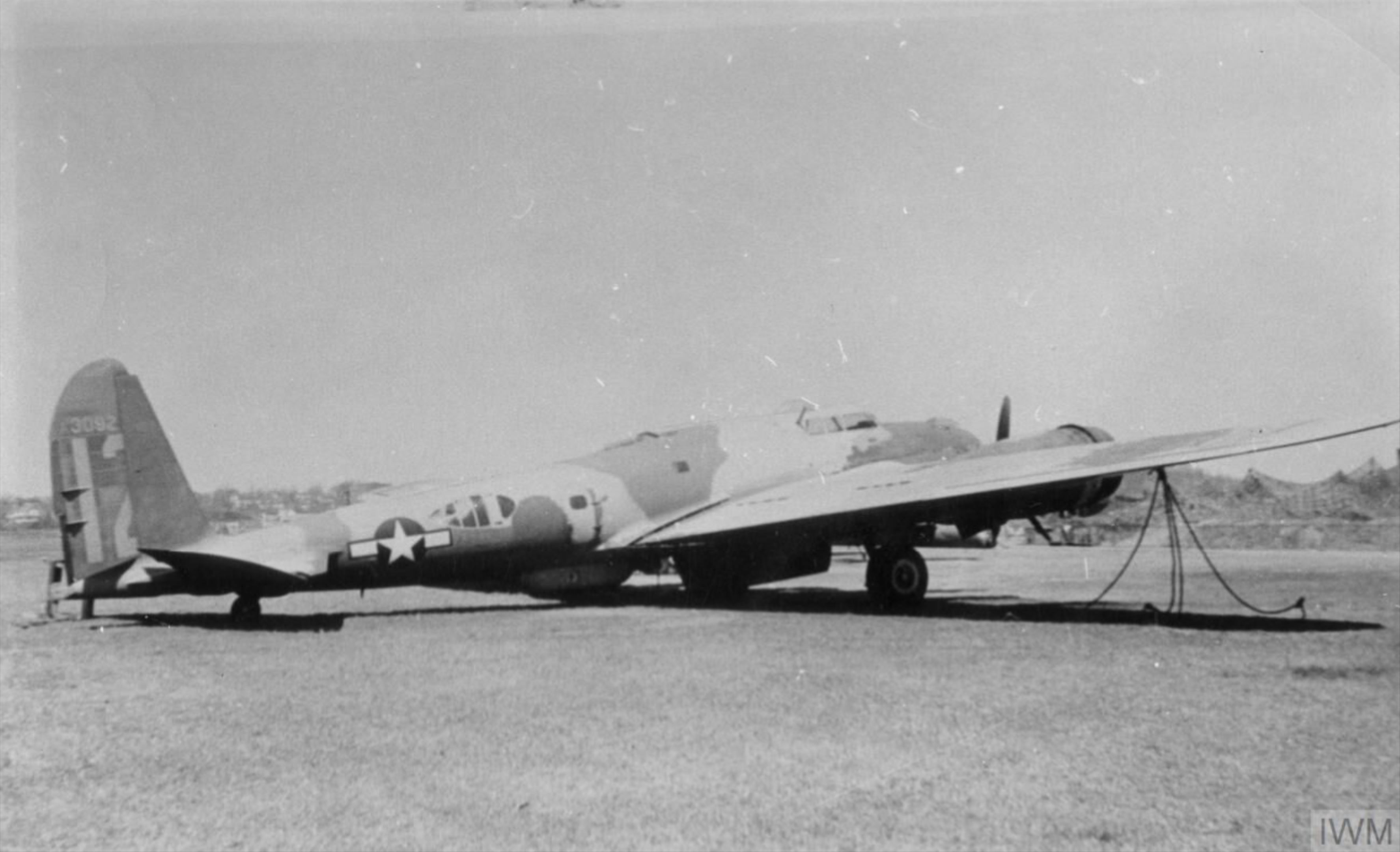

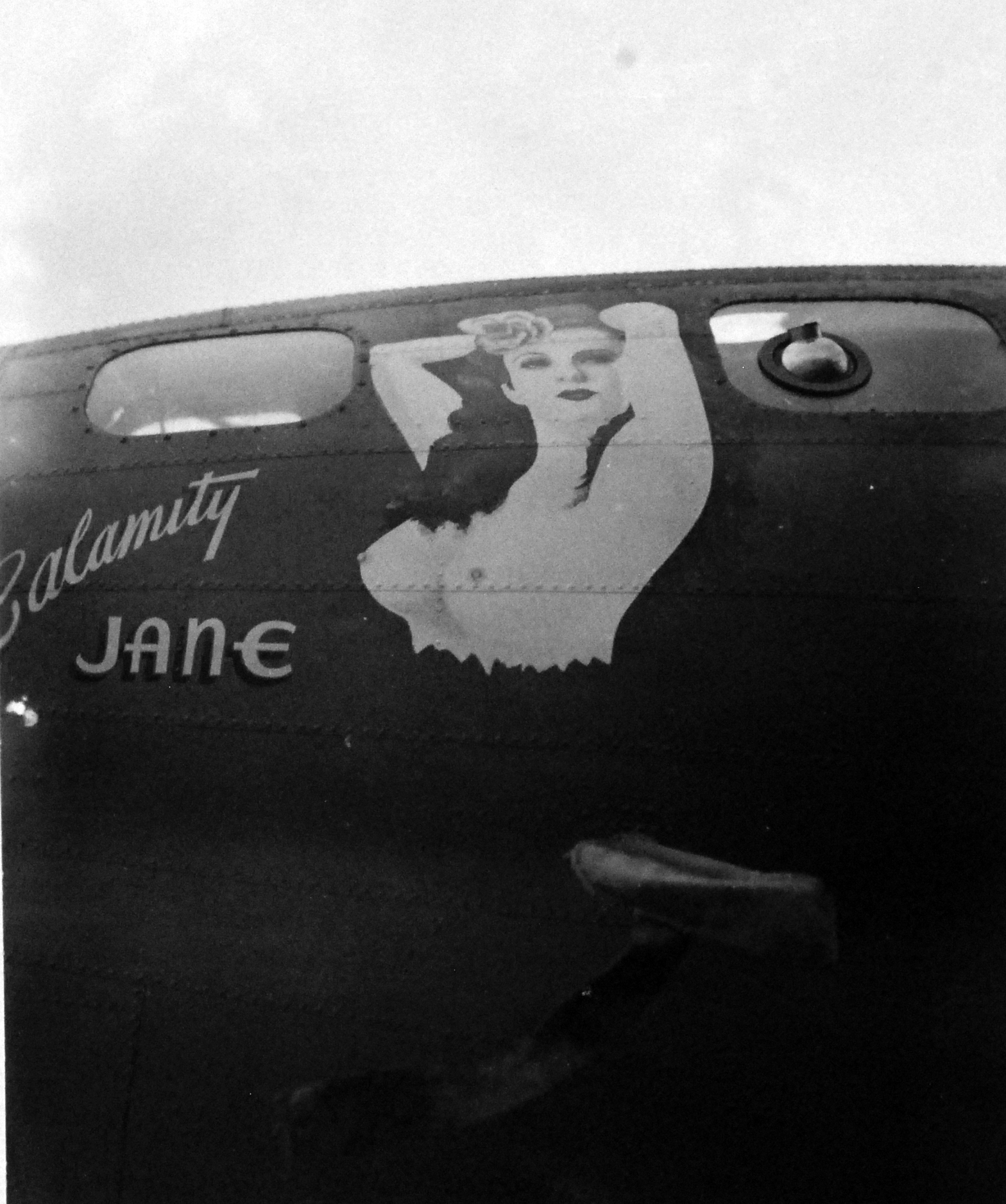

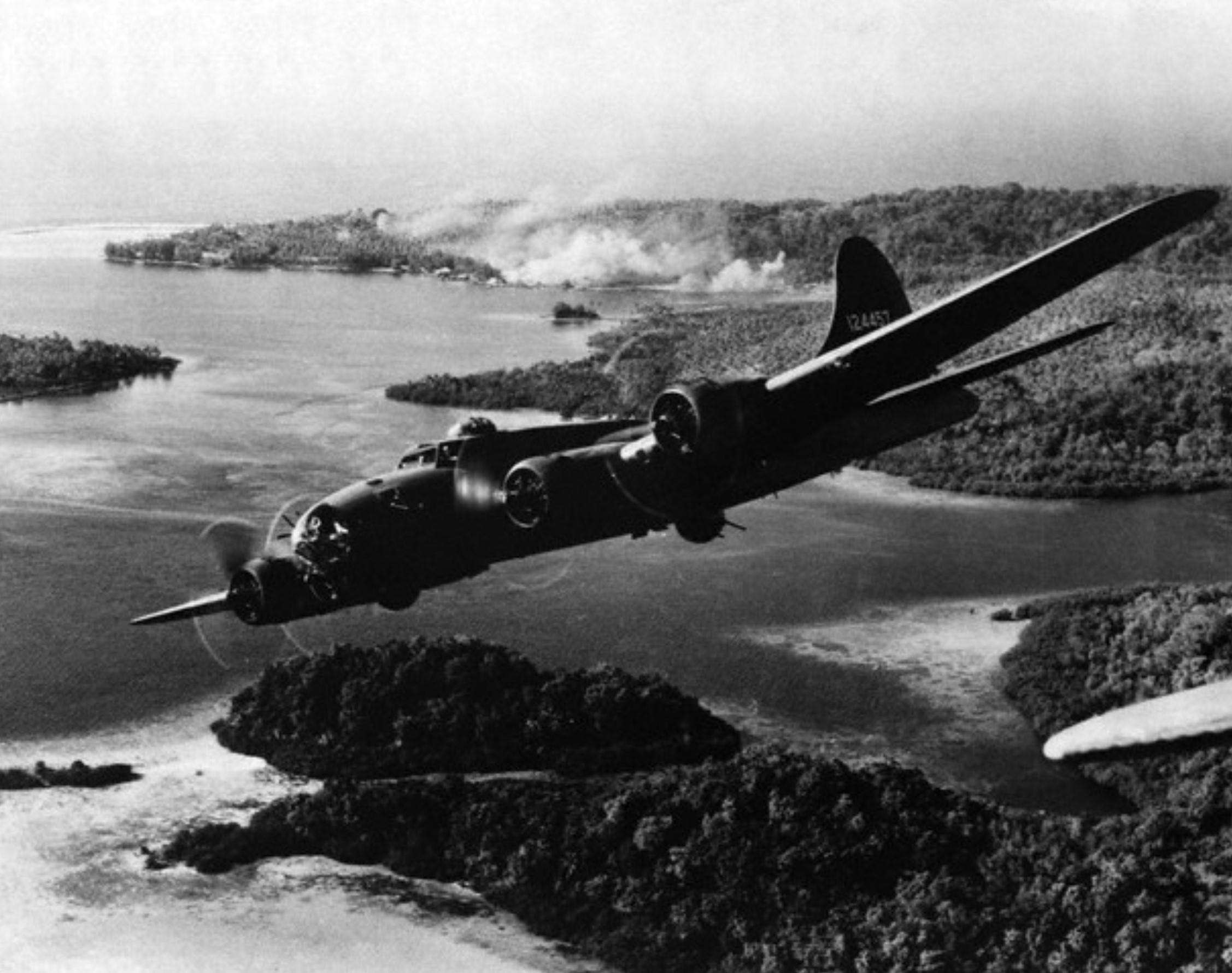
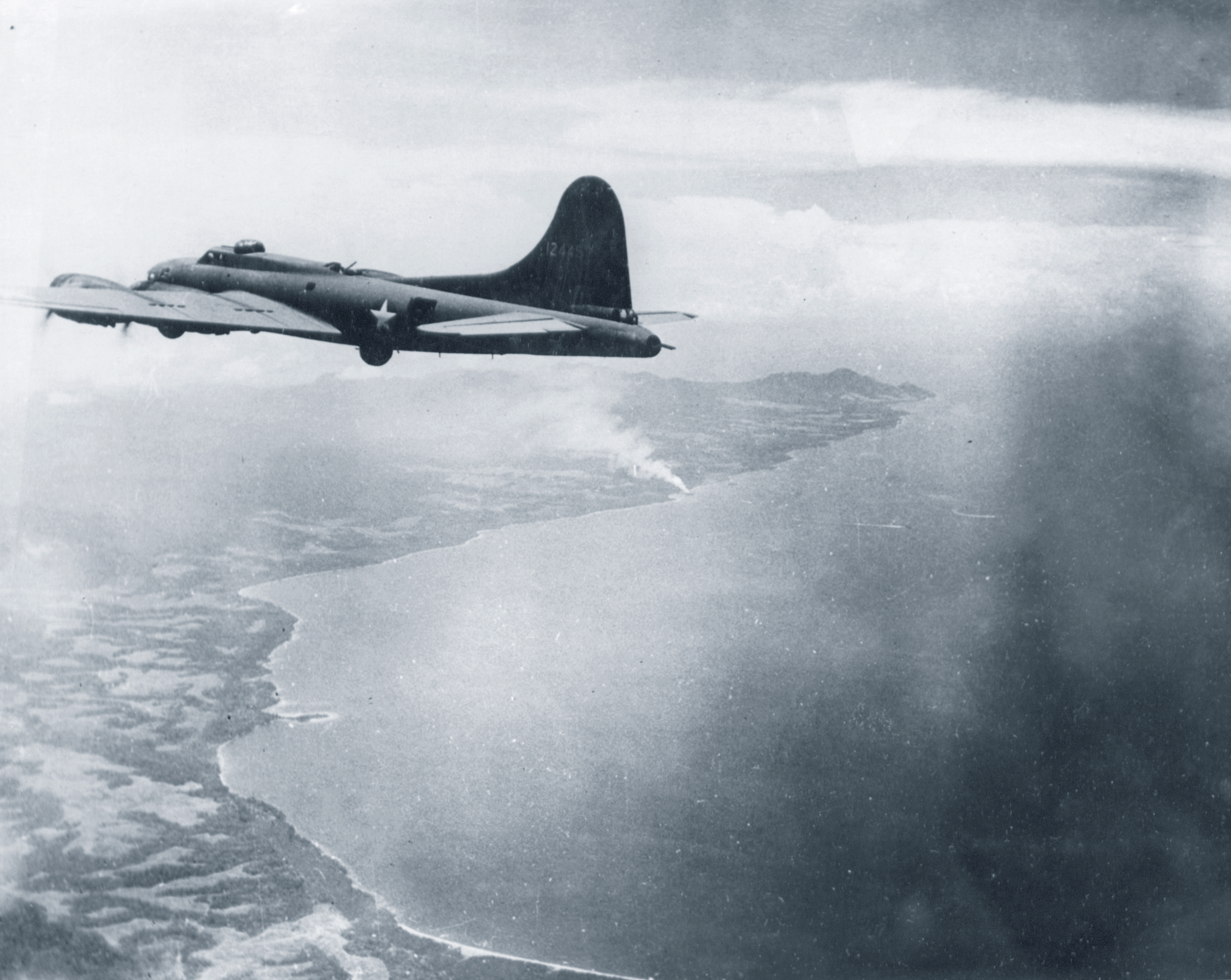

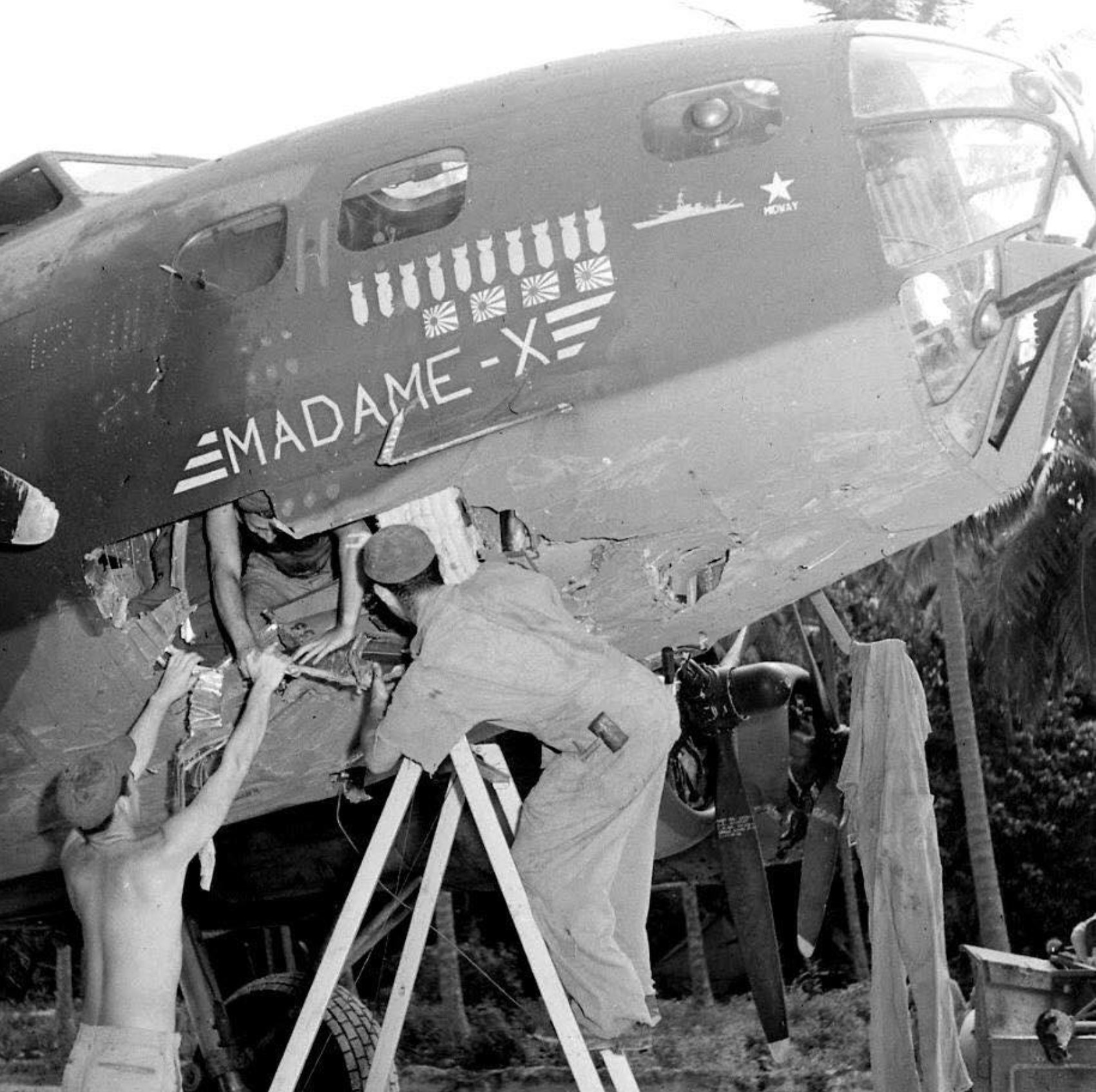
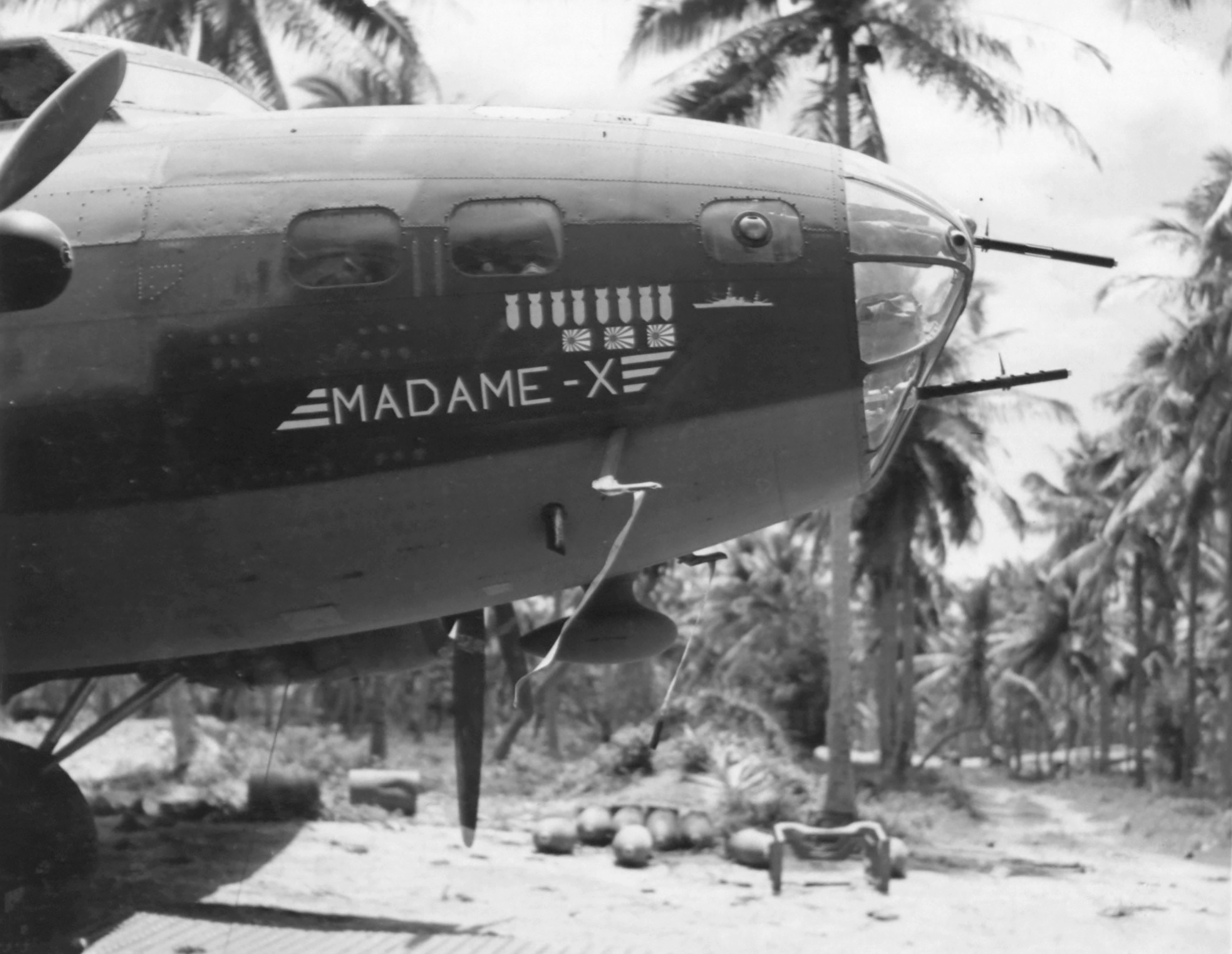
-New-Guinea-1942-01.jpg)