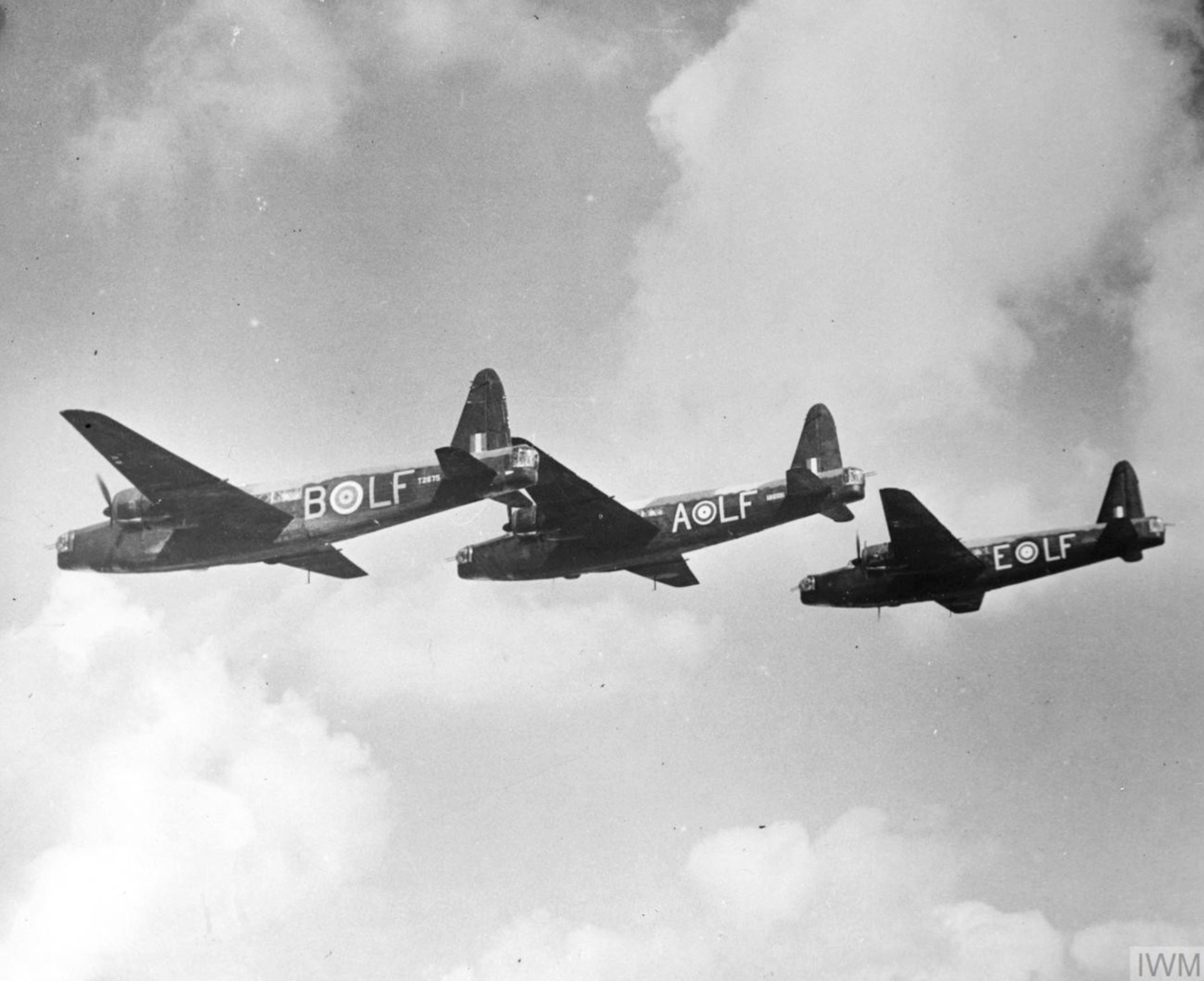
Caption: Vickers Wellington Ic RAF 37Sqn LFB T2875 with LFA T2837 and LFE at Shallufa Egypt IWM CM1362
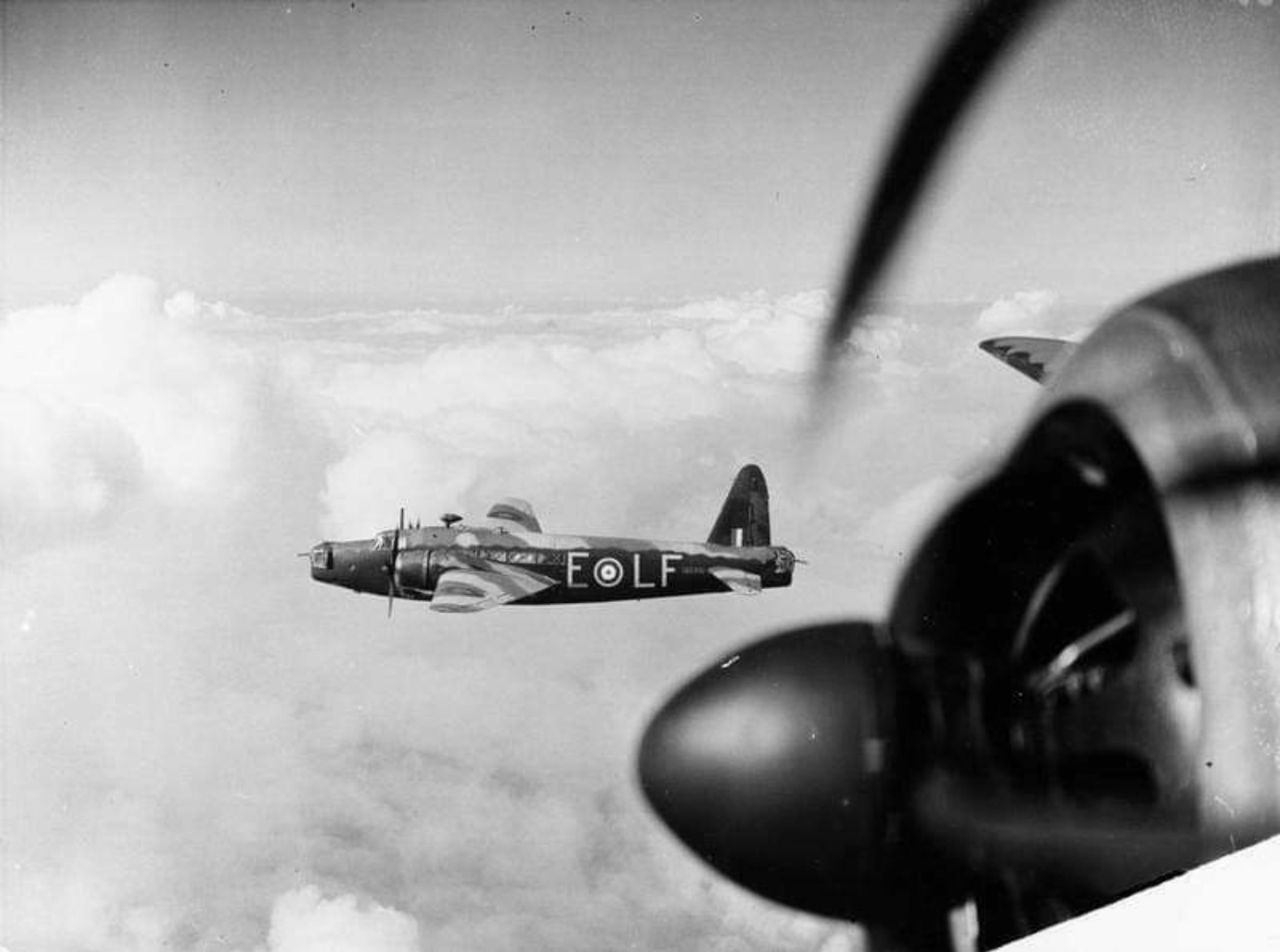
Caption: Vickers Wellington Ic RAF 37Sqn LFE over clouds ebay 01
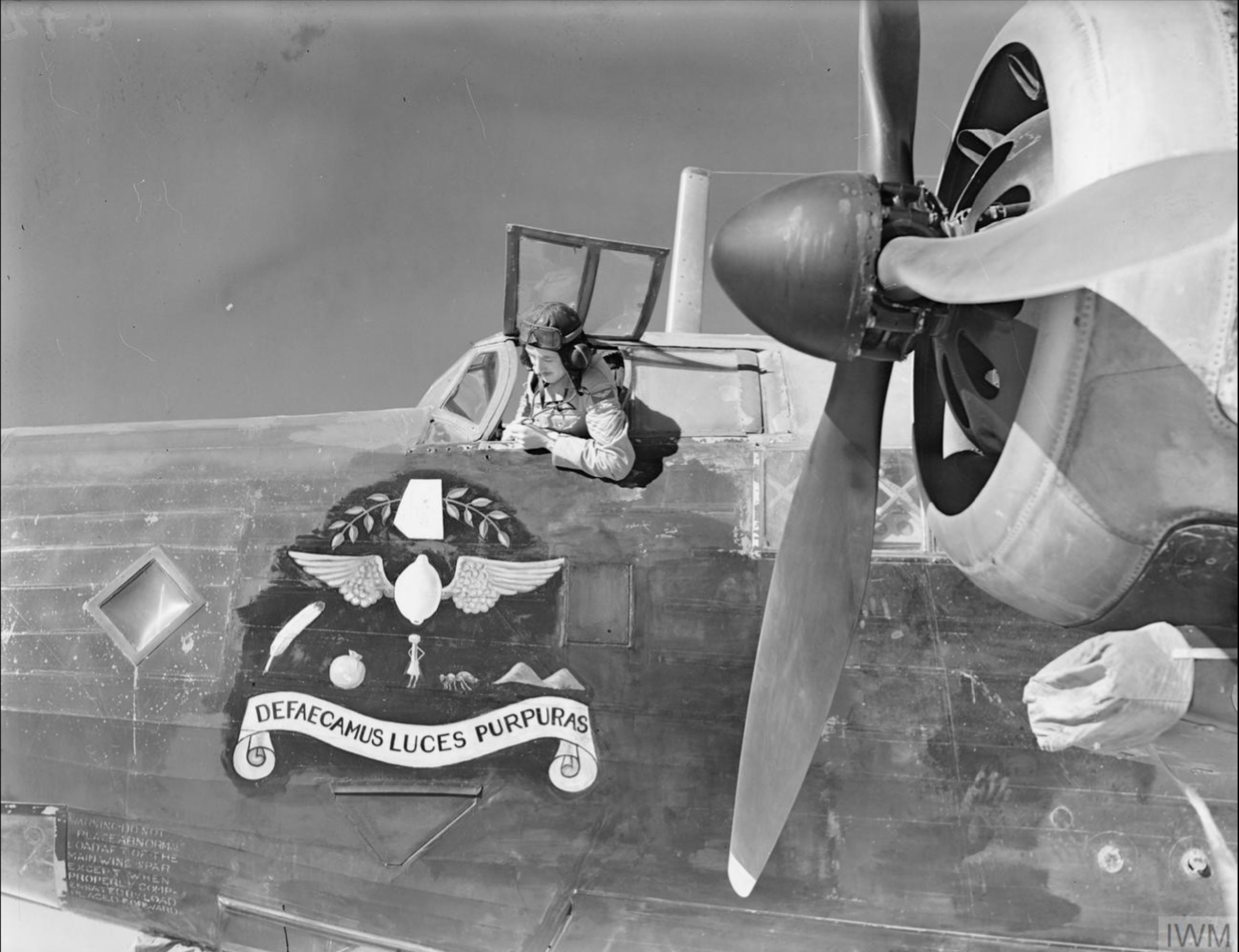
Caption: Vickers Wellington Ic RAF 37Sqn LFO T2508 and LFD at Koraiyim Egypt IWM CM368
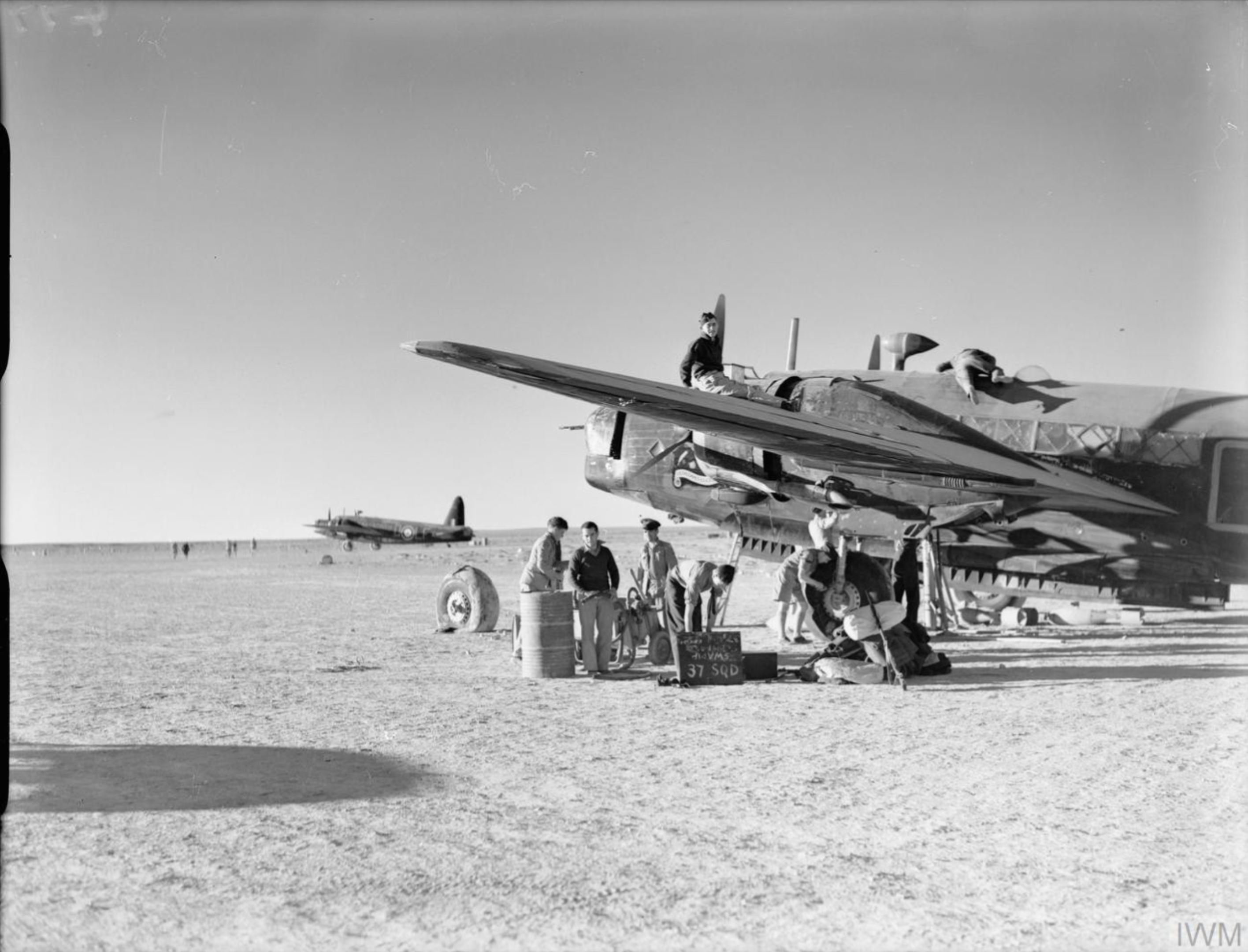
Caption: Vickers Wellington Ic RAF 37Sqn LFO T2508 at Shallufa Egypt IWM CM407
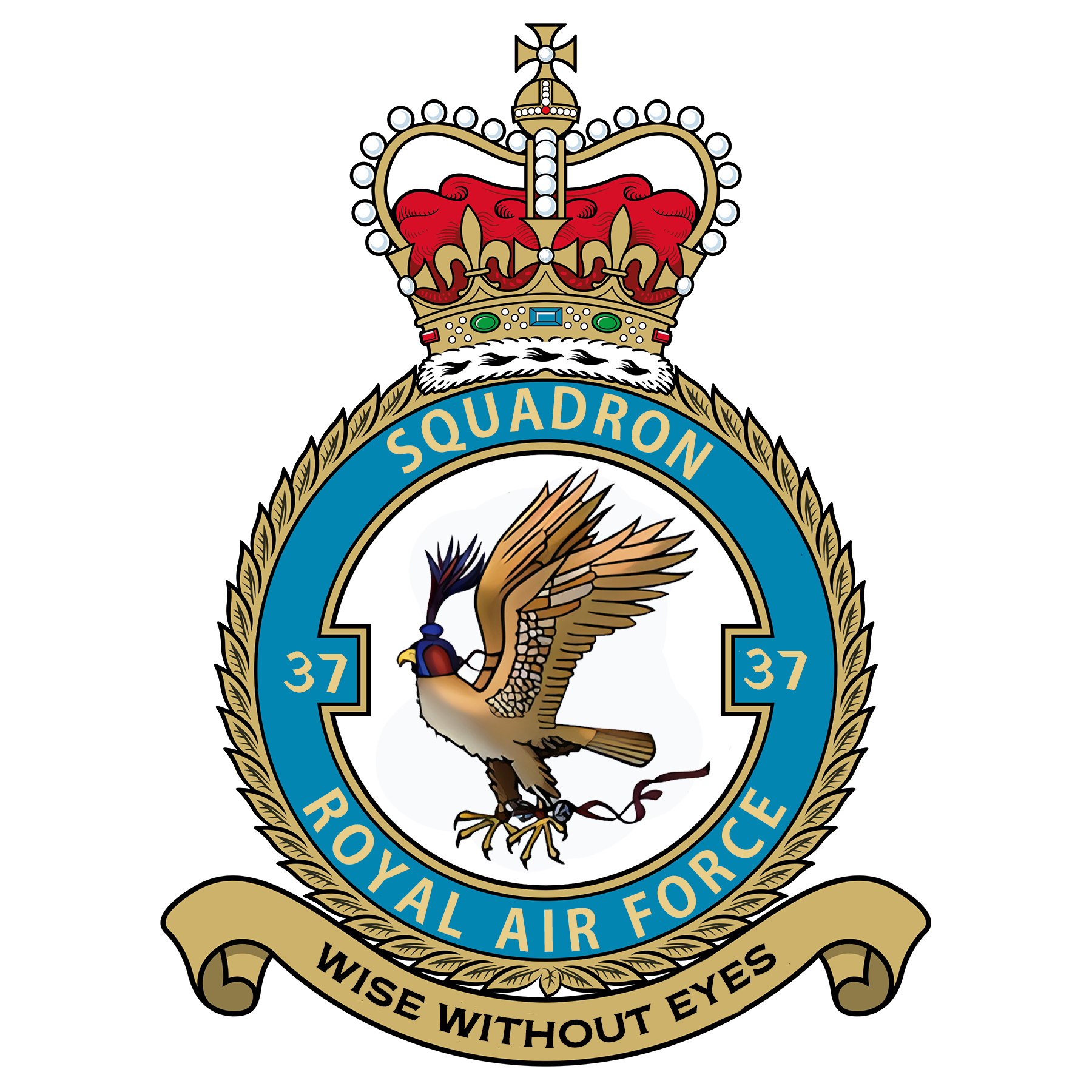
RAF 37 Squadron
Motto: Wise without eyes
No. 37 Squadron RAF
No. 37 Squadron was a Royal Flying Corps fighter squadron during the First World War, a Royal Air Force bomber squadron during the Second World War, and later performed maritime reconnaissance until 1967.
First World War
No. 37 Squadron of the Royal Flying Corps was formed at RFC Orfordness in Suffolk on 15 April 1916 as an experimental squadron. It was disbanded a month later. On 15 September 1916 it was re-formed with its headquarters at Woodham Mortimer and detachments at Rochford, Stow Maries and Goldhanger in Essex.
The squadron operated a mixture of aircraft including B.E.2s, B.E.12s and F.E.2bs. Its main task was defending London against aerial attacks, both by German Zeppelins at night and by aircraft during the day.
In May 1917 the squadron received Sopwith 1½ Strutters to help counter large-scale German Gotha bomber attacks. It also briefly operated Sopwith Pup fighters. On the night of 16/17 June 1917, one of its B.E.12s flown by Lieutenant Pierce Watkins attacked and shot down the Zeppelin L48.
The squadron became part of the new Royal Air Force on 1 April 1918. It continued to fly obsolete B.E.12s for some time before receiving S.E.5s in May 1918. In October 1918 it re-equipped with Sopwith Camels, followed by Sopwith Snipes in December. The squadron moved to Biggin Hill in March 1919 and was renumbered as No. 39 Squadron in July 1919.
Bomber Squadron in the Second World War
In April 1937 the squadron was re-formed at RAF Feltwell in Norfolk as a bomber unit. It initially flew Handley Page Harrow heavy bombers before switching to Vickers Wellingtons in May 1939.
The squadron flew its first wartime mission on 3 September 1939. On 18 December 1939 it suffered heavy losses during a raid on shipping in the Heligoland Bight, losing five out of six Wellingtons.
In November 1940 the squadron moved to the Middle East. It supported Operation Compass in the Western Desert and later operated in Greece during the Italian invasion. After the German invasion of Greece in April 1941, it returned to Egypt and took part in the Anglo-Iraqi War and the Syria-Lebanon campaign.
Throughout 1941 and 1942 the squadron continued operations over North Africa, Greece, and the Dodecanese. It moved to Malta in early 1942 and carried out successful attacks on Italian and German shipping, though it suffered heavy losses. Later it supported the Allied invasion of Sicily and moved to southern Italy in December 1943.
In late 1944 the squadron converted to Consolidated Liberators. It flew bombing missions over Northern Italy and the Balkans, dropped supplies to Yugoslav Partisans, and laid mines on the River Danube. Its final missions of the war were flown on the night of 25/26 April 1945 against targets in Austria.
After the war the squadron was disbanded and reformed several times before finally being stood down in April 1947.
Maritime Reconnaissance
The squadron reformed again in September 1947 at Ein Shemer in Palestine as a maritime reconnaissance unit equipped with Lancaster GR3s. Its main task was patrolling the Eastern Mediterranean to monitor ships carrying Jewish illegal immigrants to Palestine.
In May 1948 it moved to RAF Luqa in Malta. From 1953 it replaced its Lancasters with Avro Shackleton MR.2 aircraft. The squadron supported the Suez Crisis in 1956 and later moved to RAF Khormaksar in Aden in 1957.
From Aden it conducted patrols over the Red Sea and Indian Ocean, and supported counterinsurgency operations during the Aden Emergency. It also took part in Operation Vantage in 1961 to protect Kuwait and provided aircraft for the Beira Patrol to enforce the blockade of Rhodesia.
No. 37 Squadron was finally disbanded at Khormaksar on 7 September 1967.
The colours of 37 Squadron are preserved in All Saints' Church, Stamford.
Battle Honours*
Home Defence, 1916-18: Norway 1940: Dunkirk: Channel & North Sea, 1939-40: Fortress Europe, 1940: Malta, 1940,1942: Greece, 1941: El Alamein: Italy, 1943-45: South-East Europe, 1943-45:Squadron Codes used: 37 Apr 1937 - Apr 1939 | FJ Apr 1939 - Sep 1939 | LF Sep 1939 - Mar 1946




 Editor for Asisbiz: Matthew Laird Acred
If you love our website please subscribe to our YouTube video channel
Please donate so we can make this site even better !!