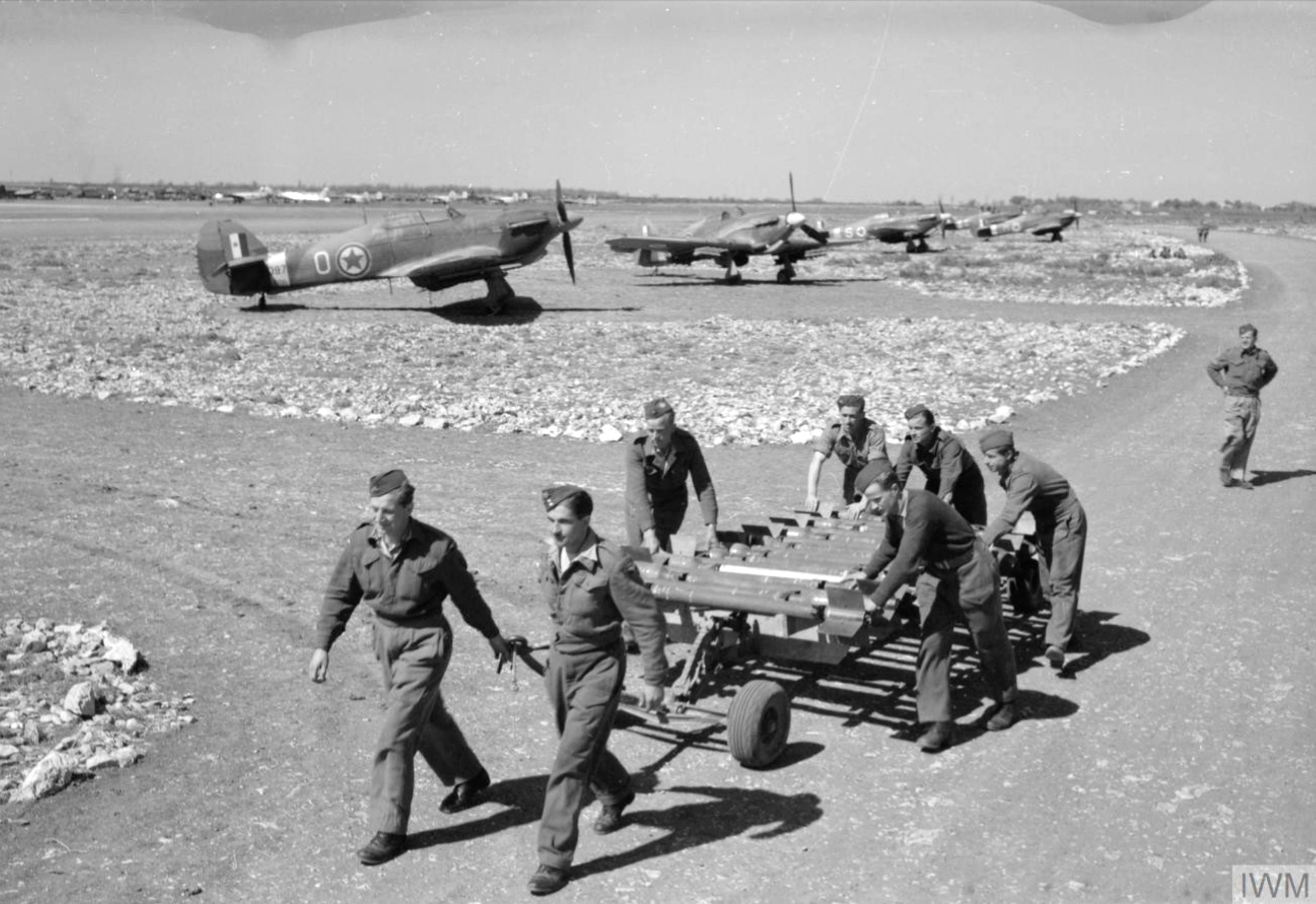
Caption: Hurricane IV RAF 351Sqn O at Prkos Yugoslavia IWM CNA35005
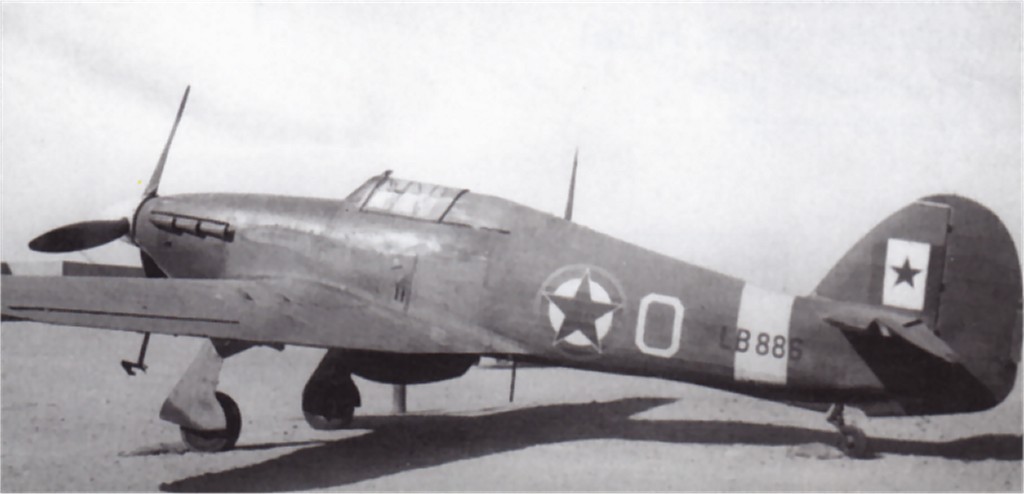
Caption: Hurricane IIc Trop RAF 351Sqn O LB886 Libya 1944
RAF No 351 Yugoslav Partisan Squadron
RAF No 351 Yugoslav Partisan Squadron
Motto: None
Nickname: Jugoslav
A Yugoslav Partisan-manned fighter-bomber squadron of the Royal Air Force during World War II
Overview
No. 351 Squadron was a unique unit of the Royal Air Force, formed in 1944 and crewed almost entirely by Yugoslav Partisans. It operated as a fighter-bomber squadron from October 1944 until the end of the war in Europe on 1 May 1945. The squadron was also known among the Partisans as the Second Squadron (NOVJ).
During its short but intense existence, the squadron flew 227 combat missions in support of Yugoslav Partisan ground operations. Of the 23 pilots who served with the unit, four were killed and one was captured. The squadron lost nine aircraft and had 38 more damaged, mostly by anti-aircraft fire.
Formation and Background
In March 1944, Yugoslav Partisan leader Josip Broz Tito and British Brigadier Fitzroy Maclean agreed to establish two RAF squadrons manned by Yugoslav personnel. These units would operate exclusively over Yugoslavia to support the Partisan fight against Axis forces.
The squadrons were largely staffed by experienced pilots from the former Royal Yugoslav Army Air Force who had fled the country after the 1941 invasion and later joined the Partisans. The first unit formed was No. 352 Squadron, followed by No. 351 Squadron, which was officially raised on 1 July 1944 at Benina airbase in Libya.
Training and Equipment
Initially equipped with Hawker Hurricane Mk IIC fighter-bombers, No. 351 Squadron transitioned to the more capable Hurricane Mk IV during training. The squadron completed its ground-attack training by late September 1944 and moved to Italy to join No. 281 Wing RAF within the Balkan Air Force.
Despite complaints from Partisan headquarters that the Hurricane was inferior to the Spitfires used by No. 352 Squadron, the unit operated the Hurricane Mk IV for the remainder of the war.
Combat Operations
October – December 1944
The squadron flew its first mission on 13 October 1944, attacking an Axis supply convoy near Aržano. On 20 October, it conducted successful rocket and strafing attacks on enemy columns near Metković, supported by Spitfires from No. 352 Squadron.
Throughout the autumn, the squadron conducted patrols, road interdictions, and attacks on targets of opportunity across Dalmatia and Bosnia. Missions were often escorted by Spitfires, though enemy aircraft were rarely encountered. Poor weather in late 1944 significantly limited operations.
January – March 1945
Improved coordination with Partisan ground forces through aviation liaison teams greatly increased the effectiveness of air support. The squadron attacked convoys, railway targets, coastal defences, and shipping, notably supporting the liberation of towns such as Mostar, Široki Brijeg, and Nevesinje.
Operations expanded to the Lika region and the capture of Sarajevo and Bihać. The squadron flew from bases in Italy, the island of Vis, and later from mainland airfields at Zemunik and Prkos. During this period, four aircraft were lost and fifteen damaged.
April – May 1945
In the final weeks of the war, No. 351 Squadron focused on supporting the 4th Army’s offensives in the Lika, Gorski Kotar, and Istria regions, as well as operations on the northern Adriatic islands. On 5 April, one Hurricane was lost when it flew into a mountain near Babin Potok.
Due to political concerns regarding Trieste, the squadron was grounded by the RAF between 2 and 8 May 1945. It was officially released from RAF control on 16 May 1945.
Statistics
Total combat missions: 227 (119 ground attack, 87 reconnaissance, 19 maritime interdiction, 2 search-and-rescue)
Pilots: 23 (4 killed, 1 captured)
Aircraft losses: 9 destroyed, 38 damaged (mainly by anti-aircraft fire)Post-War Service
After the war, the surviving Hurricanes were transferred to the new Yugoslav Air Force (JRV). They continued flying with various reconnaissance and fighter units until the early 1950s.
One of the squadron’s original Hurricane Mk IVs (serial number 20925) is preserved and on display at the Museum of Aviation in Belgrade.
Aircraft Operated by No. 351 Squadron RAF From To Aircraft Variant July 1944 September 1944 Hawker Hurricane Mk IIC September 1944 June 1945 Hawker Hurricane Mk IV No. 351 Squadron played a vital role in providing close air support to Yugoslav Partisan forces during the final stages of the liberation of Yugoslavia in World War II.
The Balkan Air Force (BAF) – Structure and Role in World War II
The Balkan Air Force was a multinational Allied air command created to support resistance movements, especially the Yugoslav Partisans, in the final stages of the war in the Balkans. Active from June 1944 to July 1945, it played a vital role in the liberation of Yugoslavia by providing close air support, supply drops, and interdiction missions.
Formation and Command
The BAF was officially established on 7 June 1944 at Bari, Italy, under the Mediterranean Allied Air Forces. It was formed to focus air operations over the Balkans that had previously been handled as a secondary task. Air Vice Marshal William Elliot was the first commander, later succeeded by Air Vice Marshal George Mills.
Overall Structure
Rather than a large strategic bombing force, the BAF was a flexible tactical organisation built for close air support and special operations. At its peak it included around 30 squadrons from several nations, operating many different aircraft types. It combined British, South African, Yugoslav, Greek, Polish, Italian, American, and Soviet units.
The force worked closely with naval forces in the Adriatic and with Partisan ground units on the ground.
Key Wings and Important Units
No. 281 Wing RAF – This was the main wing for fighter-bombers and short-range attack aircraft. It included both Yugoslav squadrons:
No. 351 Squadron RAF (Yugoslav-manned Hurricane Mk IV fighter-bombers)
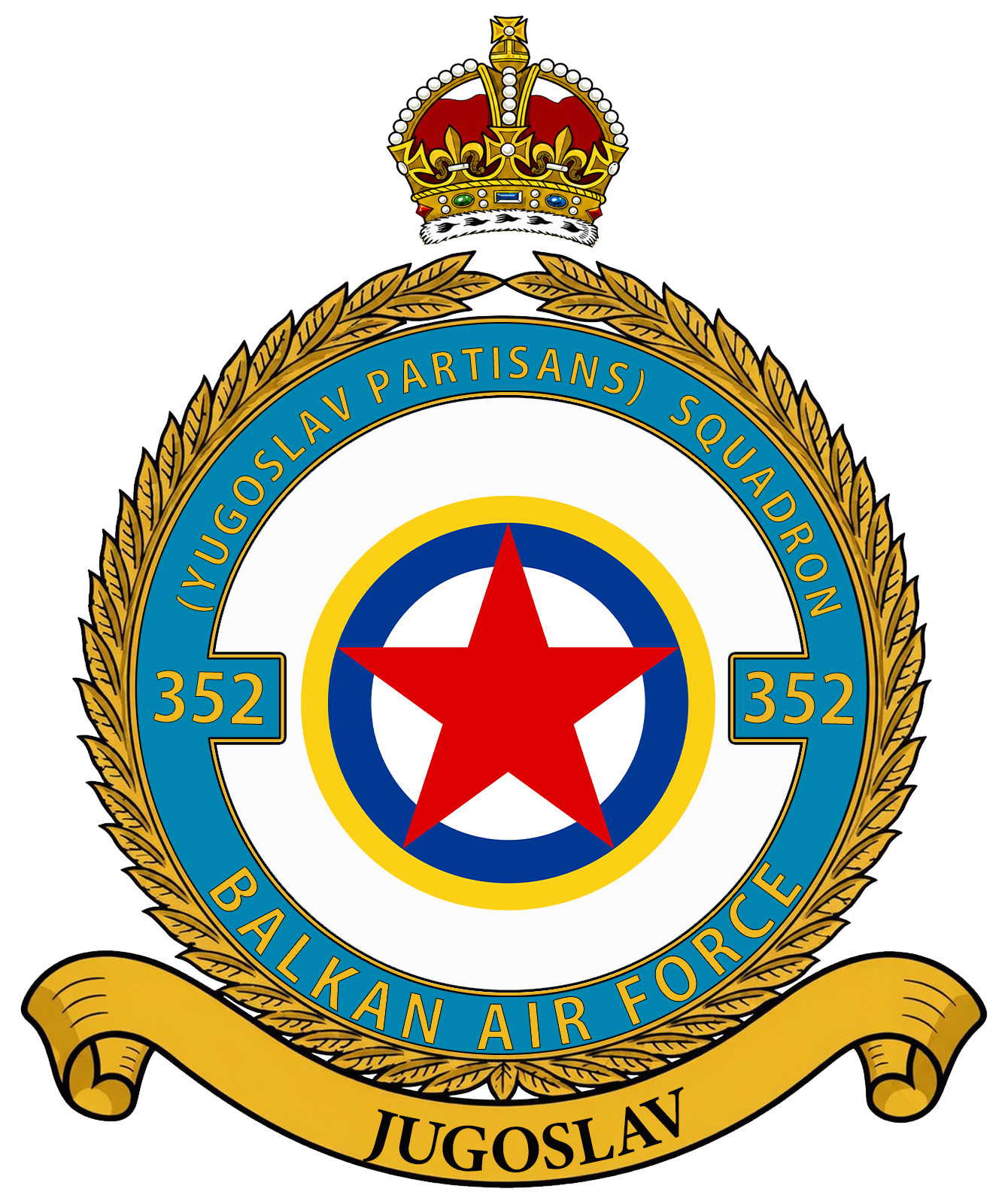
No. 352 Squadron RAF (Yugoslav-manned Spitfires)
No. 6 Squadron RAF (British-manned Hurricanes)No. 334 Wing RAF handled special operations and transport, including supply drops and agent insertions using Dakota aircraft.
Other important units included light and medium bomber squadrons, reconnaissance aircraft, and a small Soviet detachment of fighters and transports.
Operations and Impact
The Balkan Air Force flew over 38,000 sorties. It delivered thousands of tons of supplies to Partisan forces, evacuated around 19,000 wounded, and carried out hundreds of ground attack missions. Operations were launched from bases in southern Italy, the island of Vis, and later from captured airfields on the Yugoslav mainland such as Zemunik and Prkos.
No. 281 Wing, which included No. 351 Squadron, provided direct close air support during major Partisan offensives in 1944 and 1945.
Post-War Transition
The Balkan Air Force was disbanded on 15 July 1945. Many of its aircraft, especially the surviving Hurricanes, were transferred to the new Yugoslav Air Force where they continued serving into the early 1950s.
The BAF remains an excellent example of successful multinational cooperation, combining different air forces to support irregular ground troops in difficult terrain.




 Editor for Asisbiz: Matthew Laird Acred
If you love our website please subscribe to our YouTube video channel
Please donate so we can make this site even better !!