-RAF-144Sqn-crew-stand-by-the-cockpit-of-their-aircraft-at-Tain-Ross-shire-IWM-CH9765.jpg)


RAF 144 Squadron
Motto: Who shall stop us
Role: various
No. 144 Squadron RAF was a squadron of the British Royal Air Force. It was first formed in 1918 during the First World War, operating as a bomber squadron in the Middle East. It reformed in 1937, serving in the bomber and anti-shipping roles during the Second World War. A third incarnation saw the squadron serving as a strategic missile squadron during the late 1950s and early 1960s.
History
First World War
On March, a new squadron of the Royal Flying Corps was established at Port Said in British administrated Egypt. It was intended as a corps reconnaissance squadron, to work in support of the Army, and initially operated a mix of aircraft, including Royal Aircraft Factory B.E.es and Royal Aircraft Factory B.E.s. The squadron re-equipped with Airco DH. light bombers in August that year, reinforcing th (Army) Wing as it prepared for a major offensive against Ottoman forces. On September, the opening actions of the Battle of Megiddo began, with Squadron attacking Turkish communication and command centres, including the headquarters of the Ottoman Seventh Army at Nablus. The Ottoman forces were soon in full retreat, and all available air power, including Squadron, was sent to repeatedly attack the force of the Ottoman Seventh Army as it retreated through the Wadi al-Far'a, with the Seventh Army effectively destroyed by these sustained aerial attacks.
On October, the squadron moved to Mudros on the island of Lemnos near the Dardanelles, but the Armistice of Mudros ended the war against the Ottoman Empire on October. The squadron returned to the United Kingdom in December, disbanding at RAF Ford on February .
Reformation
No. Squadron reformed on January , when a flight from Squadron, equipped with four Boulton & Paul Overstrand twin-engined bombers and based at RAF Bicester in Oxfordshire, was detached to form the cadre of the new squadron. Squadron quickly received Avro Anson monoplanes to replace the obsolete Overstrand biplanes, and moved to RAF Hemswell in Lincolnshire on February . It supplemented its Ansons with Hawker Audax biplanes in March before replacing both with more modern Bristol Blenheim I bombers in August that year. By now a part of Group of Bomber Command, the squadron re-equipped with Handley Page Hampdens in March .
Second World War
No. Squadron was still equipped with Hampdens on the outbreak of the Second World War in September , flying its first mission on September, when it dispatched aircraft to search for, and attack if found, German naval forces in the North Sea. On this occasion, however, it encountered no allowable targets. Three days later, the squadron sent out aircraft over the Heligoland Bight in another search for German warships. The strike force split into two groups; while one formation spotted but failed to hit two German destroyers, the second formation was intercepted by Luftwaffe Messerschmitt Bf fighters, which shot down all five Hampdens.
The squadron started to fly night-time leaflet dropping raids over Germany from February , and on March it flew its first bombing raid against a German land target, the seaplane base at Hörnum on the island of Sylt. The squadron continued to operate in the night bomber role through the rest of and .
As a result of the Channel Dash in February , when the German battleships Scharnhorst and Gneisenau and the heavy cruiser Prinz Eugen managed to break the British blockade and sail from France through the English Channel to Germany, indicated to the RAF that their anti-shipping strike strength was inadequate, and it was decided to convert two Hampden squadrons to the torpedo bomber role, with No. Squadron being one of the two chosen for conversion. The squadron transferred from Bomber Command to Group Coastal Command on April , moving to RAF Leuchars on the East coast of Scotland. It flew its first torpedo bomber mission on July .
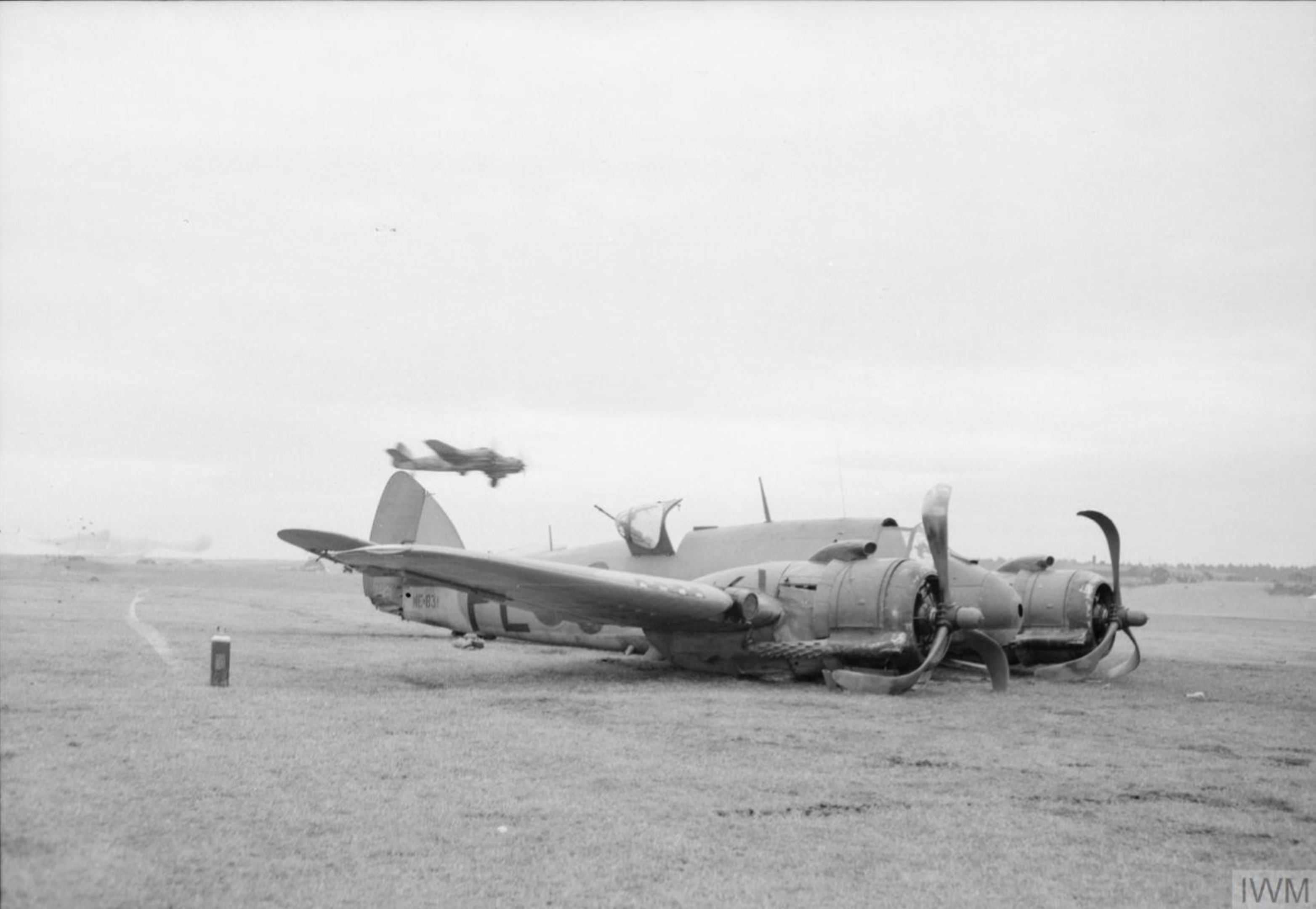
A Bristol Beaufighter torpedo bomber of No. Squadron, after a crash landing at Dallachy following a sortie to attack a German destroyer, February
In Operation Orator, during September , Hampdens of No. Squadron and the Australian No. Squadron were sent to Murmansk in Northern Russia in order to support the Arctic convoy PQ , and to attack any German warships that might sortie from bases in Norway against the convoy. The squadron lost five Hampdens on the flight to Russia, with a further four of No. Squadron's also lost. The German surface warships did not attack PQ , and the squadron's personnel returned to Britain aboard a cruiser in October, leaving its aircraft behind to be handed over to the Soviets.
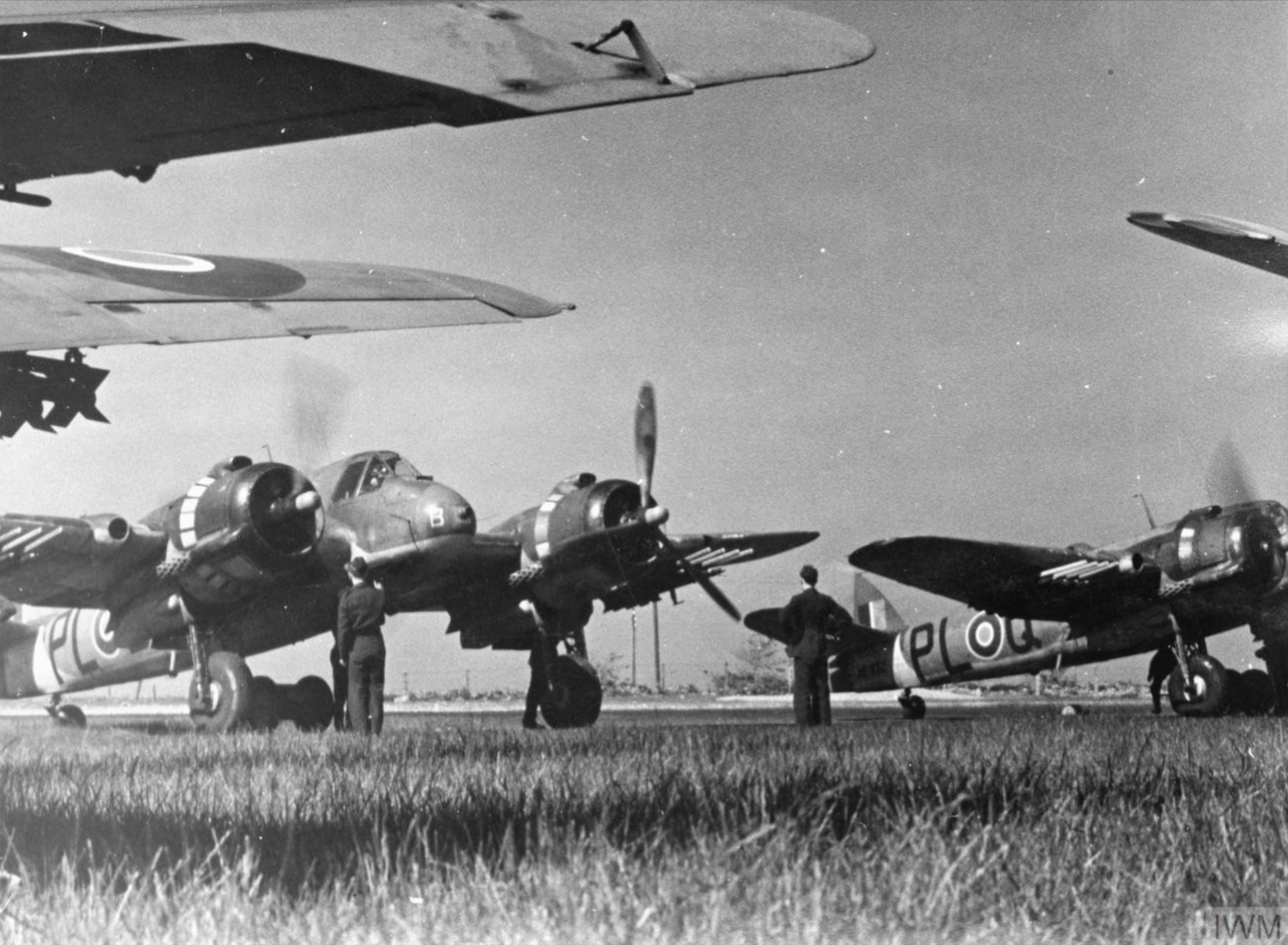
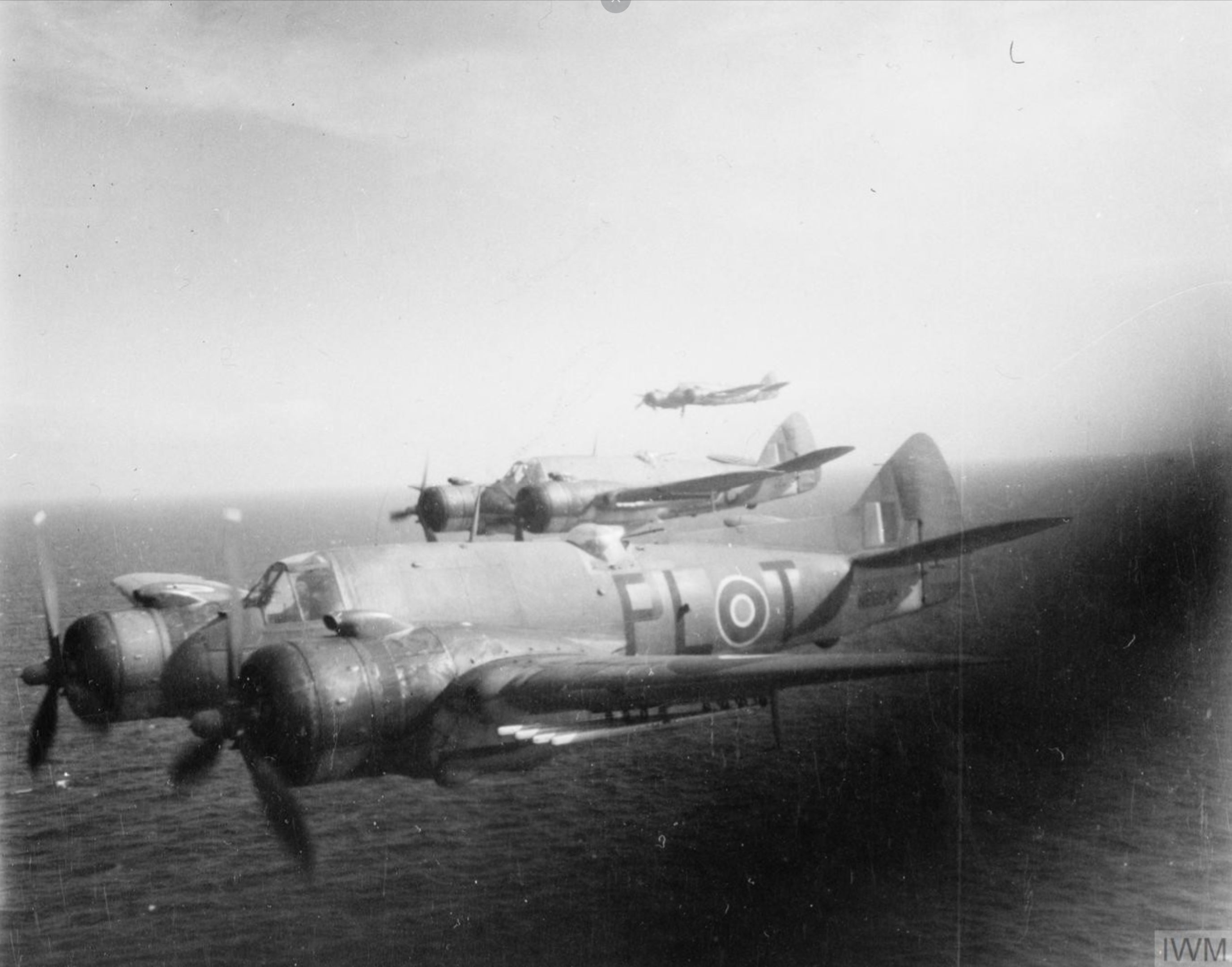
In January the squadron converted to the more capable Bristol Beaufighter, staying in the torpedo bomber role. After working up, it transferred to Algeria in June , flying anti-shipping strikes over the Mediterranean until it returned to the United Kingdom in August. It continued anti-shipping operations over the North Sea from RAF Wick in Scotland, moving to RAF Davidstow Moor in Cornwall in May in preparation for Operation Overlord, the Allied invasion of Normandy, where it was tasked with protecting the invasion forces from German E-boats. It moved to RAF Strubby in Lincolnshire in July for operations against E-boats and German convoys off the Dutch coast. In September it moved to Banff, Aberdeenshire as part of the Banff Strike Wing for operations off Norway. In January , the squadron abandoned the torpedo role, concentrating on flak suppression for the Strike Wing. It disbanded on May at RAF Dallachy.
No. Squadron was represented in the Great Escape from Stalag Luft by Flight Lt. R.S.A. Churchill. Churchill was one of escapees that was not executed by the SS and was the last man living of those that survived.




 Editor for Asisbiz: Matthew Laird Acred
If you love our website please subscribe to our YouTube video channel
Please donate so we can make this site even better !!