Photographs of Tallinn Estonia
Lennusadam Seaplane Harbour Museum Submarine EML Lembit Tallinn
Mixed Images
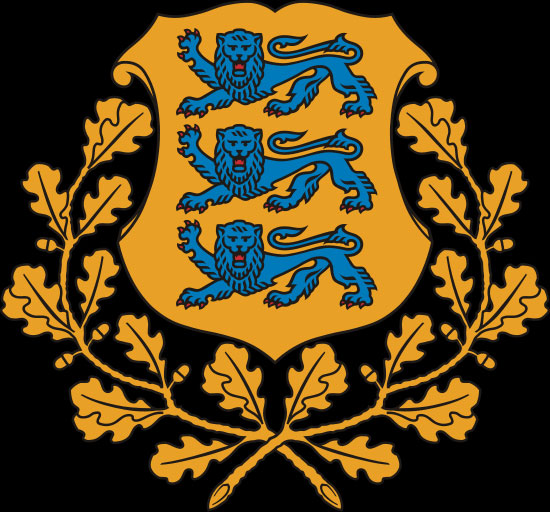
Estonia
Estonia officially the Republic of Estonia(Estonian: Eesti or Eesti Vabariik) is a country in the Baltic region of Northern Europe. It is bordered to the north by Finland across the Gulf of Finland, to the west by Sweden across the Baltic Sea, to the south by Latvia (343 km), and to the east by the Russian Federation (338,6 km). The territory of Estoniacovers 45,227 km² and is influenced by a temperate seasonal climate.
The Estonians are descendants of Baltic Finns, the Estonian language sharing many similarities with Finnish. The modern name of Estoniais thought to originate from the Roman historian Tacitus, who in his book Germania (ca. AD 98) described a people called the Aestii. Similarly, ancient Scandinavian sagas refer to a land called Eistland, close to the German and Danish terms Estland for the country. Early Latin and other ancient versions of the name are Estia and Hestia. Until the late 1930s, the name was often written as Esthonia in most English speaking countries.
Estonia is a democratic parliamentary republic and is divided into fifteen counties. The capital and largest city is Tallinn. With a population of only 1.4 million, it is one of the least-populous members of the European Union. Estoniawas a member of the League of Nations from 22 September 1921, has been a member of the United Nations since 17 September 1991, of the European Union since 1 May 2004 and of NATO since 29 March 2004. Estoniahas also signed the Kyoto protocol.
The settlement of modern day Estoniabegan around 8500 BC, immediately after the Ice Age. Over the centuries, the Estonians were subjected to Danish, Teutonic, Swedish and Russian rule. Foreign rule in Estoniabegan in 1227. In the aftermath of the Livonian Crusade the area was conquered by Danes and Germans. From 1228–1562, parts or most of Estoniawere incorporated into a crusader state Terra Mariana, that became part of the Ordensstaat, and after its decline was formed the Livonian Confederation. During the era economic activities centered around the Hanseatic League. In the 1500s Estoniapassed to Swedish rule, under which it remained until 1721, when it was ceded to the Russian Empire. The Estophile Enlightenment Period (1750-1840) led to a national awakening in the mid-19th century. In 1918 the Estonian Declaration of Independence was issued, to be followed by the Estonian War of Independence (1918-1920), which resulted in the Tartu Peace Treaty recognizing Estonian independence in perpetuity. During World War II, Estoniawas occupied and annexed first by the Soviet Union and subsequently by the Third Reich, only to be re-occupied by the Soviet Union in 1944.
Estonia regained its independence on 20 August 1991. It has since embarked on a rapid programme of social and economic reform. Today, the country has gained recognition for its economic freedom, its adaptation of new technologies and it used to be one of the world's fastest growing economies for several years.
History
Human settlement in Estoniabecame possible 11,000 to 13,000 years ago, when the ice from the last glacial era melted away. The oldest known settlement in Estoniais the Pulli settlement, which was located on the banks of the river Pärnu, near the town of Sindi, in southern Estonia. According to radiocarbon dating, it was settled around 11,000 years ago, at the beginning of the 9th millennium BC.
Prehistory
Evidence has been found of hunting and fishing communities existing around 6500 BC near the town of Kunda in northern Estonia. Bone and stone artifacts similar to those found at Kunda have been discovered elsewhere in Estonia, as well as in Latvia, northern Lithuania and in southern Finland. The Kunda culture belongs to the middle stone age, or Mesolithic period.
The end of the Bronze Age and the early Iron Age were marked by great cultural changes. The most significant was the transition to farming, which has remained at the core of Estonian economy and culture. From approximately the first to 5th centuries AD, resident farming was widely established, the population grew, and settlement expanded. Cultural influences from the Roman Empire reached Estonia, and this era is therefore also known as the Roman Iron Age.
A more troubled and war-ridden middle Iron Age followed with external dangers coming both from the Baltic tribes, who attacked across the southern land border, and from overseas. Several Scandinavian sagas refer to campaigns against Estonia. Estonian pirates conducted similar raids in the Viking age and sacked and burned the Swedish town of Sigtuna during the early middle ages, in 1187.
In the first centuries AD political and administrative subdivisions began to emerge in Estonia. Two larger subdivisions appeared: the province (Estonian: kihelkond) and the land (Estonian: maakond). The province comprised several elderships or villages. Nearly all provinces had at least one fortress. The defense of the local area was directed by the highest official, the king or elder. The terra was composed of one or several provinces, also headed by an elder, king or their collegium. By the 13th century the following major lands had developed in Estonia: Revala, Harjumaa, Saaremaa, Hiiumaa, Läänemaa, Alempois, Sakala, Ugandi, Jogentagana, Soopoolitse, Vaiga, Mõhu, Nurmekund, Järvamaa and Virumaa.
Estonia retained a pagan religion centered around a deity called Tharapita. The Chronicle of Henry of Livonia mentions Tharapita as the superior god of Oeselians (inhabitants of Saaremaa island), also well known to Vironian tribes in northern Estonia. According to the chronicle, when the crusaders invaded Vironia in 1220, there was a beautiful wooded hill in Virumaa, where locals believe the Oeselian god Tharapita was born and from which he flew to Saaremaa. The hill is believed to be the Ebavere Hill (Ebavere mägi) in modern Lääne-Viru County.
The Middle Ages period
At the beginning of the 13th century, Lembitu of Lehola, a chieftain of Sakala sought to unify the Estonian people and thwart Danish and Germanic conquest during the Livonian Crusade. He managed to assemble an army of 6,000 Estonian men from different counties, but he was killed during the Battle of St. Matthew's Day in September, 1217.
In the aftermath of Livonian Crusade from 1228 to the 1560s Estoniabecame part of Terra Mariana, established on February 2, 1207 as a principality of the Holy Roman Empire and proclaimed by pope Innocent III in 1215 as a subject to the Holy See. The southern parts of the country were conquered by Swordbrothers who joined the Teutonic Order in 1237 and became its branch known as Livonian Order. In the Northern parts of the country was formed Duchy of Estoniaas a direct dominion of King of Denmark from 1219 until 1346 when it was sold to the Teutonic order and became part of the Ordenstaat. In 1343, the people of northern Estoniaand Saaremaa rebelled against the German rule in the St. George's Night Uprising, which was put down by 1345.
Reval (known as Tallinn since 1918) gained Lübeck Rights in 1248 and joined an alliance of trading guilds called the Hanseatic League at the end of the thirteenth century.
After the Teutonic Order fell into decline following its defeat in the Battle of Grunwald in 1410, and the defeat of the Livonian Order in the Battle of Swienta on September 1, 1435, the Livonian Confederation agreement was signed on December 4, 1435. The Grand Duchy of Moscow and Tsardom of Russia attempted unsuccessful invasions in 1481 and 1558.
The Livonian Confederation ceased to exist during the Livonian War (1558–82).
The Reformation period
The Reformation in Europe officially began in 1517 with Martin Luther (1483-1546) and his 95 Theses. The Reformation resulted in great change in the Baltic region. Ideas entered the Livonian Confederation very quickly and by the 1520s they were well known. Language, education, religion, and politics were greatly transformed. The Church services were now given in the local vernacular, instead of Latin, as was previously used. During the Livonian War in 1561, northern Estoniasubmitted to Swedish control, while southern Estoniabriefly came under the control of Polish-Lithuanian Commonwealth in the 1580s. In 1625, mainland Estoniacame entirely under Swedish rule. Estoniawas administratively divided between the provinces of Estoniain the north and Livonia in southern Estoniaand northern Latvia, a division which persisted until the early twentieth century.
In 1631, the Swedish king Gustaf II Adolf, forced the nobility to grant the peasantry greater rights, although serfdom was retained. In 1632 a printing press and university were established in the city of Dorpat (known as Tartu since 1918). This period is known in Estonian history as 'the Good Old Swedish Time.'
Estonia in the Russian Empire
Following the Great Northern War, the Swedish empire lost Estoniato Russia by the Treaty of Nystad. However, the upper classes and the higher middle class remained primarily Baltic German. The war devastated the population of Estonia, but it recovered quickly. Although the rights of peasants were initially weakened, serfdom was abolished in 1816 in the province of Estoniaand in 1819 in Livonia. After the Russian revolution of 1917, Tallinn remained under Soviet control until 24 February 1918, when Estonian independence was declared.
Declaration of independence
As a result of the abolition of serfdom and the availability of education to the native Estonian-speaking population, an active Estonian nationalist movement developed in the nineteenth century. It began on a cultural level, resulting in the establishment of Estonian language literature, theatre and professional music and led on to the formation of the Estonian national identity and the Age of Awakening. Among the leaders of the movement were Johann Voldemar Jannsen, Jakob Hurt and Carl Robert Jakobson.
Declaration of independence in Pärnu on 23 February in 1918.
Significant accomplishments were the publication of the national epic, Kalevipoeg, in 1862, and the organization of the first national song festival in 1869. In response to a period of Russification initiated by the Russian empire in the 1890s, Estonian nationalism took on more political tones, with intellectuals first calling for greater autonomy, and later, complete independence from the Russian empire. Following the Bolshevik takeover of power in Russia after the October Revolution of 1917 and German victories against the Russian army, between the Russian Red Army's retreat and the arrival of advancing German troops, the Committee of Elders of the Maapäev issued the Estonian Declaration of Independence in Pärnu on 23 February and in Tallinn on 24 February 1918.
After winning the Estonian Liberation War against Soviet Russia and at the same time German Freikorps volunteers (the Tartu Peace Treaty was signed on 2 February 1920). The Republic of Estoniawas recognized (de jure) by Finland on 7 July 1920, Poland on 31 December 1920, Argentina on 12 January 1921 and by the Western Allies on 26 January 1921. Estoniamaintained its independence for twenty-two years. Initially a parliamentary democracy, the parliament (Riigikogu) was disbanded in 1934, following political unrest caused by the global economic crisis. Subsequently the country was ruled by decree by Konstantin Päts, who became President in 1938, the year parliamentary elections resumed.
Estonia in World War II
The fate of Estoniain World War II was decided by the German-Soviet Nonaggression Pact and its Secret Additional Protocol of August 1939. World War II losses in Estonia, estimated at around 25% of population, were among the highest in Europe. War and occupation deaths have been estimated at 90,000. These include the Soviet deportations in 1941, the German deportations and Holocaust victims. World War II began with the invasion and subsequent partition of an important regional ally of Estonia– Poland, by a joint operation of Nazi Germany and Soviet Union.
Soviet Annexation
The fate of the Republic of Estoniabefore World War II was decided by the German-Soviet Nonaggression Pact of August 1939 after Stalin gained Hitler's agreement to divide Eastern Europe into 'spheres of special interest' according to the Molotov-Ribbentrop Pact and its Secret Additional Protocol.
On 24 September 1939, warships of the Red Navy appeared off Estonian ports and Soviet bombers began a patrol over Tallinn and the nearby countryside. The Estonian government was forced to give their assent to an agreement which allowed the USSR to establish military bases and station 25,000 troops on Estonian soil for 'mutual defence'. On 12 June 1940, the order for a total military blockade on Estoniawas given to the Soviet Baltic Fleet. On 14 June 1940, while world's attention was focused on the fall of Paris to Nazi Germany a day earlier, the Soviet military blockade on Estoniawent into effect, two Soviet bombers downed a Finnish passenger airplane 'Kaleva' flying from Tallinn to Helsinki carrying three diplomatic pouches from the U.S. legations in Tallinn, Riga and Helsinki. On 16 June 1940, the Soviet Union invaded Estonia. The Red Army exited from their military bases in Estoniaon 17 June. The following day, some 90,000 additional troops entered the country. In the face of overwhelming Soviet force, the Estonian government capitulated on 17 June 1940 to avoid bloodshed.
The military occupation of Estoniawas complete by the 21 June 1940.
Most of the Estonian Defence Forces and the Estonian Defence League surrendered according to the orders of the Estonian Government believing that resistance was useless and were disarmed by the Red Army. Only the Estonian Single Signal Battalion stationed in Tallinn at Raua Street showed resistance to Red Army and Communist Militia called 'People's Self-Defence' on 21 June 1940. As the Red Army brought in additional reinforcements supported by six armoured fighting vehicles, the battle lasted several hours until sundown. Finally the military resistance was ended with negotiations and the Single Signal Battalion surrendered and was disarmed. There were 2 dead Estonian servicemen, Aleksei Männikus and Johannes Mandre, and several wounded on the Estonian side and about 10 killed and more wounded on the Soviet side. The Soviet militia that participated in the battle was led by Nikolai Stepulov.
In August 1940, Estoniawas illegally annexed by the Soviet Union as the Estonian SSR. The provisions in the Estonian constitution requiring a popular referendum to decide on joining a supra-national body were ignored. Instead the vote to join the Soviet Union was taken by those elected in the sham elections held in the previous month. Additionally those who had failed to do their 'political duty' of voting Estoniainto the USSR, specifically those who had failed to have their passports stamped for voting, were condemned to death by Soviet tribunals. The repressions followed with the mass deportations carried out by the Soviets in Estoniaon 14 June 1941. Many of the country's political and intellectual leaders were killed or deported to remote areas of the USSR by the Soviet authorities in 1940–1941. Repressive actions were also taken against thousands of ordinary people.
When the German Operation Barbarossa started against the Soviet Union, about 34,000 young Estonian men were forcibly drafted into the Red Army. Fewer than 30% of them survived the war. Political prisoners who could not be evacuated were executed by the NKVD.
Many countries, including the United States, did not recognize the annexation of Estoniaby the USSR. Such countries recognized Estonian diplomats and consuls who still functioned in many countries in the name of their former governments. These diplomats persisted in this anomalous situation until the ultimate restoration of Baltic independence.
Contemporary Russian politicians deny that the Republic of Estoniawas illegally annexed by the Soviet Union in 1940. They state that the Soviet troops had entered Estoniain 1940 following the agreements and with the consent of the government of the Republic of Estonia, regardless of how their actions can be interpreted today. They maintain that the USSR was not in a state of war and was not waging any combat activities on the territory of Estonia, therefore there could be no occupation. The official Soviet and current Russian version claims that Estonians voluntarily gave up their statehood. Freedom fighters of 1944–1976 are labeled 'bandits' or 'nazis'. The Russian position is not recognized internationally.
German occupation
After the Third Reich invaded the Soviet Union on 22 June 1941, the Wehrmacht reached Estoniain (July 1941). The German Army crossed the Estonian southern border on 7 July. The Red Army retreated behind the Pärnu River- the Emajõgi line on 12 July. At the end of July the Germans resumed their advance in Estoniaworking in tandem with the Estonian Forest Brothers. Both German troops and Estonian partisans took Narva on 17 August and the Estonian capital Tallinn on 28 August. After the Soviets were driven out from EstoniaGerman troops disarmed all the partisan groups. Although initially the Germans were perceived by most Estonians as liberators from the USSR and its repressions, and hopes were raised for the restoration of the country's independence, it was soon realized that they were but another occupying power. The Germans pillaged the country for the war effort and unleashed the Holocaust. For the duration of the occupation Estoniawas incorporated into the German province of Ostland. This led many Estonians, unwilling to side with the Nazis, to join the Finnish Army to fight against the Soviet Union. The Finnish Infantry Regiment 200 (Estonian: soomepoisid) was formed out of Estonian volunteers in Finland. Although many Estonians were recruited in to the German armed forces (including Estonian Waffen-SS), the majority did so only in 1944 when the threat of a new invasion of Estoniaby the Red Army had become imminent and it was clear that Nazi Germany could not win the war. By January 1944, the front was pushed back by the Red Army almost all the way to the former Estonian border. Narva was evacuated. Jüri Uluots, the last legitimate prime minister of the Republic of Estonia(according to the Constitution of the Republic of Estonia) prior to its fall to the Soviet Union in 1940, delivered a radio address that appealed to all able-bodied men born from 1904 through 1923 to report for military service (Before this, Jüri Uluots had opposed Estonian mobilization.) The call drew support from all across the country: 38,000 volunteers jammed registration centers. Several thousand Estonians who had joined the Finnish Army came back across the Gulf of Finland to join the newly formed Territorial Defense Force, assigned to defend Estoniaagainst the Soviet advance. It was hoped that by engaging in such a war Estoniawould be able to attract Western support for the cause of Estonia's independence from the USSR and thus ultimately succeed in achieving independence.
Soviet occupation
Stalin era
The Soviet forces reconquered Estoniain the autumn of 1944 after fierce battles in the northeast of the country on the Narva river and on the Tannenberg Line (Sinimäed) as part of the Baltic Strategic Offensive Operation, a twofold military-political operation to rout forces of the Wehrmacht and the so-called 'liberation of the Soviet Baltic peoples'.
In the face of the country being re-occupied by the Red Army, tens of thousands of Estonians (including majority of the education, culture, science, political and social specialists) (estimates as much as 80,000) chose to either retreat together with the Germans or flee to Finland or Sweden. On 12 January 1949 the Soviet Council of Ministers issued a decree 'on the expulsion and deportation' from Baltic states of 'all kulaks and their families, the families of bandits and nationalists', and others. More than 200,000 people are estimated to have been deported from the Baltic in 1940–1953. In addition, at least 75,000 were sent to Gulag. More than 10% of the entire adult Baltic population was deported or sent to Soviet labor and deathcamps. In response to the continuing insurgency against Soviet rule, more than 20,000 Estonians were forcibly deported either to labor camps or Siberia (see Gulag). Within the few weeks that followed, almost all of the remaining rural households were collectivized. After World War II, as part of the goal to more fully integrate Baltic countries into the Soviet Union, mass deportations were concluded in the Baltic countries and the policy of encouraging Soviet immigration to the Baltic states continued. In addition to the human and material losses suffered due to war, thousands of civilians were killed and tens of thousands of people deported from Estoniaby the Soviet authorities until Joseph Stalin's death in 1953.
Half of the deported perished, the other half were not allowed to return until the early 1960s (years after Stalin's death). The various repressive activities of Soviet forces in 1940–1941 and after reoccupation sparked a guerrilla war against the Soviet authorities in Estoniawhich was waged into the early 1950s by 'forest brothers' (metsavennad) consisting mostly of Estonian veterans of both the German and Finnish armies as well as some civilians. Material damage caused by the world war and the following Soviet era significantly slowed Estonia's economic growth, resulting in a wide wealth gap in comparison with neighboring Finland and Sweden.
Militarization was another aspect of the Soviet regime. Large parts of the country, especially the coastal areas were restricted to all but the Soviet military. Most of the sea shore and all sea islands (including Saaremaa and Hiiumaa) were declared 'border zones'. People not actually resident there were restricted from traveling to them without a permit. A notable closed military installation was the city of Paldiski which was entirely closed to all public access. The city had a support base for the Soviet Baltic Fleet's submarines and several large military bases, including a nuclear submarine training centre complete with a full-scale model of a nuclear submarine with working nuclear reactors. The Paldiski reactors building passed into Estonian control in 1994 after the last Soviet troops left the country. Immigration was another effect of Soviet occupation. Hundreds of thousands of migrants were relocated to Estoniafrom other parts of Soviet Union to assist industrialization and militarization, contributing an increase of about half million people within 45 years.
Khrushchev era
After Stalin's death, Party membership vastly expanded its social base to include more ethnic Estonians. By the mid-1960s, the percentage of ethnic Estonian membership stabilized near 50%. On the eve of perestroika the ECP claimed about 100,000 members; less than half were ethnic Estonians and they totalled less than 2% of the country's population.
One positive aspect of the post-Stalin era in Estoniawas the regranting of permission in the late 1950s for citizens to make contact with foreign countries. Ties were reactivated with Finland, and in the 1960s, a ferry connection was opened from Tallinn to Helsinki and Estonians began watching Finnish television. This electronic 'window on the West' afforded Estonians more information on current affairs and more access to Western culture and thought than any other group in the Soviet Union. This heightened media environment was important in preparing Estonians for their vanguard role in extending perestroika during the Gorbachev era.
Brezhnev era
In the late 1970s, Estonian society grew increasingly concerned about the threat of cultural Russification to the Estonian language and national identity. By 1980, when the Olympic Regatta of the 1980 Olympic Games was held in Tallinn, Russification and immigration had achieved a level at which it began to spark popular protests. By 1981, Russian was taught in the first grade of Estonian-language schools and was also introduced into Estonian pre-school teaching.
Gorbachev era
By the beginning of the Gorbachev era, concern over the cultural survival of the Estonian people had reached a critical point. The ECP remained stable in the early perestroika years but waned in the late 1980s. Other political movements, groupings and parties moved to fill the power vacuum. The first and most important was the Estonian Popular Front, established in April 1988 with its own platform, leadership and broad constituency. The Greens and the dissident-led Estonian National Independence Party soon followed. By 1989 the political spectrum had widened, and new parties were formed and re-formed almost daily.
The republic's Supreme Soviet transformed into an authentic regional lawmaking body. This relatively conservative legislature passed an early declaration of sovereignty (November 16, 1988); a law on economic independence (May 1989) confirmed by the U.S.S.R. Supreme Soviet that November; a language law making Estonian the official language (January 1989); and local and republic election laws stipulating residency requirements for voting and candidacy (August, November 1989).
Although the majority of Estonia's large Russian-speaking diaspora of Soviet-era immigrants did not support full independence, they were divided in their goals for the republic. In March 1990 some 18% of Russian speakers supported the idea of a fully independent Estonia, up from 7% the previous autumn, and by early 1990 only a small minority of ethnic Estonians were opposed to full independence.
Restoration of independence
The United States, United Kingdom, France and the majority of other western democracies considered illegal the annexation of Estoniaby the USSR. They retained diplomatic relations with the representatives of the independent Republic of Estonia, never de jure recognized the existence of the Estonian SSR, and never recognized Estoniaas a legal constituent part of the Soviet Union. Estonia's return to independence became possible as the Soviet Union faced internal regime challenges, loosening its hold on outer empire. As the 1980s progressed, a movement for Estonian autonomy started. In the initial period of 1987–1989, this was partially for more economic independence, but as the Soviet Union weakened and it became increasingly obvious that nothing short of full independence would do, the country began a course towards self-determination.
In 1989, during the 'Singing Revolution', in a landmark demonstration for more independence, called The Baltic Way, a human chain of more than two million people was formed, stretching through Lithuania, Latvia and Estonia. All three nations had similar experiences of occupation and similar aspirations for regaining independence. The Estonian Sovereignty Declaration was issued on November 16, 1989 and formal independence declared on 20 August 1991, reconstituting the pre-1940 state, during the Soviet military coup attempt in Moscow. The first country to diplomatically recognize Estonia's reclaimed independence was Iceland. The last Russian troops left on 31 August 1994.
Geography
Topography
Estonialies on the eastern shores of the Baltic Sea immediately across the Gulf of Finland from Finland on the level northwestern part of the rising east European platform between 57.3° and 59.5° N and 21.5° and 28.1° E. Average elevation reaches only 50 meters (164 ft) and the country's highest point is the Suur Munamägi in the southeast at 318 meters (1,043 ft). Estoniahas over 1,400 lakes. Most are very small, with the largest, Lake Peipus, (Peipsi in Estonian) being 3,555 km² (1372 sq mi). There are many rivers in the country. The largest are the Võhandu (162 km), Pärnu (144 km), and Põltsamaa (135 km). Estoniaalso has numerous bogs, and 3,794 kilometers (2,357 mi) of coastline marked by numerous bays, straits, and inlets. The number of islands and islets is estimated at some 1,500. Two are large enough to constitute their own counties: Saaremaa and Hiiumaa.
Climate
Estonia lies in the northern part of the temperate climate zone and in the transition zone between maritime and continental climate. Because Estonia(and all of Northern Europe) is continuously warmed by maritime air influenced by the heat content of the northern Atlantic Ocean, it has a milder climate despite its northern latitude. The Baltic Sea causes differences between the climate of coastal and inland areas. The average annual temperature in Estoniais 5.2°C. The average temperature in February, the coldest month of the year, is -5.7°C. The average temperature in July, which is considered the warmest month of the year, is 16.4°C. The climate is also influenced by the Atlantic Ocean, the North-Atlantic Stream and the Icelandic Minimum, which is an area known for the formation of cyclones and where the average air pressure is lower than in neighbouring areas. Estoniais located in a humid zone in which the amount of precipitation is greater than total evaporation. There are about 160 to 190 rainy days a year, and average precipitation is most plentiful on the western slopes of the Sakala and Haanja Uplands. Snow cover, which is deepest in the south-eastern part of Estonia, usually lasts from mid-December to late March.
Wildlife
Phytogeographically, Estoniais shared between the Central European and Eastern European provinces of the Circumboreal Region within the Boreal Kingdom. According to the WWF, the territory of Estoniabelongs to the ecoregion of Sarmatic mixed forests.
Estonia's sparse population and large areas of forest have allowed stocks of European Lynx, Wild Boar, Brown Bears, and moose to survive, among other animals. Estoniais thought to have a wolf population of around 200, which is considered slightly above the optimum range (100-200). Its birdlife includes Golden Eagles and White Storks. It has around a dozen national parks and protected areas, including Lahemaa National Park, the country's largest park, on the northern coast. Soomaa National Park, near Pärnu, is known for its ancient wetlands. Reserves such as Käina Bay Bird Reserve and Matsalu Nature Reserve (a wetland of international importance under the Ramsar Convention) are also popular with locals and tourists and support a wide variety of birdlife.
Counties
The Republic of Estoniais divided into fifteen counties (Maakonnad) which are the administrative subdivisions of the country. The first documented mentioning of Estonian political and administrative subdivisions comes from the Chronicle of Henry of Livonia, written in the 13th century during the Northern Crusades.
A maakond (county) is the biggest administrative subdivision. The county government (Maavalitsus) of each county is led by a county governor (Maavanem), who represents the national government at the regional level. Governors are appointed by Eesti Valitsus (government) for a term of five years. Several changes were made to the borders of counties after Estoniabecame independent, most notably the formation of Valga County (from parts of Võru, Tartu and Viljandi counties) and Petseri County (area acquired from Russia with the 1920 Tartu Peace Treaty).
During the Soviet rule, Petseri County was annexed and ceded to the Russian SFSR in 1945 where it became one the Pskovs districts. Counties were again re-established in 1 January 1990 in the borders of the Soviet-era regions. Due to the numerous differences between the current and historical (pre-1940) layouts, the historical borders are still used in ethnology, representing cultural and linguistic differences better.
Municipalities and cities
Municipalities of Estonia, Boroughs of Estonia, Small boroughs of Estonia, and Populated places in Estonia
Rank City Location Population Rank City Location Population 1 Tallinn Harjumaa 403,500 11 Võru Võrumaa 14,555 2 Tartu Tartumaa 101,169 12 Valga Valgamaa 13,930 3 Narva Ida-Virumaa 68,680 13 Haapsalu Läänemaa 11,774 4 Kohtla-Järve Ida-Virumaa 47,679 14 Jõhvi Ida-Virumaa 11,455 5 Pärnu Pärnumaa 45,500 15 Paide Järvamaa 9,751 6 Viljandi Vilandimaa 20,274 16 Keila Harjumaa 9,386 7 Rakvere Lääne-Virumaa 16,698 17 Kiviõli Ida-Virumaa 6,925 8 Sillamäe Ida-Virumaa 16,567 18 Tapa Lääne-Virumaa 6,559 9 Maardu Harjumaa 16,570 19 Põlva Põlvamaa 6,510 10 Kuressaare Saaremaa 14,919 20 Jõgeva Jõgevamaa 6,349 An omavalitsus (municipality) is the smallest administrative subdivision of Estonia. Each county is further divided into municipalities which are of two types: urban municipality,or linn (town), and rural municipality, or vald (parish). There is no other status distinction between them. Each municipality is a unit of self-government with its representative and executive bodies. The municipalities in Estoniacover the entire territory of the country.
Municipality may contain one or several populated places. Some urban municipalities are divided into linnaosad (districts) with limited self-government, e.g. Tallinn consists of 8 districts (Haabersti, Kesklinn, Kristiine, Lasnamäe, Mustamäe, Nõmme, Pirita and Põhja-Tallinn).
Municipalities are ranging in size from Tallinn with 400,000 inhabitants to Ruhnu with as few as 60. As over two-thirds of the municipalities have a population of under 3,000, many of them have found it advantageous to co-operate in providing services and carrying out administrative functions. Since March 2008 there are total of 227 municipalities in Estonia, 33 of them are urban and 194 are rural.
Main article: Cities of EstoniaTallinn is the capital and largest city of Estonia. It lies on the northern coast of Estonia, along the Gulf of Finland. The city is an important industrial, political and cultural center, and seaport. There are currently 33 cities and several town-parish towns in the county. More than 70% of the entire population lives in the towns. The 20 largest cities are shown on the table below:
Parliament
The Parliament of Estonia(Estonian: 'Riigikogu') or the legislative branch is elected by people for a four year term by proportional representation. Estoniais a parliamentary, representative democratic republic. The Estonian political system operates under a framework laid out in the 1992 constitutional document. The Estonian parliament has 101 members and influences the governing of the state primarily by determining the income and the expenses of the state (establishing taxes and adopting the budget). At the same time the parliament has the right to present statements, declarations and appeals to the people of Estonia, ratify and denounce international treaties with other states and international organisations and decide on the Government loans.
The Riigikogu elects and appoints several high officials of the state, including the President of the Republic. In addition to that, the Riigikogu appoints, on the proposal of the President of Estonia, the Chairman of the National Court, the Chairman of the Board of the Bank of Estonia, the Auditor General, the Legal Chancellor and the Commander-in-Chief of the Defence Forces. A member of the Riigikogu has the right to demand explanations from the Government of the Republic and its members. This enables the members of the parliament to observe the activities of the executive power and the above mentioned high officials of the state.
Government and e-Government
The Government of Estonia(Estonian: 'Vabariigi Valitsus') or the executive branch is formed by the Prime Minister of Estonia, nominated by the president and approved by the parliament. The government exercises executive power pursuant to the Constitution of Estoniaand the laws of the Republic of Estoniaand consists of 12 ministers, including the prime minister. The prime minister also has the right to appoint other ministers, whom he or she will assign with a subject to deal with and who will not have a ministry to control, becoming a minister without portfolio who currently is the Minister of Regions. The prime minister has the right to appoint a maximum of 3 such ministers, as the limit of ministers in one government is 15. It is also known as the cabinet. The cabinet carries out the country's domestic and foreign policy, shaped by parliament; it directs and co-ordinates the work of government institutions and bears full responsibility for everything occurring within the authority of executive power. The government, headed by the Prime Minister, thus represents the political leadership of the country and makes decisions in the name of the whole executive power.
Estonia has pursued the development of the e-state and e-government. Internet voting is used in elections in Estonia. The first Internet voting took place in the 2005 local elections and the first in a parliamentary election was made available for the 2007 elections, in which 30,275 individuals voted over the Internet. Voters have a chance to invalidate their vote in traditional elections, if they wish to. In its 2007 Worldwide Press Freedom Index, Reporters Without Borders ranked Estonia3rd out of 169 countries.
Law and courts
According to the Constitution of Estonia(Estonian: 'Põhiseadus') the supreme power of the state is vested in the people. The people exercise their supreme power of the state on the elections of the Riigikogu through citizens who have the right to vote. The supreme judicial power is vested in the Supreme Court or Riigikohus, with 17 justices. The Chief Justice is appointed by the parliament for nine years on nomination by the president. The official Head of State is the President of Estonia, who gives assent to the laws passed by Riigikogu, also having the right of sending them back and proposing new laws. The president, however, does not use these rights very often, having a largely ceremonial role. He or she is elected by Riigikogu, with two-thirds of the votes required. If the candidate does not gain the amount of votes required, the right to elect the president goes over to an electoral body, consisting of the 101 members of Riigikogu and representatives from local councils. As other spheres, Estonian law-making has been successfully integrated with the Information Age.
Foreign relations
Since regaining independence, Estoniahas pursued a foreign policy of close cooperation with its Western European partners.
The two most important policy objectives in this regard have been accession into NATO and the European Union, achieved in March and May 2004 respectively. Estonia's international realignment toward the West has been accompanied by a general deterioration in relations with Russia, most recently demonstrated by the controversy surrounding relocation of the Bronze Soldier WWII memorial in Tallinn.
An important element in Estonia's post-independence reorientation has been closer ties with the Nordic countries, especially Finland and Sweden. Indeed, Estonians consider themselves a Nordic people rather than Balts, based on their historical ties with Sweden, Denmark and particularly Finland. In December 1999 Estonian foreign minister (and since 2006, president of Estonia) Toomas Hendrik Ilves delivered a speech entitled 'Estonia as a Nordic Country' to the Swedish Institute for International Affairs. In 2003, the foreign ministry also hosted an exhibit called 'Estonia: Nordic with a Twist'. And in 2005, Estoniajoined the European Union's Nordic Battle Group. It has also shown continued interest in joining the Nordic Council.
Whereas in 1992 Russia accounted for 92% of Estonia's international trade, today there is extensive economic interdependence between Estoniaand its Nordic neighbors: three quarters of foreign investment in Estoniaoriginates in the Nordic countries (principally Finland and Sweden), to which Estoniasends 42% of its exports (as compared to 6.5% going to Russia, 8.8% to Latvia, and 4.7% to Lithuania). On the other hand, the Estonian political system, its flat rate of income tax, and its non-welfare-state model distinguish it from the other Nordic states, and indeed from many other European countries.
Military
The military of Estoniais based upon the Estonian Defence Forces (Estonian: 'Kaitsevägi') which is the name of the unified armed forces of the republic with Maavägi (Army), Merevägi (Navy), Õhuvägi (Air Force) and a paramilitary national guard organization Kaitseliit (Defence League). The Estonian National Defence Policy aim is to guarantee the preservation of the independence and sovereignty of the state, the integrity of its land, territorial waters, airspace and its constitutional order. At the moment the main strategic goals are to be able to defend the countries interests and development of the armed forces which would be ready to be interoperability with the other armed forces of NATO and European Union member states and also their capability to participate in NATO missions.
The current national military service (Estonian: 'ajateenistus') is compulsory for men between 18 and 28, and conscripts serve eight-month to eleven-month tours of duty depending on the army branch they serve in. Estoniahas retained conscription unlike Latvia and Lithuania and has no plan to transition to a contract armed forces. In 2008 annual military spending will reach 1.85% of GDP, or 5 billion krones, and will continue to increase until 2010, when a 2.0% level is expected to be reached. As of January 2008, the Estonian military had almost 300 troops stationed in foreign countries as part of various international peacekeeping forces, including 35 Defence League troops stationed in Kosovo; 120 Ground Forces soldiers in the NATO-led ISAF force in Afghanistan; 80 soldiers stationed as a part of MNF in the Iraq; and 2 Estonian officers in Bosnia-Herzegovina and 2 Estonian military agents in Israel in Golan Heights. The Estonian Defence Forces have also previously had military missions in Croatia from March till October 1995, in Lebanon from December 1996 till June 1997 and in Macedonia from May till December 2003. Estoniaparticipates in the Nordic Battlegroup and has announced readiness to send soldiers also to Sudan to Darfur if necessary, creating the very first African peacekeeping mission for the armed forces of Estonia.
e-Military
The Ministry of Defence and the Defence Forces have been working on a cyber warfare and defence formation for some years now. In 2007 a military doctrine of an e-military of Estoniawas officially introduced as the country was under massive cyberattacks. The proposed aim of the e-military is to secure the vital infrastructure and e-infrastructure of Estonia. The main cyber warfare facility is the Computer Emergency Response Team of Estonia(CERT) which was founded in 2006. The organization operates with the security problems that occur in the local networks also with those which are started there.
On 25 June 2007, Estonian president Toomas Hendrik Ilves met with the President of the United States, George W. Bush. Among the topics discussed were the attacks on Estonian e-infrastructure. The attacks triggered a number of military organisations around the world to reconsider the importance of network security to modern military doctrine. On 14 June 2007, defence ministers of NATO members held a meeting in Brussels, issuing a joint communiqué promising immediate action. First public results are estimated to arrive by autumn 2007. As to the placement of a newly planned NATO Cooperative Cyber Defence Centre of Excellence (CCD) (COE), Bush announced his support of Estoniaas this centre's location. In the aftermath of the cyberattacks on Estonia, plans to combine network defence with Estonian military doctrine, and related NATO plans to create a cybernetic defence centre in Estonia, have been nicknamed as the Tiger's Defence, in reference to Tiigrihüpe.
Economy
As a member of the European Union, Estonia's economy is rated as high income by the World Bank. The Estonian economy Estonian economic miracle has often been described as the Baltic Tiger. By 1929, a stable currency, the kroon, was established. It is issued by the Bank of Estonia, the country's central bank. Trade focused on the local market and the West, particularly Germany and the United Kingdom. Only 3% of all commerce was with the USSR. Before the Second World War Estoniawas mainly an agriculture country whose products such as butter, milk and cheese was widely known on the western European markets. The USSR's forcible annexation of Estoniain 1940 and the ensuing Nazi and Soviet destruction during World War II crippled the Estonian economy. Post-war Sovietization of life continued with the integration of Estonia's economy and industry into the USSR's centrally planned structure.
Since re-establishing independence, Estoniahas styled itself as the gateway between East and West and aggressively pursued economic reform and integration with the West. Estonia's market reforms put it among the economic leaders in the former COMECON area. In 1994, Estoniabecame one of the first countries in the world to adopt a flat tax, with a uniform rate of 26% regardless of personal income. In January 2005 the personal income tax rate was reduced to 24%. A subsequent reduction to 23% followed in January 2006. The income tax rate will be decreased by 1% annually to reach 18% by January 2010. The Government of Estoniafinalized the design of Estonia's euro coins in late 2004, and is now intending to adopt the euro as the country's currency between 2011 and 2013, later than planned due to continued high inflation. In 1999, Estoniaexperienced its worst year economically since it regained independence in 1991, largely because of the impact of the 1998 Russian financial crisis. Estoniajoined the WTO in November 1999. With assistance from the European Union, the World Bank and the Nordic Investment Bank, Estoniacompleted most of its preparations for European Union membership by the end of 2002 and now has one of the strongest economies of the new member states of the European Union.
A balanced budget, almost non-existent public debt, flat-rate income tax, free trade regime, fully convertible currency backed by currency board and a strong peg to the euro, competitive commercial banking sector, hospitable environment for foreign investment, innovative e-Services and even mobile-based services are all hallmarks of Estonia's free-market-based economy.
Resources
Although Estoniais in general resource-poor, the land still offers a large variety of smaller resources. The country has large oil shale and limestone deposits, along with forests which cover 47% of the land. In addition to oil shale and limestone, Estoniaalso has large reserves of phosphorite, pitchblende and granite which are not mined or mined extensively at the moment. In recent years a public debate has been raised in the terms of whether Estoniashould build a nuclear power plant in order to secure the energy production after the shut down of the Narva Power Plants if they are not reconstructed by the year 2016. It has been estimated that once Estoniastarts using nuclear energy then the local uranium mining could have potential in the terms of financial risks and investments.
Infrastructure and e-infrastructure
As Estoniahas been an important transit center since the medieval ages the country's favorable geographic location, along with its developing infrastructure, offers good opportunities for all transport and logistics related activities. The rail transport dominates the cargo sector, comprising 70% of all carried goods, domestic and international. Since 2007 the transit sector importance in the economy has been reducing, mainly due to the economical-political confrontation between Estoniaand Russia. This however has not recognized internationally. The road transport accounts almost 90% of all transported passengers. In recent years the Tallinn-Tartu Highway reconstruction has gained an over national importance as it connects two of the largest cities in the country. The highway reconstruction (2+2 route) has also been written to the current Governing Coalition programme. Also the proposed permanent connection to Saaremaa Island is among the over national infrastructure building programme. Both of these project costs however have been estimated in billions of krones which have also gained a lot of media attention and caused public debates over the real need of such constructions. There are currently five major cargo ports which offer easy navigational access, deep waters, and good ice conditions. There are 12 airports and one heliport in Estoniaof which the Lennart Meri Tallinn Airport is the largest airport, providing services to a number of international carriers flying to 23 destinations.
Estonia has a strong information technology (IT) sector, partly due to the Tiigrihüpe project undertaken in mid 1990s, and has been mentioned as the most 'wired' and advanced country in Europe in the terms of e-Government of Estonia.
Industry and environment
Food, construction, and electronic industries are currently among the most important branches of Estonia's industry. In 2007, the construction industry employed more than 80,000 people which make around 12% of the entire country's workforce. Another important industrial sector is the machinery and chemical industry which is mainly located in Ida-Viru County and around Tallinn. The oil shale based mining industry, which is also concentrated in East-Estonia, produces around 90% of the entire country's electricity. The extensive oil shale usage however has caused also severe damage to the environment. Although the amount of pollutants emitted to the air have been falling since the 1980s, the air is still polluted with sulphur dioxide from the mining industry which was rapidly developed by the Soviet Union in early 1950s. In some areas the coastal seawater is polluted, mainly around the Sillamäe industrial complex.
Estonia is a dependent country in the terms of energy and energy production. In recent years many local and foreign companies have been investing in renewable energy sources. The importance of wind power has been increasing steadily in Estoniaand currently the total amount of energy production from wind is nearly 60 MW while at the same time roughly 399 MW worth of projects are currently being developed and more than 2800 MW worth of projects are being proposed in the Lake Peipus area and the coastal areas of Hiiumaa. Currently there are plans to renovate some sections of the Narva Power Plants, establish new power stations, and provide higher efficiency in oil shale based energy production. The Estonian energy market liberalization is in progress and should be completed before 2009, as well as all of the non-household market, which totals around 77% of consumption, before 2013.
Together with Lithuania, Poland, and Latvia, the country is considering to participate in the Visaginas nuclear power plant in Lithuania to replace the Ignalina. However, due to the slow pace of the project, Estoniadoes not rule out building its own nuclear reactor. Another consideration is doing a joint project with Finland because the two electricity grids are connected.
Trade and investment
Estoniahas a modern market-based economy since the end of 1990s and one of the highest per capita income levels in Eastern Europe. Proximity to the Scandinavian markets, location between the East and West, competitive cost structure and high-skill labour force have been the major Estonian comparative advantages in the beginning of the 2000s. Tallinn as the largest city has emerged as a financial center and the Tallinn Stock Exchange joined recently with the OMX system. The current government has pursued relatively sound fiscal policies, resulting in balanced budgets and low public debt. In 2007, however, a large current account deficit and rising inflation put pressure on Estonia's currency, which is pegged to the euro, highlighting the need for growth in export-generating industries.
Estonia exports mainly machinery and equipment, wood and paper, textiles, food products, furniture, and metals and chemical products. Estoniaalso exports 1.562 billion kilowatt hours of electricity annually. At the same time Estoniaimports machinery and equipment, chemical products, textiles, food products and transportation equipment. Estoniaimports 200 million kilowatt hours of electricity annually.
Between 2007 and 2013 Estoniareceives 53.3 billion krones (3.4 billion euros) from various European Union Structural Funds as direct supports by creating the largest foreign investments into Estoniaever. Majority of the European Union financial aid will be invested into to the following fields: energy economies, entrepreneurship, administrative capability, education, information society, environment protection, regional and local development, research and development activities, healthcare and welfare, transportation and labour market.
Demographics
With only 1.3 million inhabitants, Estoniais one of the least populous countries in the European Union. The current fertility rate is 1.41 children per mother, and has been increasing in recent years. Estoniahas a small number of larger cities, the most populous being Tallinn, Tartu, Narva, Kohtla-Järve and Pärnu.
By far the largest conurbation is the Tallinn region, including cities of Maardu, Saue and smaller municipalities of Viimsi, Tabasalu, Vääna-Jõesuu and Männiku.
Ethnic and cultural diversity
Tolerance and democracy are illustrated by the Law on the Cultural Autonomy for National Minorities, passed already in 1925, which was not only the first in Europe at the time but also very progressive. Prior to World War II, Estoniawas a relatively homogeneous society – ethnic Estonians constituted 88% of the population, with national minorities constituting the remaining 12%. The largest minority groups in 1934 were Russians, Germans, Swedes, Latvians, Jews, Poles, Finns and Ingrians. Cultural autonomies could be granted to minorities numbering more than 3,000 people with longstanding ties to the Republic of Estonia. Prior to the Soviet occupation, the Germans and Jewish minorities managed to elect a cultural council. The Law on Cultural Autonomy for National Minorities was reinstated in 1993.
Historically, large parts of Estonia's north-western coast and islands have been populated by indigenous ethnically Rannarootslased (Coastal Swedes). The majority of Estonia's Swedish population of 3,800 fled to Sweden or were deported in 1944, escaping the advancing Red Army.
In the recent years the numbers of Coastal Swedes has risen again, numbering in 2008 almost 500 people, due to the property reforms in the beginning of 1990s. World War II along with Soviet and Nazi occupations interrupted the natural development of inter-ethnic relations, deforming the inner features of Estonian society. By 1989, minorities constituted more than 1/3 of the population, the number of non-Estonians had grown almost 5-fold, while the percentage of ethnic Estonians in the total population decreased by 27%. At the end of the 1980s, Estonians perceived their demographic change as a national catastrophe. This was a result of the migration policies essential to the Soviet Nationalisation Programme aiming to russify Estonia– forceful administrative and military immigration of non-Estonians from the USSR coupled with the mass deportations of Estonians to the USSR. During the purges up to 110,000 Estonians were killed or deported.
In 2005, the Ingrian Finnish minority in Estoniaelected a cultural council and was granted cultural autonomy. The Estonian Swedish minority similarly received cultural autonomy in 2007.
The country's official language is Estonian, which belongs to the Finnic branch of the Uralic languages. Estonian is thus closely related to Finnish, spoken on the other side of the Gulf of Finland, and is one of the few languages of Europe that is not of an Indo-European origin. Despite some overlaps in the vocabulary due to borrowings, in terms of its origin, Estonian is not related to its nearest neighbours, Swedish, Latvian and Russian, which are all Indo-European languages. Russian is widely spoken as a secondary language by thirty- to seventy-year-old ethnic Estonians, because Russian was the unofficial language of the occupied Estoniafrom 1944 to 1991 taught as a compulsory second language during the Soviet era. First and second generation of industrial immigrants from various parts of the former Soviet Union (mainly Russia) do not speak Estonian. The latter, mostly Russian-speaking ethnic minorities, reside predominantly in the capital city (Tallinn) and the industrial urban areas in Ida-Virumaa. Most common foreign languages learned by Estonians are English, German, Russian, Swedish, Finnish and in recent years also Latvian.
Culture and arts
The culture of Estoniaincorporates indigenous heritage, as represented by the country's rare Finno-Ugric national language Estonian and the sauna, with mainstream Nordic and European cultural aspects. Due to its history and geography, Estonia's culture has been influenced by the traditions of the adjacent area's various Finnic, Baltic and Germanic peoples as well as the cultural developments in the former dominant powers Sweden and Russia. Traditionally, Estoniahas been seen as an area of rivalry between western and eastern Europe on many levels. An example of this geopolitical legacy is an exceptional combination of nationally recognized Christian traditions: a western Protestant and an eastern Orthodox Church. Like the mainstream culture in the other Nordic countries, Estonian culture can be seen to build upon the ascetic environmental realities and traditional livelihoods, a heritage of comparatively widespread egalitarianism out of practical reasons (see: Everyman's right and universal suffrage), and the ideals of closeness to nature and self-sufficiency (see: summer cottage).
Literature
The literature of Estoniarefers to literature written in the Estonian language (ca. 1 million speakers). The domination of Estoniaafter the Northern Crusades, from the 13th century to 1918 by Germany, Sweden, and Russia resulted in few early written literary works in the Estonian language. The oldest records of written Estonian date from the 13th century. Originates Livoniae in Chronicle of Henry of Livonia contains Estonian place names, words and fragments of sentences. The Liber Census Daniae (1241) contains Estonian place and family names.
The cultural stratum of Estonian was originally characterised by a largely lyrical form of folk poetry based on syllabic quantity. Apart from a few albeit remarkable exceptions, this archaic form has not been much employed in later times. The most outstanding achievements in this field are the national epic Kalevipoeg. At a professional level, traditional folk song reached its new heyday during the last quarter of the 20th century, primarily thanks to the work of composer Veljo Tormis. In modern times Jaan Kross and Jaan Kaplinski remain to be Estonia's best known and most translated writers.
Media
The cinema of Estoniastarted in 1908 with the production of a newsreel about Swedish King Gustav V's visit to Tallinn. The first public TV broadcast in Estoniawas in July 1955. Regular, live radio-broadcasts began already in December 1926. Deregulation in the field of electronic media has brought radical changes compared to the beginning of 1990s. The first licenses for private TV broadcasters were issued in 1992. The first private radio station went on the air in 1990.
Today the media is a vibrant sector at the forefront of change in Estonian society. There is a plethora of weekly newspapers and magazines. Estonians face a choice of 9 domestic TV channels and a host of radio stations. The Constitution guarantees freedom of speech and the fact that Estoniadoes have a free press is recognized by various international press freedom bodies, like the US-based Freedom House and Reporters Without Borders who ranks Estoniamedia as one of the most free in world in their Worldwide Press Freedom Index. Estoniahas two news agencies. The Baltic News Service (BNS), founded in 1990, is a private regional news agency covering Estonia, Latvia and Lithuania. The ETV24 is an agency owned by Eesti Rahvusringhääling who is a publicly funded radio and television organization created on 30 June 2007 to take over the functions of the formerly separate Eesti Raadio and Eesti Televisioon under the terms of the Estonian National Broadcasting Act.
Music
The earliest mentioning of Estonian singing dates back to Saxo Grammaticus Gesta Danorum (ca. 1179). Saxo speaks of Estonian warriors who sang at night while waiting for a battle. The older folksongs are also referred to as regilaulud, songs in the poetic metre regivärss the tradition shared by all Baltic Finns. Runic singing was widespread among Estonians until the 18th century, when it started to be replaced by rhythmic folksongs. Classically trained Estonian musicians and composers such as Rudolf Tobias, Mart Saar and Artur Kapp emerged in the late 19th century at the time of Estonian national awakening. Nowadays the most known Estonian composers are Arvo Pärt and Veljo Tormis. Traditional wind instruments derived from those used by shepherds were once widespread, but are now becoming again more commonly played. Other instruments, including the fiddle, zither, concertina and accordion are used to play polka or other dance music. The kannel is a native instrument that is now again becoming more popular in Estonia. A Native Music Preserving Center was opened in 2008 in Viljandi.
The Estonian Song Festival (Laulupidu) is an event which takes place in Tallinns Song Festival Ground (Lauluväljak) every four years in July. The last youth song festival was in 2007 and the next festival will be in 2009. Nowadays those festivals are held on The Tallinn Song Festival Grounds.
Estonia entered the Eurovision Song Contest in 1994 and in 2001, Tanel Padar and Dave Benton's 'Everybody' won the contest. In 2002, Estoniawas the host nation for the Eurovision Song Contest. A well-known pop artist Maarja-Liis Ilus has sung for Estoniaon two successful occasions (1996 and 1997), while Eda-Ines Etti, Koit Toome and Evelin Samuel owe their popularity partly to the Eurovision Song Contest, too.
Society
Today's Estoniais a multinational country where, according to the 2000 census, altogether 109 languages are spoken. 83.4% of Estonian citizens speak Estonian as their mother tongue, 15.3% – Russian and 1% speak other languages. 83.6% of Estonian residents are Estonian citizens, 7.4% are citizens of other countries and 9% are 'citizens with undetermined citizenship'. The number of Estonian citizens who have become citizens through naturalization process (over 140,000 persons) exceeds the number of residents of undetermined citizenship (ac. 110,000 persons).
There is only one Nationality Holiday in Estoniawhich is on the 24 February and marks the Independence Day of Estonia, which is also a day of rest. There are 12 State Holidays and 10 Over-National Days celebrated in the country.Main Estonian holidays:
Independence Day: 24 February
Day of Restoration of Independence: 20 August
Christmas Eve: 24 December
New Year: 1 January
Victory Day: 23 June
Jaaniõhtu: 23 June
Tartu Peace Treaty: 2 February
Day of Language: 14 March
Day of Flag: 4 June
Day of Sorrow: 14 June
Day of Resistance: 22 September
Rebirth Day: 16 NovemberCuisine
Historically the cuisine of Estoniahas been heavily dependent on seasons and simple peasant food, which today is influenced by many countries. Today it includes many typical international foods. The most typical foods in Estoniaare black bread, pork, potatoes and dairy products. Traditionally in summer and spring, Estonians like to eat everything fresh - berries, herbs, vegetables and everything else that comes straight from the garden. Hunting and fishing have also been very common, although currently hunting and fishing are enjoyed mostly as hobbies. Today it is also very popular to grill outside in summer. Traditionally in winter jams, preserves and pickles are brought to the table. Estoniahas been through rough times in the past and thus gathering and conserving fruits, mushrooms and vegetables for winter has always been essential. Today gathering and conserving is not that common because everything can be bought from stores, but preparing food for winter is still very popular in the countryside and still has somewhat ritual significance. Being a country with a large coastal line, fish has also been very important.
Education and science
The history of formal education in Estoniadates back to the 13–14th centuries when the first monastic and cathedral schools were founded. The first primer in the Estonian language was published in 1575. The oldest university is the University of Tartu which was established by the Swedish king Gustav II Adolf in 1632. In 1919, university courses were first taught in the Estonian language.
Today's education in Estoniais divided into general, vocational and hobby education. The education system is based on four levels which include the pre-school, basic, secondary and higher education. A wide network of schools and supporting educational institutions has been established. The Estonian educational system consists of state, municipal, public and private educational institutions. There are currently 589 schools in Estonia.
Academic higher education in Estoniais divided into three levels: bachelor's studies, master's studies, and doctoral studies. In some specialties (basic medical studies, veterinary, pharmacy, dentistry, architect-engineer and a classroom teacher program) the Bachelors and Master's levels are integrated into one unit. Estonian public universities have significantly more autonomy than applied higher education institutions. In addition to organizing the academic life of the university, universities can create new curricula, establish admission terms and conditions, approve the budget, approve the development plan, elect the rector and make restricted decisions in matters concerning assets. Estoniahas a moderate number of public and private universities. The largest public universities are Tartu University, Tallinn University of Technology, Tallinn University, Estonian University of Life Sciences, Estonian Academy of Arts, and the largest private university is Estonian Business School.
The Estonian Academy of Sciences is Estonia's national academy of science. The IT industry of Estoniain late 1950s as the first computer centers were established in Tartu and Tallinn. Estonian specialists contributed in the development of software engineering standards for different ministries of the Soviet Union during the 1980s.
Religion
According to the constitution there is a freedom of religion, no state church and that every person has the right to privacy of belief and religion. Although Estoniahas one of the highest level of irreligious individuals in the world, with over 76% of the population stating no specific religious affiliation, the dominant religion in the country is Evangelical Lutheranism. The country was christianized by the Teutonic Knights in the 13th century. During the Reformation, Lutheranism spread, and the church was officially established in Estoniain 1686. Still, Estonians generally tend not to be very religious, because religion through the nineteenth century was associated with German feudal rule.
The second most populous religious group is the Eastern Orthodox, especially among the Russian minority. Historically there has been also another dominant minority religion, Russian Old-believers near Lake Peipus area in Tartu County. In 2000 there were about 152,000 Lutherans, 143,000 Orthodox, 5,000 Catholics and nearly 2,000 Taaras in Estonia. In addition there were around 68,000 people who stated themselves as atheists.
Sports
Sport plays an important role in Estonian culture. Estoniafirst competed as a nation at the 1920 Summer Olympics, although the National Olympic Committee was established in 1923. Estonian athletes took part of the Olympic Games until the country was annexed by the Soviet Union in 1940. The 1980 Summer Olympics Sailing regatta was held in the capital city Tallinn. After regaining independence in 1991, Estoniahas participated in all Olympics. Estoniahas won most of its medals in athletics, weightlifting, wrestling and cross-country skiing.
Rankings Name: Year: Place: Out of #: Reference
CIA World Factbook – GDP per capita (PPP): 2008: 44th: 229:
CIA World Factbook – life expectancy: 2008: 112th: 223:
World Economic Forum – Enabling Trade Index ranking: 2008: 43rd: 118:
Yale University / Columbia University - Environmental Performance Index: 2008: 19th: 149:
The Economist Intelligence Unit - e-readiness: 2008: 37th: 70:
The Economist Intelligence Unit - Global Peace Index: 2008: 35th: 140:
United States Patent and Trademark Office's list of patents by country: 2007: 92nd: 172:
Save the Children - Mother's Index Rank: 2007: 17th: 41:
Save the Children - Women's Index Rank: 2007: 19th: 41:
Save the Children - Children's Index Rank: 2007: 14th: 41:
Wall Street Journal / The Heritage Foundation - Index of Economic Freedom: 2007: 12th: 157:
United Nations - Human Development Index: 2008: 42th: 179:
World Economic Forum - Global Competitiveness Report 2007-2008: 2007: 27th: 131:
World Economic Forum - The Global Gender Gap Report 2007: 2007: 30th: 128:
World Bank - Ease of Doing Business Index: 2007: 22th: 178:
Reporters Without Borders - Worldwide Press Freedom Index: 2008: 4th: 173:
Transparency International - Corruption Perceptions Index: 2008: 27th: 180:
The Economist Intelligence Unit - Index of Democracy: 2007: 33rd: 167:
Organisation for Economic Co-operation and Development - Official Development Assistance by country as a percentage of GNI: 2006: 1st: 34:
Privacy International - Privacy index (EU and 11 other selected countries): 2006: 28th: 36:
New Economics Foundation - Happy Planet Index: 2006: 119th: 178:
The Economist Intelligence Unit - Quality-of-life index: 2005: 68th: 111:
Save the Children - % seats in the national government held by women: 2004: 1st (47%): 141:
World Health Organization - suicide rates by country: 31st: 100:
NationMaster's index of civil and political liberties: 17th: 140:References:
* Hiden, John; and Patrick Salmon (1991). The Baltic Nations and Europe: Estonia, Latvia, and Lithuania in the Twentieth Century. London: Longman. ISBN 0-582-08246-3.
* Laar, Mart (1992). War in the Woods: Estonia's Struggle for Survival, 1944-1956. trans. Tiina Ets. Washington, D.C.: Compass Press. ISBN 0-929590-08-2.
* Lieven, Anatol (1993). The Baltic Revolution: Estonia, Latvia, Lithuania, and the Path to Independence. New Haven: Yale University Press. ISBN 0-300-05552-8.
* Raun, Toivo U. (1987). Estoniaand the Estonians. Stanford, Calif.: Hoover Institution Press, Stanford University. ISBN 0-8179-8511-5.
* Smith, David J. (2001). Estonia: Independence and European Integration. London: Routledge. ISBN 0-415-26728-5.
* Smith, Graham (ed.) (1994). The Baltic States: The National Self-determination of Estonia, Latvia, and Lithuania. New York: St. Martin's Press. ISBN 0-312-12060-5.
* Taagepera, Rein (1993). Estonia: Return to Independence. Boulder, Colo.: Westview Press. ISBN 0-8133-1199-3.
* Taylor, Neil (2004). Estonia(4th ed.). Chalfont St. Peter: Bradt. ISBN 1-84162-095-5.
* Williams, Nicola; Debra Herrmann, and Cathryn Kemp (2003). Estonia, Latvia, and Lithuania (3rd ed.). London: Lonely Planet. ISBN 1-74059-132-1.
* Subrenat, Jean-Jacques (Ed.) (2004). Estonia, identity and independence. Rodopi. ISBN 90-420-0890-3.Web references: http://en.wikipedia.org/wiki/Estonia
 Editor for Asisbiz: Matthew Laird Acred
If you love our website please donate so we can make this site even better !!