High Resolution Photos of China
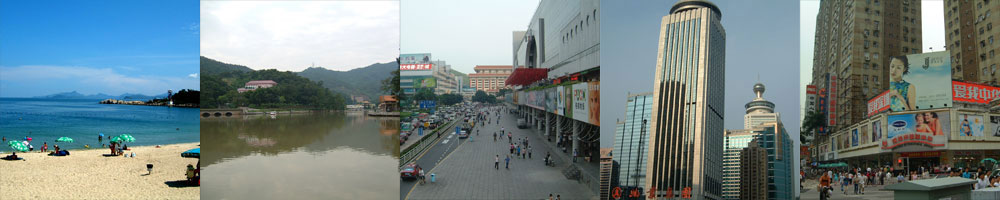
Guangdong Province

SAR - Hong Kong
For Russian or English tour guide in Hong Kong and mainland China
Kivrin Alexander - Киврин Александр
Photo's of Hong Kong
Hong Kong Shopping in Hong Kong Sai Kung District Victoria Harbor


Both featured images above are from Wikipedia
Hong Kong Architecture
BOCHK - 中国银行(香港)有限公司 HSBC Lippo Centre Victoria Peak - 太平山 or 扯旗山 International Finance Centre - 國際金融中心

Mixed Images of Hong Kong
Fireworks RTHK Radio First Ferry NWFF 新世界第一渡輪服務有限公司 Star Cruises Star Ferry Kai Tak Airport
Shanghai
Shanghai [66] Jade Buddha Temple [178] Jade Buddha Temple Shop [239] Yu Yang Garden [298] Lishui Road and Yuyuan Market [59] Jiujiaochang Road [70] Xintiandi

1 Zhongshan Road [19] 2 Zhongshan Road [15] 3 Zhongshan Road [6] 5 Zhongshan Road [5] 6 Zhongshan Road [7]
7 Zhongshan Road [10] 9 Zhongshan Road [11] 12 Zhongshan Road [20] 13 Zhongshan Road [11] 14 Zhongshan Road [4]
15 Zhongshan Road [7] 16 Zhongshan Road [3] 17 Zhongshan Road [9] 18 Zhongshan Road [3] 19 Zhongshan Road [8]
20 Zhongshan Road [10] 23 Zhongshan Road [10] 24 Zhongshan Road [6] 26 Zhongshan Road [3] 27 Zhongshan Road [12]
29 Zhongshan Road [2] 32 Zhongshan Road [6] Bei Suzhou Road [8] Gutzlaff Signal Tower [10] Huangpu Park [15]
Oriental Pearl Tower [46] Astor House Hotel (礼查饭店) or Pujiang Hotel (浦江饭店) [10] Huangpu Road [22]
2 Beijing Road [4] Fangbang Road [104] Waibaidu Bridge [17]
Mixed Images
Photos can be used for non commercial purposes.
If used for web site development please back link back to us.
Stock Photos uploaded to Wikipedia by myself
are issued under CC-BY-SA license terms
http://en.wikipedia.org/wiki/CC-BY-SA
China
China - traditional: 中國 simplified: 中国
China (traditional Chinese: 中國; simplified Chinese: 中国; Tongyong Pinyin: Jhongguó; Hanyu Pinyin: zh-zhongguo.ogg Zhōngguó (help·info); Wade-Giles (Mandarin): Chung¹kuo²) is a cultural region, an ancient civilization, and, depending on perspective, a national or multinational entity extending over a large area in East Asia.
The last Chinese Civil War (with major combat ending in 1949) has resulted in two political entities using the name China:
China has one of the world's oldest people and continuous civilizations, consisting of states and cultures dating back more than six millennia. It has the world's longest continuously used written language system, and is the source of many major inventions, such as what the British scholar and biochemist Joseph Needham called the 'four great inventions of Ancient China': paper, the compass, gunpowder, and printing. Historically, China's cultural sphere has extended across East Asia as a whole, with Chinese religion, customs, and writing systems being adopted to varying degrees by neighbors such as Japan, Korea and Vietnam. The first evidence of human presence in the region was found at the Zhoukoudian cave and is one of the first known specimens of Homo erectus, now commonly known as the Peking Man, estimated to have lived approximately from 300,000 to 550,000 years ago. Noticeably, it is also known that the Peking Man was able to control and use fire.
Etymology
The traditional (top) and simplified (bottom) characters for 'China' in Chinese. The first character means 'middle' and the second character means 'country' or 'kingdom.'
China
The first recorded use of the word 'China' is dated 1555. It is derived from Cin, a name for China popularized by Marco Polo. This word was derived via Persian from Sanskrit Cīnā and ultimately from Qin Kingdom (秦) (778BC-207BC), the Westernmost of the Chinese kingdoms during the Zhou Dynasty.
China was historically referred to as Sina (hence 'Sino-'), Sinae, Cathay, or Ceres by Western nations. The official name of China changed with each dynasty. The common name is Zhōngguó (中國), which is usually translated as 'Middle Kingdom.'
China is known as 'Zhōngguó' in Mandarin and pinyin (中國 in traditional chinese or 中国 in simplified chinese). The character zhōng means 'middle' or central; the letter, guó, means land, kingdom or country. An appropriate English translation would be 'middle kingdom'.
The name 'Zhōngguó' first appeared in the Classic of History (6th century BCE), and was used to refer to the late Zhou Dynasty, as they believed that they were the 'center of civilization,' while peoples in the four cardinals were called Eastern Yi, Southern Man, Western Rong and Northern Di respectively. Some texts imply that 'Zhōngguó' was originally meant to refer to the capital of the sovereign, to differ from the capital of his vassals. The use of 'Zhōngguó' implied a claim of political legitimacy, and 'Zhōngguó' was often used by states who saw themselves as the sole legitimate successor to previous Chinese dynasties; for example, in the era of the Southern Song Dynasty, both the Jin Dynasty and the Southern Song state claimed to be 'Zhōngguó.'
'Zhōngguó' came to official use as an abbreviation for the Republic of China (Zhonghua Minguo) after the government's establishment in 1912. Since the People's Republic of China, established in 1949, now controls the great majority of the area encompassed within the traditional concept of 'China', the People's Republic is the political unit most commonly identified with the abbreviated name 'Zhōngguó'.
History
Ancient China was one of the earliest centers of human civilization. Chinese civilization was also one of the few to invent writing independently, the others being Mesopotamia, the Indus Valley Civilization, the Mayan civilization, the Minoan Civilization of ancient Greece, and Ancient Egypt.
Prehistory
Archaeological evidence suggests that the earliest hominids in China date from 2.24 million to 250,000 years ago. A cave in Zhoukoudian (near present-day Beijing) has fossils dated at somewhere between 300,000 to 550,000 years. The fossils are of Peking Man, an example of Homo erectus who used fire.
The earliest evidence of a fully modern human in China comes from Liujiang County, Guangxi, where a cranium has been found and dated to approximately 67,000 years ago. Although much controversy persists over the dating of the Liujiang remains, a partial skeleton from Minatogawa in Okinawa, Japan has been dated to 18,250 ± 650 to 16,600 ± 300 years ago, so modern humans must have reached China before that time.
Dynastic rule
Chinese tradition names the first dynasty Xia, but it was considered mythical until scientific excavations found early bronze-age sites at Erlitou in Henan Province. Archaeologists have since uncovered urban sites, bronze implements, and tombs in locations cited as Xia's in ancient historical texts, but it is impossible to verify that these remains are of the Xia without written records from the period.
Some of the thousands of life-size Terracotta Warriors of the Qin Dynasty, ca. 210 BCE.
The second dynasty, the loosely feudal Shang, settled along the Yellow River in eastern China from the 18th to the 12th century BCE. They were invaded from the west by the Zhou, who ruled from the 12th to the 5th century BCE until their centralized authority was slowly eroded by neighboring warlords. Many strong, independent states continually waged war with each other in the Spring and Autumn period, only occasionally deferring to the Zhou king.
The first unified Chinese state was established by the Qin Dynasty in 221 BCE, when the office of the Emperor was set up and the Chinese language was forcibly standardized. This state did not last long, as its legalist policies soon led to widespread rebellion.
The subsequent Han Dynasty ruled China between 206 BCE and 220 CE, and created a lasting Han cultural identity among its populace that would last to the present day. The Han Dynasty expanded the empire's territory considerably with military campaigns reaching Korea, Vietnam, Mongolia and Central Asia, and also helped establish the Silk Road in Central Asia.
After Han's collapse, another period of disunion followed, including the highly chivalric period of the Three Kingdoms. Independent Chinese states of this period also opened diplomatic relations with Japan, introducing the Chinese writing system there. In 580 CE, China was reunited under the Sui. However, the Sui Dynasty was short-lived after a failure in the Goguryeo-Sui Wars (598–614) weakened it.
A 10th-11th century Longquan stoneware vase from Zhejiang province, during the Song Dynasty.
Under the succeeding Tang and Song dynasties, Chinese technology and culture reached its zenith. The Song dynasty was the first government in world history to issue paper money and the first Chinese polity to establish a permanent standing navy. Between the 10th and 11th centuries, the population of China doubled in size. This growth came about through expanded rice cultivation in central and southern China, and the production of abundant food surpluses. Within its borders, the Northern Song Dynasty had a population of some 100 million people. The Song Dynasty was a culturally rich period in China for the arts, philosophy, and social life. Landscape art and portrait paintings were brought to new levels of maturity and complexity after the Tang Dynasty, and social elites gathered to view art, share their own, and make trades of precious artworks. Philosophers such as Cheng Yi and Chu Hsi reinvigorated Confucianism with new commentary, infused Buddhist ideals, and emphasized a new organization of classic texts that brought about the core doctrine of Neo-Confucianism.
In 1271, the Mongol leader and the fifth Khagan of the Mongol Empire Kublai Khan established the Yuan Dynasty, with the last remnant of the Song Dynasty falling to the Yuan in 1279. A peasant named Zhu Yuanzhang overthrew the Mongols in 1368 and founded the Ming Dynasty. Ming Dynasty thinkers such as Wang Yangming would further critique and expand Neo-Confucianism with ideas of individualism and innate morality that would have tremendous impact on later Japanese thought. Chosun Korea also became a nominal vassal state of Ming China and adopted much of its Neo-Confucian bureaucratic structure. China's capital was moved from Nanjing to Beijing during the early Ming Dynasty. The Ming fell to the Manchus in 1644, who then established the Qing Dynasty. An estimated 25 million people died during the Manchu conquest of the Ming Dynasty (1616–1644).
The Qing Dynasty, which lasted until 1912, was the last dynasty in China. In the 19th century the Qing Dynasty adopted a defensive posture towards European imperialism, even though it engaged in imperialistic expansion into Central Asia itself. At this time China awoke to the significance of the rest of the world, in particular the West. As China opened up to foreign trade and missionary activity, opium produced by British India was forced onto Qing China. Two Opium Wars with Britain weakened the Emperor's control.
A corner tower of the Forbidden City at night; the palace served as the residence for the imperial family since the reign of the Yongle Emperor of the Ming Dynasty in the 15th century, up until the fall of the Qing Dynasty in 1912.
One result was the Taiping Civil War, which lasted from 1851 to 1862. It was led by Hong Xiuquan, who was partly influenced by an idiosyncratic interpretation of Christianity. Hong believed himself to be the son of God and the younger brother of Jesus. Although the Qing forces were eventually victorious, the civil war was one of the bloodiest in human history, costing at least twenty million lives (more than the total number of fatalities in the First World War), with some estimates of up to two hundred million. Other costly rebellions followed the Taiping Rebellion, such as the Punti-Hakka Clan Wars (1855–1867), Nien Rebellion (1851–1868), Muslim Rebellion (1862–1877), Panthay Rebellion (1856–1873) and the Miao Rebellion (1854–1873). These rebellions resulted in an estimated loss of several million lives each and led to disastrous results for the economy and the countryside. The flow of British opium hastened the empire's decline.
While China was wracked by continuous war, Meiji Japan succeeded in rapidly modernizing its military and set its sights on Korea and Manchuria. Influenced by Japan, Korea declared independence from Qing China's suzerainty in 1894, leading to the First Sino-Japanese War, which resulted in the Qing Dynasty's cession of both Korea and Taiwan to Japan. Following these series of defeats, a reform plan for the empire to become a modern Meiji-style constitutional monarchy was drafted by the Emperor Guangxu in 1898, but was opposed and stopped by the Empress Dowager Cixi, who placed Emperor Guangxu under house arrest in a coup d'état. Further destruction followed the ill-fated 1900 Boxer Rebellion against westerners in Beijing. By the early 20th century, mass civil disorder had begun, and calls for reform and revolution were heard across the country. The 38-year-old Emperor Guangxu died under house arrest on 14 November 1908, suspiciously just a day before Cixi's own death. With the throne empty, he was succeeded by Cixi's handpicked heir, his two year old nephew Puyi, who became the Xuantong Emperor, the last Chinese emperor. Guangxu's consort, who became the Empress Dowager Longyu, signed the abdication decree as regent in 1912, ending two thousand years of imperial rule in China. She died, childless, in 1913.
Republic of China (1912–1949)
On 1 January 1912, the Republic of China was established, heralding the end of the Qing Dynasty. Sun Yat-sen of the Kuomintang (the KMT or Nationalist Party) was proclaimed provisional president of the republic. However, the presidency was later given to Yuan Shikai, a former Qing general, who had ensured the defection of the entire Beiyang Army from the Qing Empire to the revolution. In 1915, Yuan proclaimed himself Emperor of China but was forced to abdicate and return the state to a republic when he realized it was an unpopular move, not only with the population but also with his own Beiyang Army and its commanders.
After Yuan Shikai's death in 1916, China was politically fragmented, with an internationally recognized but virtually powerless national government seated in Peking (modern day Beijing). Warlords in various regions exercised actual control over their respective territories. In the late 1920s, the Kuomintang, under Chiang Kai-shek, was able to reunify the country under its own control, moving the nation's capital to Nanking (modern day Nanjing) and implementing 'political tutelage', an intermediate stage of political development outlined in Sun Yat-sen's program for transforming China into a modern, democratic state. Effectively, political tutelage meant one-party rule by the Kuomintang.
The Sino-Japanese War of 1937–1945 (part of World War II) forced an uneasy alliance between the Nationalists and the Communists as well as causing around 10 million Chinese civilian deaths. With the surrender of Japan in 1945, China emerged victorious but financially drained. The continued distrust between the Nationalists and the Communists led to the resumption of the Chinese Civil War. In 1947, constitutional rule was established, but because of the ongoing Civil War many provisions of the ROC constitution were never implemented on the mainland.
People's Republic of China and Republic of China (1949–present)
After its victory in the Chinese Civil War, the Communist Party of China (CCP) led by Mao Zedong gained control of most of Mainland China. On 1 October 1949, they established the People's Republic of China as a Socialist State headed by a 'Democratic Dictatorship' with the CCP as the only legal political party, thus, laying claim as the successor state of the ROC. The central government of the Chinese Nationalist Party led by Chiang Kai-shek was forced to retreat to the island of Taiwan that it had occupied at the end of World War II and moved the ROC government there. Major armed hostilities ceased in 1950 but no peace treaty has been signed.
Beginning in the late 1970s, the Republic of China began the implementation of full, multi-party, representative democracy in the territories still under its control (Taiwan, and a number of smaller islands including Quemoy and Matsu). Today, the ROC has active political participation by all sectors of society. The main cleavage in ROC politics is the issue of eventual political unification with the Chinese mainland vs. formal independence of Taiwan.
After the Chinese Civil War, mainland China underwent a series of disruptive socioeconomic movements starting in the late 1950s with the Great Leap Forward and continuing in the 1960s with the Cultural Revolution that left much of its education system and economy in shambles. With the death of its first generation Communist Party leaders such as Mao Zedong and Zhou Enlai, the PRC began implementing a series of political and economic reforms advocated by Deng Xiaoping that eventually formed the foundation for mainland China's rapid economic development starting in the 1990s.
Post-1978 reforms on the mainland have led to some relaxation of control over many areas of society. However, the PRC government still has almost absolute control over politics, and it continually seeks to eradicate what it perceives as threats to the social, political and economic stability of the country. Examples include the fight against terrorism, jailing of political opponents and journalists, custody regulation of the press, regulation of religion, and suppression of independence/secessionist movements. In 1989, the student protests at Tiananmen Square were violently put to an end by the Chinese military after 15 days of martial law. In 1997, Hong Kong was returned to the PRC by the United Kingdom, and in 1999, Macau was returned by Portugal.
Today, mainland China is administered by the People's Republic of China—a one-party state under the leadership of the Chinese Communist Party—while the island of Taiwan and surrounding islands are administered by the Republic of China—a democratic multi-party state. After the founding of the People's Republic in 1949, both states claimed to be the sole legitimate ruler of all of 'China'. After the Kuomintang retreat to Taiwan in 1949, the Republic of China had maintained official diplomatic relations with most states around the world, but by the 1970s, a shift had occurred in international diplomatic circles and the People's Republic of China gained the upper hand in international diplomatic relations and recognition count. In 1971, under resolution 2758, the representatives of Chiang Kai-shek to the United Nations were expelled from the intergovernmental organization. With the expulsion of the Chiang Kai-shek's representatives, and effectively the Republic of China, the representatives of the People's Republic of China were invited to assume China's seat on the UN Security Council, the UN General Assembly and other United Nations councils and agencies. Later attempts by the Republic of China to rejoin the UN have either been blocked by the People's Republic of China, which has veto power on the UN Security Council, or rejected by the United Nations Secretariat or a United Nations General Assembly committee responsible for the General Assembly's agenda.
Since the relocation of its capital to Taiwan, the Republic of China has not formally renounced its claim to all of China, nor has it changed its official maps, which includes the mainland and Mongolia. Following the introduction to full democracy, and the electoral victory of the DPP's Chen Shui-bian in the presidential elections, the ROC had adopted a policy of separating the state's identity from 'China', while moving towards identifying the state as 'Taiwan'. However, the ROC has not made any formal moves to change the name, flag, or national anthem of the state to reflect a Taiwanese identity due to the lack of consensus within Taiwan, pressure from the United States and the fear of invasion or military action from the People's Republic of China against the island. The Republic of China during the DPP years did not actively pursue its claims on mainland China or Mongolia, however following the electoral victory of the KMT's Ma Ying-jeou as president, the claim to mainland China has been reinstated. The People's Republic of China claims to have succeeded the Republic of China as the sole legitimate governing authority of all of China, which, from the official viewpoint of the People's Republic of China, includes the island of Taiwan. Over the last 50 years, both the Republic of China and the People's Republic of China have used diplomatic and economic means to compete for recognition in the international arena. Because most international, intergovernmental organizations observe the One-China policy of the People's Republic of China, the PRC has been able to pressure organizations, such as the World Health Organization and the International Olympic Committee, to refuse to officially recognize the Republic of China. Due to the One-China policy, states around the world are pressured to refuse, or to cut off, diplomatic relations with the Republic of China. As a result, 23 U.N. member states currently maintain official diplomatic relations with the Republic of China, while the vast majority of U.N. member states maintain official diplomatic relations with the People's Republic of China.
Territory and environment
Top-level political divisions of China have altered as administrations changed. Top levels included circuits and provinces. Below that, there have been prefectures, subprefectures, departments, commanderies, districts, and counties. Recent divisions also include prefecture-level cities, county-level cities, towns and townships.
Most Chinese dynasties were based in the historical heartlands of China, known as China proper. Various dynasties also expanded into peripheral territories like Inner Mongolia, Manchuria, Xinjiang, and Tibet. The Manchu-established Qing Dynasty and its successors, the ROC and the PRC, incorporated these territories into the Chinese empire.
Geography and climate
China ranges from mostly plateaus and mountains in the west to lower lands in the east. Principal rivers flow from west to east, including the Yangtze (central), the Huang He (Yellow river, north-central), and the Amur (northeast), and sometimes toward the south (including the Pearl River, Mekong River, and Brahmaputra), with most Chinese rivers emptying into the Pacific Ocean.
In the east, along the shores of the Yellow Sea and the East China Sea there are extensive and densely populated alluvial plains. On the edges of the Inner Mongolian plateau in the north, grasslands can be seen. Southern China is dominated by hills and low mountain ranges. In the central-east are the deltas of China's two major rivers, the Huang He and Yangtze River. Most of China's arable lands lie along these rivers, and they were the centers of China's major ancient civilizations. Other major rivers include the Pearl River, Mekong, Brahmaputra and Amur. Yunnan Province is considered a part of the Greater Mekong Subregion, which also includes Myanmar, Laos, Thailand, Cambodia, and Vietnam.
Main geographic features and regions of China.
In the west, the north has a great alluvial plain, and the south has a vast calcareous tableland traversed by hill ranges of moderate elevation, and the Himalayas, containing Earth's highest point, Mount Everest. The northwest also has high plateaus with more arid desert landscapes such as the Takla-Makan and the Gobi Desert, which has been expanding. During many dynasties, the southwestern border of China has been the high mountains and deep valleys of Yunnan, which separate modern China from Burma, Laos and Vietnam.
The Paleozoic formations of China, excepting only the upper part of the Carboniferous system, are marine, while the Mesozoic and Tertiary deposits are estuarine and freshwater, or else of terrestrial origin. Groups of volcanic cones occur in the Great Plain of north China. In the Liaodong and Shandong Peninsulas, there are basaltic plateaus.
The climate of China varies greatly. The northern zone (containing Beijing) has summer daytime temperatures of more than 30 degrees Celsius and winters of Arctic severity. The central zone (containing Shanghai) has a temperate continental climate with very hot summers and cold winters. The southern zone (containing Guangzhou) has a subtropical climate with very hot summers and mild winters.
Due to a prolonged drought and poor agricultural practices, dust storms have become usual in the spring in China. Dust has blown to southern China and Taiwan, and has reached the West Coast of the United States. Water, erosion, and pollution control have become important issues in China's relations with other countries.
Culture
Confucianism was the official philosophy throughout most of Imperial China's history, and mastery of Confucian texts was the primary criterion for entry into the imperial bureaucracy. China's traditional values were derived from various versions of Confucianism. A number of more authoritarian strains of thought have also been influential, such as Legalism. There was often conflict between the philosophies, e.g. the Song Dynasty Neo-Confucians believed Legalism departed from the original spirit of Confucianism. Examinations and a culture of merit remain greatly valued in China today. In recent years, a number of New Confucians (not to be confused with Neo-Confucianism) have advocated that democratic ideals and human rights are quite compatible with traditional Confucian 'Asian values'.
With the rise of Western economic and military power beginning in the mid-19th century, non-Chinese systems of social and political organization gained adherents in China. Some of these would-be reformers totally rejected China's cultural legacy, while others sought to combine the strengths of Chinese and Western cultures. In essence, the history of 20th-century China is one of experimentation with new systems of social, political, and economic organization that would allow for the reintegration of the nation in the wake of dynastic collapse.
Arts, scholarship, and literature
Chinese characters have had many variants and styles throughout Chinese history. Tens of thousands of ancient written documents are still extant, from oracle bones to Qing edicts. This literary emphasis affected the general perception of cultural refinement in China, e.g. the view that calligraphy was a higher art form than painting or drama. Manuscripts of the Classics and religious texts (mainly Confucian, Taoist, and Buddhist) were handwritten by ink brush. Calligraphy later became commercialized, and works by famous artists became prized possessions. Chinese literature has a long past; the earliest classic work in Chinese, the I Ching or 'Book of Changes' dates to around 1000 BCE. A flourishing of philosophy during the Warring States Period produced such noteworthy works as Confucius's Analects and Laozi's Tao Te Ching. (See also: the Chinese classics.) Dynastic histories were often written, beginning with Sima Qian's seminal Records of the Historian, which was written from 109 BCE to 91 BCE. The Tang Dynasty witnessed a poetic flowering, while the Four Great Classical Novels of Chinese literature were written during the Ming and Qing Dynasties. Printmaking in the form of movable type was developed during the Song Dynasty. Academies of scholars sponsored by the empire were formed to comment on the classics in both printed and handwritten form. Royalty frequently participated in these discussions as well. The Song Dynasty was also a period of great scientific literature, and saw the creation of works such as Su Song's Xin Yixiang Fayao and Shen Kuo's Dream Pool Essays. There were also enormous works of historiography and large encyclopedias, such as Sima Guang's Zizhi Tongjian of 1084 CE or the Four Great Books of Song fully compiled and edited by the 11th century.For centuries, religious and social advancement in China could be achieved through high performance on the imperial examinations. This led to the creation of a meritocracy, although success was available only to males who could afford test preparation. Imperial examinations required applicants to write essays and demonstrate mastery of the Confucian classics. Those who passed the highest level of the exam became elite scholar-officials known as jinshi, a highly esteemed socio-economic position. Chinese philosophers, writers and poets were highly respected and played key roles in preserving and promoting the culture of the empire. Some classical scholars, however, were noted for their daring depictions of the lives of the common people, often to the displeasure of authorities.The Chinese invented numerous musical instruments, such as the zheng (zither with movable bridges), qin (bridgeless zither), sheng (free reed mouth organ), and xiao (vertical flute) and adopted and developed others such the erhu (alto fiddle or bowed lute) and pipa (pear-shaped plucked lute), many of which later spread throughout East Asia and Southeast Asia, particularly to Japan, Korea, and Vietnam.
Demography
Hundreds of ethnic groups have existed in China throughout its history. The largest ethnic group in China by far is the Han. This group, however, is internally diverse and can be further divided into smaller ethnic groups that share similar traits.
Over the last three millennia, many previously distinct ethnic groups in China have been Sinicized into a Han identity, which over time dramatically expanded the size of the Han population. However, these assimilations were usually incomplete, and vestiges of indigenous language and culture still often remain in various regions of China. Because of this, many within the Han identity have maintained distinct linguistic and cultural traditions while still identifying as Han. Several ethnicities have also dramatically shaped Han culture, e.g. the Manchurian clothing called the qipao became the new 'Chinese' fashion after the 17th century, replacing earlier Han styles of clothing such as the Hanfu. The modern term Chinese nation (Zhonghua Minzu) is now used to describe a notion of a Chinese nationality that transcends ethnic divisions.
Languages
Most languages in China belong to the Sino-Tibetan language family, spoken by 29 ethnicities. There are also several major dialects within the Chinese language itself. The most spoken dialects are Mandarin (spoken by over 70% of the population), Wu, Yue (Cantonese), Min, Xiang, Gan, and Hakka. Non-Sinitic languages spoken widely by ethnic minorities include Zhuang (Thai), Mongolian, Tibetan, Uyghur (Turkic), Hmong and Korean.
Classical Chinese was the written standard in China for thousands of years, and allowed for written communication between speakers of various unintelligible languages and dialects in China. Vernacular Chinese or baihua is the written standard based on the Mandarin dialect first popularized in Ming dynasty novels, and was adopted (with significant modifications) during the early 20th century as the national vernacular. Classical Chinese is still part of the high school curriculum and is thus intelligible to some degree to many Chinese.
Religion
The 'official' orthodox faith system held by most dynasties of China since at least the Shang Dynasty (1766 BC) until the overthrow of the last dynasty (1911 AD) centered on the worship of Shangdi ('Supreme God') or 'Heaven' as an omnipotent force. This faith system pre-dated the development of Confucianism and Taoism and the introduction of Buddhism and Christianity. It has features of monotheism in that Heaven is seen as an omnipotent entity, endowed with personality but no corporeal form. From the writings of Confucius, we find that Confucius himself believed that Heaven cannot be deceived, Heaven guides people's lives and maintains a personal relationship with them, and that Heaven gives tasks for people to fulfill in order to teach them righteousness (yi, 義). However, this faith system was not truly monotheistic since other lesser gods and spirits, which varied with locality, were also worshiped along with Shangdi. Still, variants such as Mohism approached high monotheism, teaching that the function of lesser gods and ancestral spirits is merely to carry out the will of Shangdi, which included observing 'universal love' (jian'ai, 兼爱) and shunning fatalism. Worship of Shangdi and Heaven in ancient China includes the erection of shrines, the last and greatest being the Temple of Heaven in Beijing, and the offering of prayers. The ruler of China in every Chinese dynasty would perform annual sacrificial rituals to Heaven, usually by slaughtering a bull as sacrifice. Although its popularity gradually diminished after the advent of Taoism and Buddhism, among other religions, its concepts remained in use throughout the pre-modern period and have been incorporated in later religions in China, including terminology used in Chinese Christianity.
Taoism is an indigenous religion of China and its beginnings are traditionally traced to the composition of Lao Zi's Tao Te Ching (The Book of Tao and Its Virtues) or to seminal works by Zhang Daoling. The philosophy of Taoism is centered on 'the way'; an understanding of which can be likened to recognizing the true nature of the universe. Taoism in its unorganized form is also considered a folk religion of China. More secular derivatives of Taoist ideas include Feng Shui, Sun Tzu's Art of War, and acupuncture.
Photo: A Chinese Tang Dynasty (618–907) sculpture of the Buddha seated in meditation.
Buddhism in China was first introduced from India and Central Asia during the Han dynasty and became very popular among Chinese of all walks of life, embraced particularly by commoners, and sponsored by emperors in certain dynasties. Mahayana (Dacheng, 大乘) is the predominant form of Buddhism practiced in China, where it was largely Sinicized and later exported to Korea, Japan and Vietnam. Some subsets of Mahayana popular in China include Pure Land (Amidism) and Zen. Buddhism is the largest organized faith in China and the country has the most Buddhist adherents in the world. Many Chinese, however, identify themselves as both Taoist and Buddhist at the same time.
Ancestor worship is a major religious theme shared among all Chinese religions. Traditional Chinese culture, Taoism, Confucianism, and Chinese Buddhism all value filial piety, or a love and respect for one's parents and ancestors, as one of the most important virtues. Chinese people generally offer prayers and food for their ancestors, light incense and candles, and burn offerings of Joss paper. These activities are typically conducted at the site of ancestral graves or tombs, at an ancestral temple, or at a household shrine.
Christianity in China has developed since at least the 7th century AD with the introduction of the Assyrian Church of the East. Christianity began to make significant inroads in China after the 16th century through Jesuit and later Protestant missionaries. The Taiping Rebellion was influenced to some degree by Christian teachings, and the Boxer Rebellion was in part a reaction against Christianity in China.
Islam in China dates to a mission in 651, eighteen years after Muhammad's death. Muslims came to China for trade, dominating the import/export industry during the Song Dynasty. They became influential in government circles, including Zheng He, Lan Yu and Yeheidie'erding, was one of the people who helped to construct the Yuan Dynasty's capital, Khanbaliq. Nanjing became an important center of Islamic study. The Qing Dynasty waged war and genocide against Muslims in the Dungan revolt and Panthay rebellion.
Judaism in China dates to as early as the 7th or 8th century CE. In the first half of the 20th century, many Jews arrived in Shanghai and Hong Kong during those cities' periods of economic expansion, seeking refuge from the Holocaust. Shanghai was notable for its volume of Jewish refugees, as it was the only port in the world to accept them without an entry visa.
Sports and recreation
Many historians believe that football (soccer) originated in China, where a form of the sport may have appeared around 1000 CE. Other popular sports include martial arts, table tennis, badminton, and more recently, golf. Basketball is now popular among young people in urban centers.
There are also many traditional sports. Chinese dragon boat racing occurs during the Duan Wu festival. In Inner Mongolia, Mongolian-style wrestling and horse racing are popular. In Tibet, archery and equestrian sports are part of traditional festivals.
Physical fitness is highly regarded. It is common for the elderly to practice Tai Chi Chuan and qigong in parks.
Board games such as International Chess, Go (Weiqi), and Xiangqi (Chinese chess) are also common and have organized formal competitions.
The capital city of the People's Republic of China, Beijing, hosted the 2008 Olympic Games, a major international sporting event.
Science and technology
Among the technological accomplishments of ancient China were paper (not papyrus) and papermaking, woodblock printing and movable type printing, the early lodestone and needle compass, gunpowder, toilet paper, early seismological detectors, matches, pound locks, the double-action piston pump, blast furnace and cast iron, the iron plough, the multi-tube seed drill, the suspension bridge, natural gas as fuel, the escapement mechanism for clocks, the differential gear for the South Pointing Chariot, the hydraulic-powered armillary sphere, the hydraulic-powered trip hammer, the mechanical chain drive, the mechanical belt drive, the raised-relief map, the propeller, the crossbow, the cannon, the rocket, the multistage rocket, etc. Chinese astronomers were among the first to record observations of a supernova. The work of the astronomer Shen Kuo (1031–1095) alone was most impressive, as he theorized that the sun and moon were spherical, corrected the position of the polestar with his improved sighting tube, discovered the concept of true north, wrote of planetary motions such as retrogradation, and compared the orbital paths of the planets to points on the shape of a rotating willow leaf. With evidence for them, he also postulated geological theories for the processes of land formation in geomorphology and climate change in paleoclimatology. Other important astronomers included Gan De, Shi Shen, Zhang Heng, Yi Xing, Zhang Sixun, Su Song, Guo Shoujing, and Xu Guangqi. Chinese mathematics evolved independently of Greek mathematics and is therefore of great interest in the history of mathematics. The Chinese were also keen on documenting all of their technological achievements, such as in the Tiangong Kaiwu encyclopedia written by Song Yingxing (1587–1666).
China's science and technology had fallen behind that of Europe by the 17th century. Political, social and cultural reasons have been given for this, although recent historians focus more on economic causes, such as the high level equilibrium trap. Since the PRC's market reforms, China has become better connected to the global economy and is placing greater emphasis on science and technology.
http://en.wikipedia.org/wiki/China
People's Republic of China (PRC)
中华人民共和国 or 中華人民共和國
The People's Republic of China (PRC) (simplified Chinese: 中华人民共和国; traditional Chinese: 中華人民共和國; pinyin: Zhōnghuá Rénmín Gònghéguó Zh-Zhonghua renmin gongheguo.ogg listen (help·info)), commonly known as China or mainland China, is the largest country in East Asia and the most populous in the world with over 1.29 billion people, approximately a fifth of the world's population. It is a socialist republic ruled by the Communist Party of China under a single-party system and has jurisdiction over twenty-two provinces, five autonomous regions, four municipalities, and two largely self-governing Special Administrative Regions. China's capital is Beijing.
At 9.6 million square kilometres, the People's Republic of China is the world's third or fourth largest country by total area, and fourth largest by land area. Its landscape is diverse with forest steppes and deserts (the Gobi and Taklamakan) in the dry north near Mongolia and Russia's Siberia, and subtropical forests in the wet south close to Vietnam, Laos, and Myanmar. The terrain in the west is rugged and high altitude, with the Himalayas and the Tian Shan mountain ranges forming China's natural borders with India and Central Asia. In contrast, China's eastern seaboard is low-lying and has a 14,500-kilometre long coastline bounded on the southeast by the South China Sea and on the east by the East China Sea beyond which lies Korea and Japan.
Ancient Chinese civilization—one of the world's earliest—flourished in the fertile basin of the Yellow River which flows through the North China Plain. For 4,000 years, China's political system was based on hereditary monarchies (also known as dynasties). The first of these dynasties was the Xia but it was later the Qin Dynasty who first unified China in 221 BC. The last dynasty, the Qing, ended in 1911 with the founding of the Republic of China (ROC) by the Nationalist Kuomintang (KMT). The first half of the 20th century saw China plunged into a period of disunity and civil wars that divided the country into two main political camps – the Kuomintang (KMT) and the Communists. Major hostilities ended in 1949, when the People's Republic of China (PRC) was established in mainland China by the victorious Communists. The KMT-led Republic of China government retreated to Taipei, its jurisdiction now limited to Taiwan and several outlying islands. As of today, the PRC is still involved in disputes with the ROC over issues of sovereignty and the political status of Taiwan.
China's importance in the world today is reflected through its role as the world's third largest economy nominally (or second largest by PPP) and a permanent member of the UN Security Council as well as in other multilateral organizations including the WTO, APEC, East Asia Summit, and Shanghai Cooperation Organization. In addition, it is a nuclear state and has the world's largest standing army with the second largest defense budget. Since the introduction of market-based economic reforms in 1978, China has become one of the world's fastest growing economies and the world's second largest exporter and the third largest importer of goods. Rapid industrialization has reduced its poverty rate from 53% in 1981 to 8% in 2001. However, the PRC is now faced with a number of other problems including a rapidly aging population due to the one-child policy, a widening rural-urban income gap, and environmental degradation.
History
Major combat in the Chinese Civil War ended in 1949 with the Communist Party of China in control of the mainland, and the Kuomintang (KMT) retreating to Taiwan. On 1 October 1949, Mao Zedong proclaimed the People's Republic of China. Red China was a frequent appellation for the PRC (generally within the Western Bloc) used from the time of Communist ascendance until the mid-late 1970s with the improvement of relations between China and the West.
Following a series of dramatic economic failures caused by the Great Leap Forward, Mao stepped down from his position as chairman in 1959, with Liu Shaoqi as successor. Mao still had much influence over the Party, but was removed from day-to-day management of economic affairs, which came under the control of Liu Shaoqi and Deng Xiaoping.
In 1966, Mao and his allies launched the Cultural Revolution, which would last until Mao's death a decade later. The Cultural Revolution, motivated by power struggles within the Party and a fear of the Soviet Union, led to a major upheaval in Chinese society. In 1972, at the peak of the Sino-Soviet split, Mao and Zhou Enlai met Richard Nixon in Beijing to establish relations with the United States. In the same year, the PRC was admitted to the United Nations, replacing the Republic of China for China's membership of the United Nations, and permanent membership of the Security Council.
After Mao's death in 1976 and the arrest of the Gang of Four, blamed for the excesses of the Cultural Revolution, Deng Xiaoping quickly wrested power from Mao's anointed successor Hua Guofeng. Although Deng never became the head of the Party or State himself, his influence within the Party led the country to economic reforms of significant magnitude. The Communist Party subsequently loosened governmental control over citizens' personal lives and the communes were disbanded with many peasants receiving multiple land leases, which greatly increased incentives and agricultural production. This turn of events marked China's transition from a planned economy to a mixed economy with an increasingly open market environment, a system termed by some 'market socialism'. The PRC adopted its current constitution on 4 December 1982.
In 1989, the death of pro-reform official, Hu Yaobang, helped to spark the Tiananmen Square protests of 1989, during which students and others campaigned for several months for more democratic rights and freedom of speech. However, they were eventually put down on 4 June when PLA troops and vehicles entered and forcibly cleared the square, resulting in numerous casualties. This event was widely reported and famously videotaped, which brought worldwide condemnation and sanctions against the government.
President Jiang Zemin and Premier Zhu Rongji, both former mayors of Shanghai, led post-Tiananmen PRC in the 1990s. Under Jiang Zemin's ten years of administration, the PRC's economic performance pulled an estimated 150 million peasants out of poverty and sustained an average annual GDP growth rate of 11.2%. The country formally joined the World Trade Organization in 2001.
Although the PRC needs economic growth to spur its development, the government has begun to worry that rapid economic growth has negatively impacted the country's resources and environment. Another concern is that certain sectors of society are not sufficiently benefiting from the PRC's economic development. As a result, under current President Hu Jintao and Premier Wen Jiabao, the PRC has initiated policies to address these issues of equitable distribution of resources, but the outcome remains to be seen. For much of the PRC's population, living standards have seen extremely large improvements, and freedom continues to expand, but political controls remain tight.
Politics
At the time of the global financial crisis of 2008, China had come to occupy a position as a major source of financing for public and private overseas borrowing by the United States, occupying a position of trust, support, and importance to the United States in contrast to a situation of public apprehension and, at times, antagonism in the United States towards China's acquisition of status as a major power in other respects. The PRC is regarded by many political scientists as one of the last five Communist states (along with Vietnam, North Korea, Laos and Cuba), but simple characterizations of PRC's political structure since the 1980s are no longer possible. The PRC government has been variously described as communist and socialist, but also as authoritarian, with heavy restrictions remaining in many areas, most notably on the Internet, the press, freedom of assembly, reproductive rights, and freedom of religion. However, compared to its closed-door policies until the mid-1970s, the liberalization of the PRC is such that the administrative climate is much less restrictive than before, though the PRC is still far from the full-fledged democracy practiced in most of Europe or North America, according to most observers internationally. The PRC's incumbent President is Hu Jintao and its premier is Wen Jiabao.
The country is run by the Communist Party of China (CPC), which is guaranteed power by the Constitution. There are other political parties in the PRC, referred to in China as 'democratic parties', which participate in the People's Political Consultative Conference and the National People's Congress. There have been some moves toward political liberalization, in that open contested elections are now held at the village and town levels, and that legislatures have shown some assertiveness from time to time. However, the Party retains effective control over government appointments: in the absence of meaningful opposition, the CPC wins by default most of the time. Political concerns in the PRC include lessening the growing gap between rich and poor and fighting corruption within the government leadership. The level of support that the Communist Party of China has among the PRC population in general is unclear since there are no consistently contested national elections. According to a survey conducted in Hong Kong, where a relatively high level of freedom is enjoyed, the current CPC leaders have received substantial votes of support when residents were asked to rank their favorite leaders from mainland China and Taiwan.
Foreign relations
The People's Republic of China maintains diplomatic relations with most major countries in the world. Sweden was the first western country to establish diplomatic relations with the People's Republic on 9 May 1950. In 1971, the PRC replaced the Republic of China as the sole representative of China in the United Nations and as one of the five permanent members of the United Nations Security Council. It is considered a founding member of the UN, though the PRC was not in control of China at the time. The PRC was also a former member and leader of the Non-Aligned Movement.
Under its interpretation of the One-China policy, the PRC has made it a precondition to establishing diplomatic relations that the other country acknowledges its claim to Taiwan and severs official ties with the Republic of China government. The government opposes publicized foreign travels by former and present ROC officials promoting Taiwan's independence, such as Lee Teng-hui and Chen Shui-bian, and other politically controversial figures, such as Tenzin Gyatso, the Dalai Lama of Tibetan Buddhism, in an official context.
The PRC has been playing an increasing role in calling for free trade areas and security pacts amongst its Asia-Pacific neighbors. In 2004, the PRC proposed an entirely new East Asia Summit (EAS) framework as a forum for regional security issues that pointedly excluded the United States. The EAS, which includes ASEAN Plus Three, India, Australia and New Zealand, held its inaugural summit in 2005. The PRC is also a founding member of the Shanghai Cooperation Organisation (SCO), with Russia and the Central Asian republics.
Much of the current foreign policy is based on the concept of China's peaceful rise. Conflicts with foreign countries have occurred at times in its recent history, particularly with the United States; for example, the U.S. bombing of the Chinese embassy in Belgrade during the Kosovo conflict in May 1999 and the U.S.-China spy plane incident in April 2001. Its foreign relations with many Western nations suffered for a time following the Tiananmen Square protests of 1989, though they have since recovered. The relationship between China and Japan has been strained at times by Japan's refusal to acknowledge its wartime past to the satisfaction of the PRC; take for instance revisionist comments made by prominent Japanese officials and in some Japanese history textbooks. Another point of conflict between the two countries is the frequent visits by Japanese government officials to the Yasukuni Shrine. However, Sino-Japanese relations have warmed considerably since Shinzo Abe became the new Japanese Prime Minister in September 2006. A joint historical study to be completed by 2008 of WWII atrocities is being conducted by the PRC and Japan.
Equally bordering the most countries in the world alongside Russia, the PRC was in a number of international territorial disputes. China's territorial disputes have led to localized wars in the last 50 years, including the Sino-Indian War in 1962, the Sino-Soviet border conflict in 1969, and the Sino-Vietnamese War in 1979. In 2001, the PRC and Russia signed the Sino-Russian Treaty of Friendship, which paved the way in 2004 for Russia to transfer Yinlong Island as well as one-half of Heixiazi to China, ending a long-standing Sino-Russian border dispute. Other territorial disputes include islands in the East and South China Seas, and undefined or disputed borders with India, Tajikistan, and North Korea.
While accompanying a rapid economic rise, the PRC since the 1990s seeks to maintain a policy of quiet diplomacy with its neighbors. It does so by keeping economic growth steady and participating in regional organizations and cultivating bi-lateral relations in order to ease suspicion over China's burgeoning military capabilities. The PRC has started a policy of wooing African nations for trade and bilateral co-operation. There are some discussions about whether China will become a new superpower in the 21st century, with certain commentators pointing out its economic progress, military might, very large population, and increasing international influence but others claiming it is headed for economic collapse.
Population policy
With a population of over 1.3 billion, the PRC is very concerned about its population growth and has attempted, with mixed results, to implement a strict family planning policy. The government's goal is one child per family, with exceptions for ethnic minorities and flexibility in rural areas, where a family can have a second child if the first is a girl or physically disabled. The government's goal is to stabilize population growth early in the 21st century, though some projections estimate a population of anywhere ranging from 1.4 billion to 1.6 billion by 2025. Hence, the country's family planning minister has indicated that China will maintain its one-child policy until at least the year 2020.
The policy is resisted, particularly in rural areas, because of the need for agricultural labour and a traditional preference for boys (who can later serve as male heirs). Families who breach the policy often lie during the census. Official government policy opposes forced sterilization or abortion, but allegations of coercion continue as local officials, who are faced with penalties for failing to curb population growth, may resort to forced abortion or sterilization, or manipulation of census figures.
The decreasing reliability of PRC population statistics since family planning began in the late 1970s has made evaluating the effectiveness of the policy difficult. Estimates by Chinese demographers of the average number of children for a Chinese woman vary from 1.5 to 2.0. The government is particularly concerned with the large imbalance in the sex ratio at birth, apparently the result of a combination of traditional preference for boys and family planning pressure, which led to the ban of using ultrasound devices for the purpose of preventing sex-selective abortion.
Civil rights
While economic and social controls have been greatly relaxed in China since the 1960s, political freedom is still tightly controlled by both central and local governments. The Constitution of the People's Republic of China states that the 'fundamental rights' of citizens include freedom of speech, freedom of the press, the right to a fair trial, freedom of religion, universal suffrage, and property rights. However, these provisions do not afford significant protection in practice against criminal prosecution by the State.
Censorship of political speech and information is openly and routinely used to silence criticism of government and the ruling Chinese Communist Party. In particular, press control is notoriously tight: Reporters Without Borders considers the PRC one of the least free countries in the world for the press. The government has a policy of limiting groups, organizations, and beliefs that it considers a potential threat to 'social stability' and control, as was the case with the Tiananmen Square protests of 1989. The Communist Party has had mixed success in controlling information: a very strong media control system faces very strong market forces, an increasingly educated citizenry, and cultural change that are making China more open, especially on environmental issues.
A number of foreign governments and NGOs routinely criticize the PRC, alleging widespread civil rights violations including systematic use of lengthy detention without trial, forced confessions, torture, mistreatment of prisoners, restrictions of freedom of speech, assembly, association, religion, the press, and labor rights. China leads the world in capital punishment, accounting for roughly 90% of total executions in 2004. Civil rights issues are one of the factors driving independence movements in Tibet and Xinjiang. In the ‘Reporters without Borders' Annual World Press Freedom Index of 2005, the PRC ranked 159 out of 167 places. Chinese journalist He Qinglian in her 2004 book Media Control in China documents government controls on the Internet and other media in China.
The PRC government has responded by arguing that the notion of human rights should take into account a country's present level of economic development, and focus more on the people's rights to subsistence and development in poorer countries. The rise in the standard of living, literacy, and life expectancy for the average Chinese in the last three decades is seen by the government as tangible progress made in human rights. Efforts in the past decade to combat deadly natural disasters, such as the perennial Yangtze River floods, and work-related accidents are also portrayed in China as progress in human rights for a still largely poor country.
Administrative divisions
The People's Republic of China has administrative control over twenty-two provinces and considers Taiwan to be its twenty-third province. There are also five autonomous regions, each with a designated minority group; four municipalities; and two Special Administrative Regions that enjoy considerable autonomy. The twenty-two provinces, five autonomous regions, and four municipalities can be collectively referred to as 'mainland China', a term which usually excludes Hong Kong and Macau.
PROVINCES (省) and CAPITALS
Anhui (安徽):Hefei
Fujian (福建):Fuzhou
Gansu (甘肃):Lanzhou
Guangdong (广东):Guangzhou
Guizhou (贵州):Guiyang
Hainan (海南):Haikou
Hebei (河北):Shijiazhuang
Heilongjiang (黑龙江):Harbin
Henan (河南):Zhengzhou
Hubei (湖北):Wuhan
Hunan (湖南):Changsha
Jiangsu (江苏):Nanjing
Jiangxi (江西):Nanchang
Jilin (吉林):Changchun
Liaoning (辽宁):Shenyang
Qinghai (青海):Xining
Shaanxi (陕西):Xi'an
Shandong (山东):Jinan
Shanxi (山西):Taiyuan
Sichuan (四川):Chengdu
* Taiwan (台湾)†:Taipei (few arguments over this one!!)
Yunnan (云南):Kunming
Zhejiang (浙江):HangzhouSpecial Administrative Regions (特别行政区)
Guangxi Zhuangzu (广西壮族自治区):Nanning
Nei Monggol (内蒙古自治区):Hohhot
Ningxia Huizu (宁夏回族自治区):Yinchuan
Tibet (Xizang) (西藏自治区):Lhasa
Xinjiang Uygur:Urumqi* Taiwan is claimed by the PRC but administered by the Republic of China Autonomous regions (自治区)
Special Administrative Regions (特别行政区)
Xianggang (Hong Kong) (香港特別行政區):Xianggang (Hong Kong)
Macao (澳門特別行政區):MacaoMunicipalities (直辖市)
Beijing (北京市), Shanghai (上海市), Chongqing (重庆市) and Tianjin (天津市)
Geography and climate
China is the second largest country in Asia by area after Russia, and is considered the third largest in the world in respect to land and sea area. The uncertainty over size is related to (a) the validity of claims by China on territories such as Aksai Chin and Trans-Karakoram Tract (both territories also claimed by India), and (b) how the total size of the United States is calculated: The World Factbook gives 9,826,630 km², and the Encyclopedia Britannica gives 9,522,055 km². A recent change in the method used by the United States to calculate its surface area adds to the confusion as to the actual size of the United States. China borders 14 nations (counted clockwise from south): Vietnam, Laos, Burma, India, Bhutan, Nepal, Pakistan, Afghanistan, Tajikistan, Kyrgyzstan, Kazakhstan, Russia, Mongolia and North Korea. Additionally the border between PRC and ROC is located in territorial waters.
The territory of China contains a large variety of landscapes. In the east, along the shores of the Yellow Sea and the East China Sea, there are extensive and densely populated alluvial plains, while on the edges of the Inner Mongolian plateau in the north, grasslands can be seen. Southern China is dominated by hill country and low mountain ranges. In the central-east are the deltas of China's two major rivers, the Yellow River and Yangtze River (Chang Jiang). Other major rivers include the Xi, Mekong, Brahmaputra and Amur.
To the west, major mountain ranges, notably the Himalayas, with China's highest point at the eastern half of Mount Everest, and high plateaus feature among the more arid landscapes such as the Taklamakan and the Gobi Desert.
A major issue is the continued expansion of deserts, particularly the Gobi Desert. Although barrier tree lines planted since the 1970s have reduced the frequency of sandstorms, prolonged drought and poor agricultural practices result in dust storms plaguing northern China each spring, which then spread to other parts of East Asia, including Korea and Japan. Water, erosion, and pollution control have become important issues in China's relations with other countries.
China has some relevant environmental regulations: the 1979 Environmental Protection Law, which was largely modeled on U.S. legislation. But the environment continues to deteriorate. While the regulations are fairly stringent, they are frequently disregarded by local communities while seeking economic development. Twelve years after the law, only one Chinese city was making an effort to clean up its water discharges. This indicates that China is about twenty years behind the U.S. schedule of environmental regulation.
Part of the price China is paying for increased prosperity is damage to the environment. Leading Chinese environmental campaigner Ma Jun has warned that water pollution is one of the most serious threats facing China. According to Ma the drinking water of 300 million peasants is unsafe and water quality in one fifth of the cities is not up to standard. This makes the crisis of water shortages more pressing, with 400 out of 600 cities short of water.
Military
With 2.3 million active troops, the People's Liberation Army (PLA) is the largest military in the world. The PLA consists of an army, navy, air force, and strategic nuclear force. The official announced budget of the PLA for 2007 was $45 billion. However, the United States claims China does not report its real military spending. The DIA estimates that the real Chinese military budget for 2007 could be anywhere from US$85 to US$125 billion.
The PRC, despite possession of nuclear weapons and delivery systems, is widely seen by military researchers both within and outside of China as having only limited power projection capability; this is, among other things, because of the limited effectiveness of its navy. It is considered a major military regional power and an emerging military superpower.
Much progress has been made in the last decade and the PRC continues to make efforts to modernize its military. It has purchased state-of-the-art fighter jets from Russia, such as the Sukhoi Su-30s, and has also produced its own modern fighters, specifically the Chinese J-10s and the J-11s. It has also acquired and improved upon the Russian S-300 surface-to-air missile systems, which are considered to be among the best aircraft-intercepting systems in the world, albeit Russia has since produced the new generation S-400 Triumf, which has been reported to at least have been semi developed with China. The PRC's armored and rapid-reaction forces have been updated with enhanced electronics and targeting capabilities. In recent years, much attention has been focused on building a navy with blue-water capability.
Economy
From its founding in 1949 to late 1978, the People's Republic of China was a Soviet-style centrally planned economy. Private businesses and capitalism were suppressed. To propel the country towards a modern, industrialized communist society, Mao Zedong instituted the Great Leap Forward which is now widely seen – both within the PRC and outside – as a major economic failure and a great humanitarian disaster. His death and the end of the Cultural Revolution allowed Deng Xiaoping and the new Chinese leadership to reform the economy and move to a market-oriented mixed economy under one-party rule. Collectivization of the agriculture was dismantled and farmlands were privatized to increase productivity. A wide variety of small-scale enterprises were allowed to flourish while the government relaxed price controls and promoted foreign investment. Foreign trade was focused upon as a major vehicle of growth, which led to the creation of Special Economic Zones (SEZs) first in Shenzhen (near Hong Kong) and then in other Chinese cities. Inefficient state-owned enterprises (SOEs) were restructured by introducing western-style management system and the unprofitable ones were closed, resulting in massive job losses.
Since economic liberalization began in 1978, the PRC's investment- and export-led economy has grown 70 times bigger and is among the fastest growing in the world. It now has the world's third largest nominal GDP at 30 trillion yuan (US$4.4 trillion), although its per capita income of US$3,300 is still low and puts the PRC behind roughly a hundred countries. The primary, secondary, and tertiary industries contributed 11.3%, 48.6%, and 40.1% respectively to the total economy. If PPP is taken into account, the PRC's economy is second only to the US at US$7 trillion corresponding to US$5,300 per capita. The PRC is the fourth most visited country in the world with 49.6 million inbound international visitors in 2006. It is a member of the WTO and is the world's third largest trading power behind the US and Germany with a total international trade of US$2.18 trillion - US$1.22 trillion in exports (#2) and US$955.8 billion in imports (#3). Its foreign exchange reserves have reached US$1.9 trillion, making it the world's largest. It is among the world's favorite destination for FDI, attracting more than US$80 billion in 2007 alone. The PRC's success has been primarily due to manufacturing as a low-cost producer. This is attributed to a combination of cheap labor, good infrastructure, medium level of technology and skill, relatively high productivity, favorable government policy, and some say, an undervalued exchange rate. The latter has been blamed for the PRC's bulging trade surplus (US$262.7 billion in 2007) and has become a major source of dispute between the PRC and its major trading partners – the US, EU, and Japan – despite the yuan having been de-pegged and risen in value by 20% against the US dollar since 2005.
The state still dominates in strategic 'pillar' industries (such as energy and heavy industries), but private enterprise (30 million private businesses) now accounts for approximately 70% of China's national output, up from 1% in 1978. Its stock market in Shanghai (SSE) is raising record amounts of IPOs and its benchmark Shanghai Composite index has doubled since 2005. SSE's market capitalization reached US$3 trillion in 2007 and is the world's fifth largest exchange. China now ranks 34th in the Global Competitiveness Index. Twenty nine Chinese companies made the list in the 2008 Fortune Global 500. Measured on market capitalization, 3 out of 10 of the world's most valuable companies are in China including #2-PetroChina, #5-China Mobile (world's most valuable telecommunications company), and #6-Industrial and Commercial Bank of China (world's most valuable bank).
Although still relatively poor by the world's standard, the PRC's rapid growth managed to pull hundreds of millions of its people out of poverty since 1978. Today, about 10% of the Chinese population (down from 64% in 1978) live below the poverty line of US$1 per day (PPP) while life expectancy has dramatically increased to 73 years. More than 90% of the population is relatively literate, compared to 20% in 1950. Urban unemployment declined to 4 percent in China by the end of 2007 (true overall unemployment might be higher at around 10%). Its middle class population has now reached 80-150 million. China's retail market is worth RMB8921 billion (US$1302 billion) in 2007 and growing at 16.8% annually. It is also now the world's third biggest consumer of luxury goods with 12% of the global share.
The PRC's growth has been uneven when comparing different geographic regions and rural and urban areas. The urban-rural income gap is getting wider in the PRC with a Gini coefficient of 46.9%. Development has also been mainly concentrated in the eastern coastal regions while the remainder of the country are left behind. To counter this, the government has promoted development in the western, northeastern, and central regions of China. The economy is also highly energy-intensive and inefficient – it uses 20%-100% more energy than OECD countries for many industrial processes. It has now become the world's second largest energy consumer behind the US but relies on coal to supply about 70% of its energy needs. Coupled with a lax environmental regulation, this has led to a massive water and air pollution (China has 20 of the world's 30 most polluted cities). Consequently, the government has promised to use more renewable energy with a target of 10% of total energy use by 2010 and 30% by 2050.
Science and technology
After the Sino-Soviet split, China started to develop its own nuclear weapons and delivery systems, successfully detonating its first surface nuclear test in 1964 at Lop Nur. A natural outgrowth of this was a satellite launching program, which culminated in 1970 with the launching of Dong Fang Hong I, the first Chinese satellite. This made the PRC the fifth nation to independently launch a satellite. In 1992, the Shenzhou manned spaceflight program was authorized. After four tests, Shenzhou 5 was launched on 15 October 2003, using a Long March 2F launch vehicle and carrying Chinese astronaut Yang Liwei, making the PRC the third country to put a human being into space through its own endeavors. With the successful completion of the second manned mission, Shenzhou 6 in October 2005, the country plans to build a Chinese Space Station in the near future and achieve a lunar landing in the next decade.
China has the world's second largest research and development budget, and is expected to invest over $136 billion this year after growing more than 20% in the past year. The Chinese government continues to place heavy emphasis on research and development by creating greater public awareness of innovation, and reforming financial and tax systems to promote growth in cutting-edge industries. President Hu Jintao in January 2006 called for China to make the transition from a manufacturing-based economy to an innovation-based one, and this year's National People's Congress has approved large increases in research funding. Stem cell research and gene therapy, which some in the Western world see as controversial, face minimal regulation in China. China has an estimated 926,000 researchers, second only to the 1.3 million in the United States.
China is also actively developing its software, semiconductor and energy industries, including renewable energies such as hydro, wind and solar power. In an effort to reduce pollution from coal-burning power plants, China has been pioneering the deployment of pebble bed nuclear reactors, which run cooler and safer, and have potential applications for the hydrogen economy.
Transportation
Transportation in the mainland of the People's Republic of China has improved remarkably since the late 1990s as part of a government effort to link the entire nation through a series of expressways known as the National Trunk Highway System (NTHS). The total length of expressway is 45,000 km at the end of 2006, second only to the United States. Most of the expressways, however, require tolls.
Private car ownership is increasing at an annual rate of 15%, although it is still uncommon because of government policies which make car ownership expensive, such as taxes and toll roads. Private highway driving is becoming more common, being almost nonexistent ten years ago.
Domestic air travel has increased significantly, but remains too expensive for most. Long distance transportation is dominated by railways and charter bus systems. Railways are the vital carrier in China; they are monopolized by the state, divided into various railway bureaus in different regions. At the rates of demand it experiences, the system has historically been subject to overcrowding during travel seasons such as Chunyun during the Chinese New Year.
Cities such as Beijing and Shanghai both have a rapidly expanding network of underground or light rail systems, while several other cities also have running rapid transit. Numerous cities are also constructing subways. Hong Kong has one of the most developed transport systems in the world. Shanghai has a Maglev rail line connecting Shanghai's urban area to Pudong International Airport.
See also: Rail transport in the People's Republic of China
Demographics
As of July 2006, there are 1,313,973,713 people in the PRC. About 20.8% (male 145,461,833; female 128,445,739) are 14 years old or younger, 71.4% (male 482,439,115; female 455,960,489) are between 15 and 64 years old, and 7.7% (male 48,562,635; female 53,103,902) are over 65 years old. The population growth rate for 2006 is 0.59%. The PRC officially recognizes 56 distinct ethnic groups, the largest of which are the Han Chinese, who constitute about 91.9% of the total population. Large ethnic minorities include the Zhuang (16 million), Manchu (10 million), Hui (9 million), Miao (8 million), Uyghur (7 million), Yi (7 million), Tujia (5.75 million), Mongols (5 million), Tibetans (5 million), Buyei (3 million), and Koreans (2 million).
In the past decade, China's cities expanded at an average rate of 10% annually. The country's urbanization rate increased from 17.4% to 41.8% between 1978 and 2005, a scale unprecedented in human history. Between 80 and 120 million migrant workers work part-time in the major cities and return home to the countryside periodically with their earnings.
Today, the People's Republic of China has dozens of major cities with one million or more long-term residents, including the three global cities of Beijing, Hong Kong, and Shanghai. Major cities in China play key roles in national and regional identity, culture and economics.
Largest cities
The figures below are from the 2008 census, and are only estimates of the population within administrative city limits; a different ranking exists when considering the total municipal populations (which includes suburban and rural populations). The large floating populations of migrant workers make conducting censuses in urban areas difficult; the figures below do not include the floating population, only long-term residents.
| Rank | Core City | Division | Urban Pop | Admin Rank | Admin Pop | Region |
| 1 | Shanghai | Shanghai Municipality | 14,460,000 | 2 | 18,542,200 | East |
| 2 | Beijing | Beijing Municipality | 12,770,000 | 3 | 17,430,000 | North |
| 3 | Guangzhou | Guangdong Province | 11,810,000 | 4 | 15,000,000 | South |
| 4 | Shenzhen | Guangdong Province | 11,710,000 | 5 | 13,300,000 | South |
| 5 | Dongguan | Guangdong Province | 7,650,000 | 34 | 7,650,000 | South |
| 6 | Tianjin | Tianjin Municipality | 7,200,000 | 6 | 11,500,000 | North |
| 7 | Hong Kong | Hong Kong SAR | 6,985,200 | 30 | 6,985,200 | South |
| 8 | Wuhan | Hubei Province | 5,240,000 | 15 | 9,400,000 | Central |
| 9 | Shenyang | Liaoning Province | 4,560,000 | 22 | 7,500,000 | Northeast |
| 10 | Nanjing | Jiangsu Province | 4,150,000 | 27 | 7,100,000 | East |
| 11 | Chongqing | Chongqing Municipality | 4,150,000 | 1 | 31,442,300 | Southwest |
| 12 | Chengdu | Sichuan Province | 3,860,000 | 8 | 11,300,000 | Southwest |
| 13 | Hangzhou | Zhejiang Province | 3,410,000 | 29 | 7,000,000 | East |
| 14 | Xi'an | Shaanxi Province | 3,340,000 | 11 | 10,500,000 | Northwest |
| 15 | Qingdao | Shandong Province | 3,330,000 | 18 | 8,000,000 | East |
| 16 | Harbin | Heilongjiang Province | 2,980,000 | 12 | 8,499,000 | Northeast |
| 17 | Changchun | Jilin Province | 2,440,000 | 25 | 7,400,000 | Northeast |
| 18 | Changsha | Hunan Province | 2,390,000 | 38 | 6,103,000 | Central |
| 18 | Nanchang | Jiangxi Province | 2,310,000 | 50 | 4,507,000 | East |
| 19 | Shijiazhuang | Hebei Province | 2,270,000 | 14 | 9,500,000 | North |
| Dalian | Liaoning Province | 2,270,000 | 36 | 6,200,000 | Northeast | |
| 20 | Jinan | Shandong Province | 2,230,000 | 35 | 6,300,000 | East |
2008 Census
Education
In 1986, China set the long-term goal of providing compulsory nine-year basic education to every child. As of 1997, there were 628,840 primary schools, 78,642 secondary schools and 1,020 higher education institutions in the PRC. In February 2006, the government advanced its basic education goal by pledging to provide completely free nine-year education, including textbooks and fees, in the poorer western provinces. As of 2002, 90.9% (male: 95.1%; female: 86.5%) of the population over age 15 are literate. China's youth (age 15 to 24) literacy rate is 98.9% (99.2% for males and 98.5% for females) in 2000. In March 2007, China announced the decision of making education a national 'strategic priority', the central budget of the national scholarships will be tripled in two years and 223.5 billion Yuan (28.65 billion US dollars) of extra funding will be allocated from the central government in the next 5 years to improve the compulsory education in rural areas.
The quality of Chinese colleges and universities varies considerably across the country. The consistently top-ranked universities in mainland China are:
* Beijing: Peking University, Tsinghua University, Renmin University of China
* Shanghai: Fudan University, Shanghai Jiao Tong University
* Tianjin: Nankai University
* Xi'an Jiaotong University (Xi'an)
* Nanjing University (Nanjing)
* University of Science and Technology of China (Hefei)
* Zhejiang University (Hangzhou)
* Wuhan University (Wuhan)
* Sun Yat-sen University (Aka. Zhongshan University) (Guangzhou)
* Shandong University (Jinan)
* Lanzhou University (Lanzhou)
Many parents are highly committed to their children's education, often investing large portions of the family's income on education. Private lessons and recreational activities, such as in foreign languages or music, are popular among the middle-class families who can afford them.
Public health
The Ministry of Health, together with its counterparts in the provincial health bureaus, oversees the health needs of the Chinese population. An emphasis on public health and preventative treatment characterized health policy since the early 1950s. At that time, the party started the Patriotic Health Campaign, which was aimed at improving sanitation and hygiene, as well as attacking several diseases. This has shown major results as diseases like cholera, typhoid, and scarlet fever were nearly eradicated.
With economic reform after 1978, the health of the Chinese public improved rapidly because of better nutrition despite the disappearance, along with the People's Communes, of much of the free public health services provided in the countryside. Health care in China became largely private fee-for-service. This was widely criticised by the Islamic Hui populations of the North West, who were often unable to obtain medical support in their remote communities. By 2000, when the World Health Organization made a large study of public health systems throughout the world, The World Health Report 2000 Health Systems: Improving Performance the Chinese public health system ranked 144 of the 191 UN member states ranked.
The country's life expectancy at birth jumped from about 35 years in 1949 to 73.18 years in 2008, and infant mortality went down from 300 per thousand in the 1950s to about 23 per thousand in 2006. Malnutrition as of 2002 stood at 12 percent of the population according to United Nations FAO sources.
Despite significant improvements in health and the introduction of western style medical facilities, China has several emerging public health problems, which include respiratory problems as a result of widespread air pollution and millions of cigarette smokers, a possible future HIV/AIDS epidemic, and an increase in obesity among urban youths. Estimates of excess deaths in China from environmental pollution (apart from smoking) are placed at 760,000 people per annum from air and water pollution (including indoor air pollution). China's large population and close living quarters has led to some serious disease outbreaks in recent years, such as the 2003 outbreak of SARS (a pneumonia-like disease) which has since been largely contained. Reports by the World Bank and the New York Times have claimed industrial pollution, particularly of the air, to be significant health hazards in China.
Religion
China does allow a limited degree of religious freedom although the state is officially atheist. However, official tolerance is only extended to members of state-approved religious organizations and not to those who worship underground, such as house churches. An accurate number of religious adherents is hard to obtain due to a lack of official data, but there is general consensus that religion has been enjoying a resurgence over the past 20 years. A survey by Phil Zuckerman on Adherents.com found that in 1998, 59% (over 700 million) of the population was irreligious. Meanwhile, another survey in 2007 found that there are 300 million (23% of the population) believers as opposed to an official figure of 100 million.
Despite the surveys' varying results, most agree that China's traditional religions – Buddhism, Taoism, and Chinese folk religions – are the dominant faiths. According to a number of sources, Buddhism in China accounts for between 660 million (~50%) and over 1 billion (~80%) while Taoists number 400 million (~30%). However, the number of adherents to these religions can be overcounted because one person may subscribe to one or more of these traditional beliefs simultaneously, and the difficulty in clearly differentiating Buddhism, Taoism, and Chinese folk religions. In addition, subscribing to Buddhism and Taoism is not necessarily considered religious by those who follow the philosophies in principle but stop short of subscribing to any kind of divinity. Most Chinese Buddhists are nominal adherents because only a small proportion of the population (over 8% or over 100 million) may have taken the formal step of going for refuge. Even then, it's still difficult to estimate accurately the number of Buddhists because they do not have congregational memberships and often do not participate in public ceremonies. Mahayana (大乘, Dacheng) and its subsets Pure Land (Amidism), Tiantai and Zen are the most widely practiced denominations of Buddhism. Other forms, such as Theravada and Tibetan, are practiced largely by ethnic minorities along the geographic fringes of the Chinese mainland.
Christianity in China was first introduced during the Tang period in the 7th century with the arrival of Nestorianism in 635 CE. This was followed by Franciscan missionaries in the 13th century, Jesuits in the 16th century, and finally Protestants in the 19th century, during which time Christianity began to make significant foothold in China. Of the minority religions, Christianity has been particularly noted as one of the fastest growing (especially since the last 200 years) and today may number between 40 million (3%)and 54 million (4%) according to independent surveys, while official estimates suggested that there are only 16 million Christians.
Islam in China dates to a mission in 651, eighteen years after Muhammad's death. Muslims came to China for trade, dominating the import/export industry during the Song Dynasty. They became influential in government circles, including Zheng He, Lan Yu and Yeheidie'erding. Nanjing became an important center of Islamic study. The Qing Dynasty waged war and genocide against Muslims in the Dungan revolt and Panthay rebellion. The number of Muslims in China today is estimated between 20 and 100 million by one source while most estimates figures that there are 20 to 30 million Muslims (1.5% to 2% of the population).
There are also followers of minority religions including Hinduism, Dongbaism, Bon, and a number of new religions and sects (particularly Xiantianism).
In July 1999, the Falun Gong spiritual practice was officially banned by the authorities, and many international organizations have criticized the persecution of Falun Gong that has occurred since then. According to official estimates, 50–70 million Chinese practised Falun Gong in 1998. Other estimates have varied, however: Falun Gong itself claims to have as many as 100 million practitioners, while the China's Ministry of Civil Affairs later claimed that there were as few as 2 million. As there is no official membership or lists, current global numbers are unknown.
Culture
For centuries, opportunity for economic and social advancement in China could be provided by high performance on Imperial examinations. The literary emphasis of the exams affected the general perception of cultural refinement in China, such as the belief that calligraphy and literati painting were higher forms of art than dancing or drama. China's traditional values were derived from various versions of Confucianism and conservatism. A number of more authoritarian and rational strains of thought have also been influential, such as Legalism. There was often conflict between the philosophies, such as the individualistic Song Dynasty neo-Confucians, who believed Legalism departed from the original spirit of Confucianism. Examinations and a culture of merit remain greatly valued in China today. In recent years, a number of New Confucians have advocated that democratic ideals and human rights are quite compatible with traditional Confucian 'Asian values.'
The first leaders of the People's Republic of China were born in the old society but were influenced by the May Fourth Movement and reformist ideals. They sought to change some traditional aspects of Chinese culture, such as rural land tenure, sexism, and a Confucian education, while preserving others, such as the family structure and obedience to the state. Many observers believe that the period following 1949 is a continuation of traditional Chinese dynastic history, while others say that the CPC's rule has damaged the foundations of Chinese culture, especially through political movements such as the Cultural Revolution, where many aspects of traditional culture were labeled 'regressive and harmful' or 'vestiges of feudalism' by the regime and thus, were destroyed. They further argue that many important aspects of traditional Chinese morals and culture, such as Confucianism, Chinese art, literature, and performing arts like Beijing opera, were altered to conform to government policies and propaganda at the time. One example being Chinese character simplification, since traditional characters were blamed for the country's low literacy rate at the time. However, simplified Chinese characters are not used in Taiwan, Hong Kong and Macau.
Today, the Chinese government has accepted a great deal of traditional Chinese culture as an integral part of Chinese society, lauding it as an important achievement of the Chinese civilization and emphasizing it as vital to a Chinese national identity. Since the Cultural Revolution ended, various forms of traditional Chinese art, literature, music, film, fashion and architecture have seen a vigorous revival, and folk and variety art in particular have gained a new found respectability, and sparked interest nationally and even worldwide.
Sports and recreation
China has one of the oldest sporting cultures in the world, spanning the course of several millennia. There is, in fact, evidence that a form of football was played in China in ancient times. Besides football, some of the most popular sports in the country include martial arts, table tennis, badminton, swimming, and basketball. Board games such as Go (Weiqi), and Xiangqi (Chinese chess) and recently chess are also commonly played and have organized competitions.
Physical fitness is widely emphasized in Chinese culture. Morning exercises are a common activity and often one can find the elderly practicing qigong and tai chi chuan in parks or students doing stretches on school campuses. Young people are especially keen on basketball, especially in urban centers with limited space and grass areas. The NBA has a huge following among Chinese youths, with Yao Ming being the idol of many. The 2008 Summer Olympics, officially known as the Games of the XXIX Olympiad, were held in Beijing.
Many traditional sports are also played. The popular Chinese dragon boat racing (龙舟) occurs during the Dragon Boat Festival. In Inner Mongolia, sports such as Mongolian-style wrestling and horse racing are popular. In Tibet, archery and equestrianism are a part of traditional festivals.
http://en.wikipedia.org/wiki/People%27s_Republic_of_China
The third largest country in the world, and the most populous, China is today something of an enigma: it has an increasingly capitalistic economy but with an old-style Communist Party Leadership remaining in political control. Much depends on how successfully this 'socialist market economy' works. With a civilization going back 5,000 years, China's history has combined long periods of dynastic stability with shorter periods of sudden change. In the last 100 years it has gone through a series of convulsive social, political, and economic transformations. Once isolated, agrarian, and indifferent to other societies and cultures, China's future is now that of a modern industrial nation trading with much of the world. Politically it remains a one-party state. The political reforms needed for greater democracy are widely discussed in western media, as are civil liberties and human rights issues, but they are not yet on the agenda of China itself.
Physical features and land use China can be divided into three major regions: the mountains to the west, including the vast Plateau of Tibet; the series of deserts and desert basins starting in the northwest with the Tarim Basin and the Taklimakan Desert, reaching across the Nei Mongol Plateau (Nei Mongol Gaoyuan) to Manchuria (Taklimakan Shamo) in the northeast; and the largely low-lying eastern region consisting of the valleys and floodplains of the Chang Jiang (Yangtze) and Huang (Yellow) rivers, extending to the coastal plains including the Pearl River in the south.
The melting snows of the Plateau of Tibet feed several major rivers-the Brahmaputra, flowing south to India, the Salween (Nu) of Myanmar (Burma), and the Mekong which skirts Laos and Thailand before passing through Cambodia and reaching the sea in Vietnam. In addition it is the source of both the Huang (Yellow), and the mighty Chang Jiang (Yangtze), China's two main rivers which drain into the East China Sea. In some parts permanently covered in snow, the Plateau of Tibet is the highest region in the world, averaging about 4,900 m (16,000 ft), with ranges rising from 6,100 to 7,300 m (20,000 to 24,000 ft). It is bounded to the north by the Kunlun Shan Range and to the south along the borders of India, Nepal, and Bhutan by the mountain system of the Himalayas. A harsh environment, hostile to human settlement, most of the plateau's 2 million people live in the south. The Himalayan ranges also have a political significance. Forming a massive rampart along China's southwestern frontier, for centuries they have provided a natural defensive barrier against the west. This is one reason why China is unwilling to allow the pressure for Tibetan independence to take it beyond the status of an 'autonomous region.'
The second region, stretching from the Tarim Basin and Dzungarian Basin (Junggar Pendi) in the northwest, past the southern fringes of the Gobi Desert to Northern Manchuria, is mostly too arid and cold for agriculture. Here, pastoralists such as the Uighurs of Xinjiang keep sheep, goats, and herds of horses. Some oasis crops, however, are grown around the rim of the Taklimakan Dese11, and there are small farming settlements in the Gansu corridor to the north of the Qilian Mountains. The Turfan Depression (Turpan Pendi) (both the lowest and the hottest place in China at -154 m [-505 ft]) lies northeast of the Tarim Basin. East of the Gobi Desert lies the agricultural area of the Manchurian Plain, where coarse grains and soya beans are cultivated. In Northern Manchuria the growing season is short: only 90 days a year are frost free.
The eastern region of central China is where two-thirds of the country's people live. This was the cradle of Chinese civilization. On the region's fertile alluvial plains the most distinctive failures of China's economic and social life developed intensive irrigated agriculture and the Chinese peasant family. Known as 'China's Sorrow,' the Huang (Yellow) River makes its way across the North China Plain. For hundreds of years it caused frequent flooding, with serious loss of life, but today modern flood-control schemes have reduced this danger.
Further south, near the Chang Jiang (Yangtze) delta, the plain changes into a land of large lakes and intricate networks of canals, many of them centuries old. The Chang Jiang is China's largest and most important river, much of it navigable. When the river level is high, vessels of 10,000 tons may reach Wuhan; and 1,000-tonne barges can reach Chongqing in Sichuan. What is called the 'Red Basin' of Sichuan is a fertile and highly productive area far up the Chang Jiang, separated from the lower valley by steep-sided gorges. It is intensively cultivated, the landscape dominated by rice fields arranged in terraces up the hillsides. Summer weather in the central valley of the Chang Jiang is hot and humid, temperatures at Nanjing reaching 44°C (111°F).
A distinctive landscape in southern China (famous for centuries as an inspiration for Chinese landscape painters) is found in northeastern Guizhou Province, where limestone spires and pinnacles rise above small, intensively cultivated plains. This heavily eroded area is marked by sinkholes, caverns, and underground streams. In the coastal lowlands of Guangdong Province, in the far south, the climate is tropical and farmers enjoy a year-round growing season. On Hainan Island, flanking the Gulf of Tongking, three crops of rice per year are possible, while other crops in the south include sugar, bananas, and tropical fruits. During the summer, cyclones and typhoons often strike the southeast coast.
Early history
Civilization arose along the margins of the North China Plain. Here, about 1700 BC, the Shang Dynasty originated in the Huang Valley. Noted for craftsmanship in bronze, along with the use of the wheel, the calendar, and a form of writing, the Shang lasted until 1122 Be. During the next dynasty, the Zhou, the teachings of the philosopher-teacher Confucius (551-479 BC) provided a pattern for Chinese society for centuries to come. Iron casting, metal coinage, and silk were also introduced at this time. During the short-lived Qin Dynasty (221-206 BC) a ruler arose named Qin Shihuang. He unified the nation, fOl1ified China's northern bounda1Y with the Great Wall, established the civil service, and was buried at Lintong with an army of 6,000 terra cotta warriors which are today a major tourist attraction.
In 206 BC the Han Dynasty was begun. During the four centuries of the Han, paper and the seismograph were invented, steel was first made, and Buddhism was introduced from India. And the boundaries of China were extended nearly to their present limits. Under the Sui (AD 581-618) a large pal1 of the Grand Canal linking the nOl1h with the Chang Valley was built. During the 300 years of the Tang Dynasty which followed, China became the world's biggest empire. Paper money was adopted; block printing invented, and priceless ceramic vases produced. In these centuries, and those of the Song Dynasty (AD 960-1269) China's population, threatened by incursions of nomads from the north, began to concentrate in the warmer, more productive south. By the thirteenth century most people lived in the south, including the Chang Valley. The Song Dynasty is sometimes regarded as China's Golden Age. Trade expanded, and Chinese shipping took porcelain and silk to the East Indies, India, and Africa.
Northern invaders ended the Song Dynasty. By 1223 Ghengis Khan's Mongols held much of the north and in 1260 Kublai Khan proclaimed himself emperor, with Beijing as his capital. Unified by the conquests of the Mongol tribes, the empire by 1300 reached from Kiev to the Persian Gulf and from Burma to Korea. Muslims, Christians, and Armenians all came to China at this time-among them the Italian Marco Polo, who served under Kublai Khan. After the Mongols were overthrown, Chinese rule was re-established under the Ming Dynasty in 1368, and the Great Wall was restored and extended to its present length of 6,400 km (4,000 miles). In the three centuries of Ming rule many palaces were built, including the Imperial Palace at Beijing, and ships explored as far field as the Red Sea. It was during this period that the first Christian missions began to appear in China, the Jesuits establishing themselves with the Portuguese at Macao in the sixteenth century.
Chinese civilization's main features, however, had been laid down in the time of the Han, Tang, and Song. During their rule Confucianism became the pervasive social ethic, the individual becoming subordinated to both family and state; porcelain manufacture and silk production reached a rare perfection; and various inventions were made which found their way to the West, notably that of gunpowder. Despite the development of large cities, and the growth of educated bureaucratic elite, Chinese society was largely agricultural, and its economic base depended on the productivity of the rural peasantry.
The Qing Dynasty (1683-1912) represented a return to power of northern people, the Manchus, descendants of the Mongols. Aggressive at first, seizing Taiwan and garrisoning Tibet, by the nineteenth century the Qing government had become weak and corrupt. Famine and unrest had made the country vulnerable to outside pressure and by the century's end China had been divided into spheres of influence among the major Western powers, a disintegration hastened by peasant uprisings (the Taiping Rebellion of 1850-64), and military defeats (the Sino-Japanese War of 1894-95). In 1912 the last of China's emperors abdicated and a republic was proclaimed.
Modern history
Political and military disorder prevailed during the next 40 years. At first the country was fought over by rival warlords. Two hostile competing political movements offered solutions to this chaos-the Kuomintang (or Chinese National Party), and the Communist Party (founded in 1921)-but neither gained overall control. Then in 1931 Japan seized Manchuria, and in 1937 war broke out between China and Japan. During this time the communists sharpened their military and political skills, Mao Zedong winning the support of the peasantry and showing it was possible to succeed at guerrilla warfare. Hostilities between the Kuomintang and the communists were suspended in order to defeat Japan. But once this was achieved, in 1945, civil war broke out, costing 12 million lives. Victory went to the communists, and the People's Republic of China was proclaimed in October 1949.
Mass starvation, malnutrition, and disease were all brought under control in the initial years of communist rule and land reform began. As part of a planned economy the rural population was organized into 50,000 communes-units which farmed the land collectively. Communes also ran rural industries, schools, and clinics. During these years morale and dedication were high. Many of the old middle classes suffered grave privations in 're-education camps' but living standards improved for most people, and corruption and bureaucratic sloth were not a major problem. But Mao Zedong was determined to push ahead with radical programs of industrialization and political change. In 1958, the 'Great Leap Forward' movement tried to industrialize the country using the organization of the communes, and increase steel production~ by using backyard furnaces. It was a disaster.
Between 1959 and 1961 failed economic policies led to famine, disease, and attempted rebellion. As many as 20 million people died. Mao increasingly suspected his associates of disloyalty, believing some wanted to take 'the capitalist road.' In 1966 he launched the Great Proletarian Cultural Revolution to extirpate 'old thought, old culture, old customs and old habits.' China's local authorities were, in effect, put on trial, many community members were abused and tormented, and the Red Guards rampaged through the many cities destroying property and wrecking ancient works of art. In 1967 the army was called in to restore order. Mao's death in 1976 brought change. There was even, in 1978, a brief flirtation with free speech. Deng Xiaoping, a new leader with a different vision of Chinese communism but no less determined to assert his power, began the process of economic liberalization which has led to today's state-managed capitalism and rigid political regime.
Taiwan and Tibet complicate China's relations with the West. China insists that Taiwan must rejoin the mainland as a province. Tibet has suffered under the regime, and thousands of its people have been killed, China's historic use of the region as a defensive bulwark in the west means that independence is unlikely. Civil rights do not exist in China. Law is arbitrary, the courts usually being conducted by army personnel without legal training. Students demonstrating in Beijing in 1989 for greater democracy were met with tanks and hundreds were killed and injured. In 1998 an attempt to organize an independent political party was crushed and its leaders jailed.
The economy
Coal deposits exist in most provinces, and there are 70 production centers, of which Hebei, Shanxi, Shandong, Jilin, and Anhui are the most important. China also has deposits of iron ore, and is a major producer of tungsten. Industries produce iron, steel, coal, machinery, armaments, textiles, and petroleum, while the main exports are textiles, oil and oil products, chemicals, light industrial goods, and armaments. Questions about the economy are not centered on resources, skills or capacity. They concern the ideological clash between a market oriented economy and the rigid controls of the Communist Party.
In 1978 the leadership began moving away from Soviet-style central planning. In agriculture, household responsibility replaced collectivization and brought an immediate rise in productivity. In industry, the power of plant managers and local officials was increased, small-scale private enterprise was allowed, and foreign investment and trade encouraged. As a result, agricultural output doubled in the 1980s and industry made major gains. Gross domestic product has tripled since 1978.
The present system, however, combines some of the worst features of communism (bureaucracy inertia, and corruption) and of capitalism (windfall gains and high inflation). Additional difficulties arise from revenue collection of every kind; from extortion and other economic malpractices; and from inefficient state enterprises. Up to 100 million rural workers are adrift between country and city. The amount of arable land continues to decline. Serious environmental problems exist-air pollution from the use of coal, and water pollution from industrial effluents; falling water tables and nation-wide water shortages; and the fact that less than 10% of sewage is treated.
Fact File
OFFICIAL NAME:People's Republic of China
FORM OF GOVERNMENT:Communist republic with single legislative body (National People's Congress)
CAPITAL:Beijing
AREA:9,596,960 sq km (3,705,386 sq miles)
TIME ZONE GMT:+ 8 hours
POPULATION:1,246,871,951
PROJECTED POPULATION:2005 1,296,199,683
POPULATION DENSITY:129.9 per sq km (336.4 per sq mile)
LIFE EXPECTANCY:69.9
INFANT MORTALITY:(PER 1,000) 43.3
OFFICIAL LANGUAGE:Mandarin Chinese
OTHER LANGUAGES:Yue (Cantonese), Wu (Shanghaiese), Minbei (Fuzhou), Minnan (Hokkien-Taiwanese), other minority languages
LITERACY RATE:80.9%
RELIGIONS:Officially atheist; traditionally Confucian, Taoist, Buddhist; small Muslim and Christian minorities
ETHNIC GROUPS:Han Chinese 92%, other (including Zhuang, Uygur, Hui, Yi, Tibetan, Miao, Manchu, Mongol, Buyi, Korean) 8%
CURRENCY:Yuan
ECONOMY:Agriculture 74%, industry 14%, services 12%
GNP PER CAPITA:US$620
CLIMATE:Varies widely: subtropical in southeast; temperate in east; cold and arid on southwestern Tibetan plateau; arid in northern deserts; cold temperate in northeast
HIGHEST POINT:Mt Everest 8,848 m (29,028 ft)

 Editor for Asisbiz: Matthew Laird Acred
If you love our website Please donate so we can make this site even better !!