100th Bombarment Group Boeing B-17 Flying Fortress slideshow

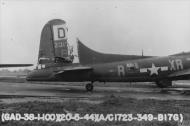
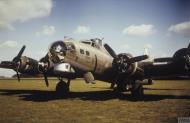
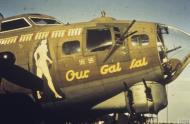
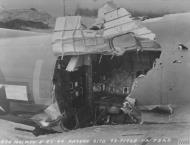
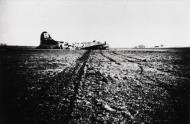
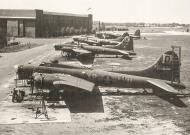
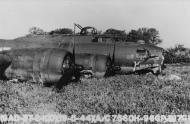
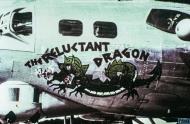
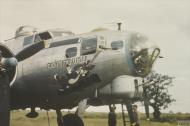
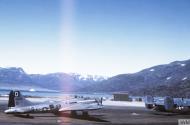
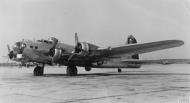
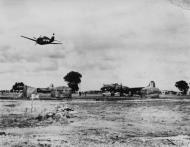
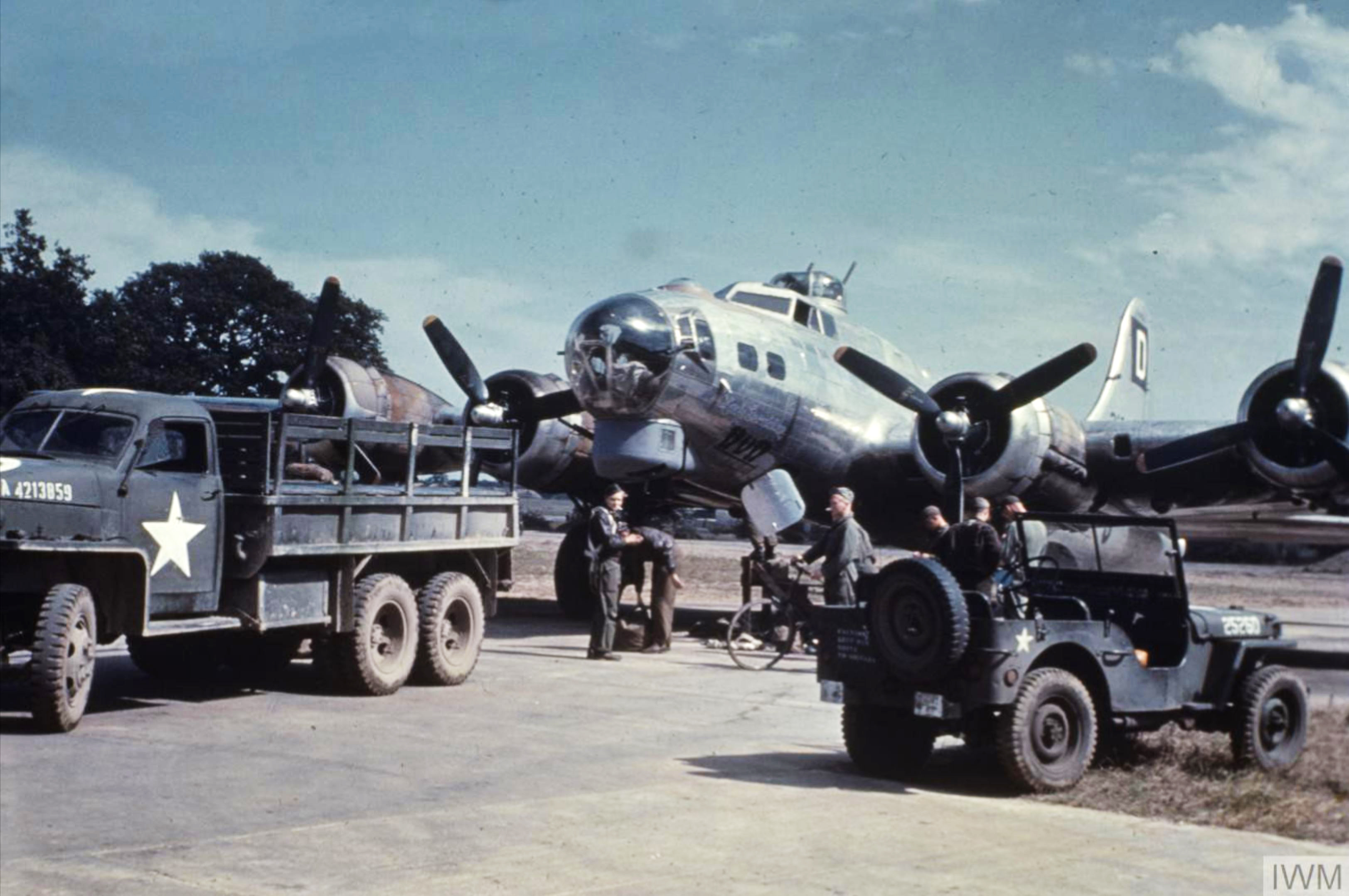
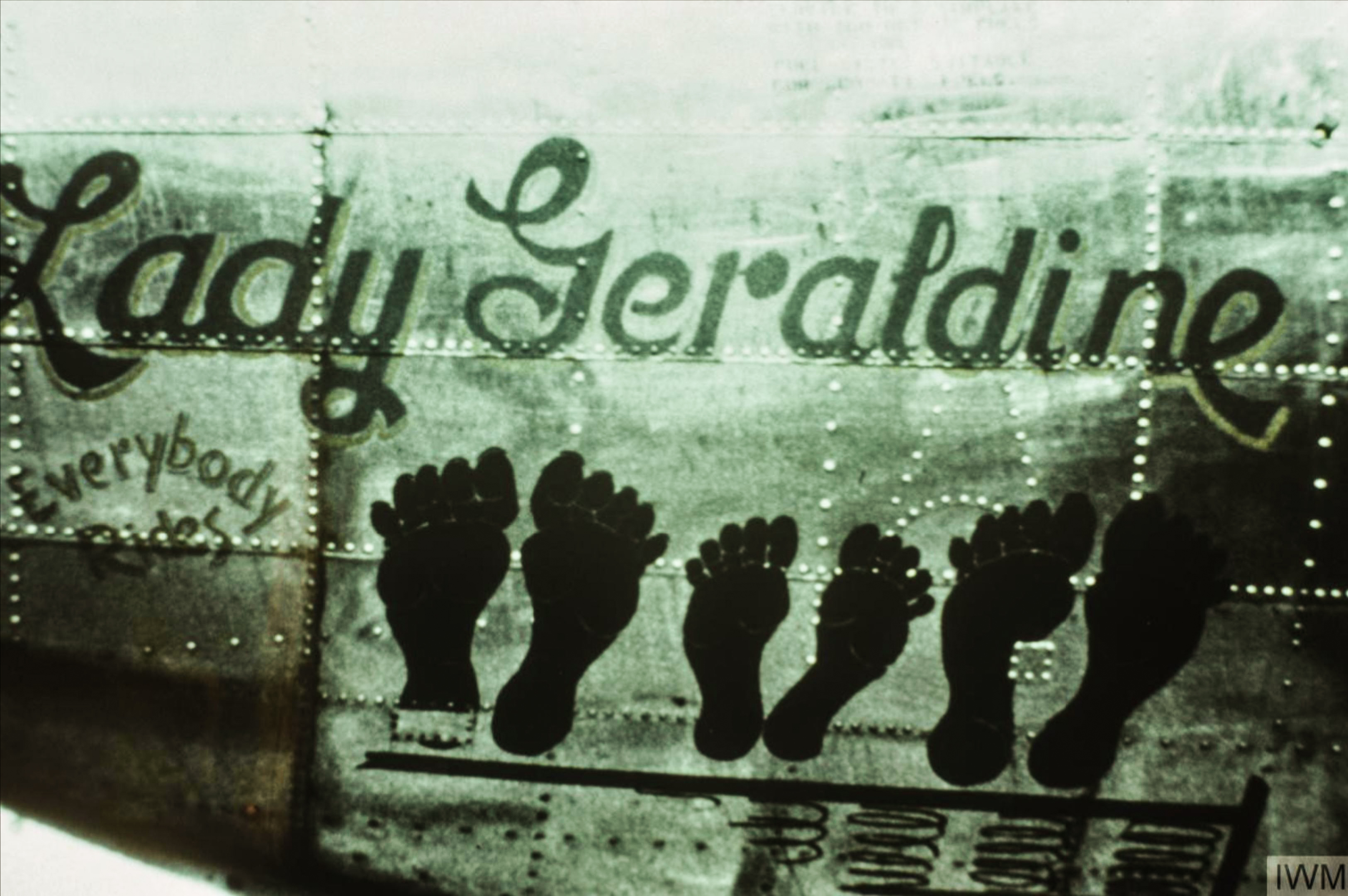
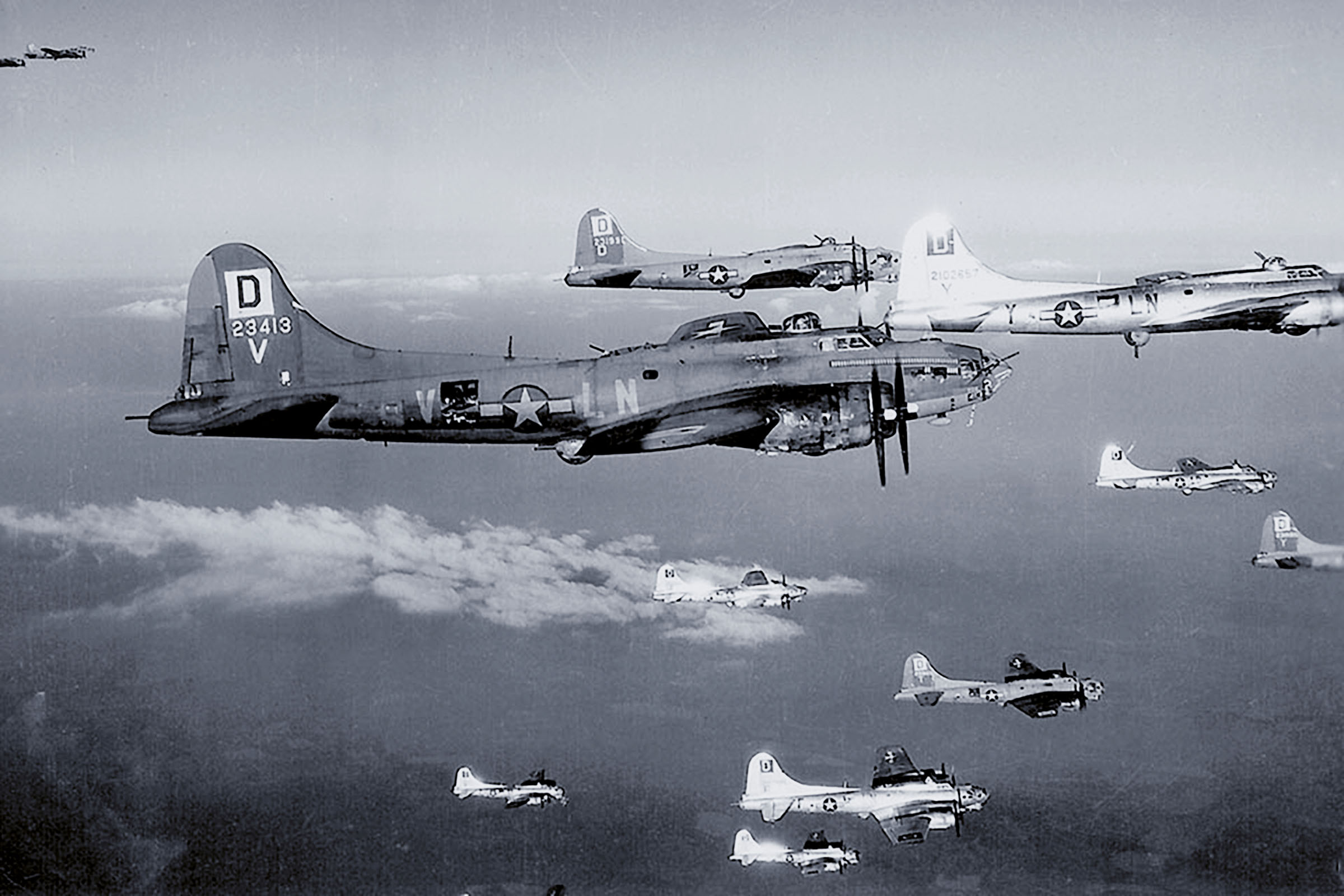
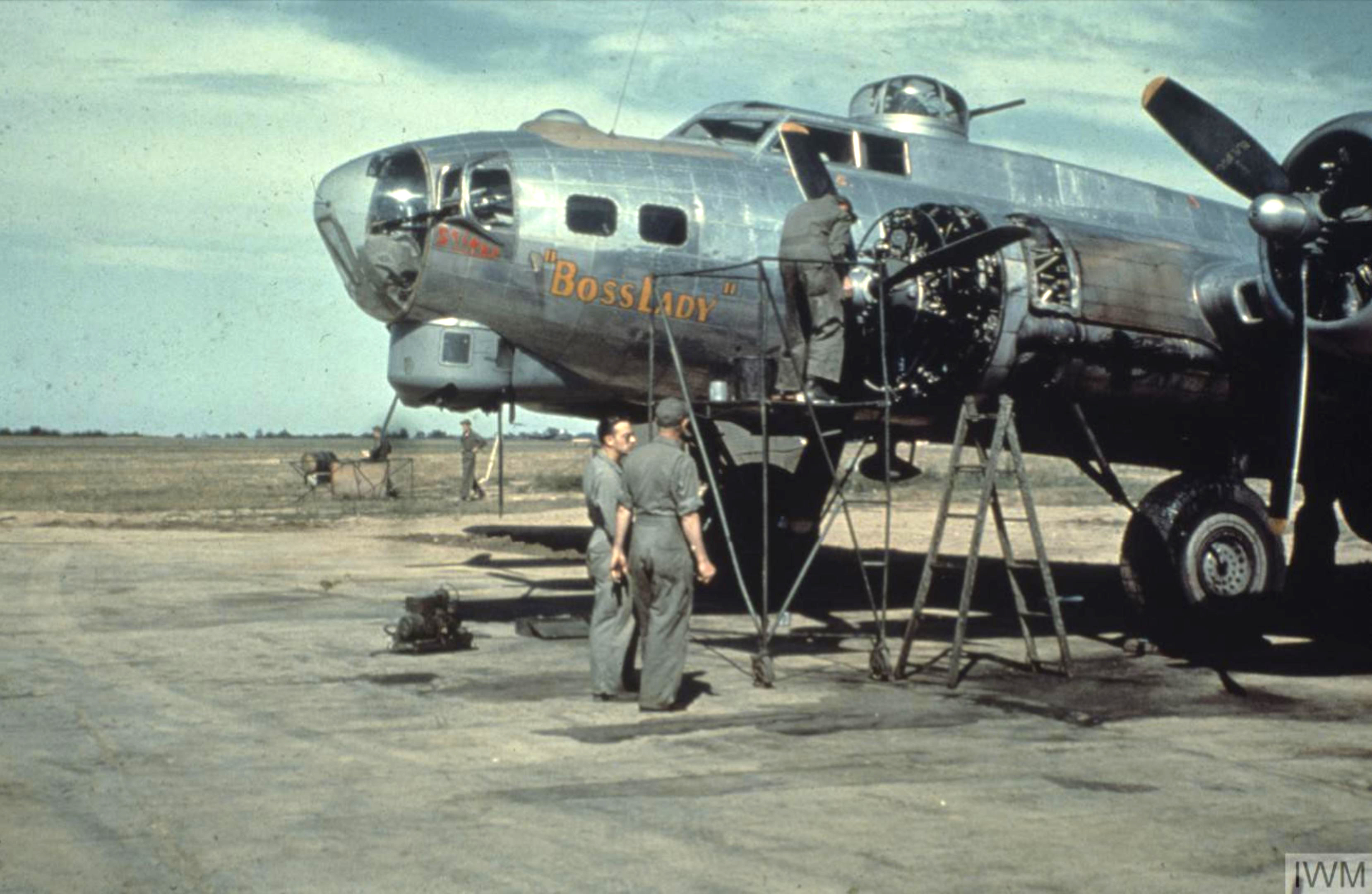
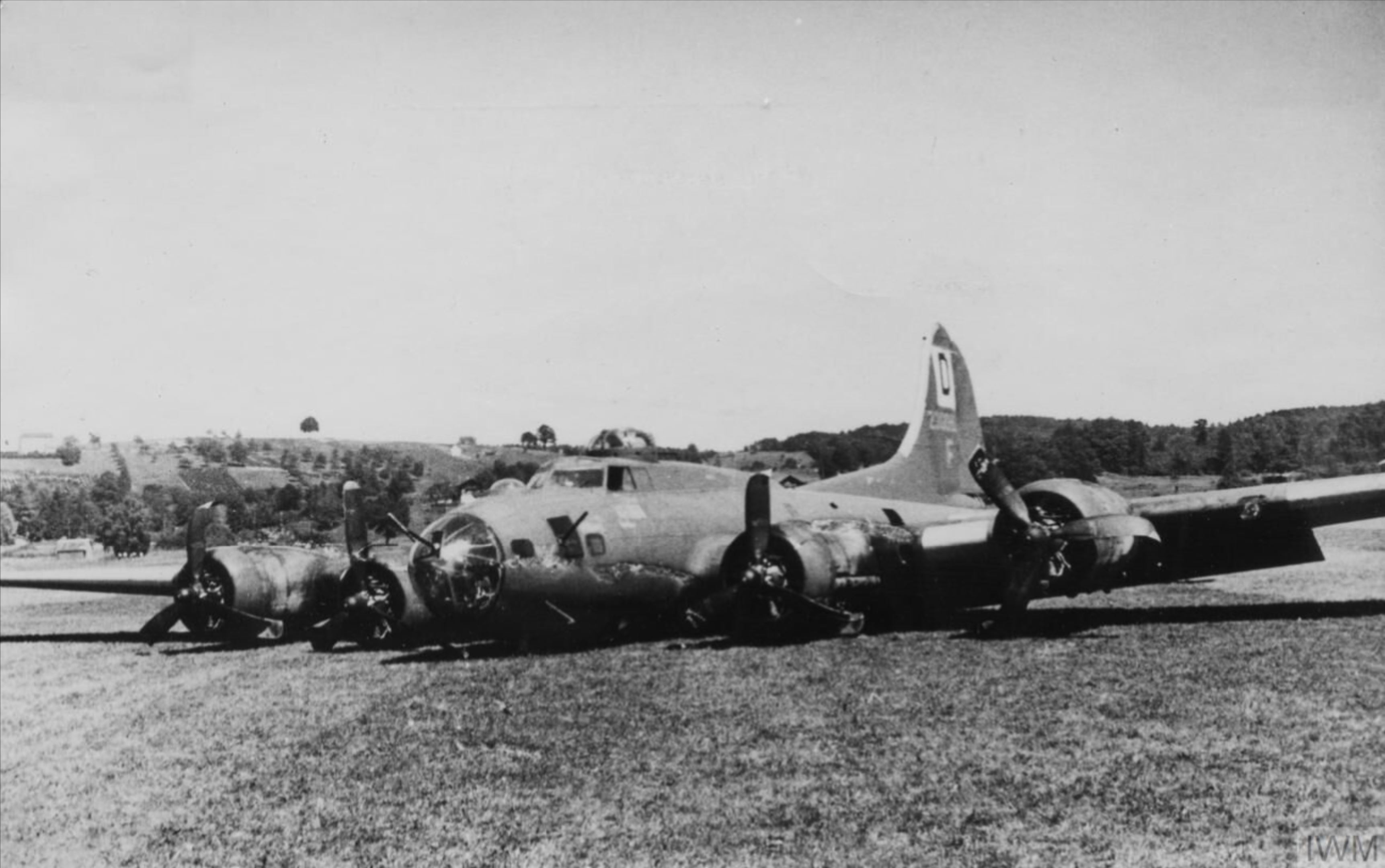
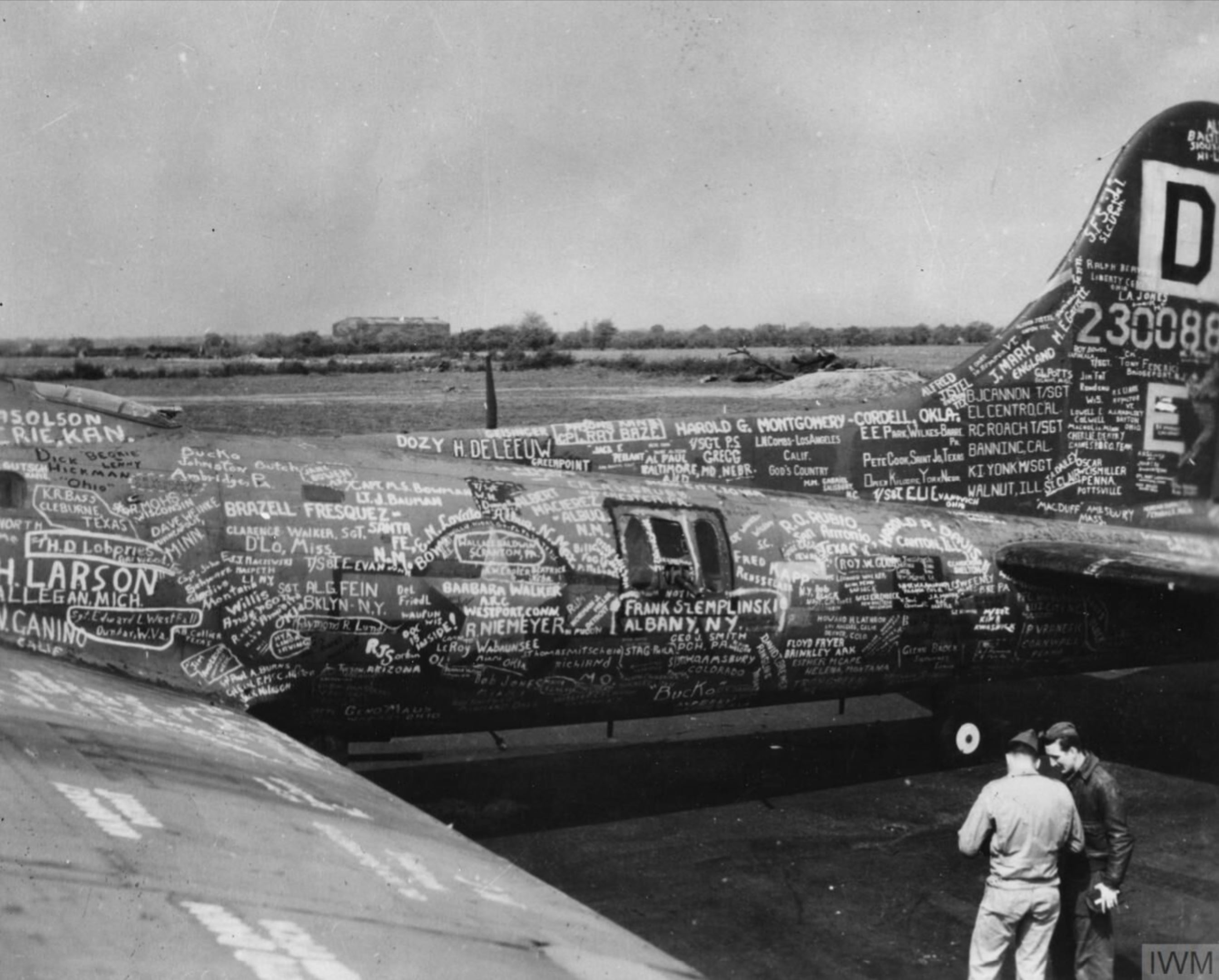
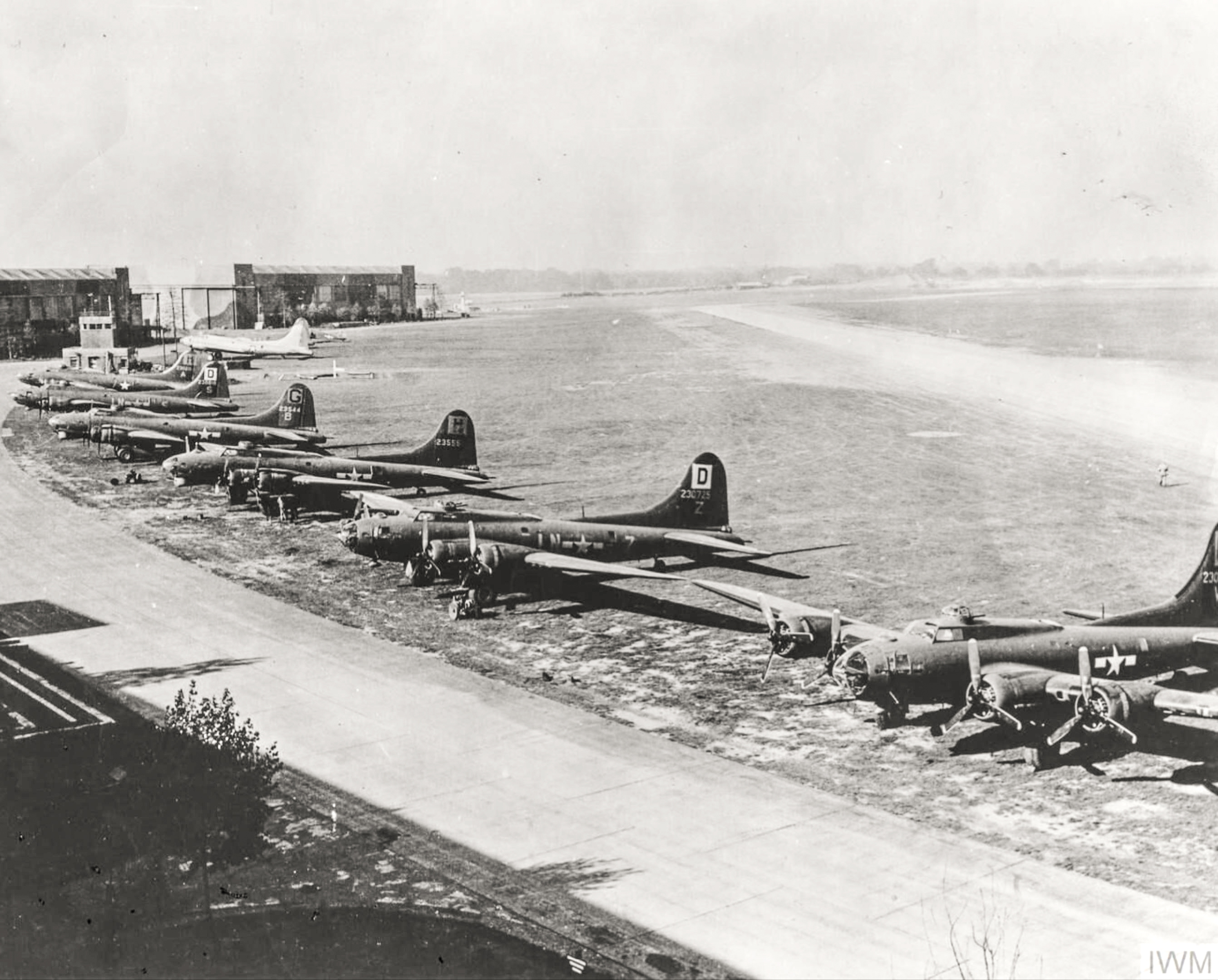
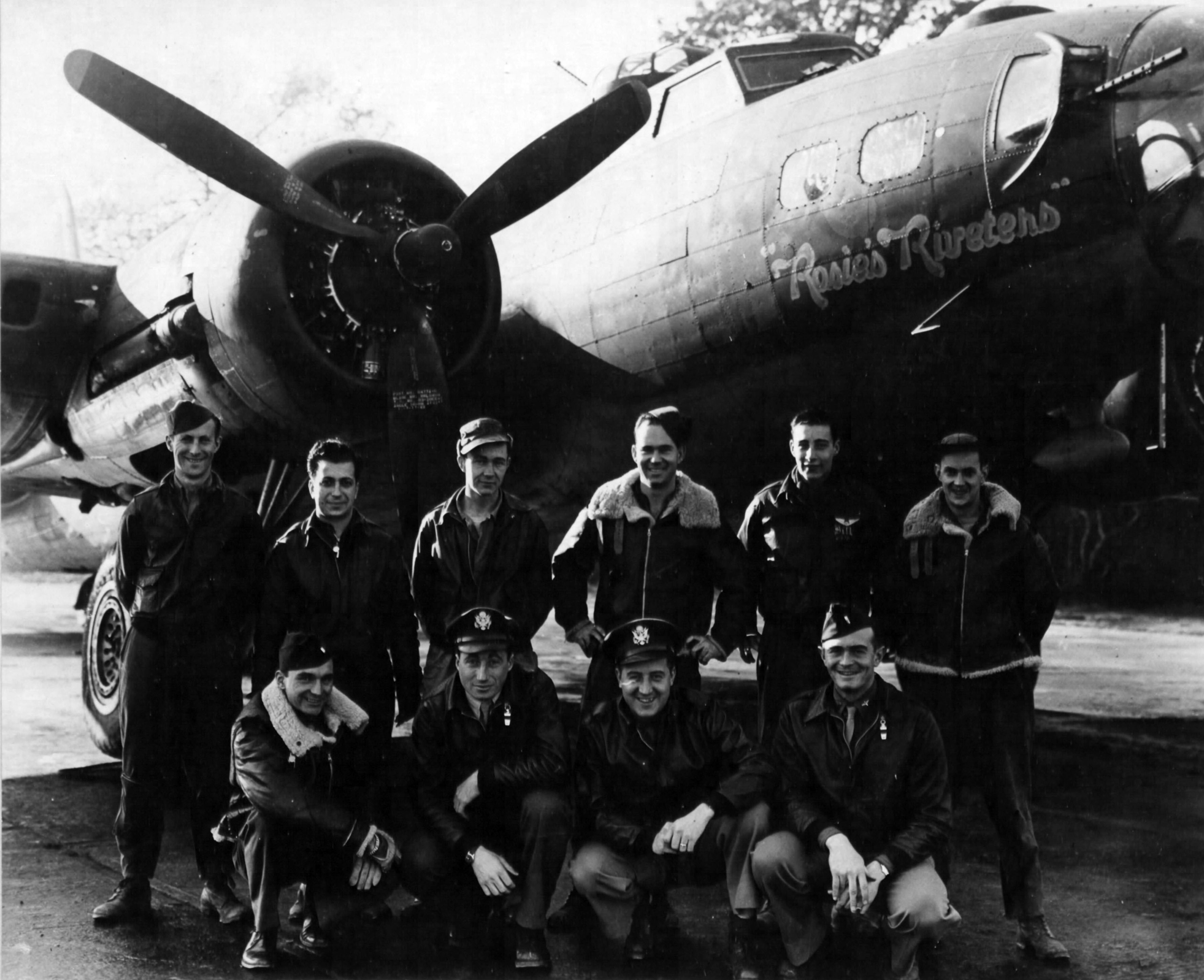
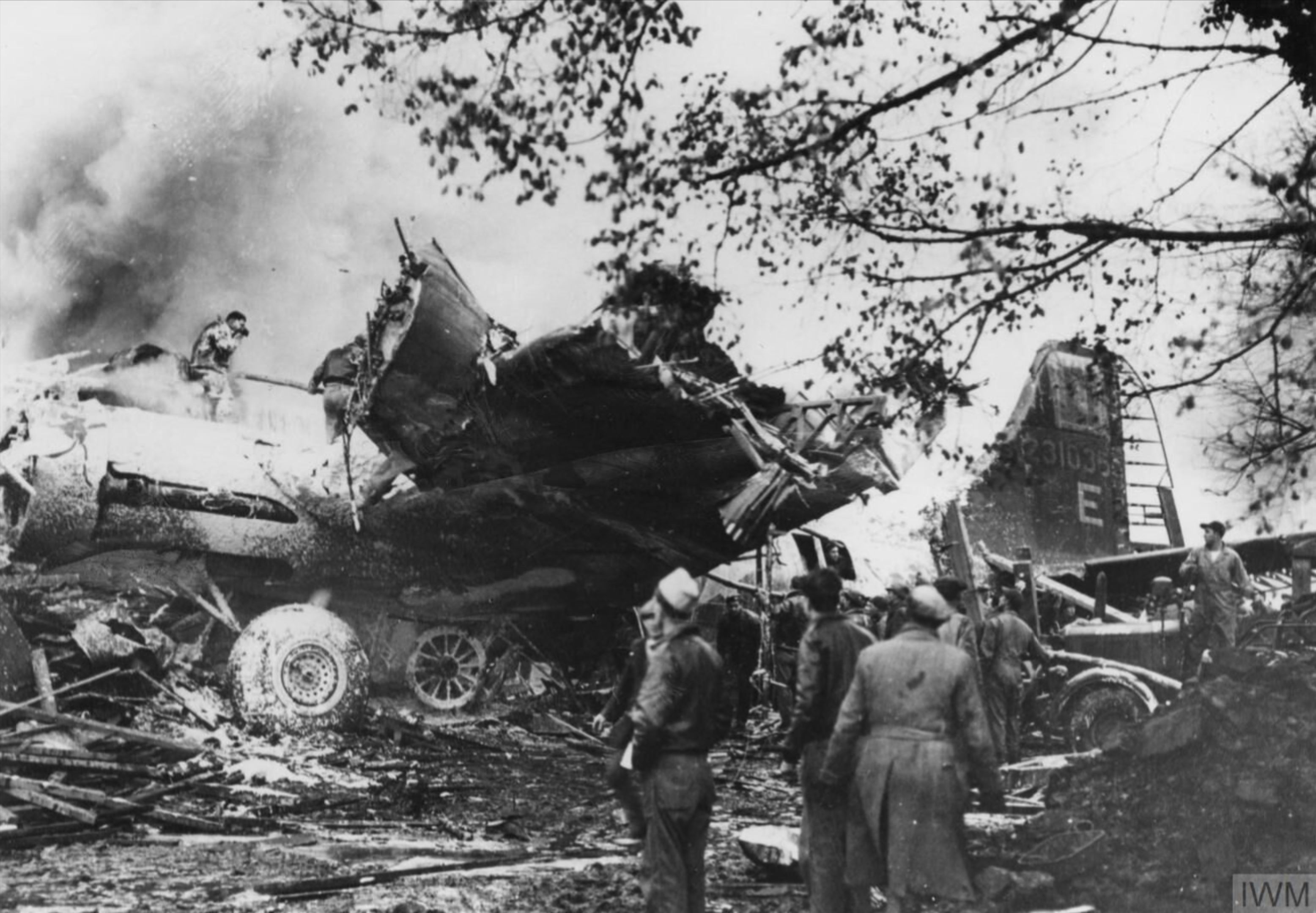
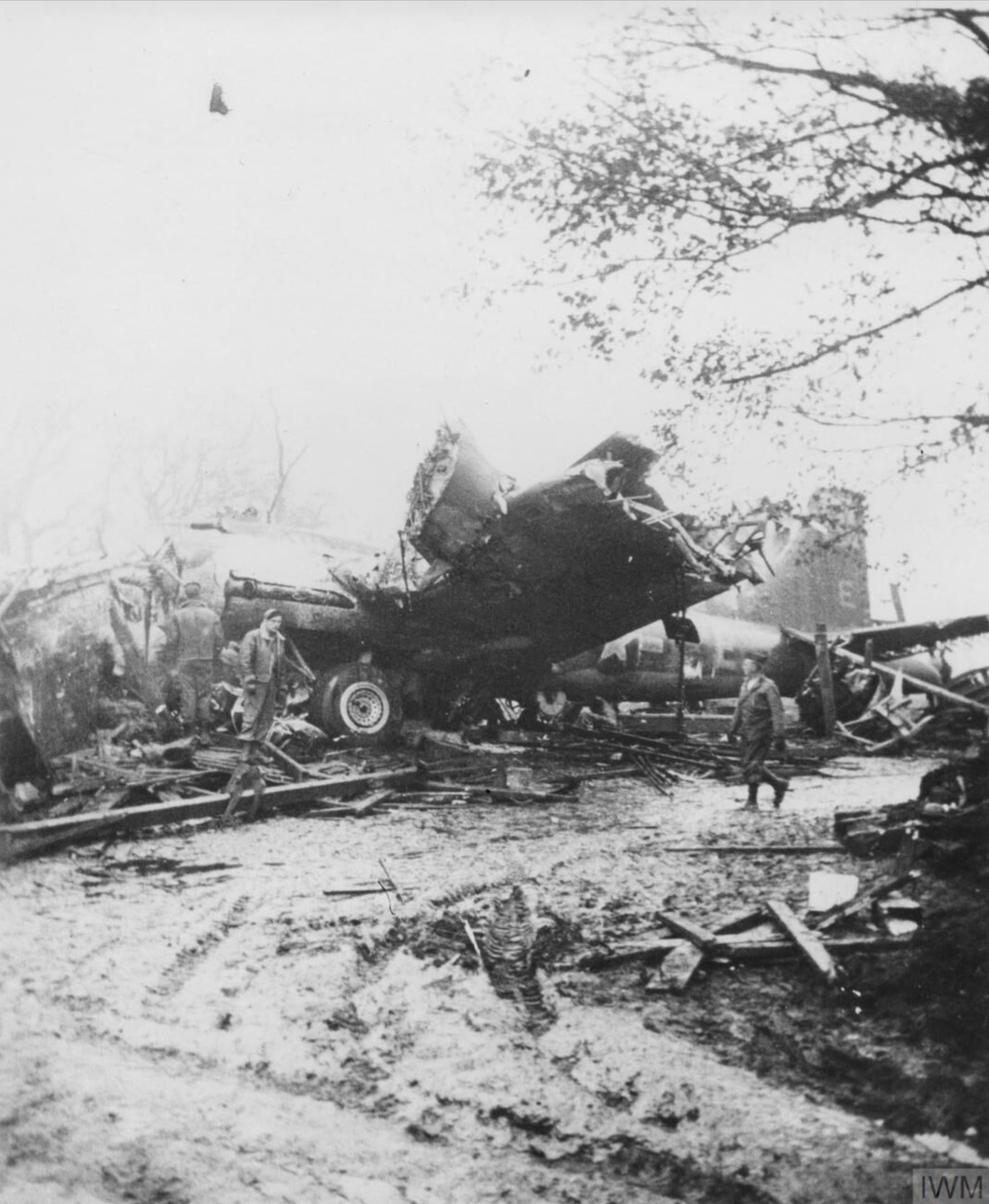
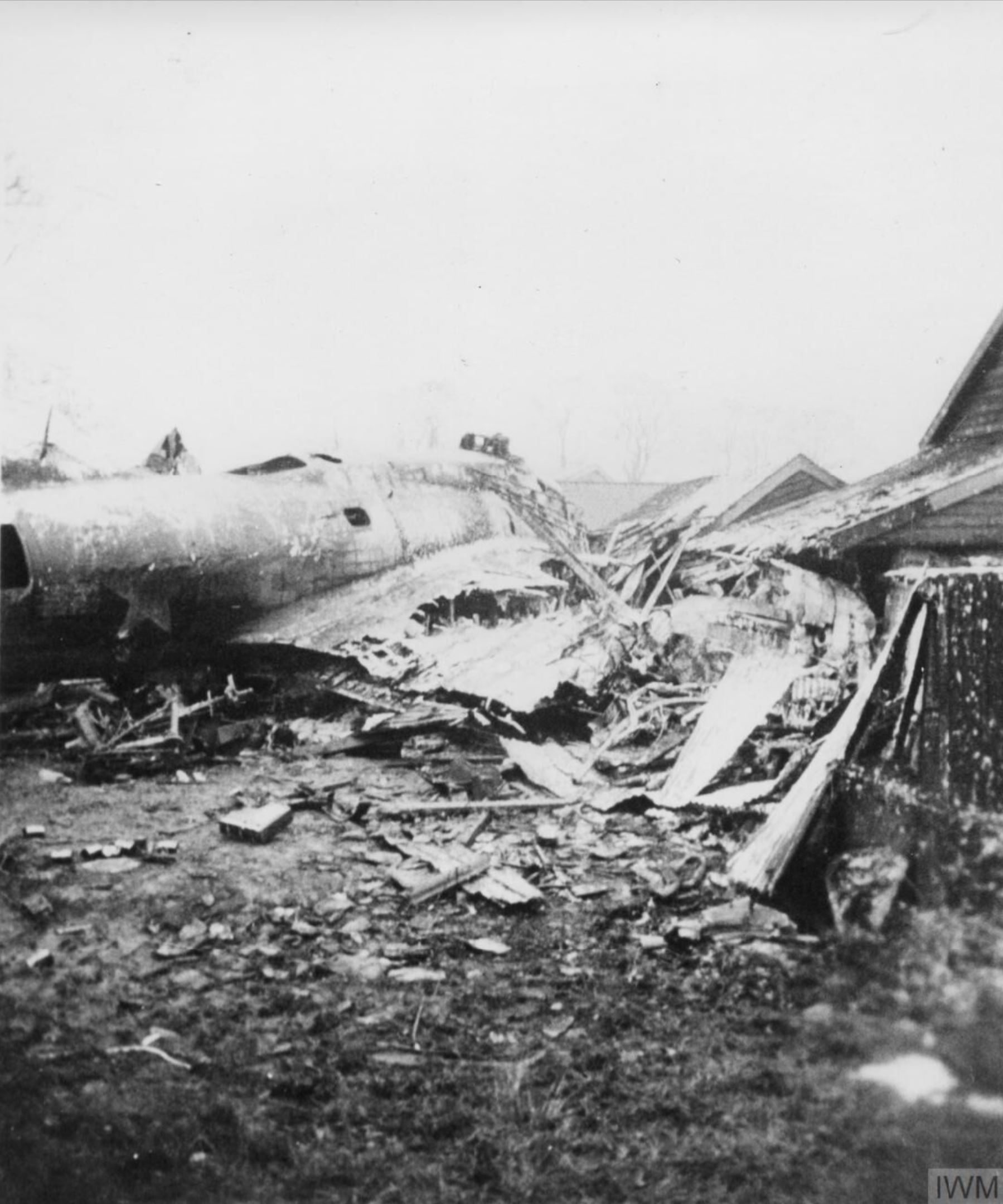
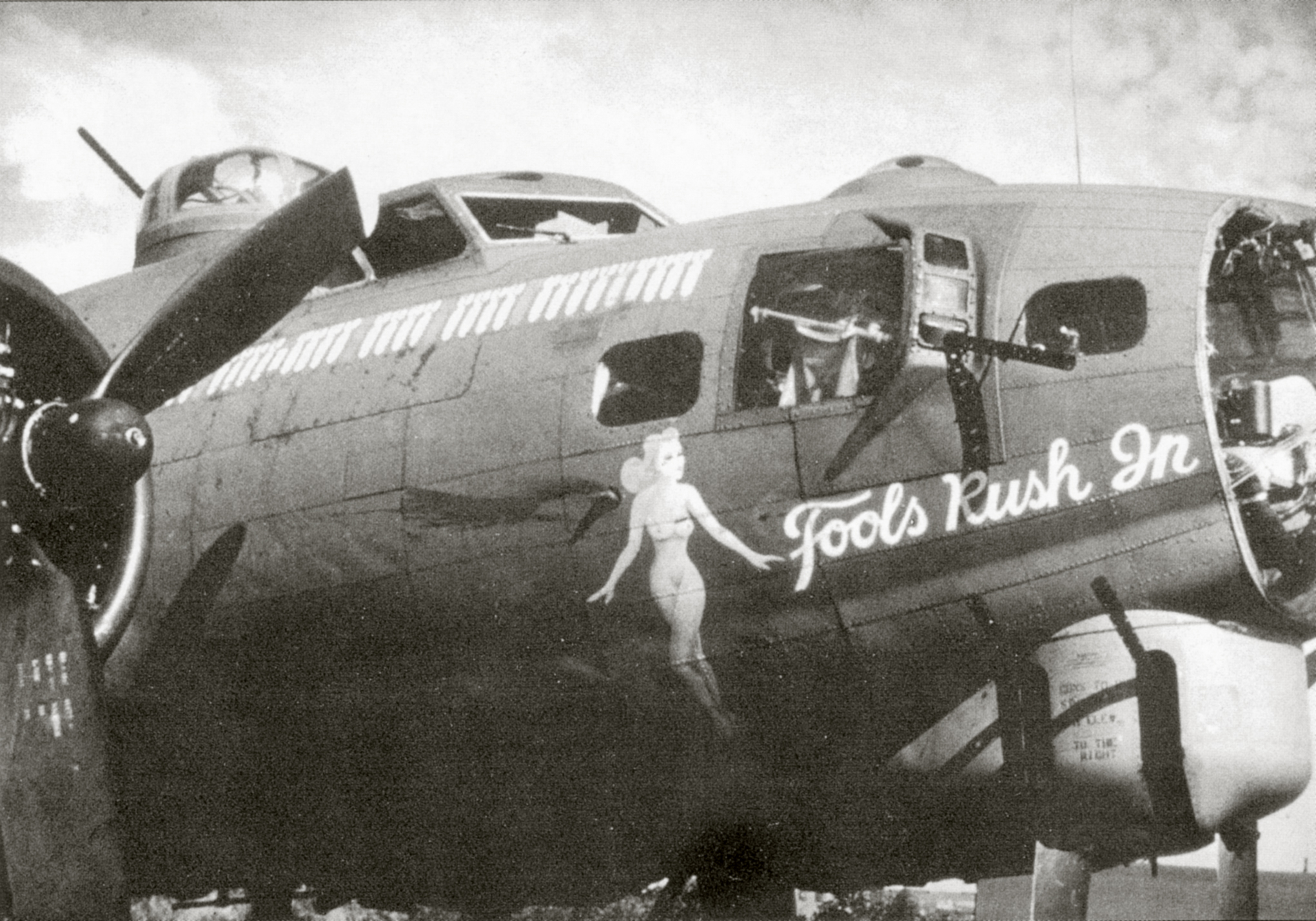
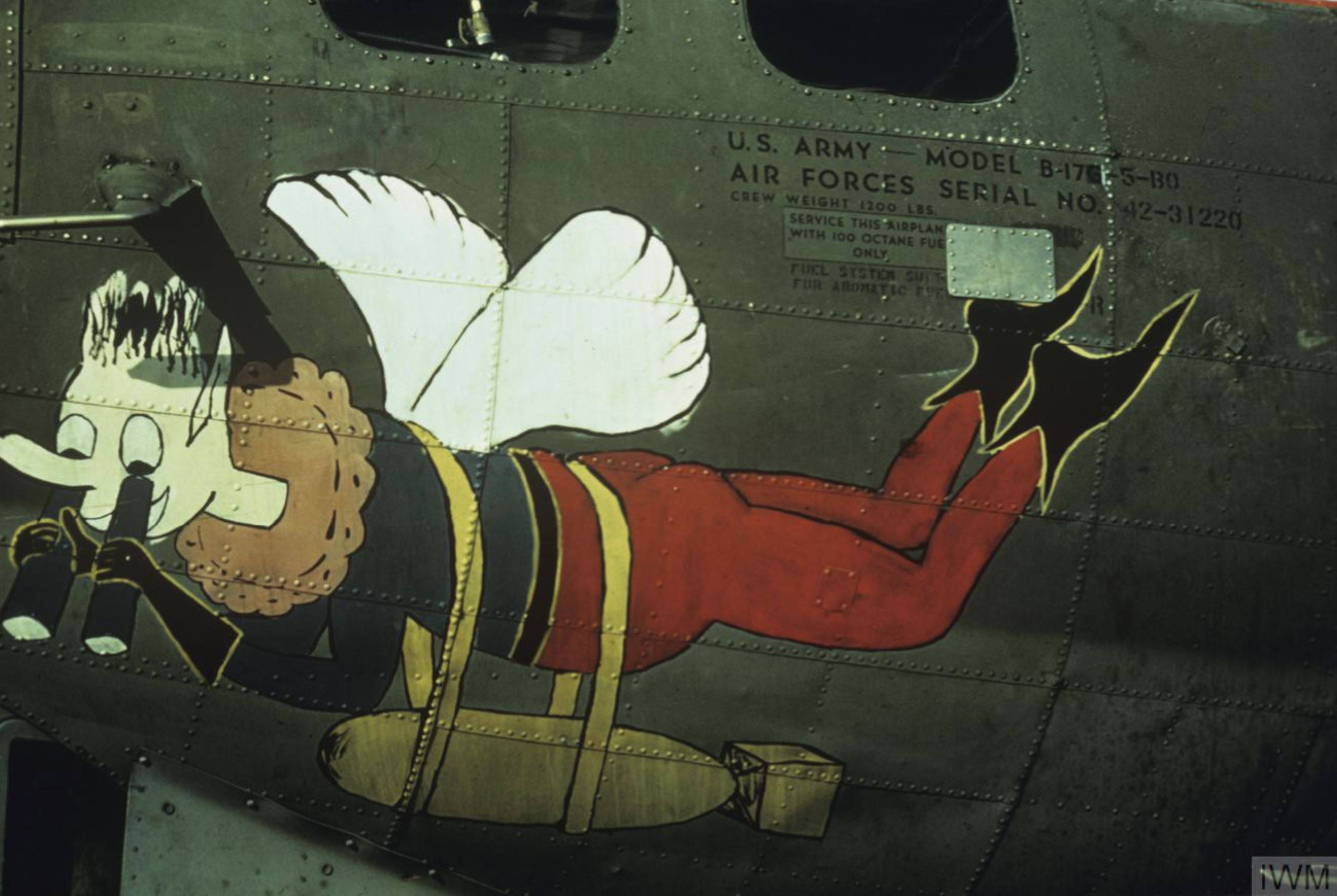
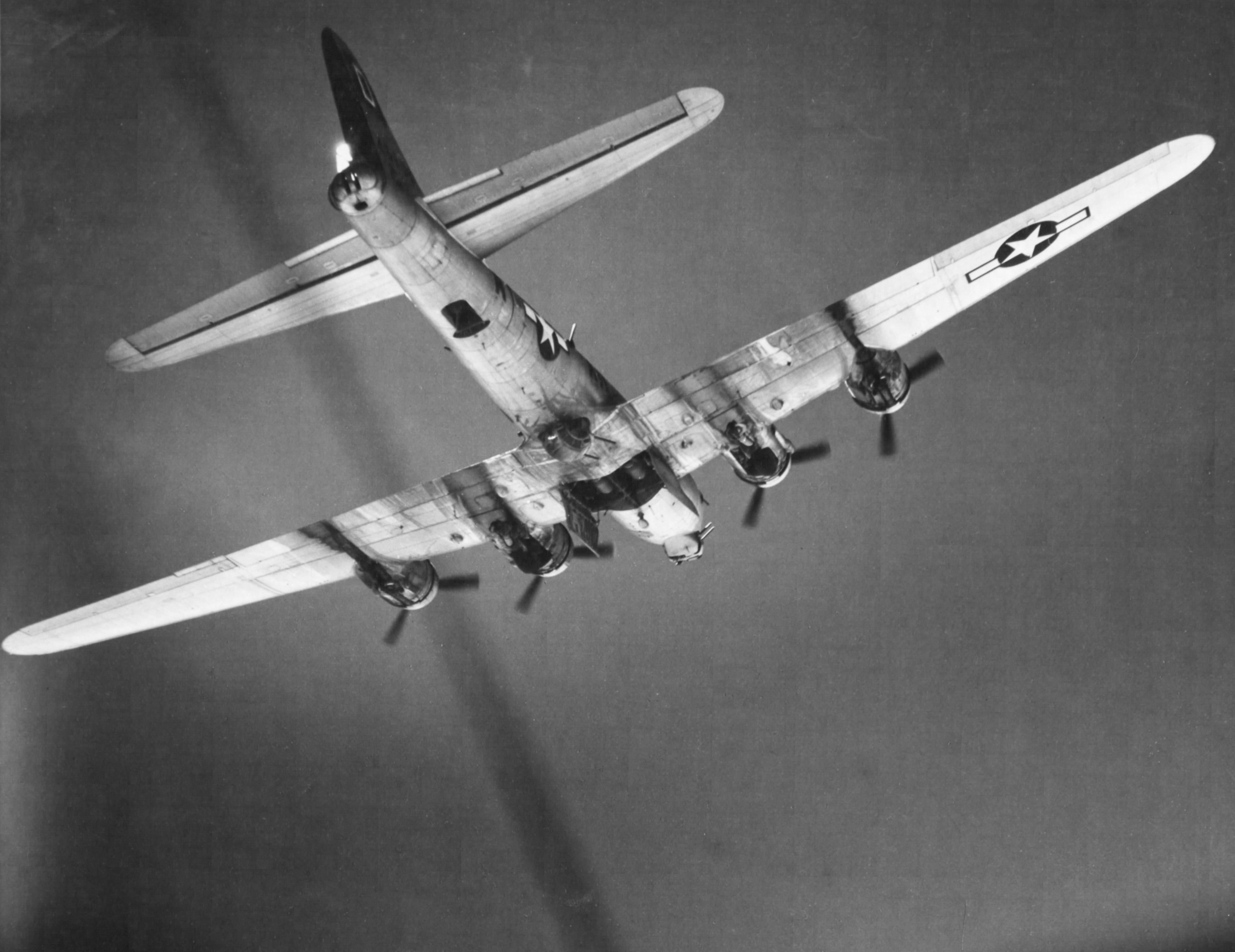
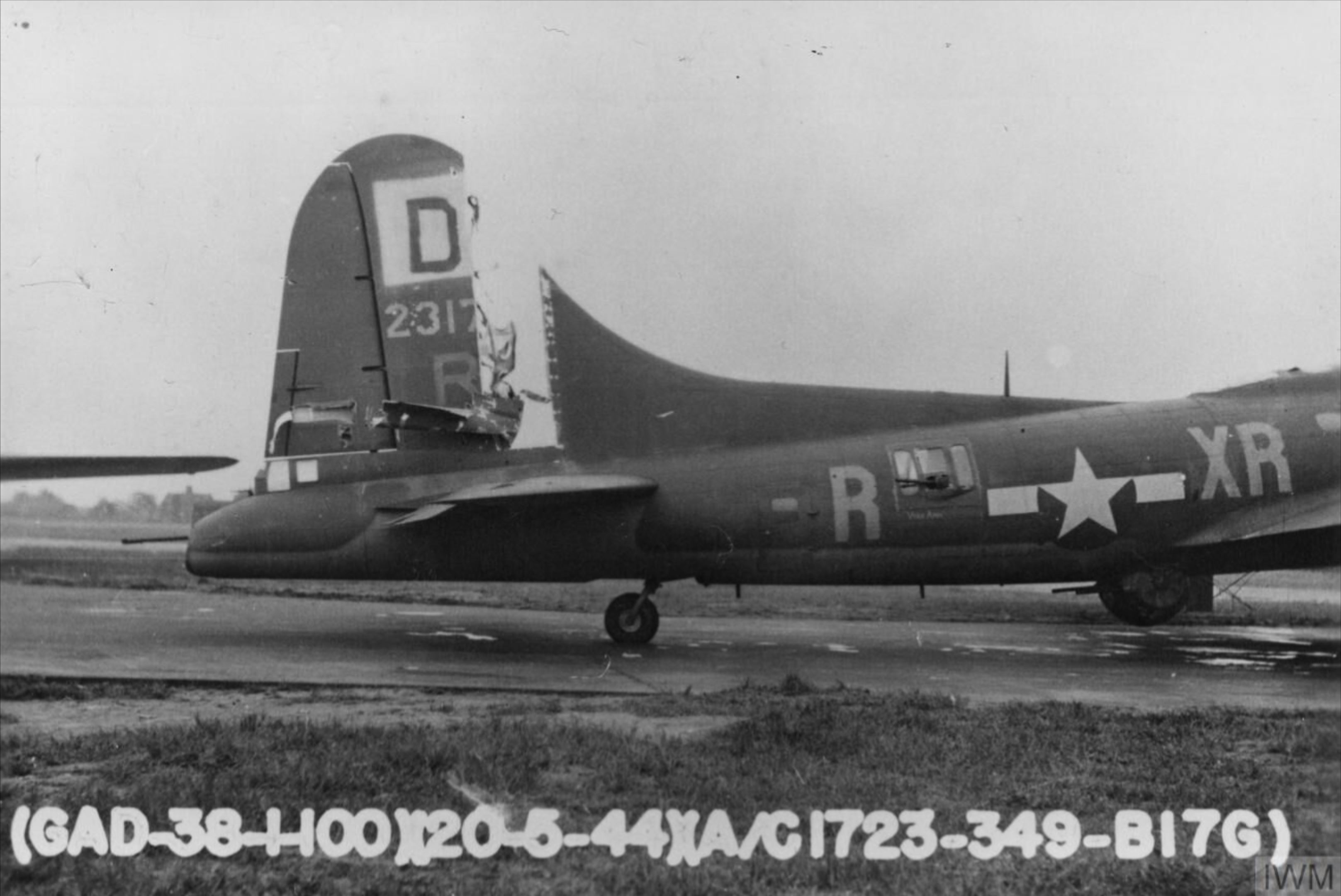
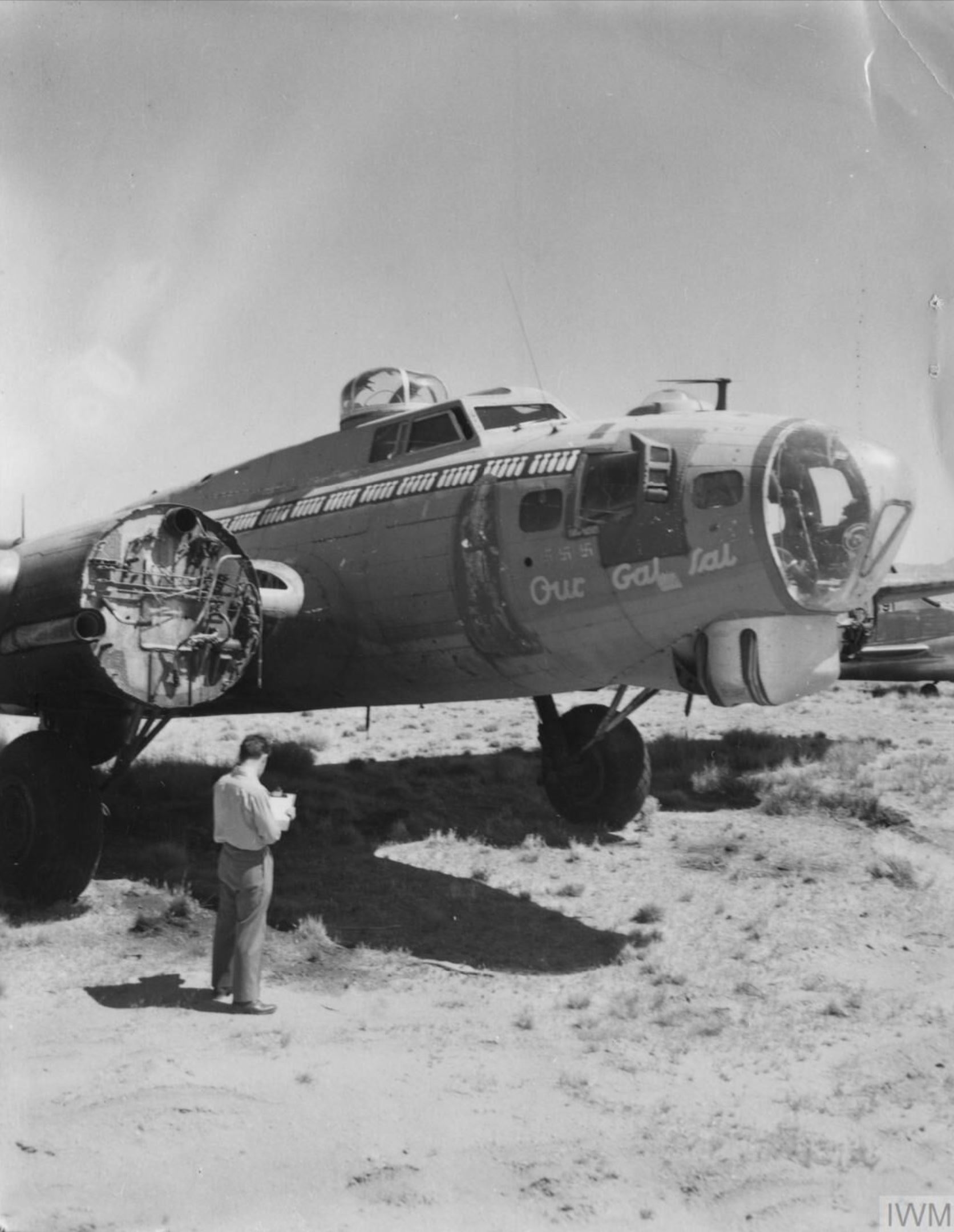
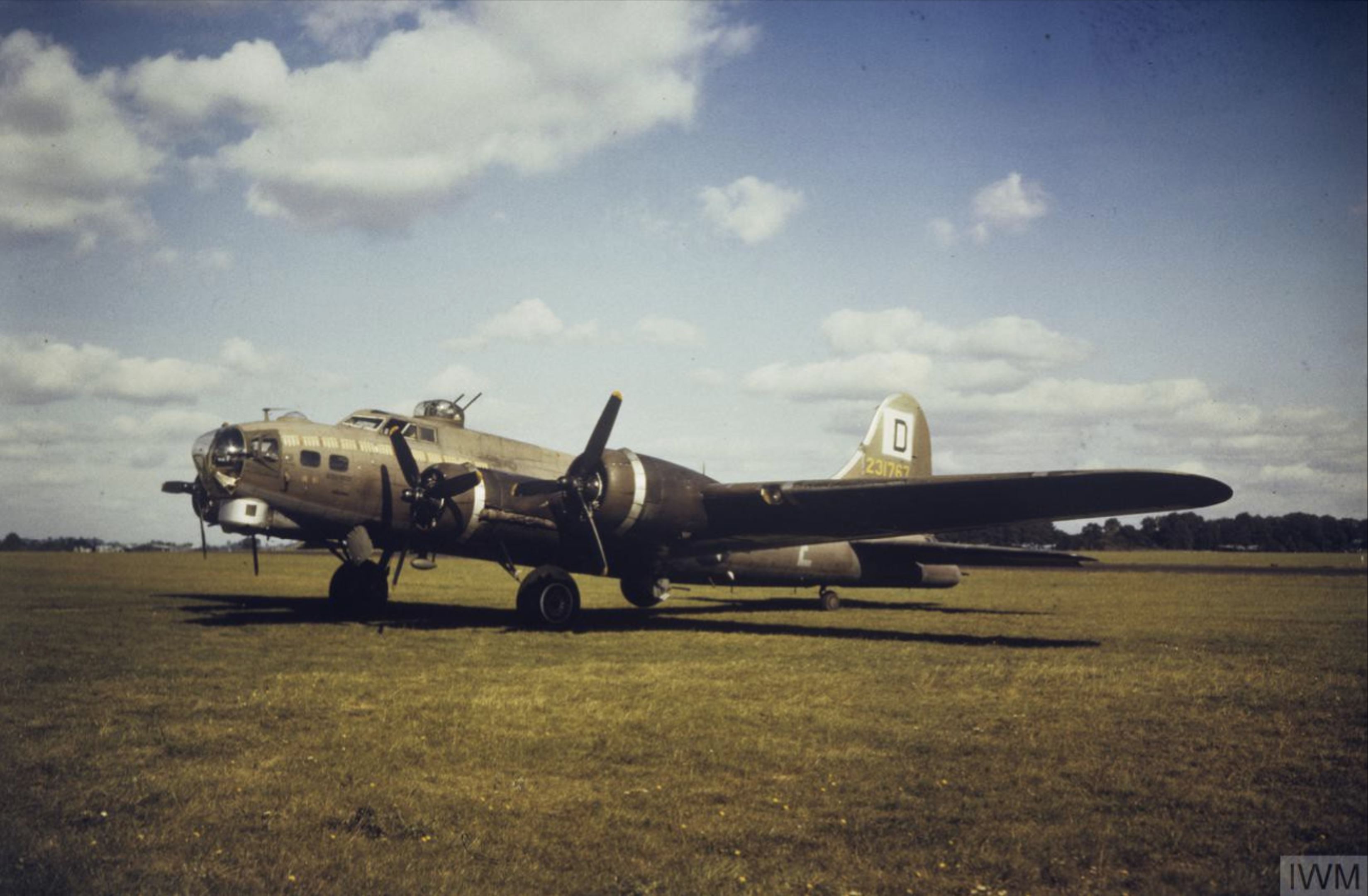
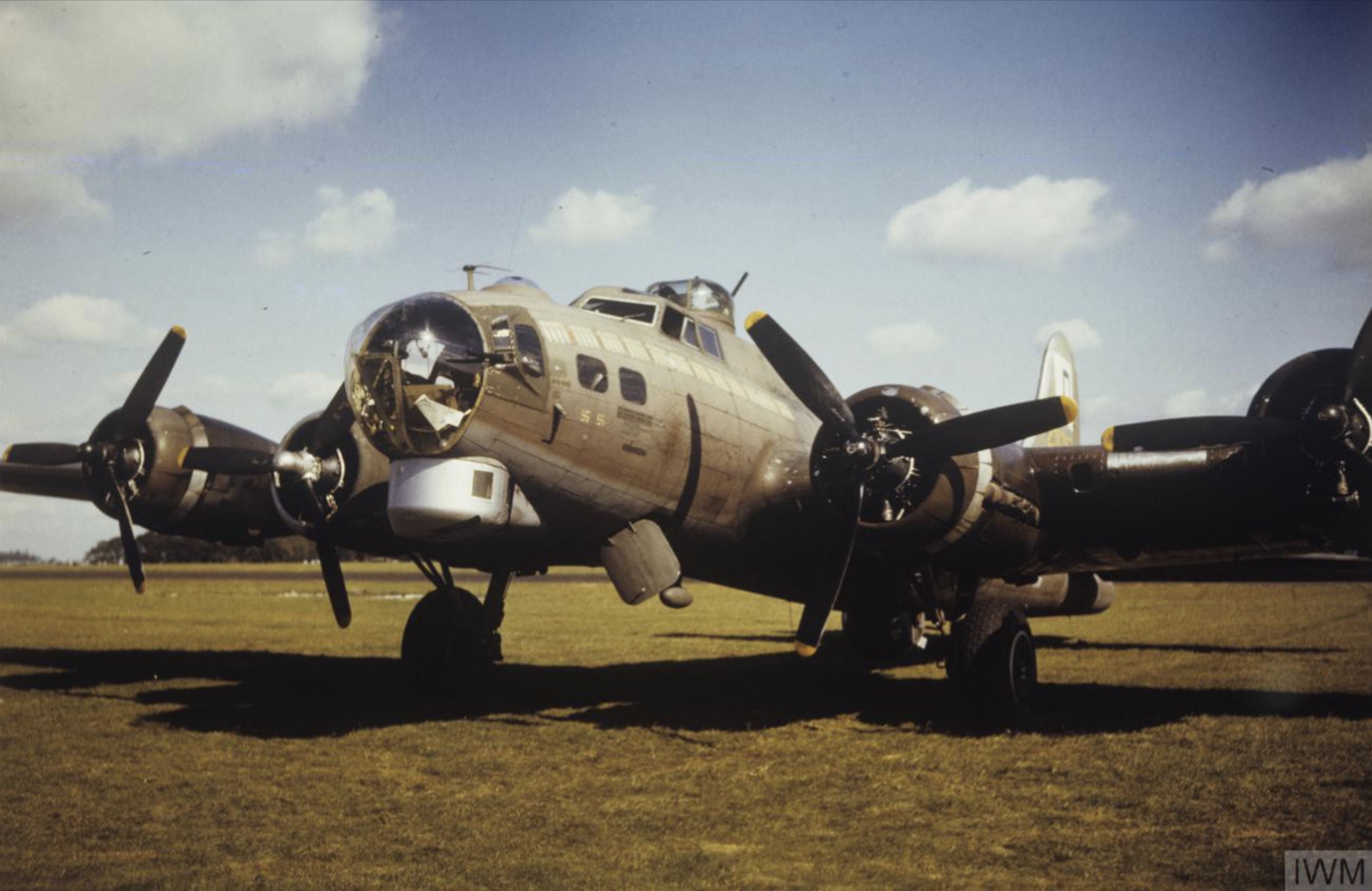
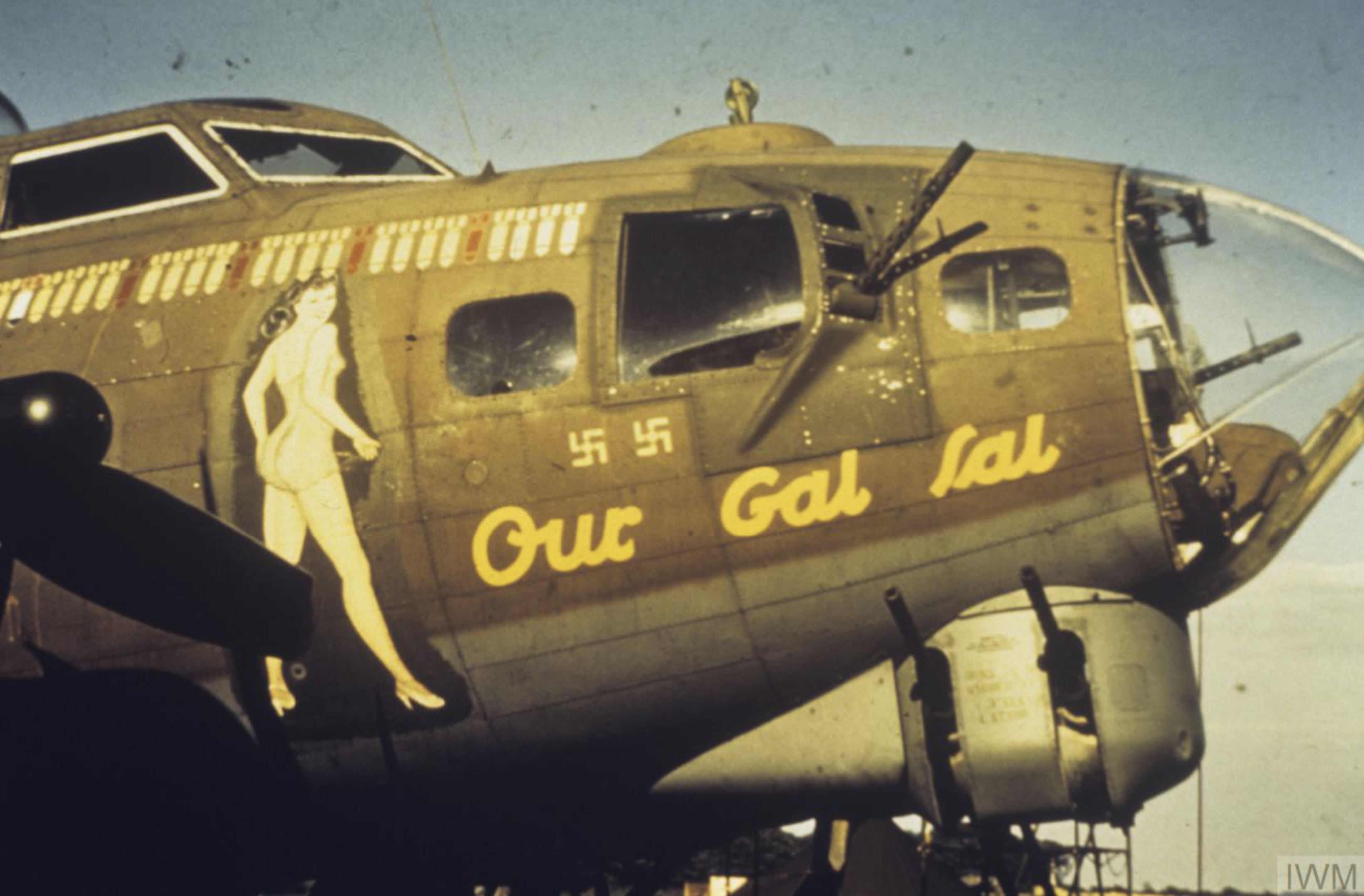
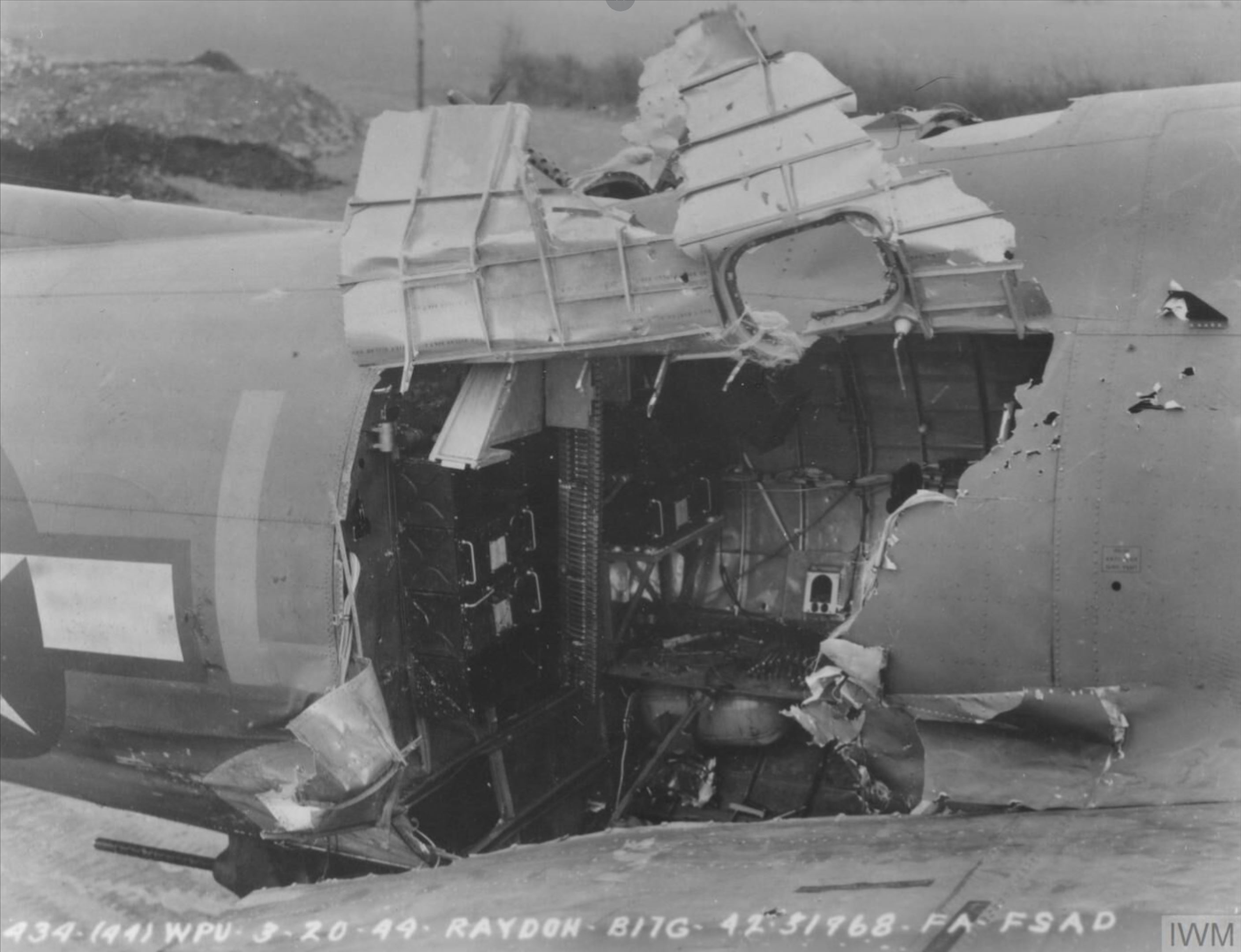
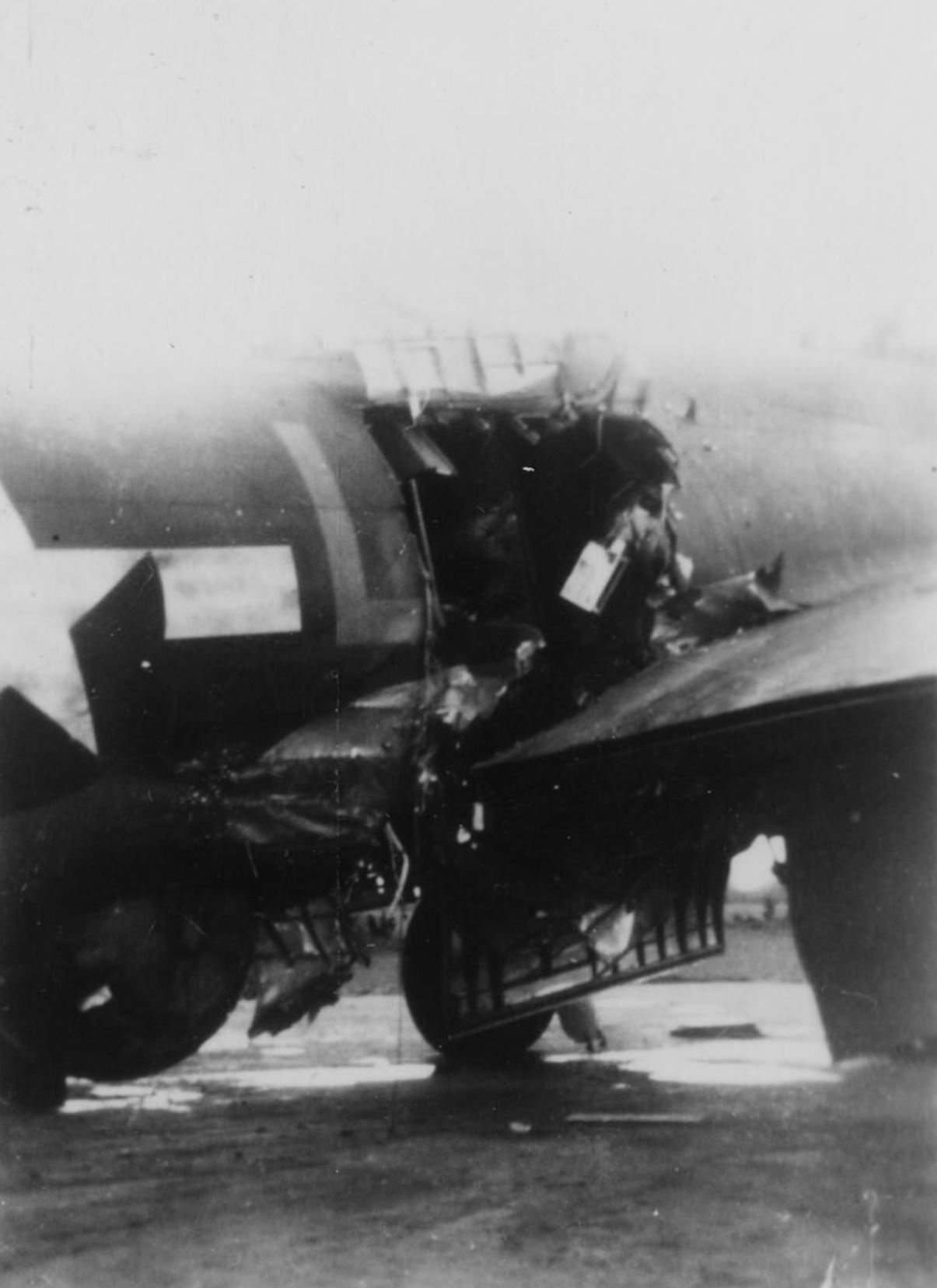
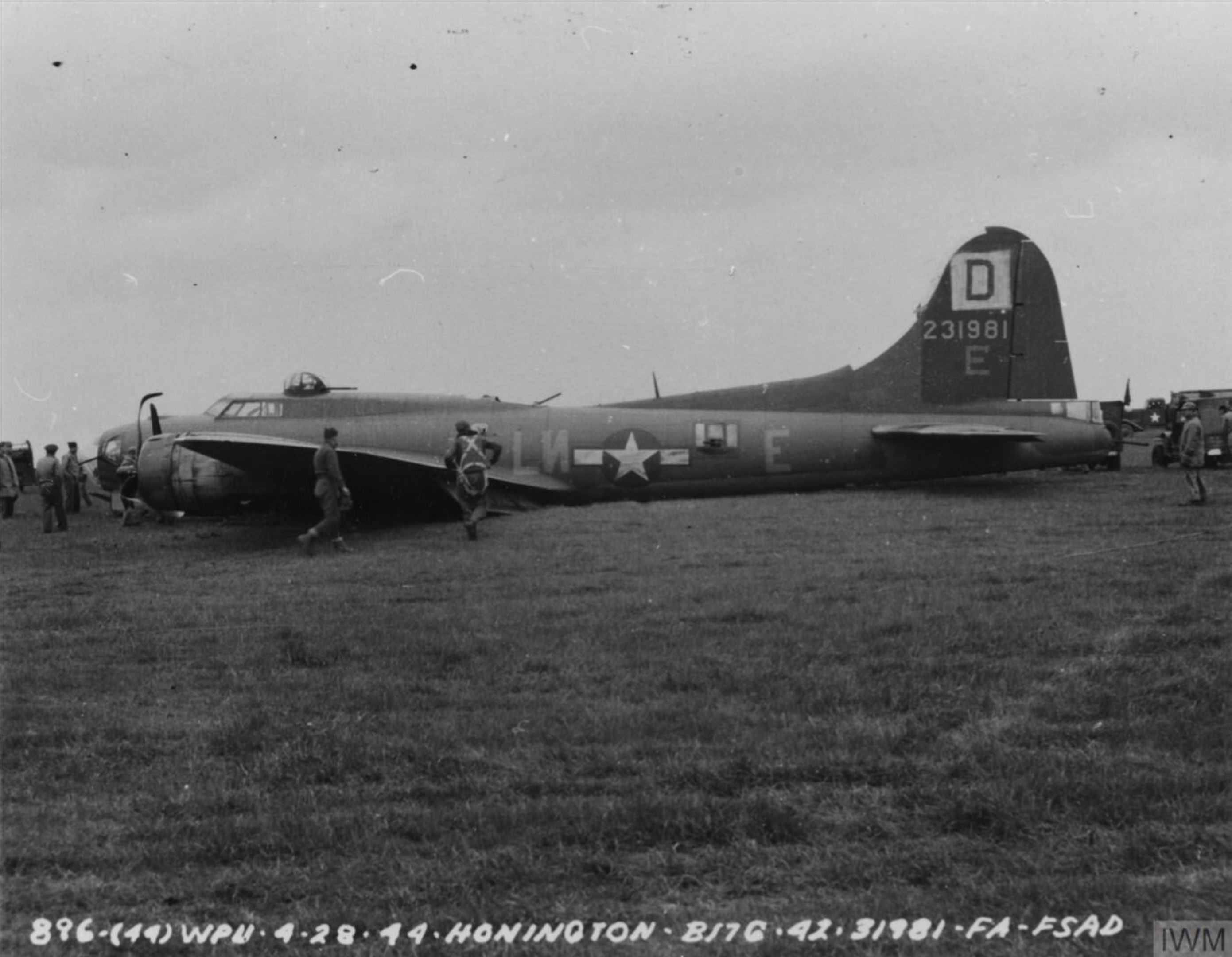
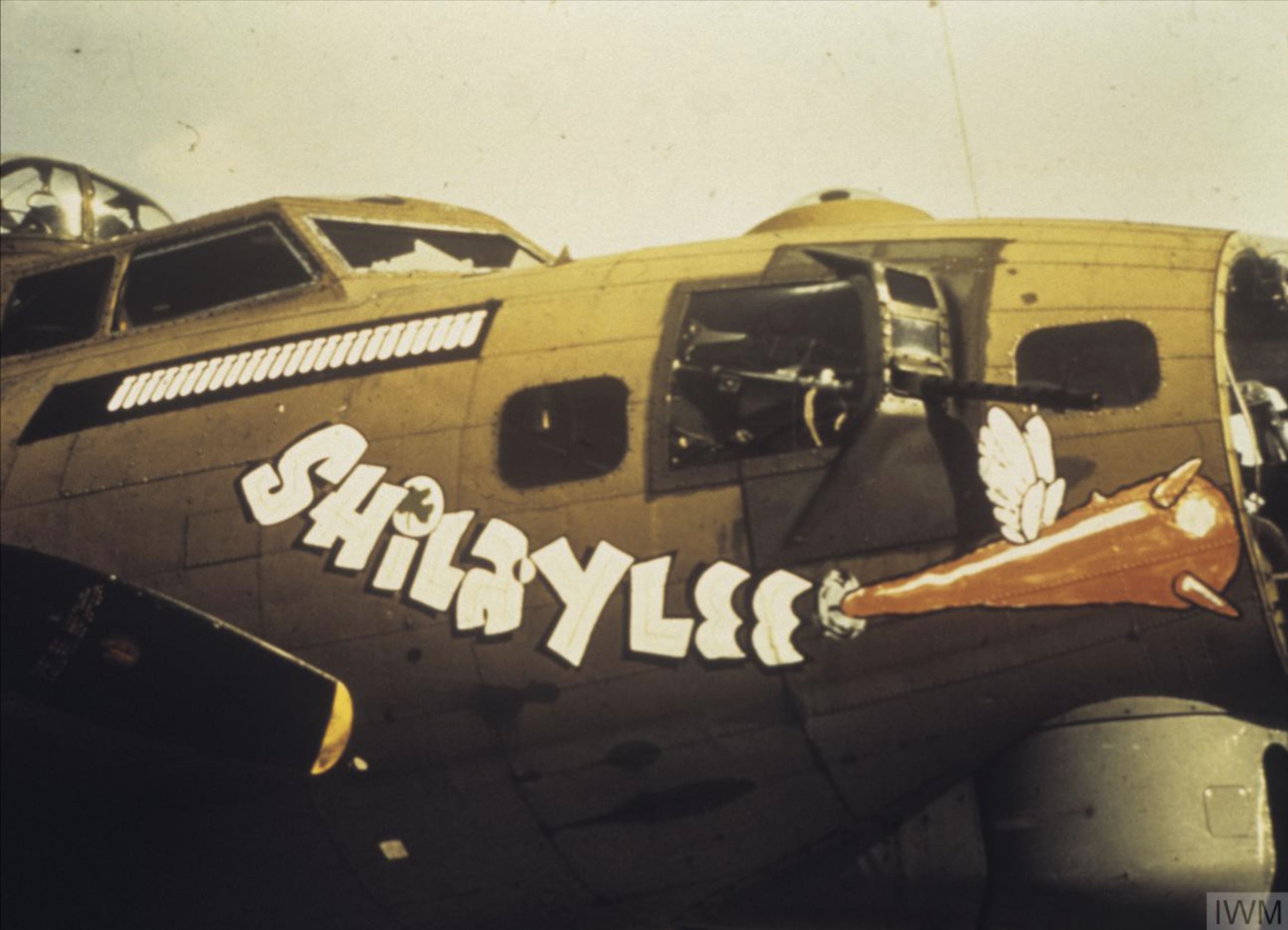
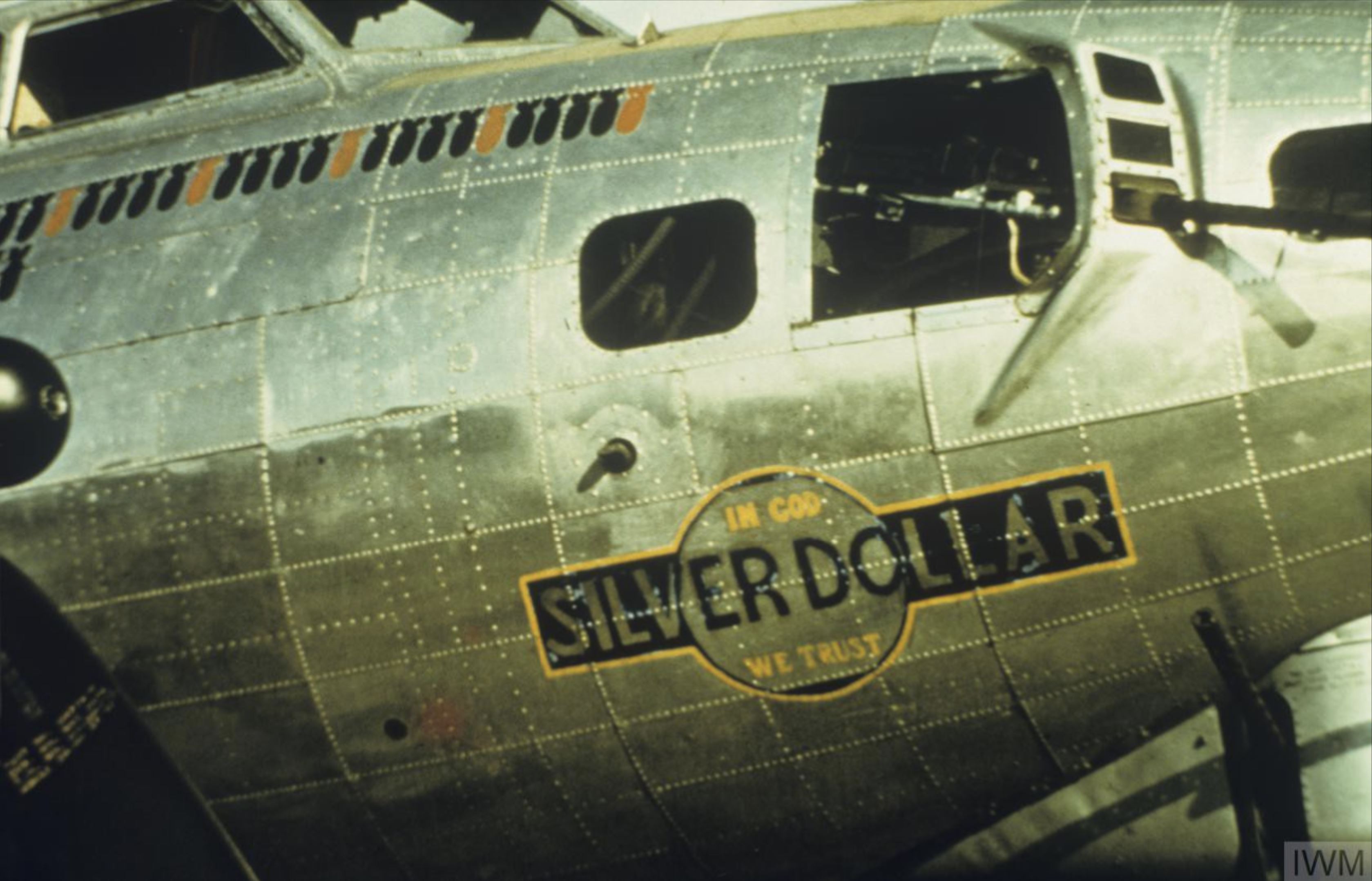
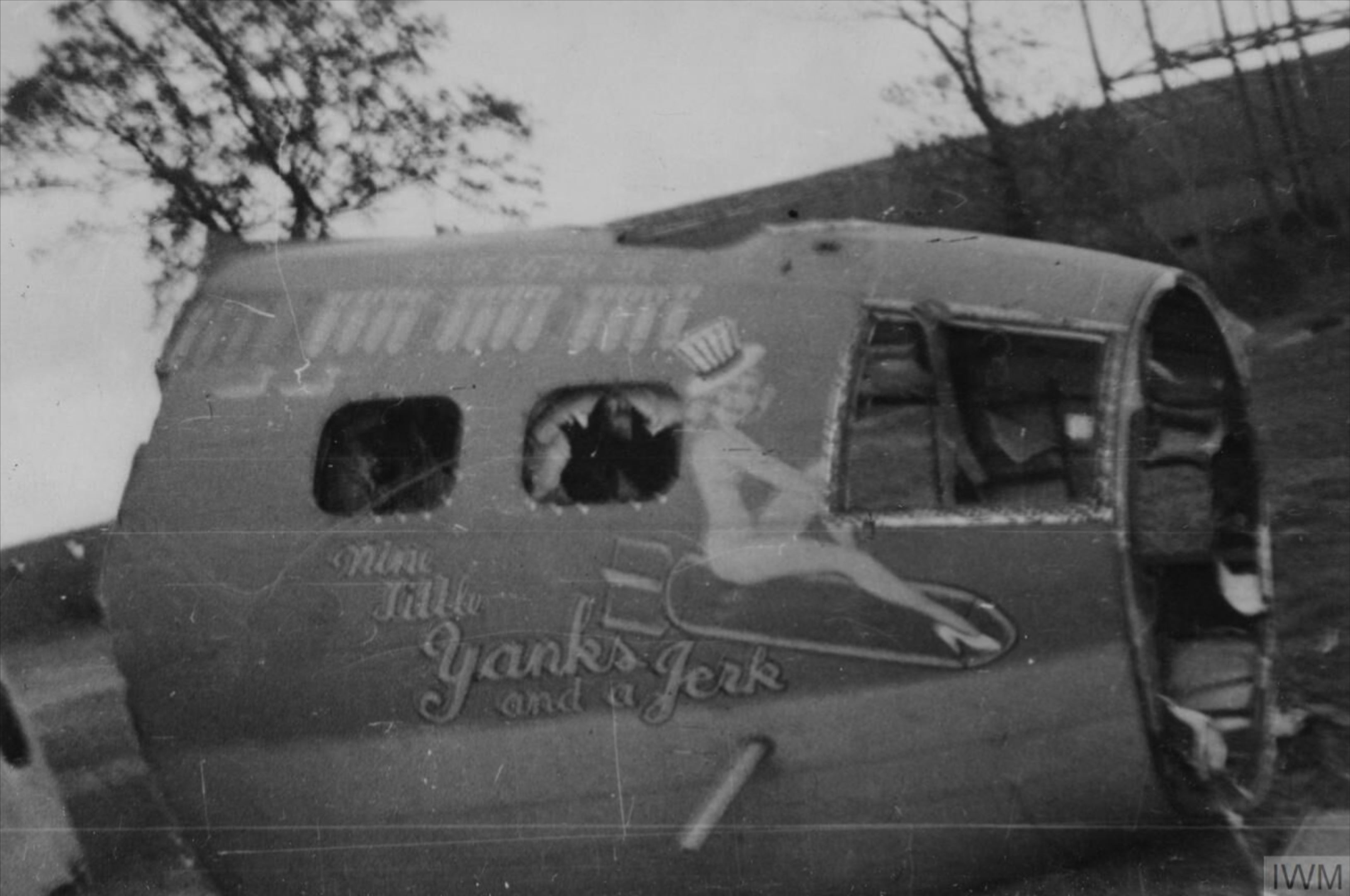
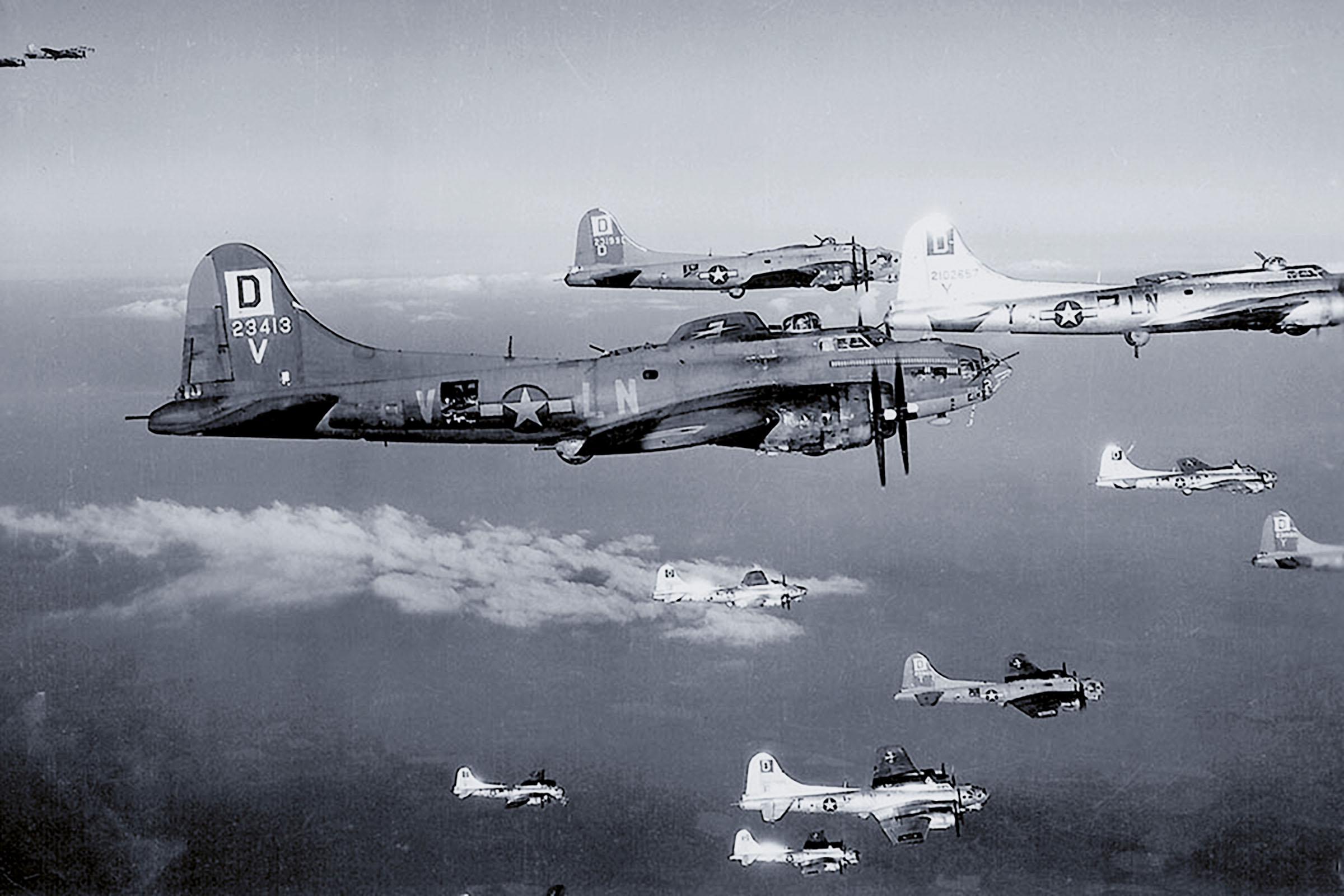
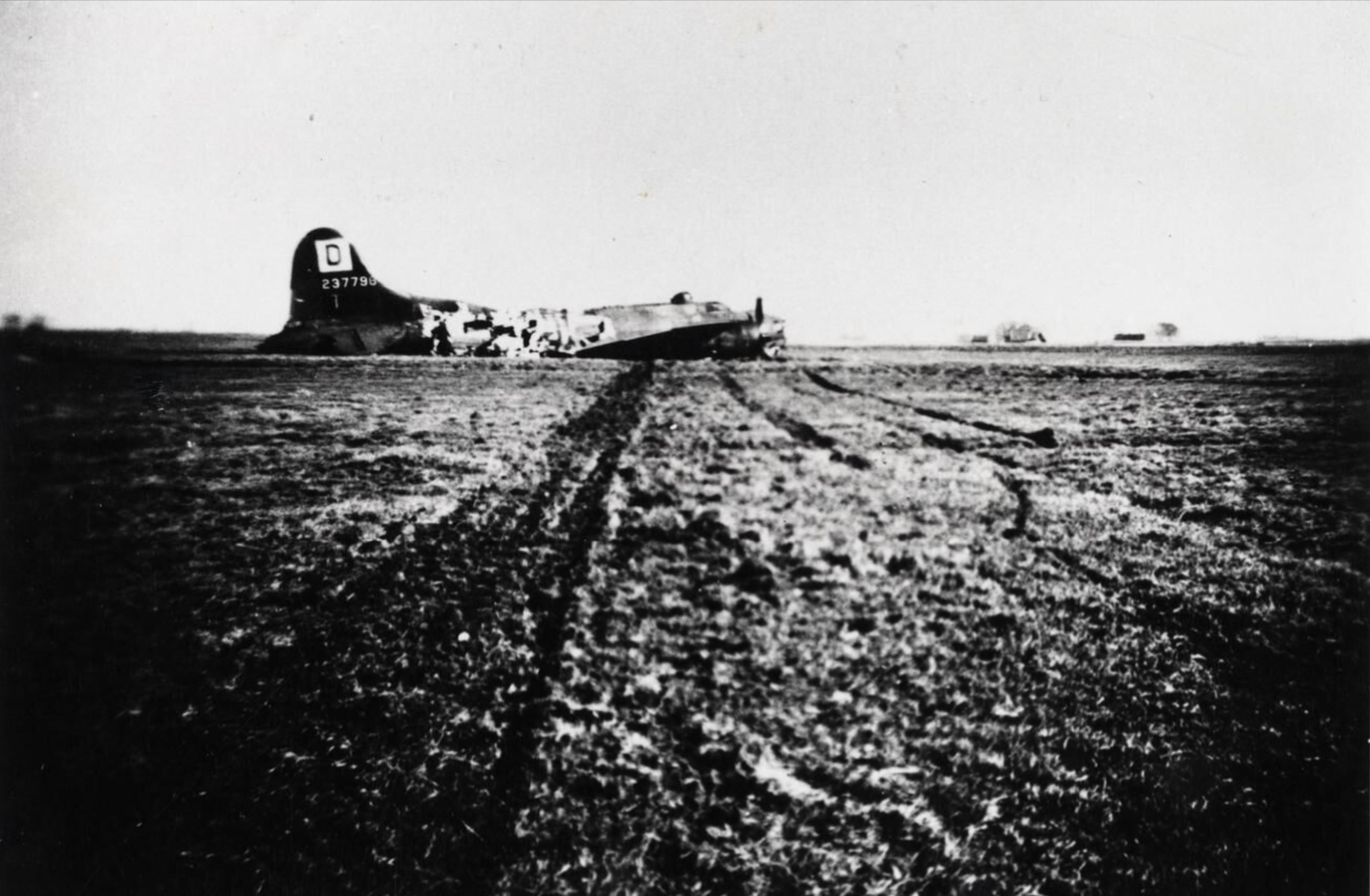
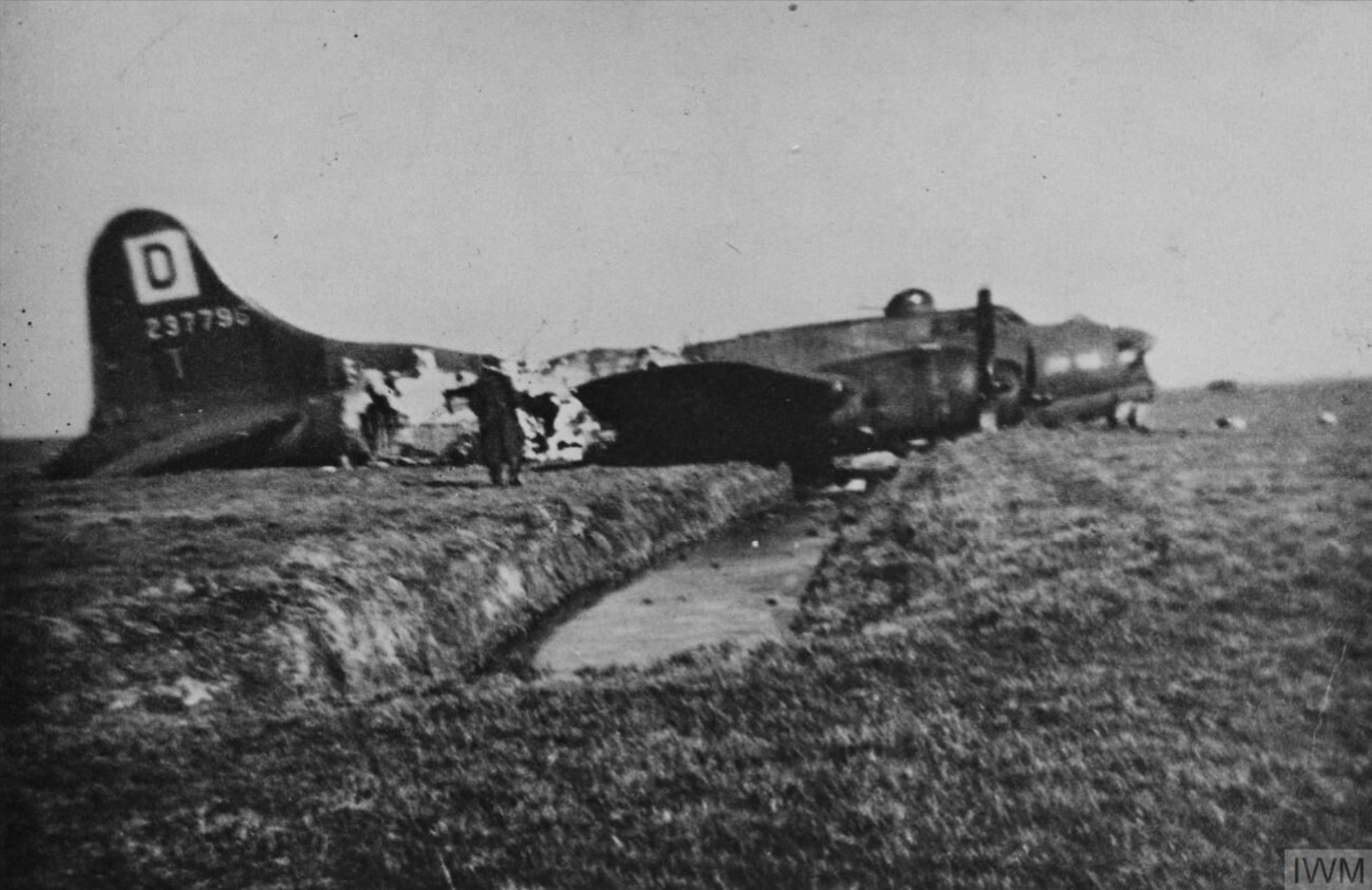
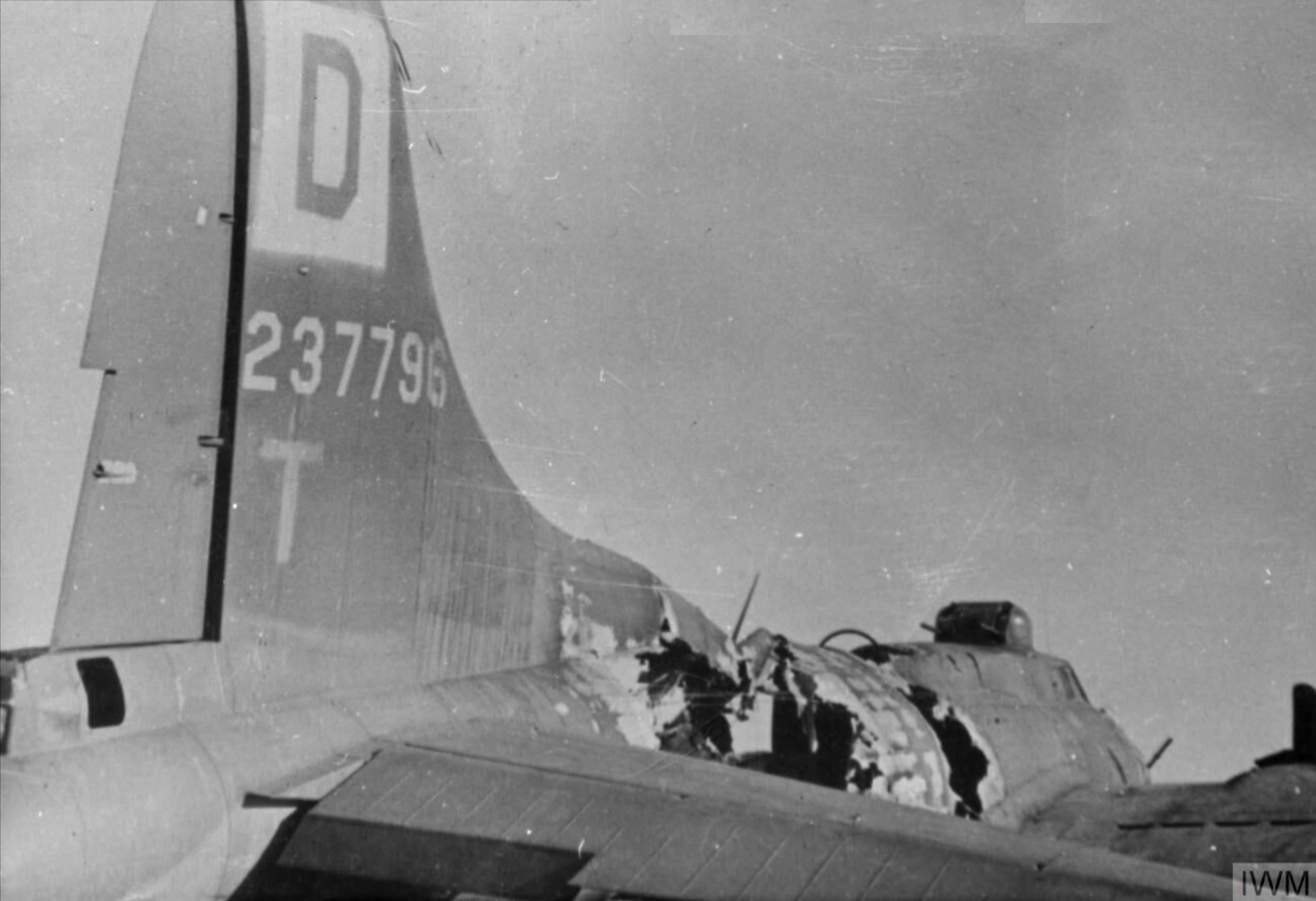
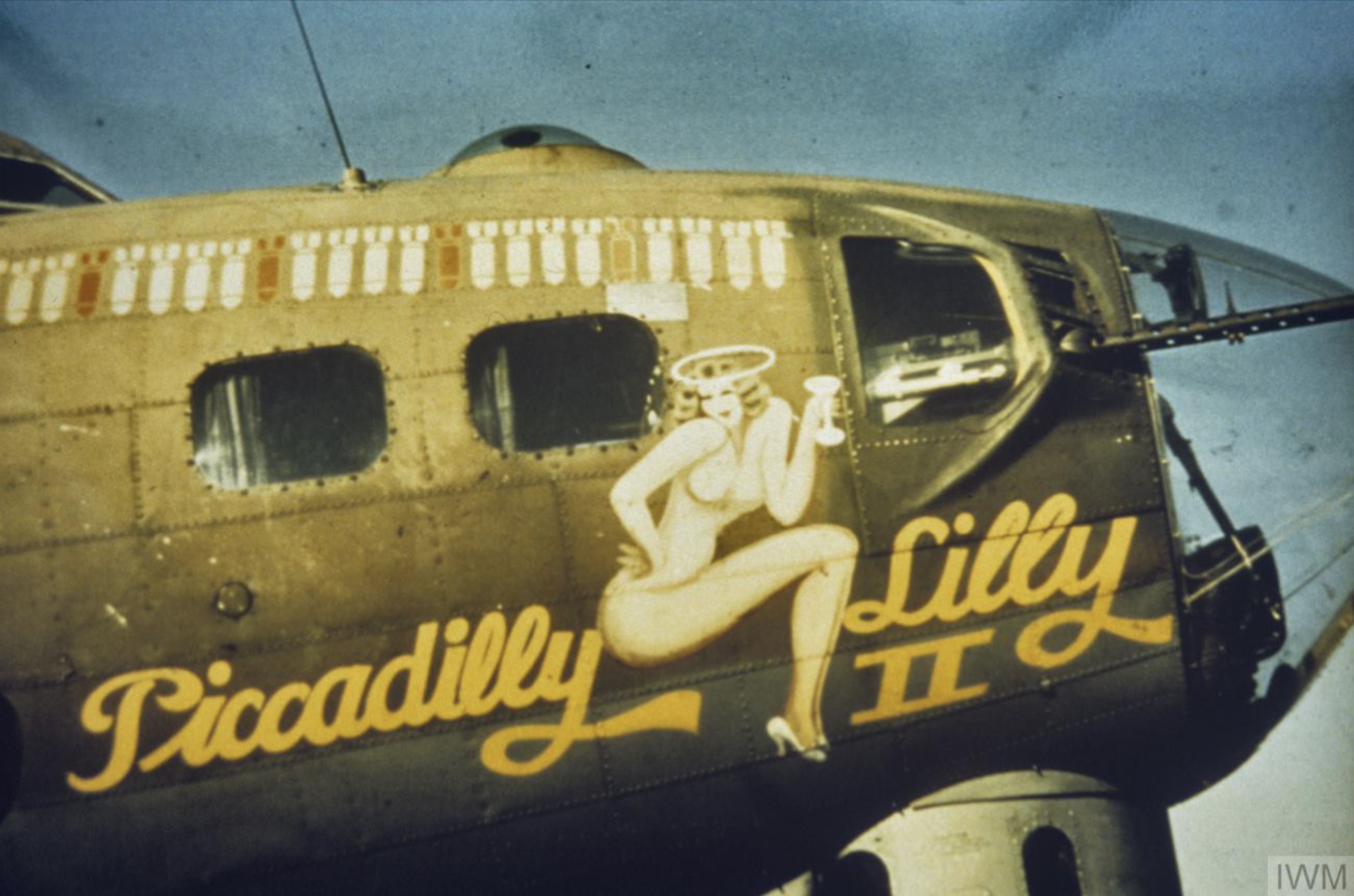
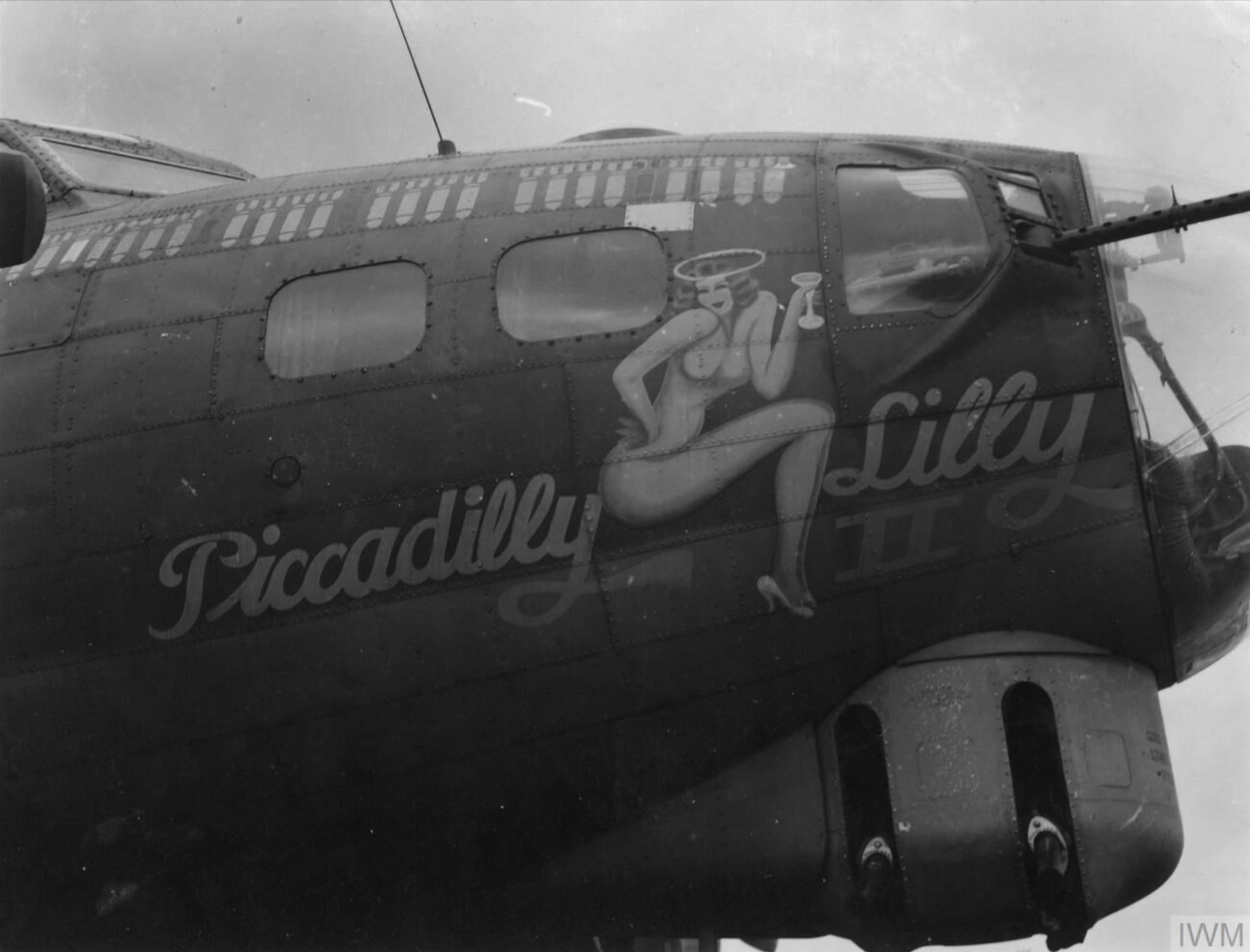
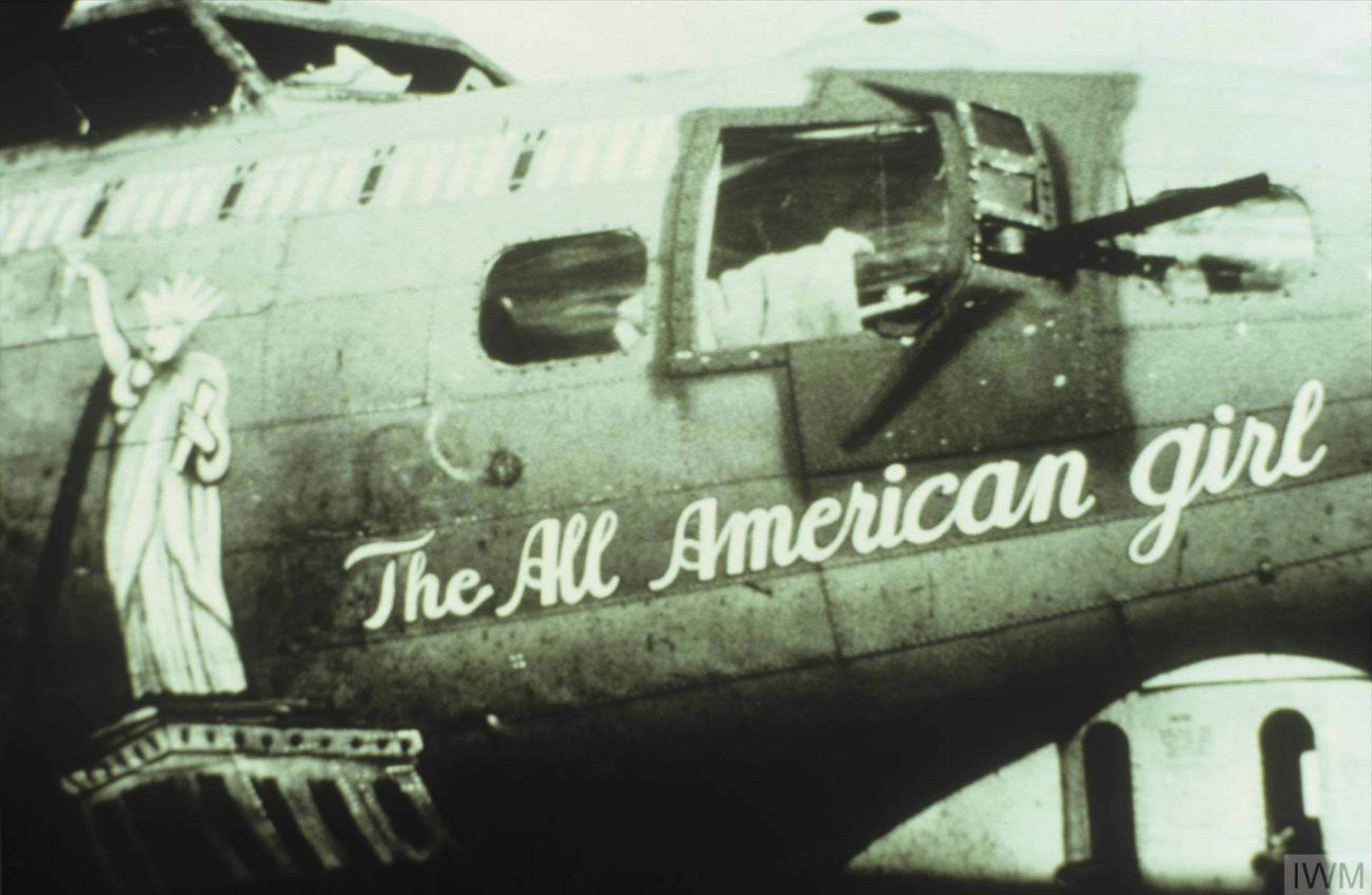
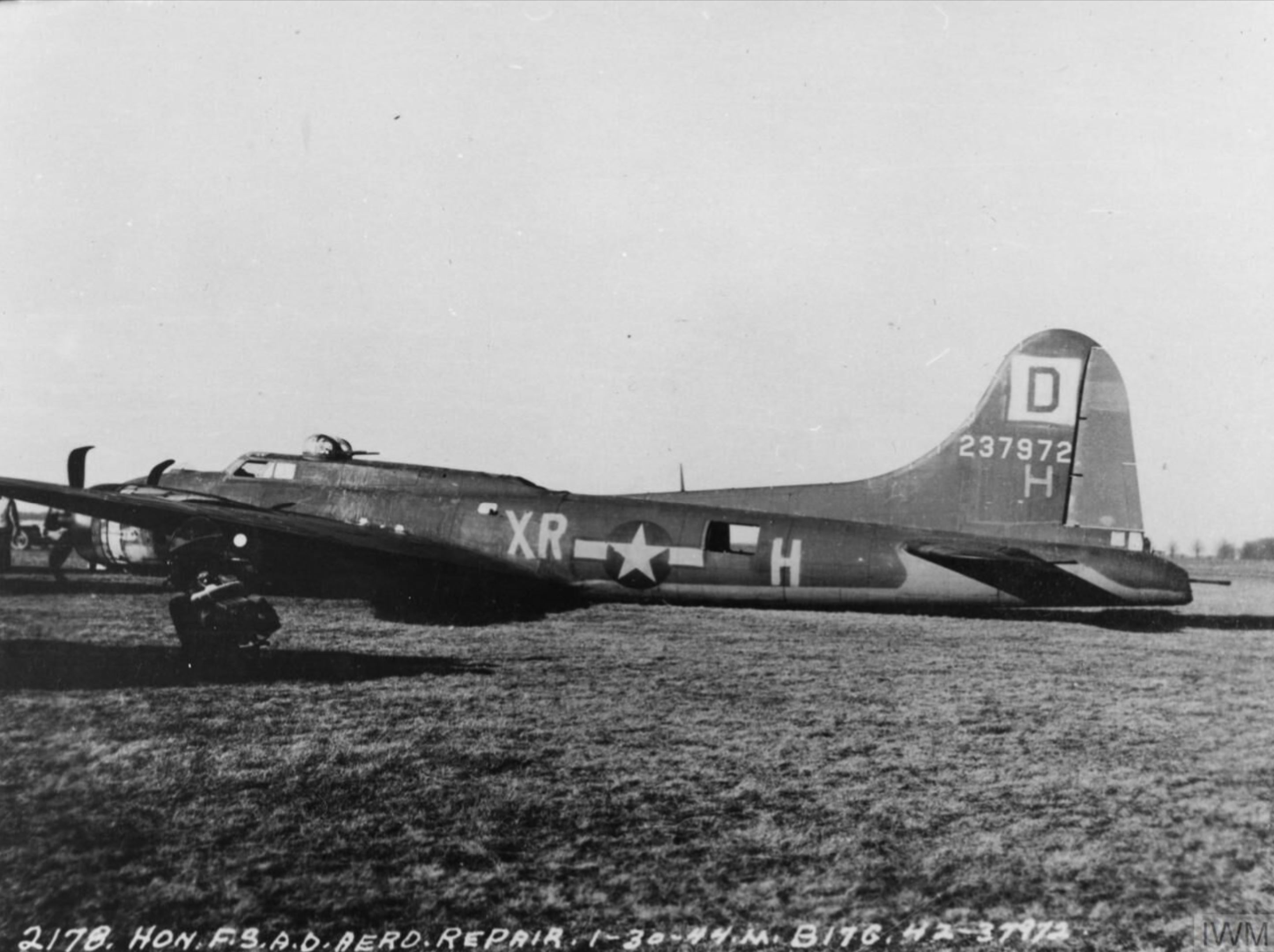
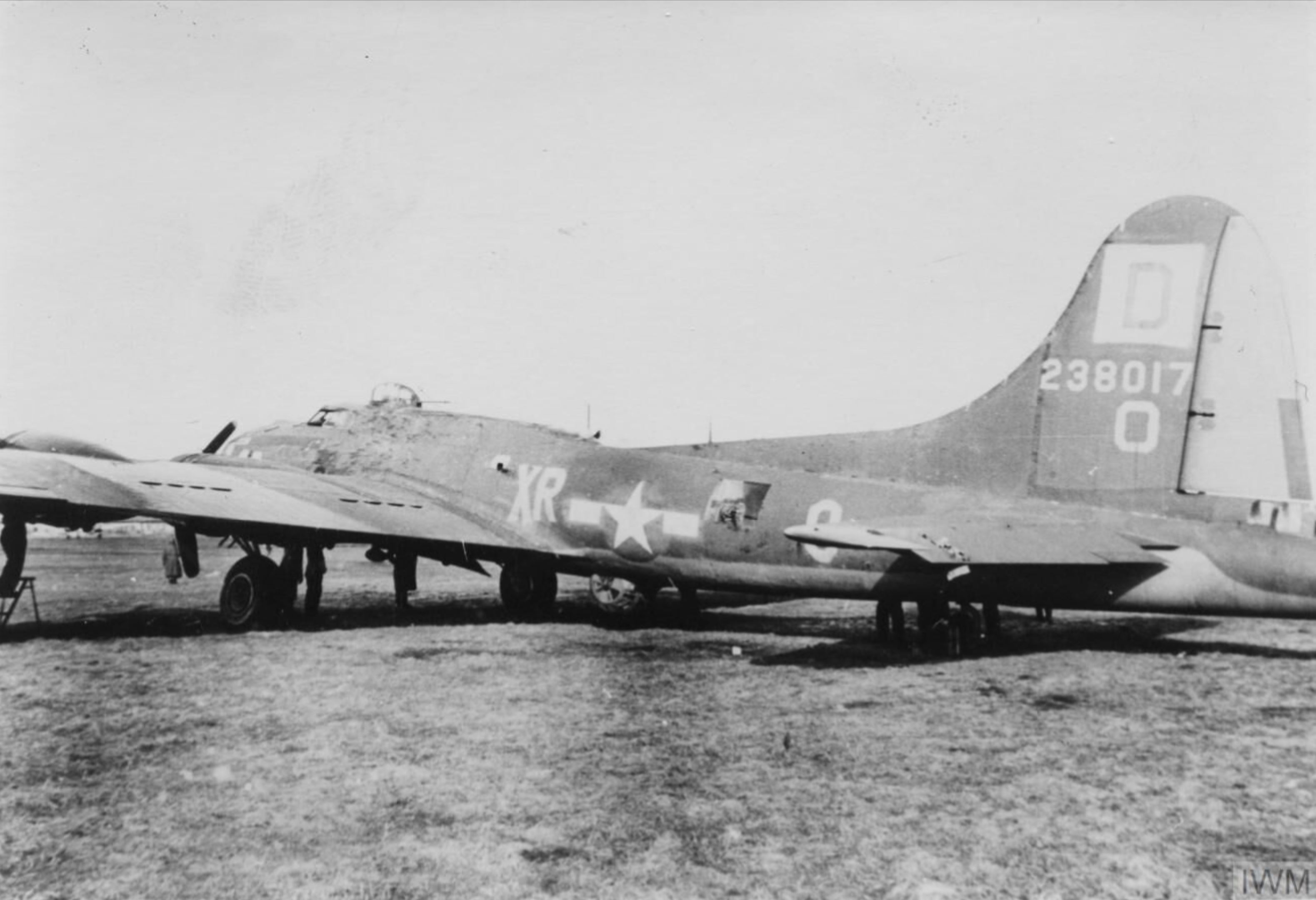
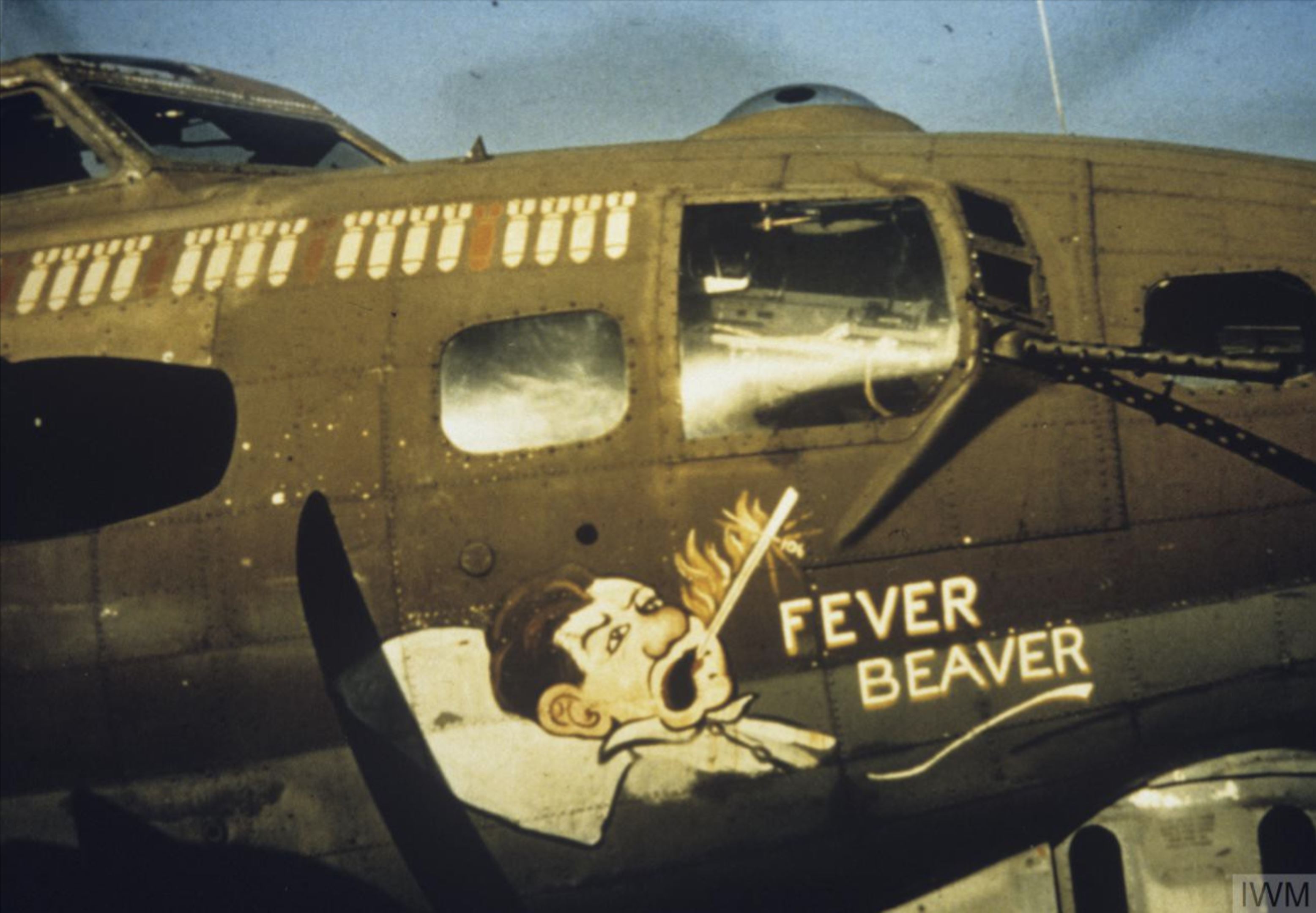
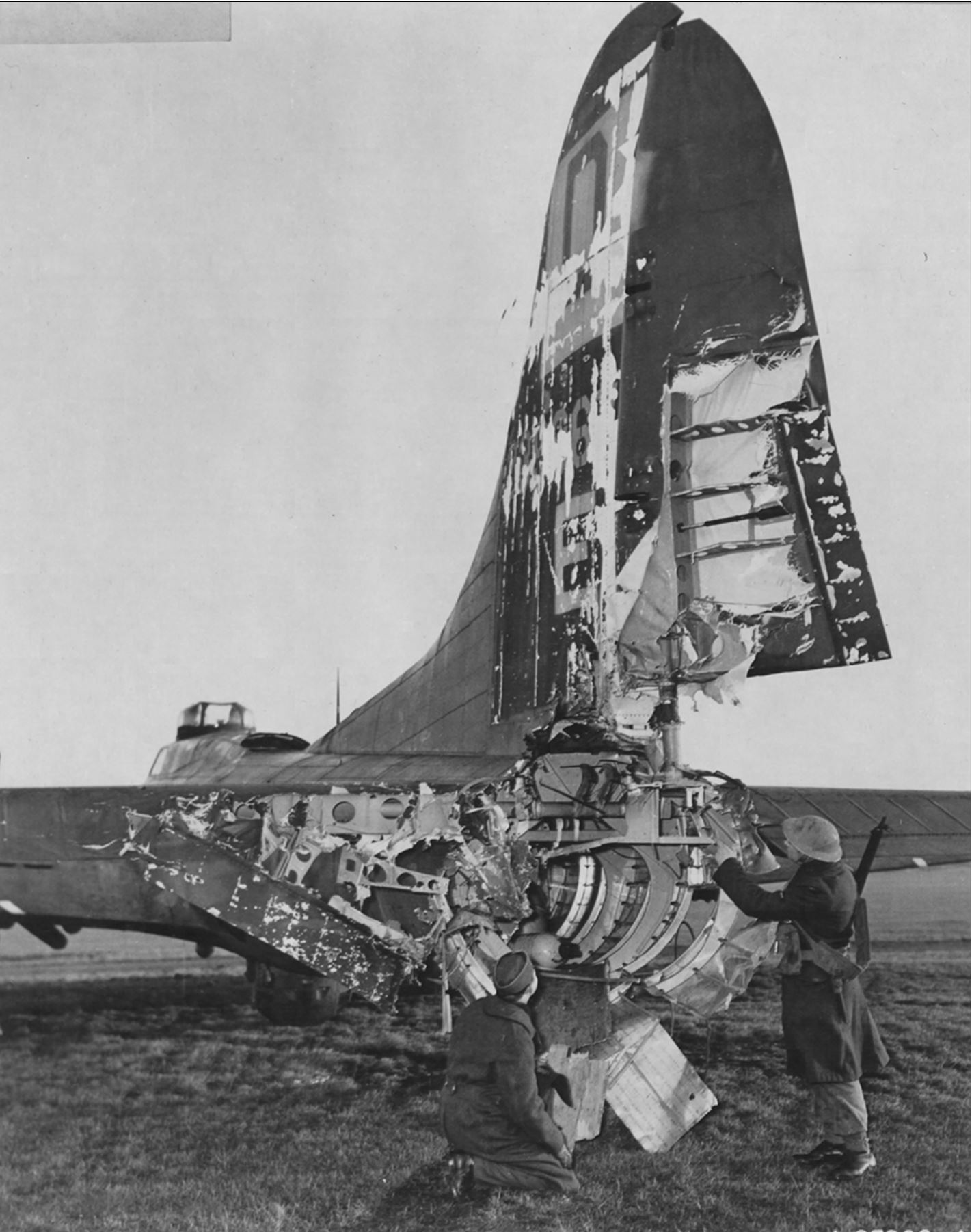
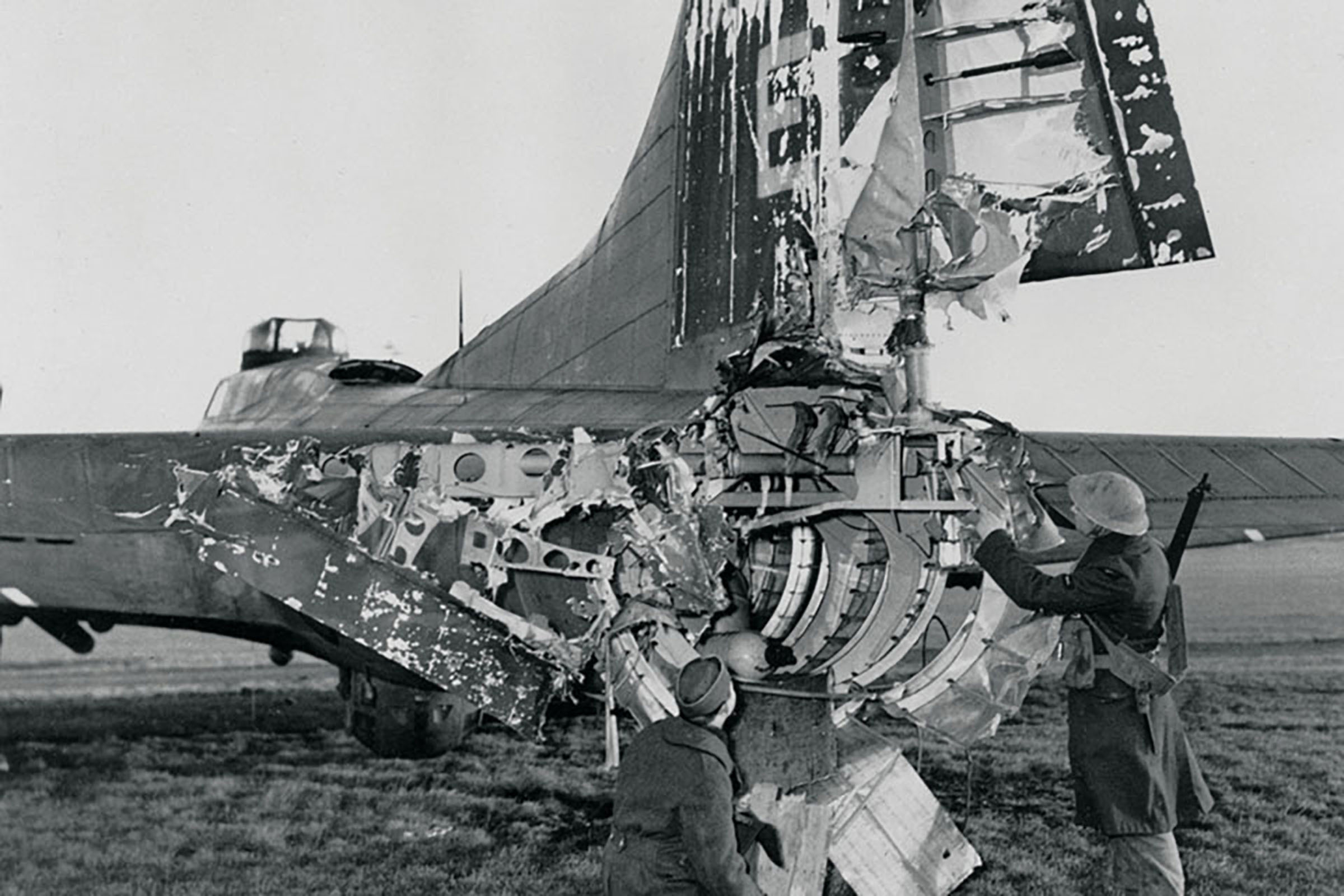
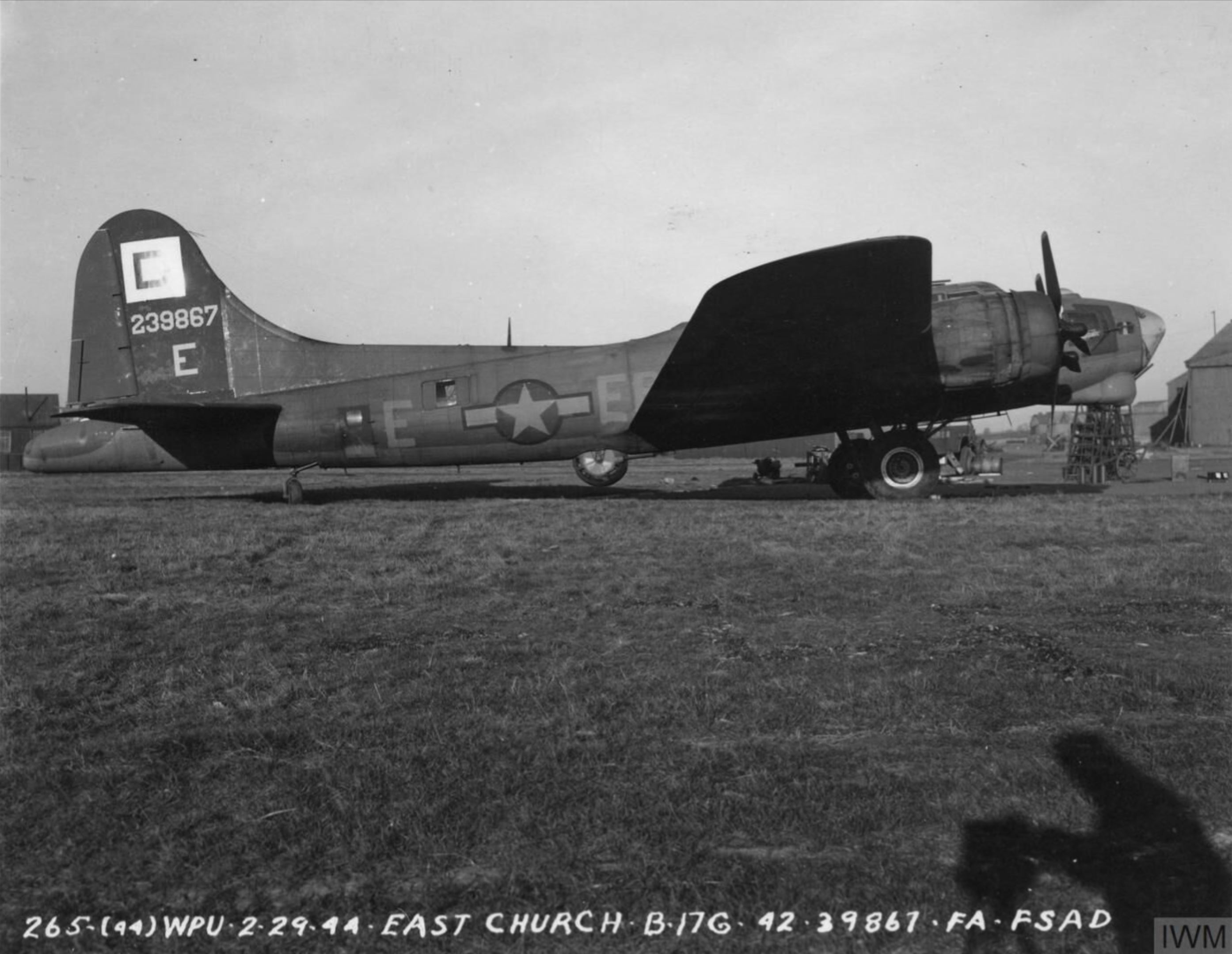
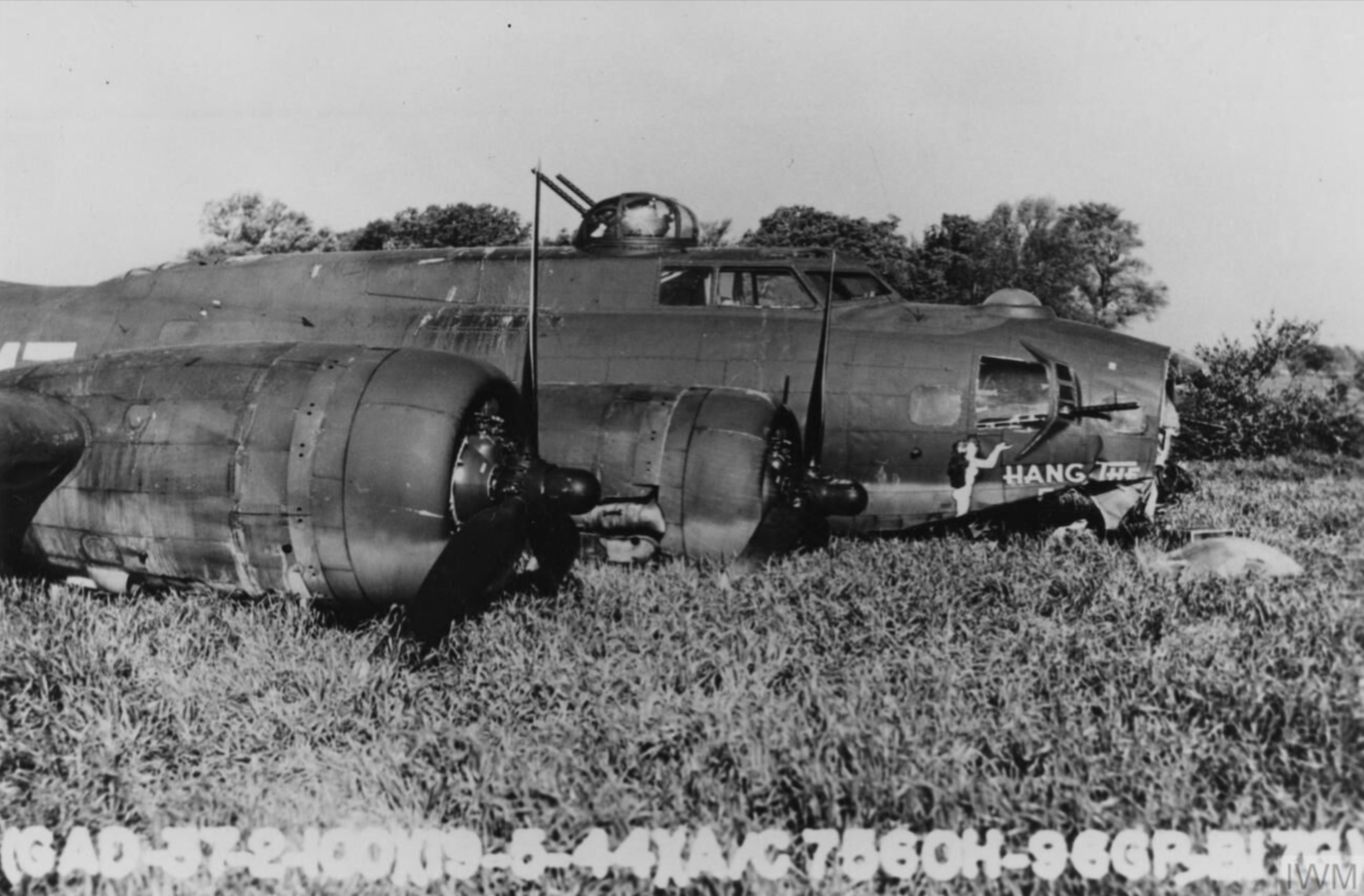
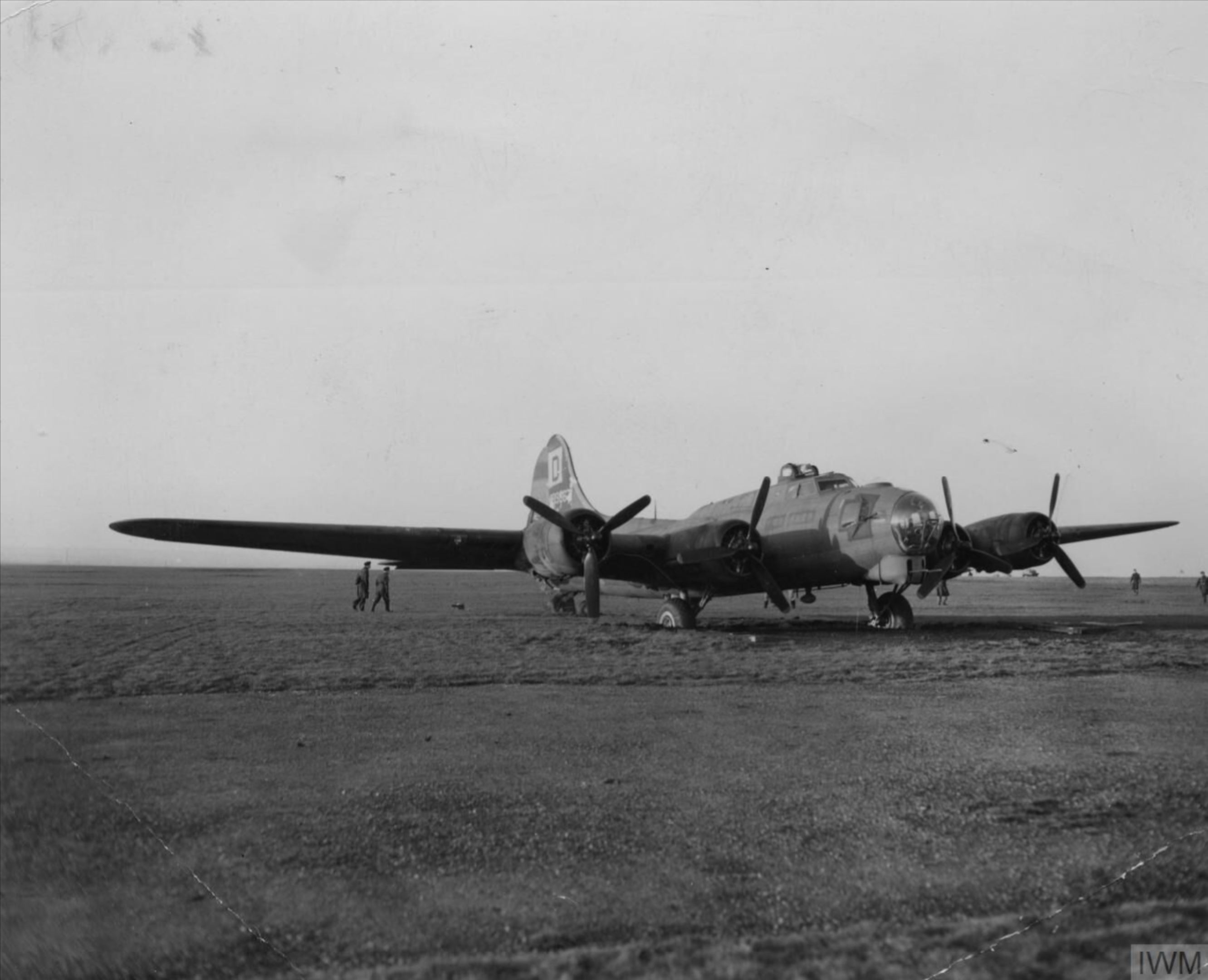
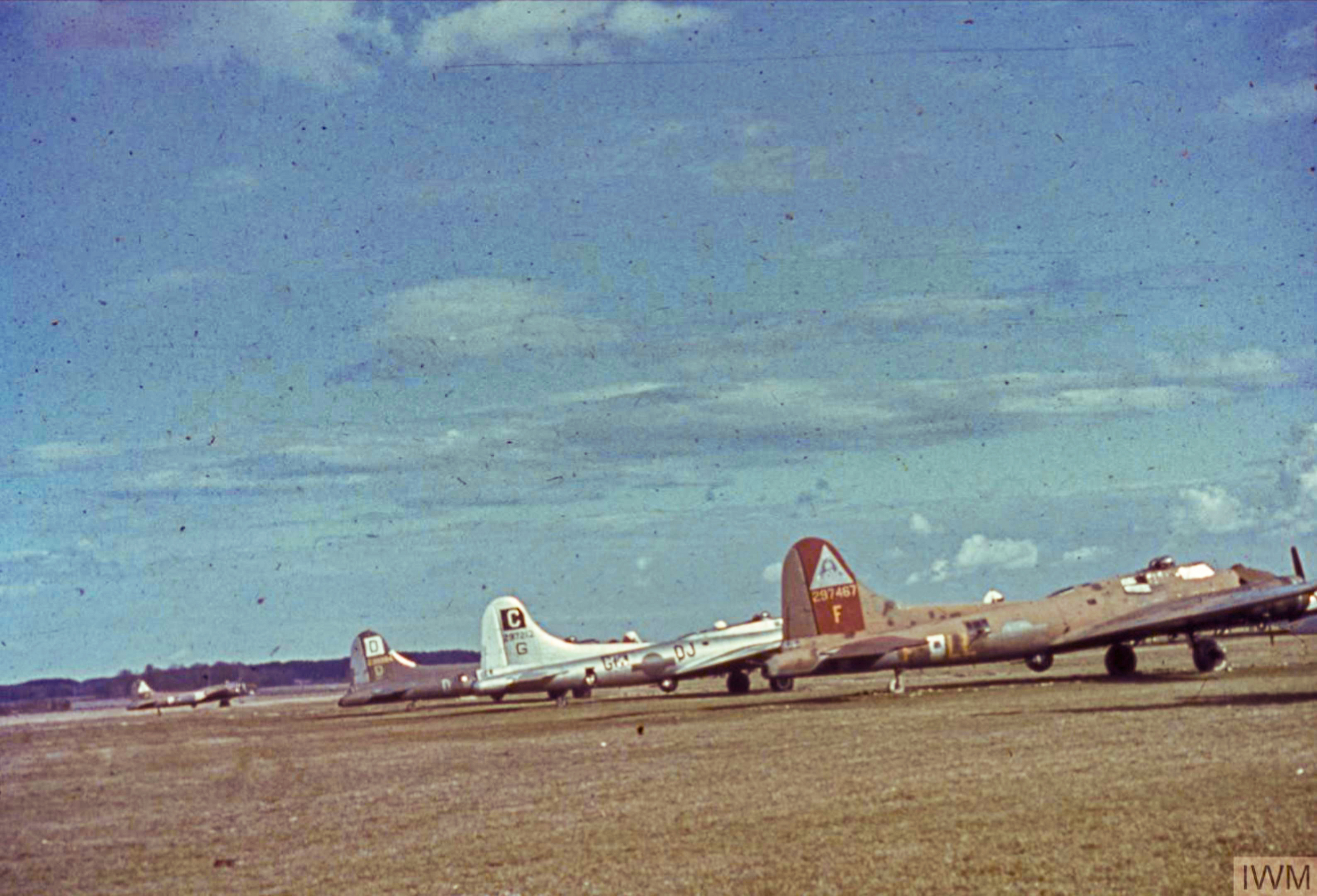
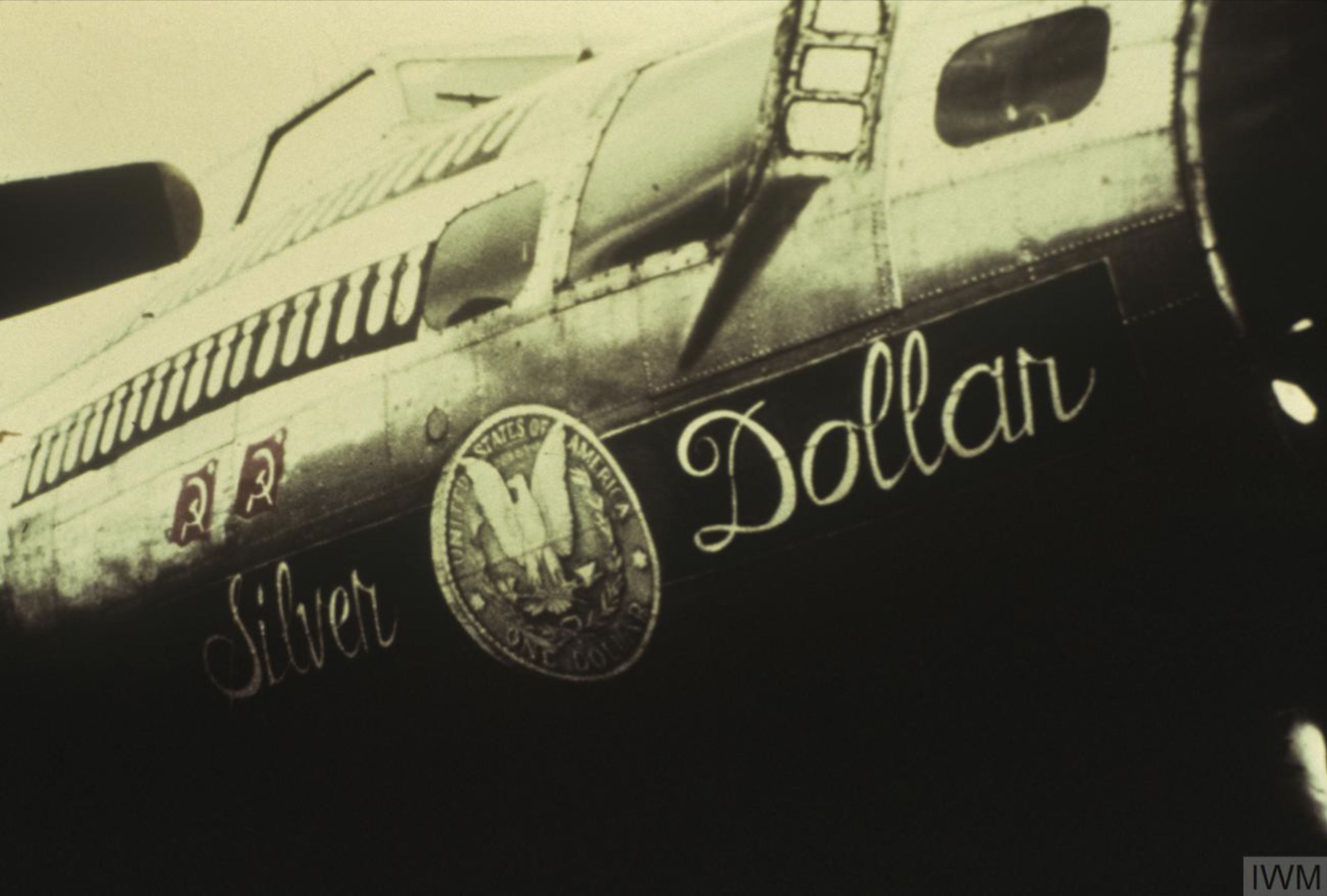
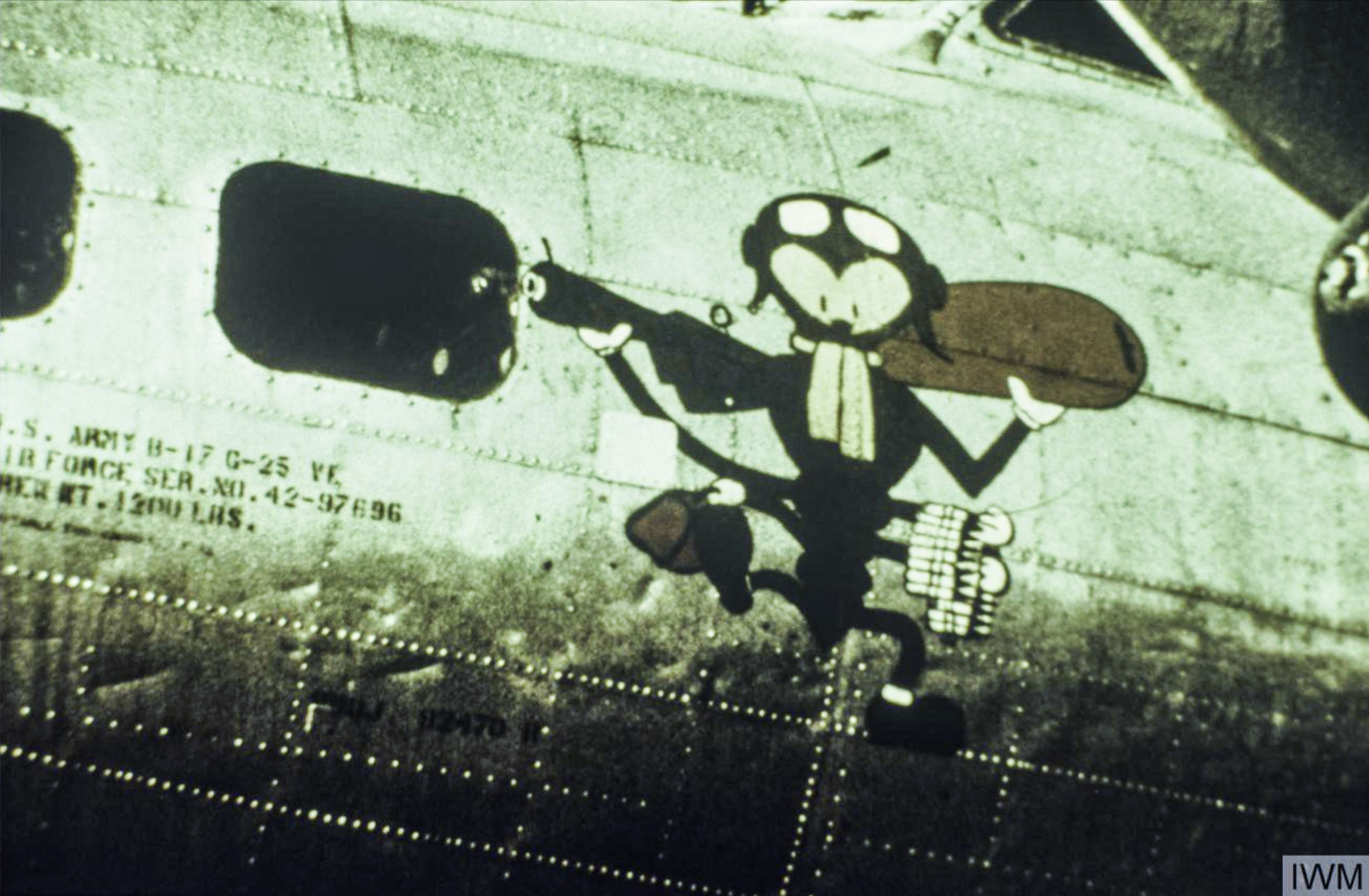
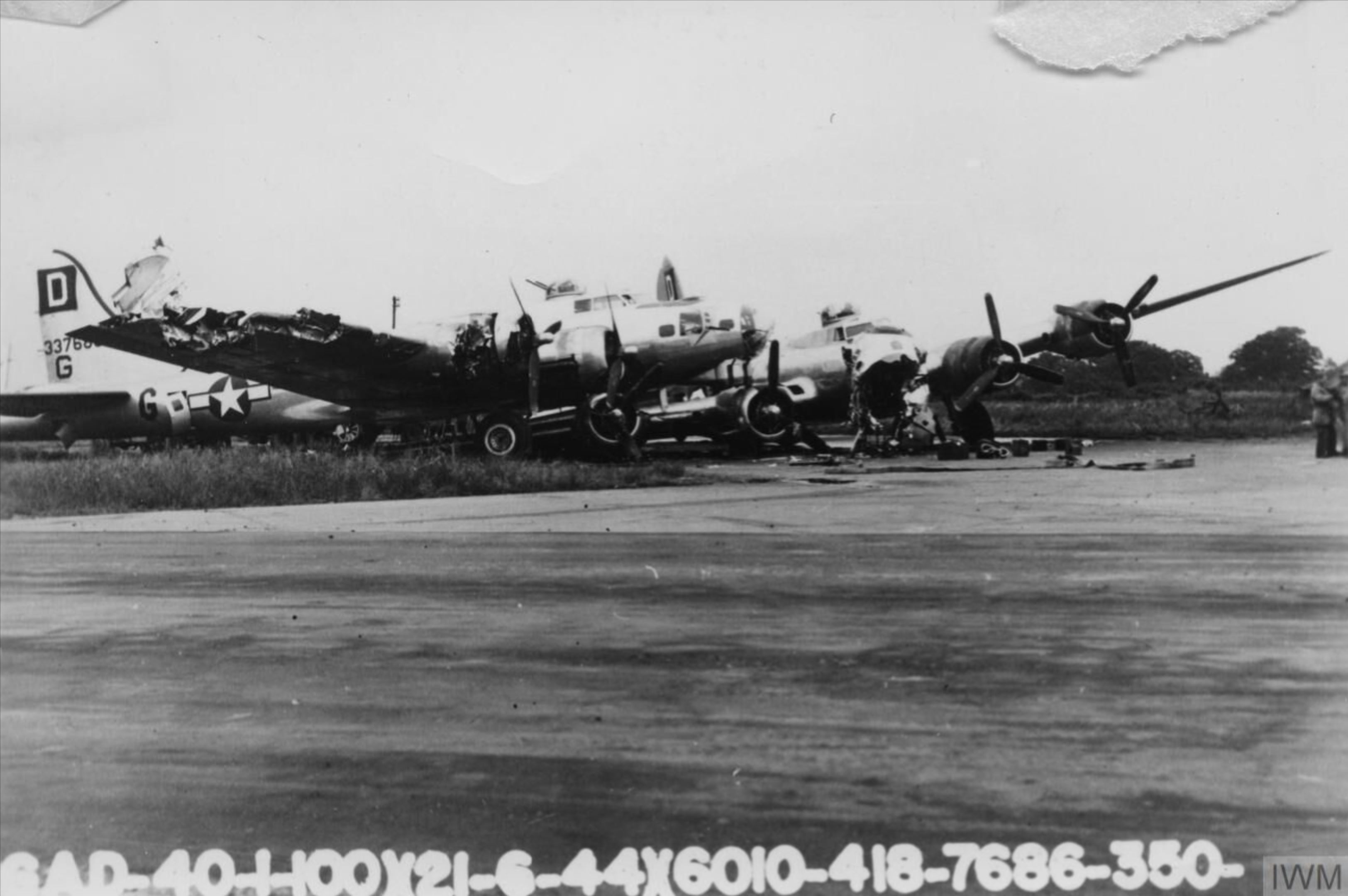
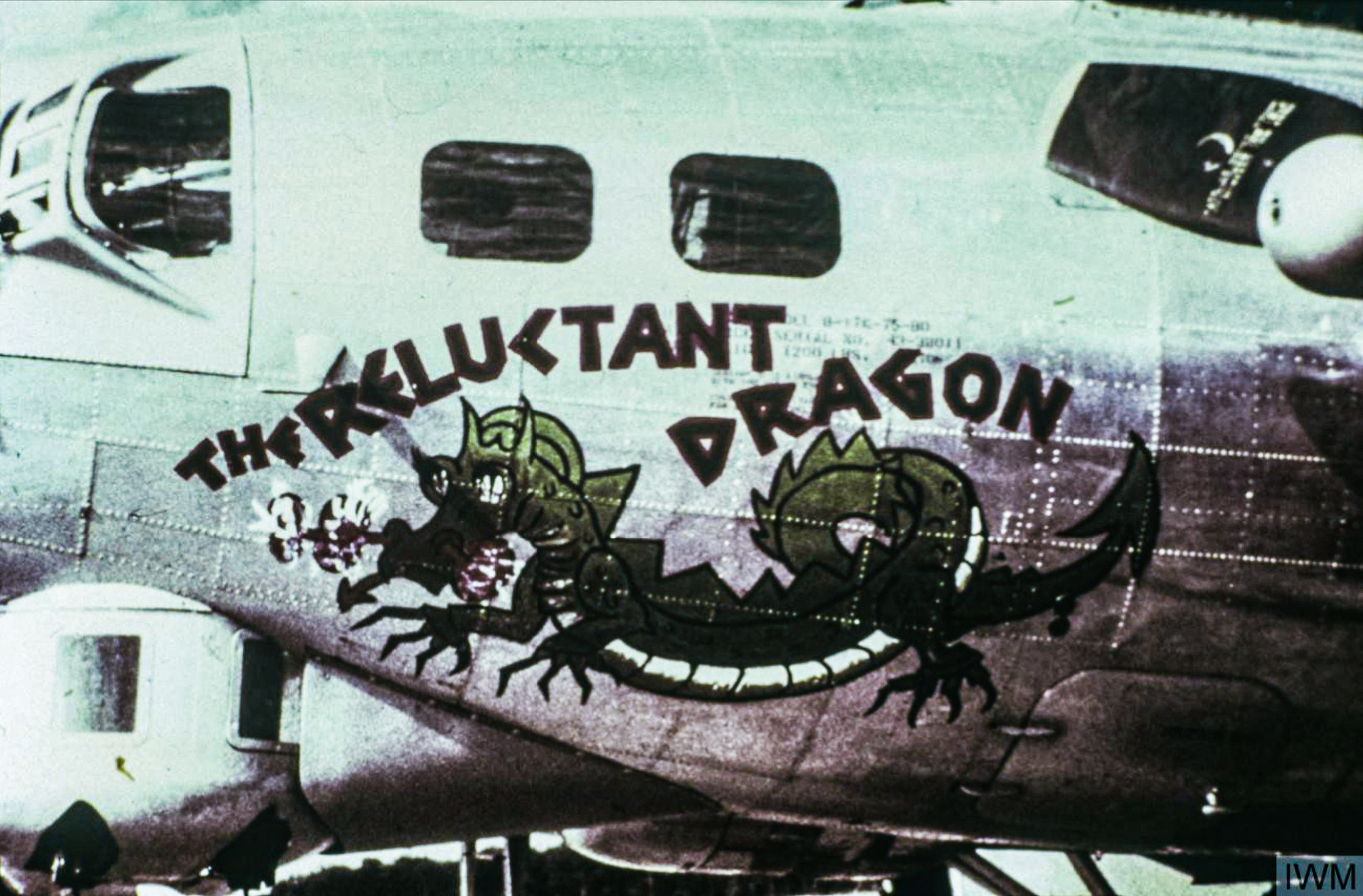
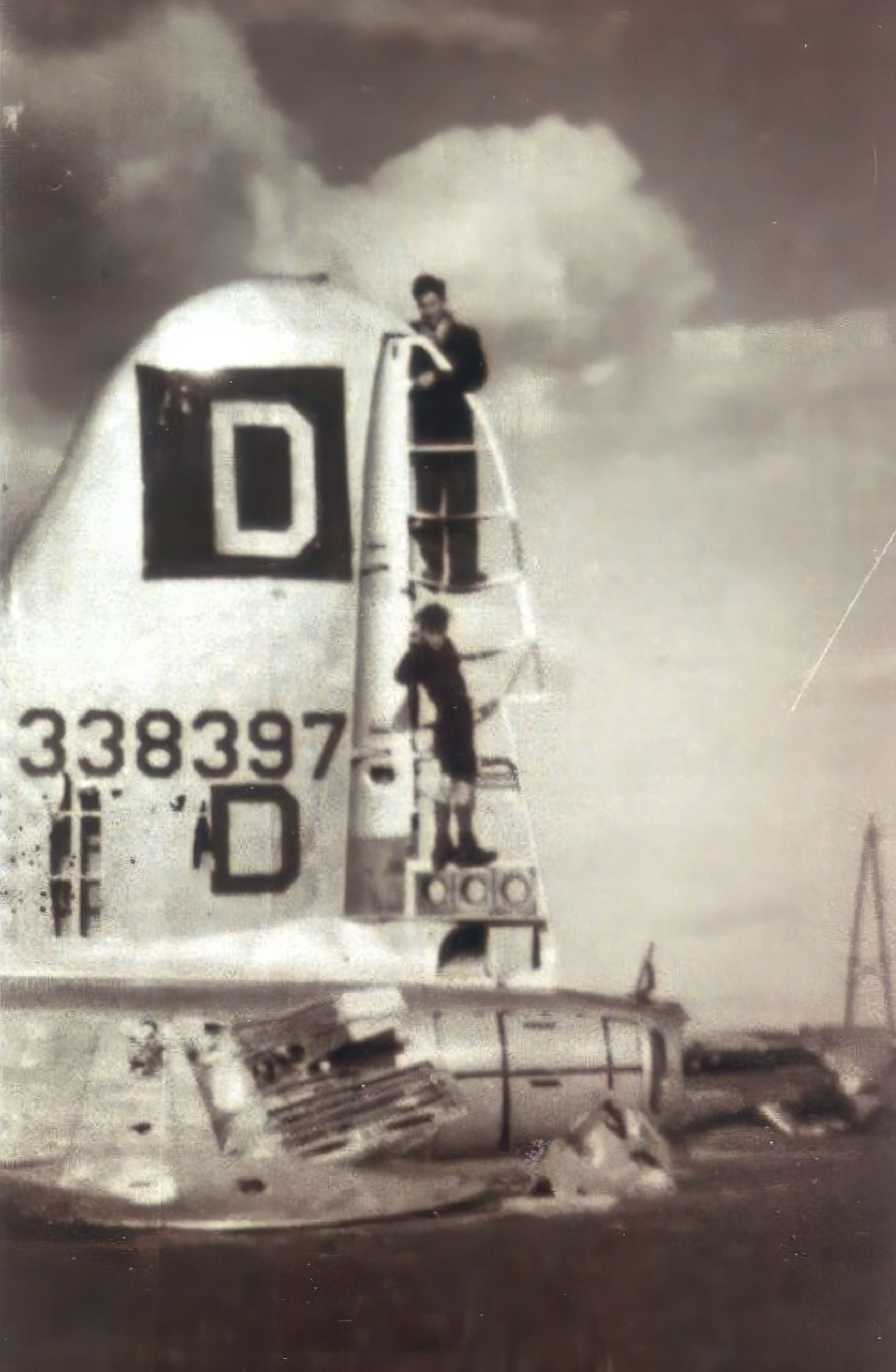
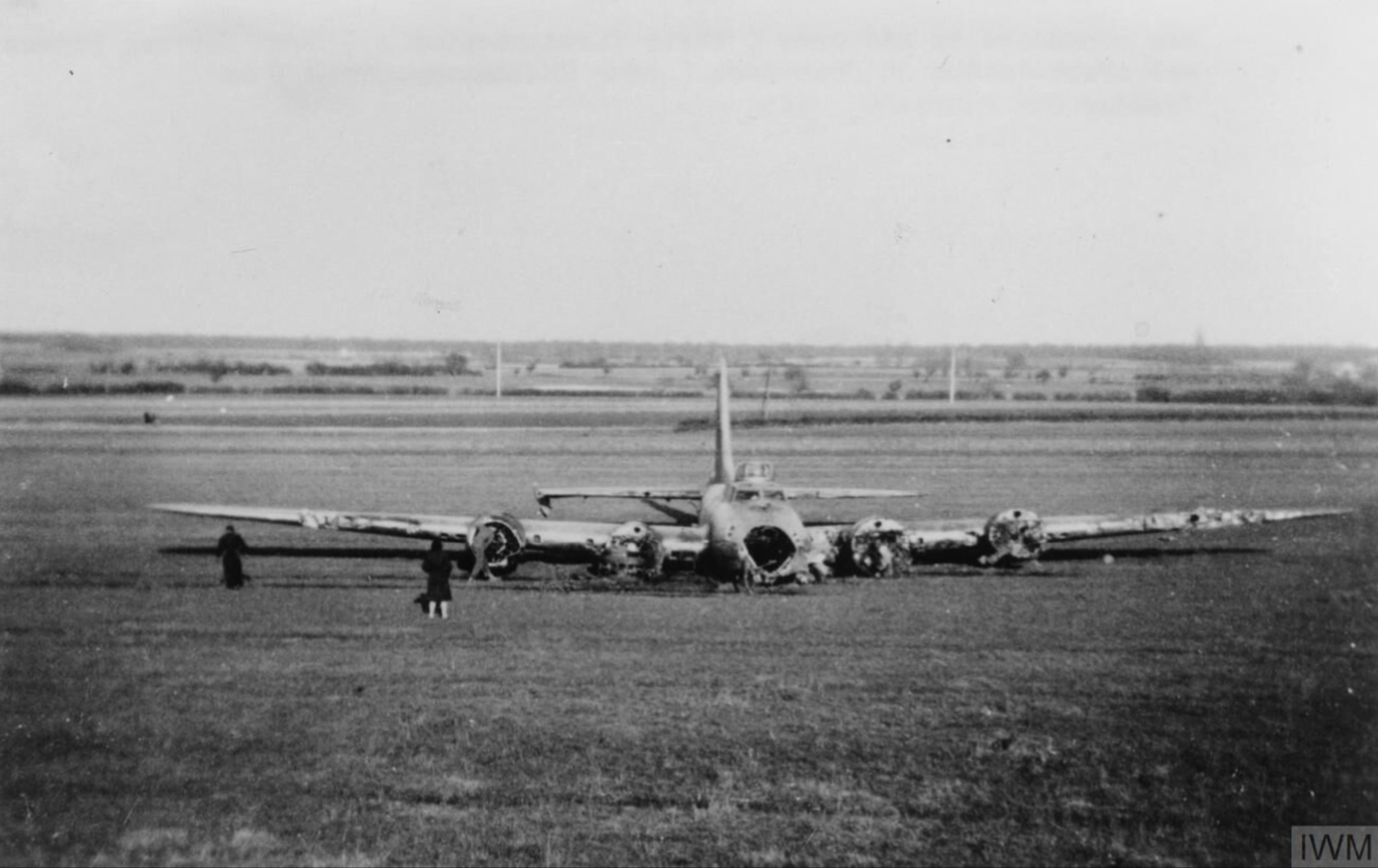
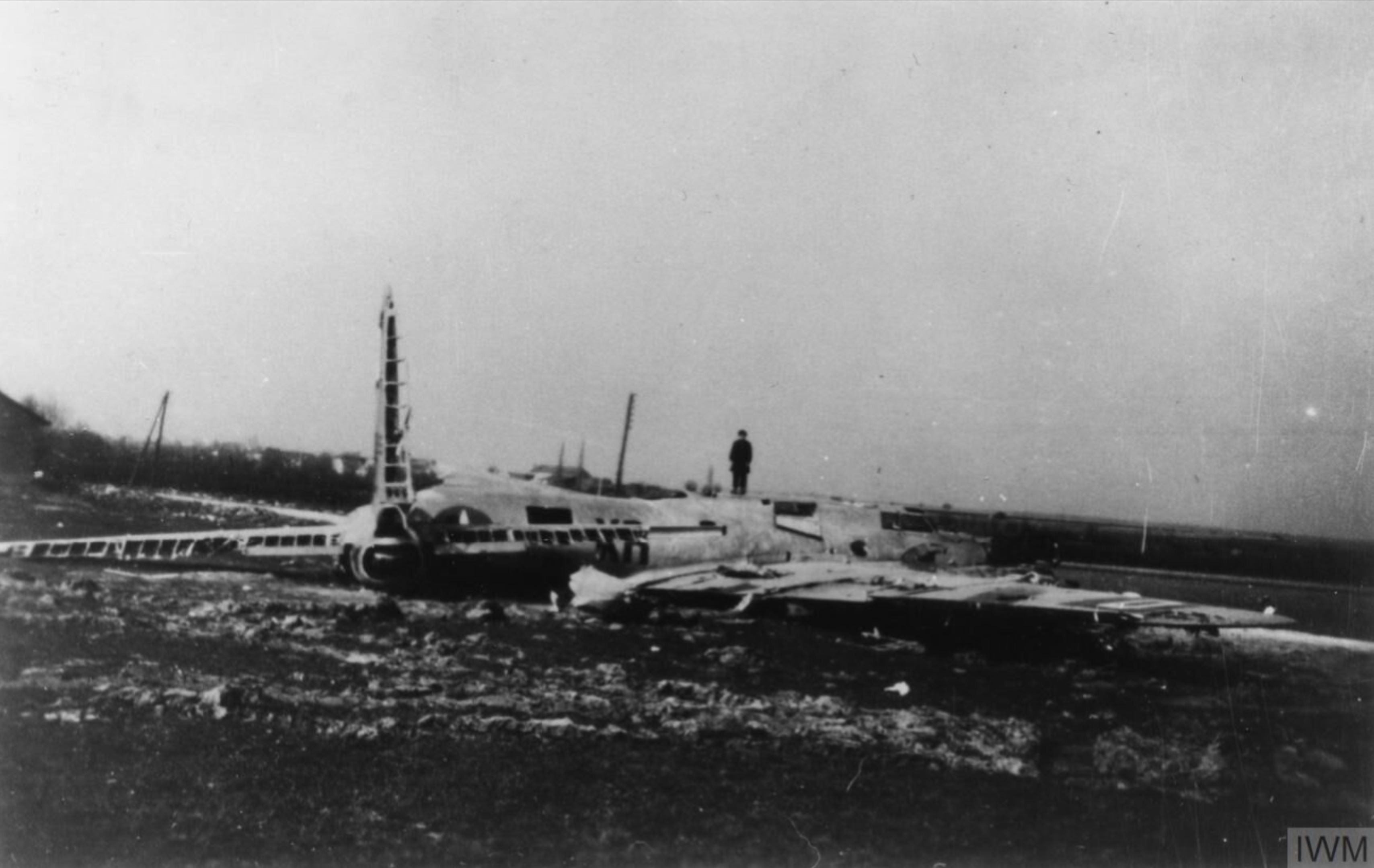
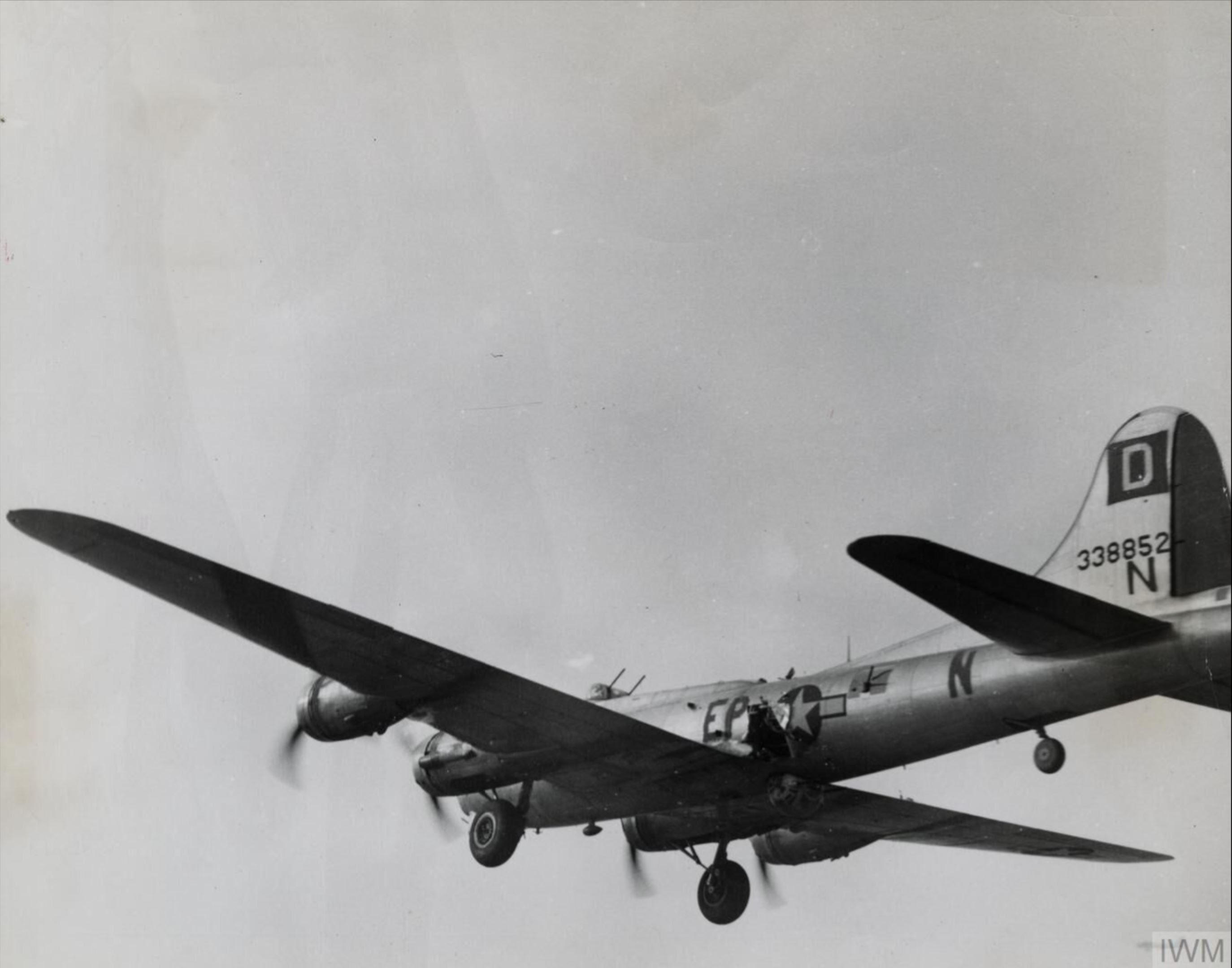
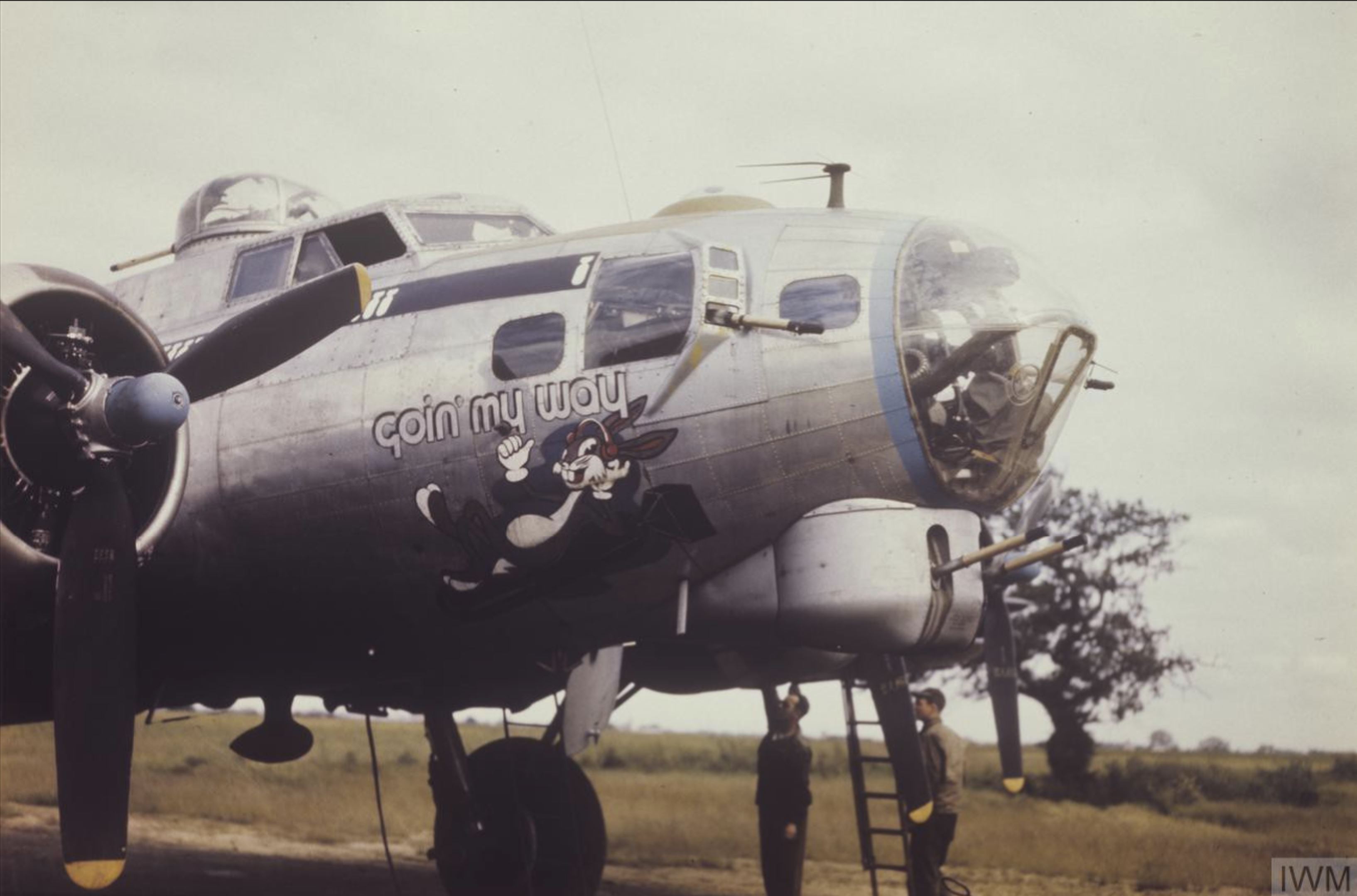
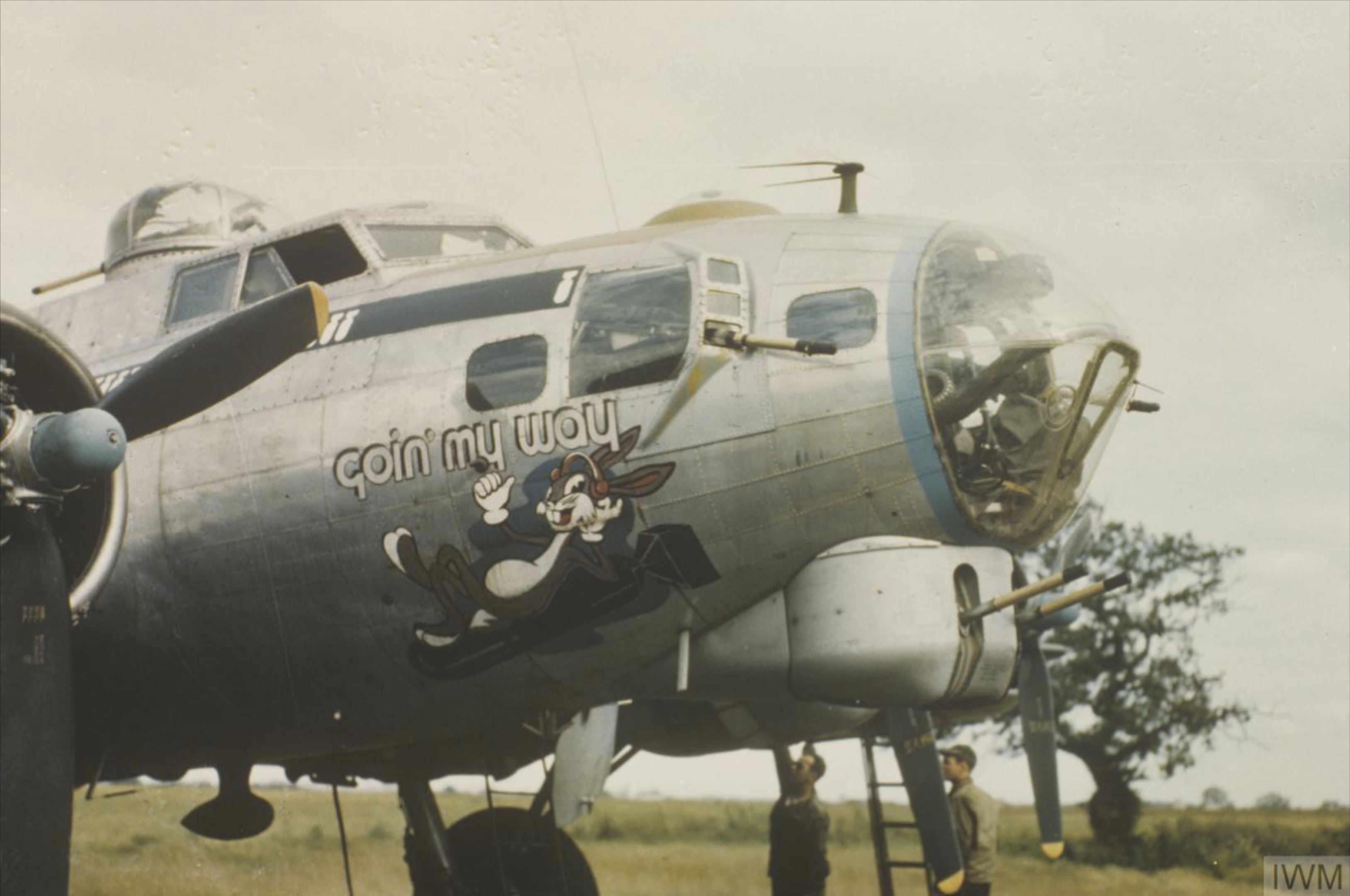
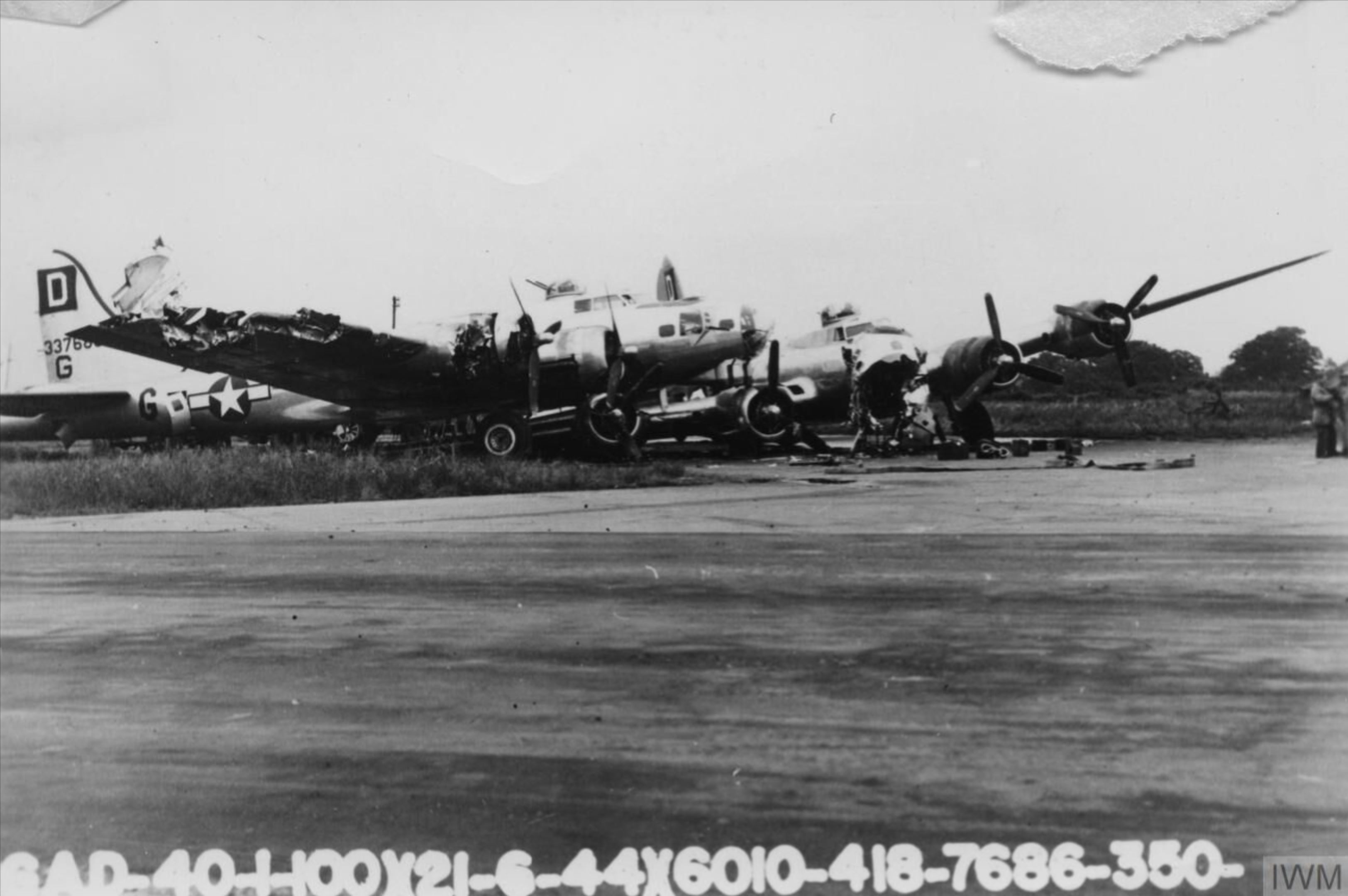
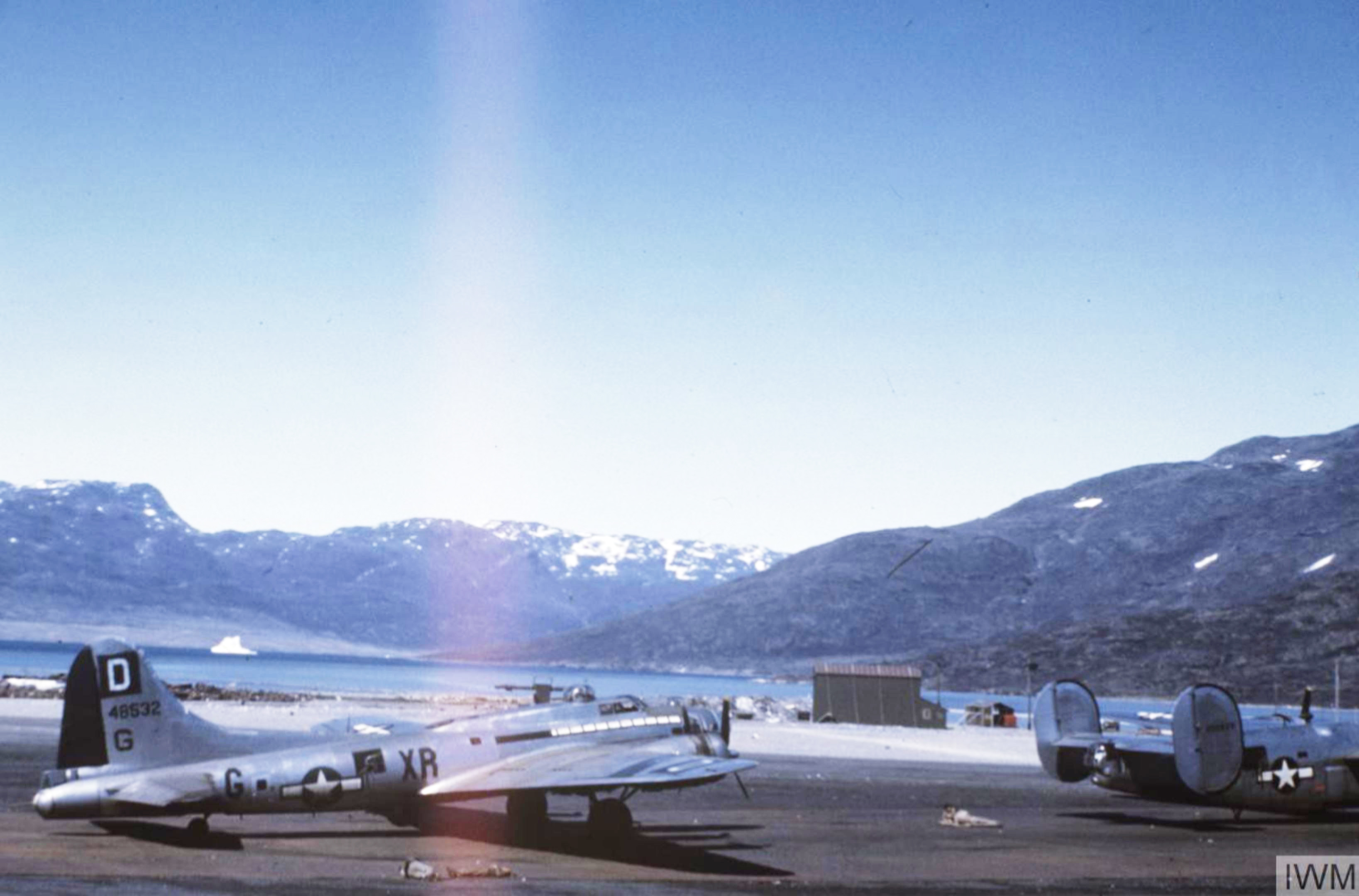
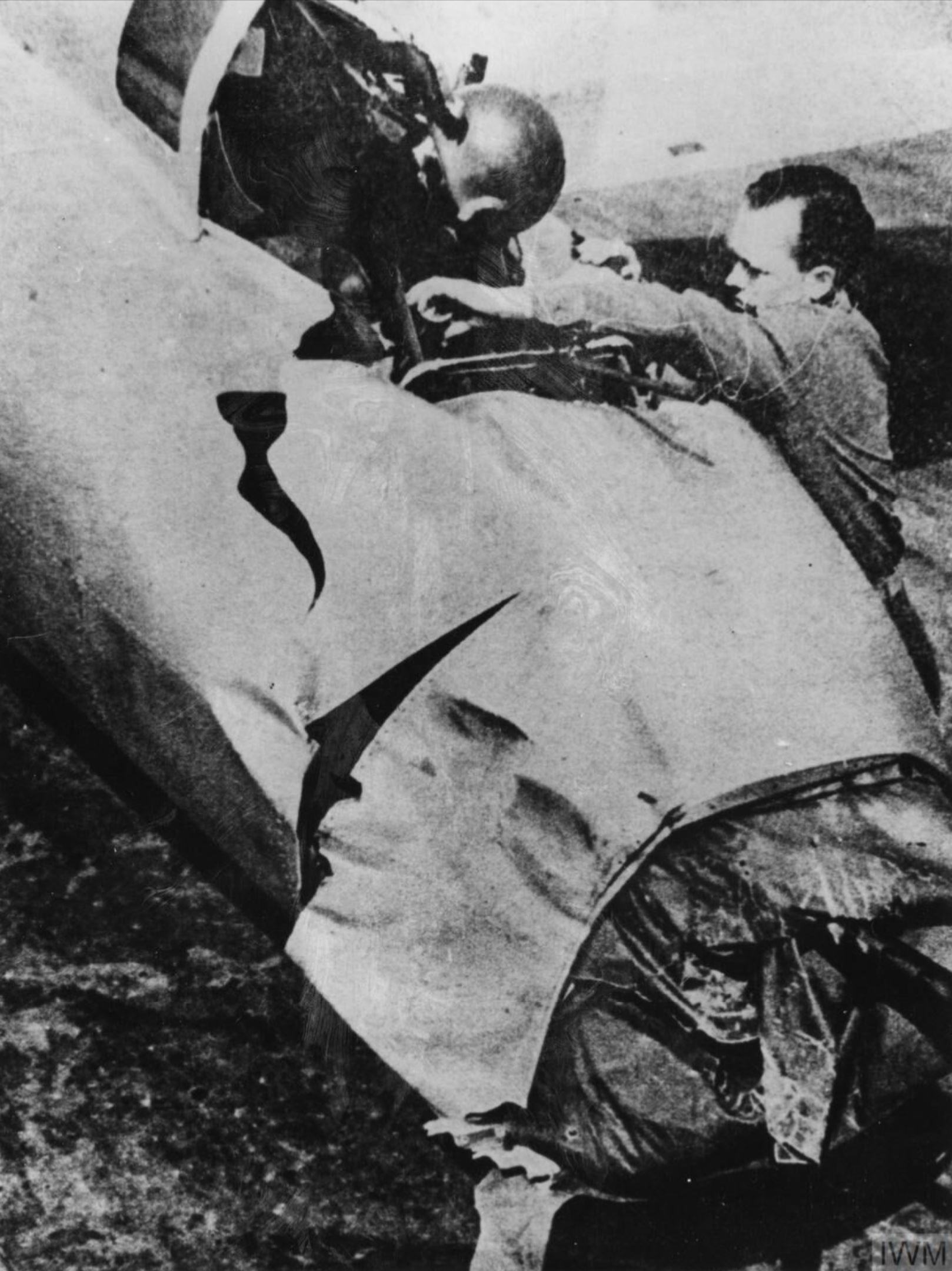
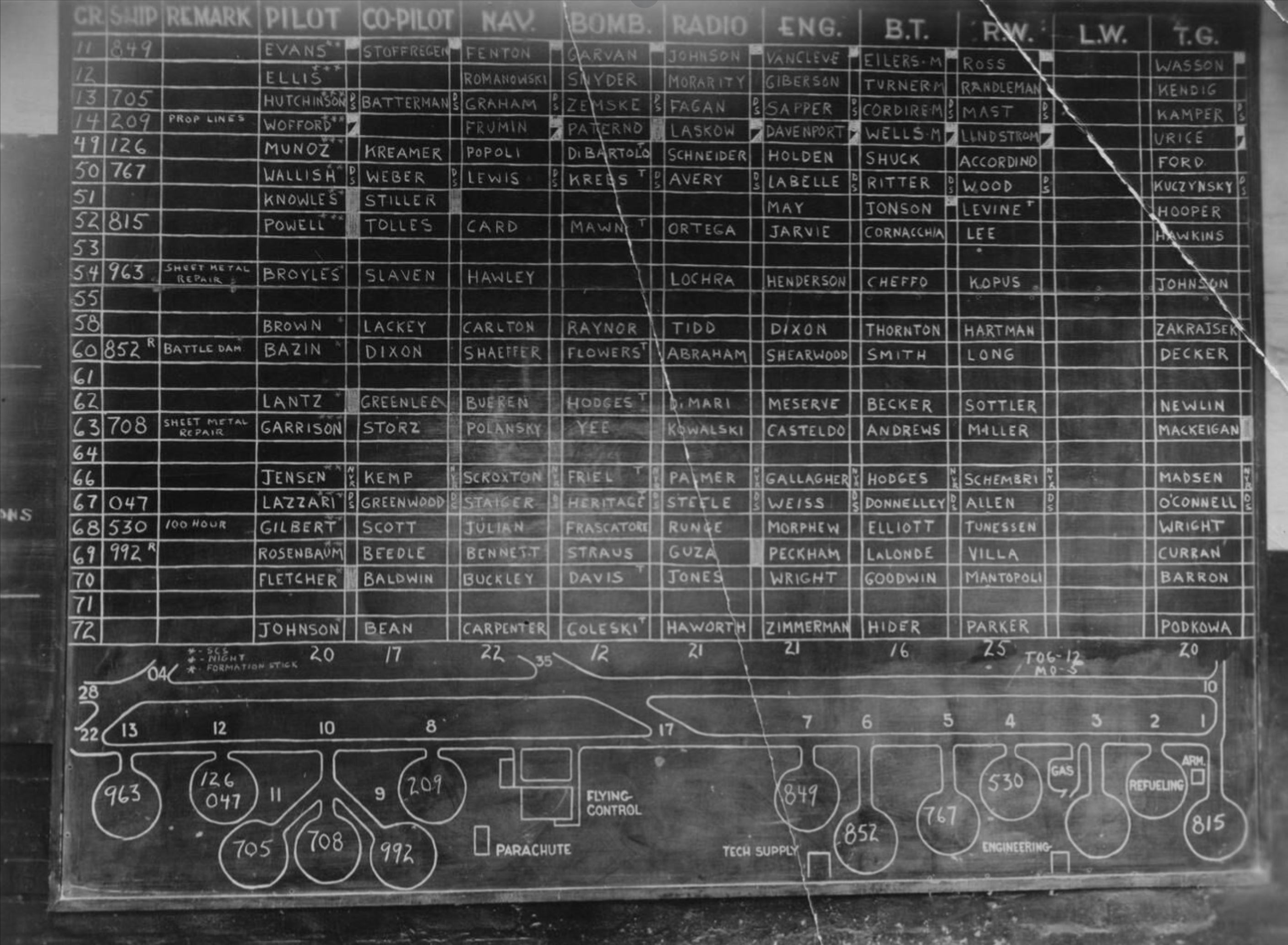
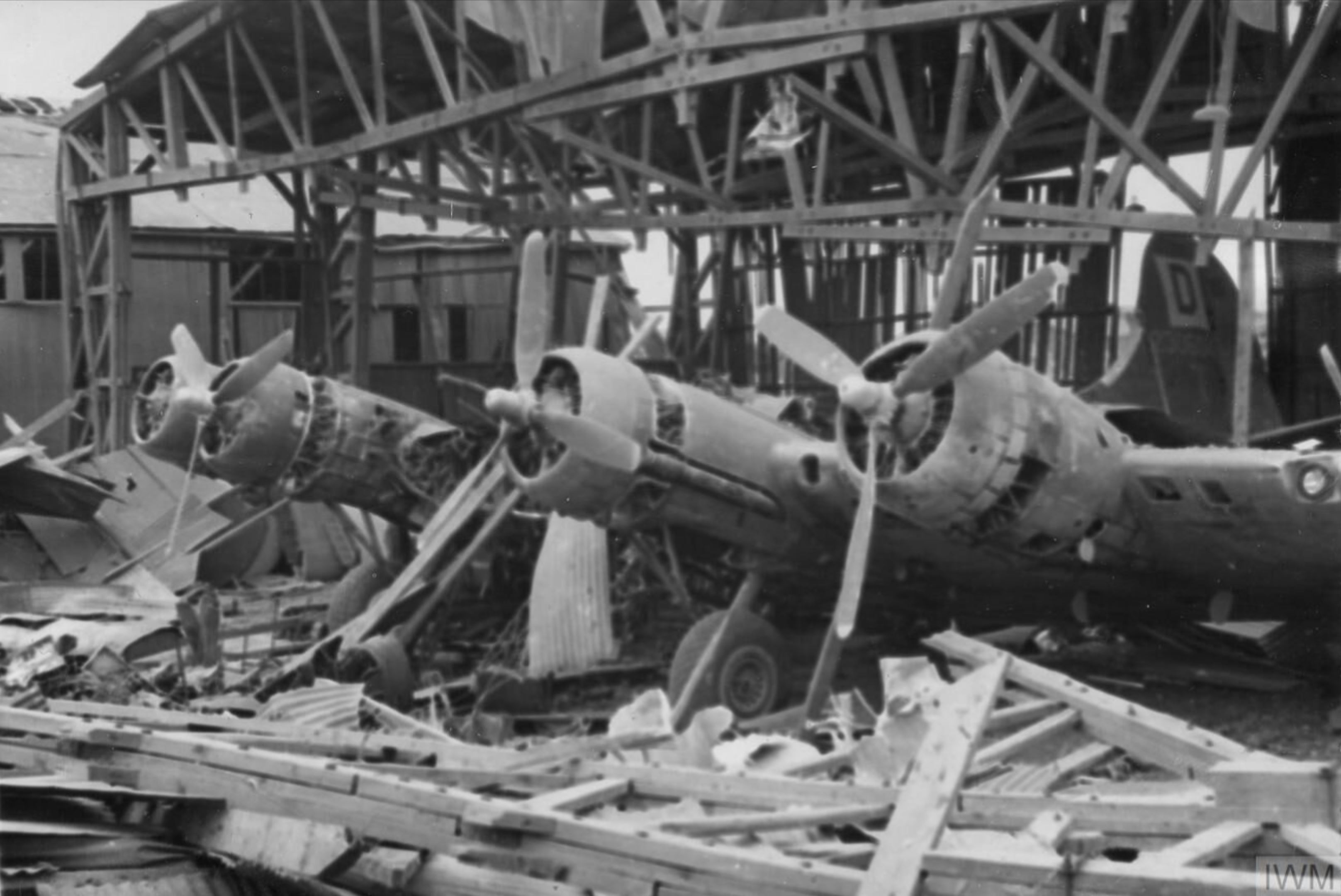
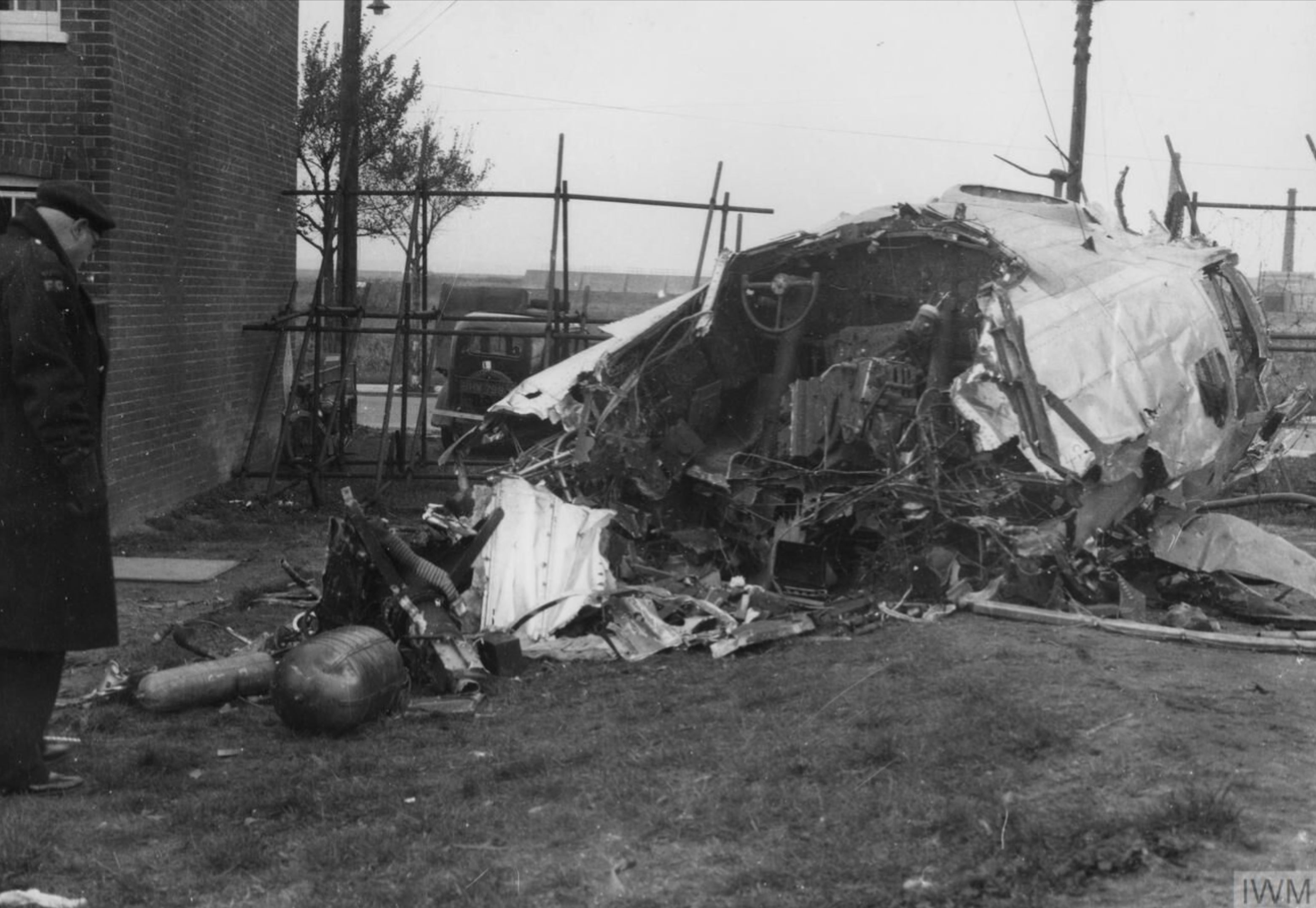
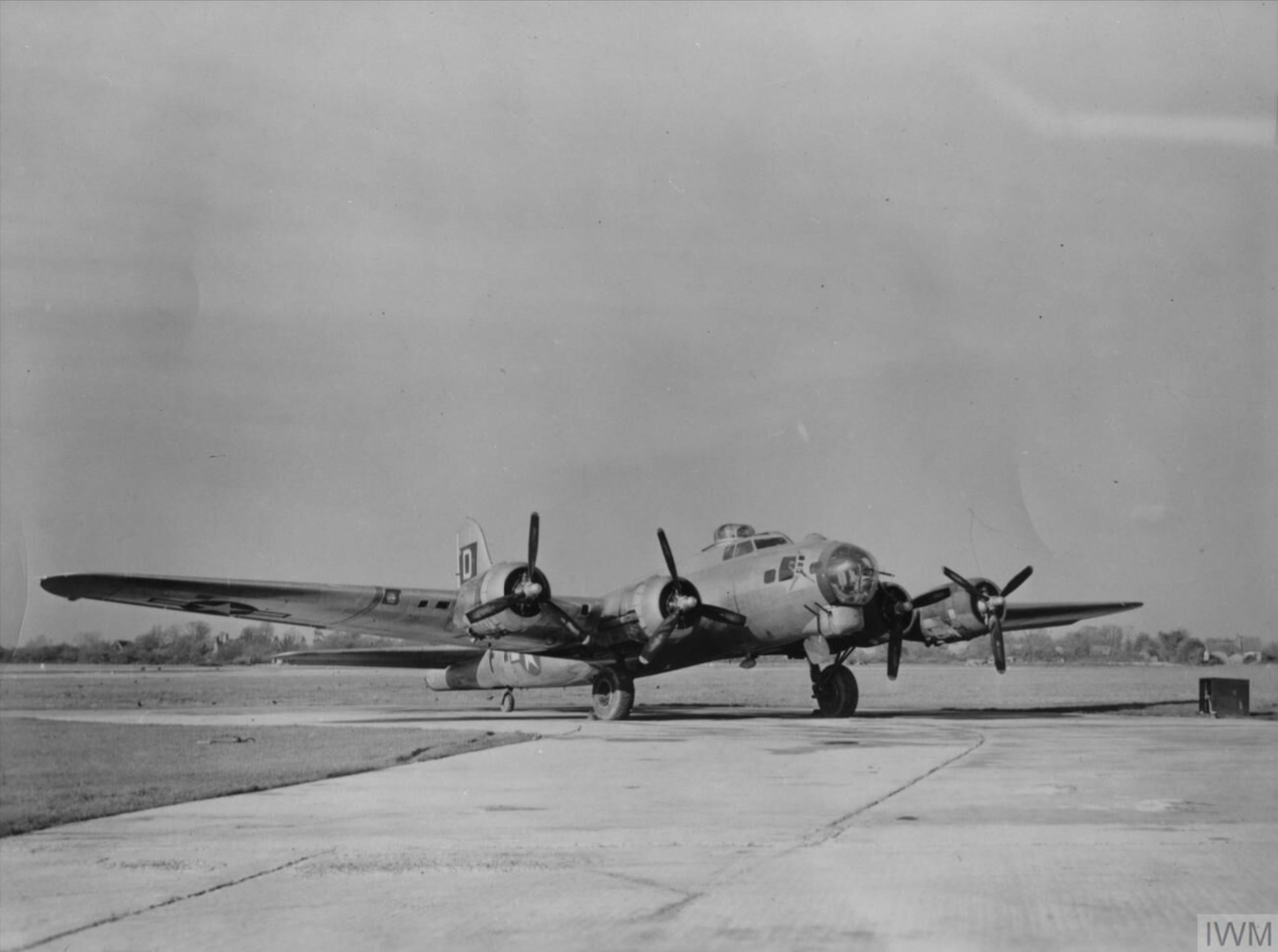
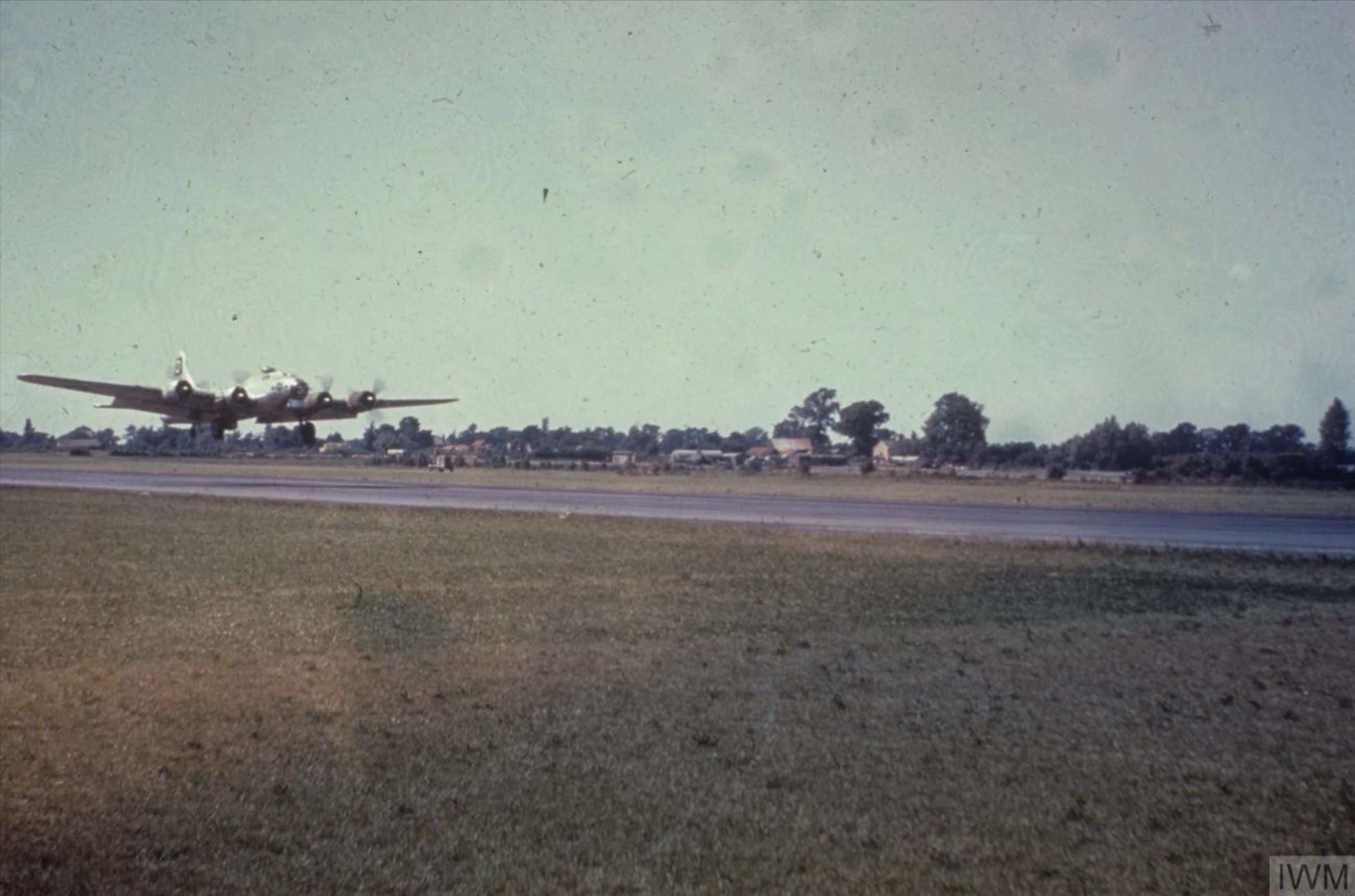
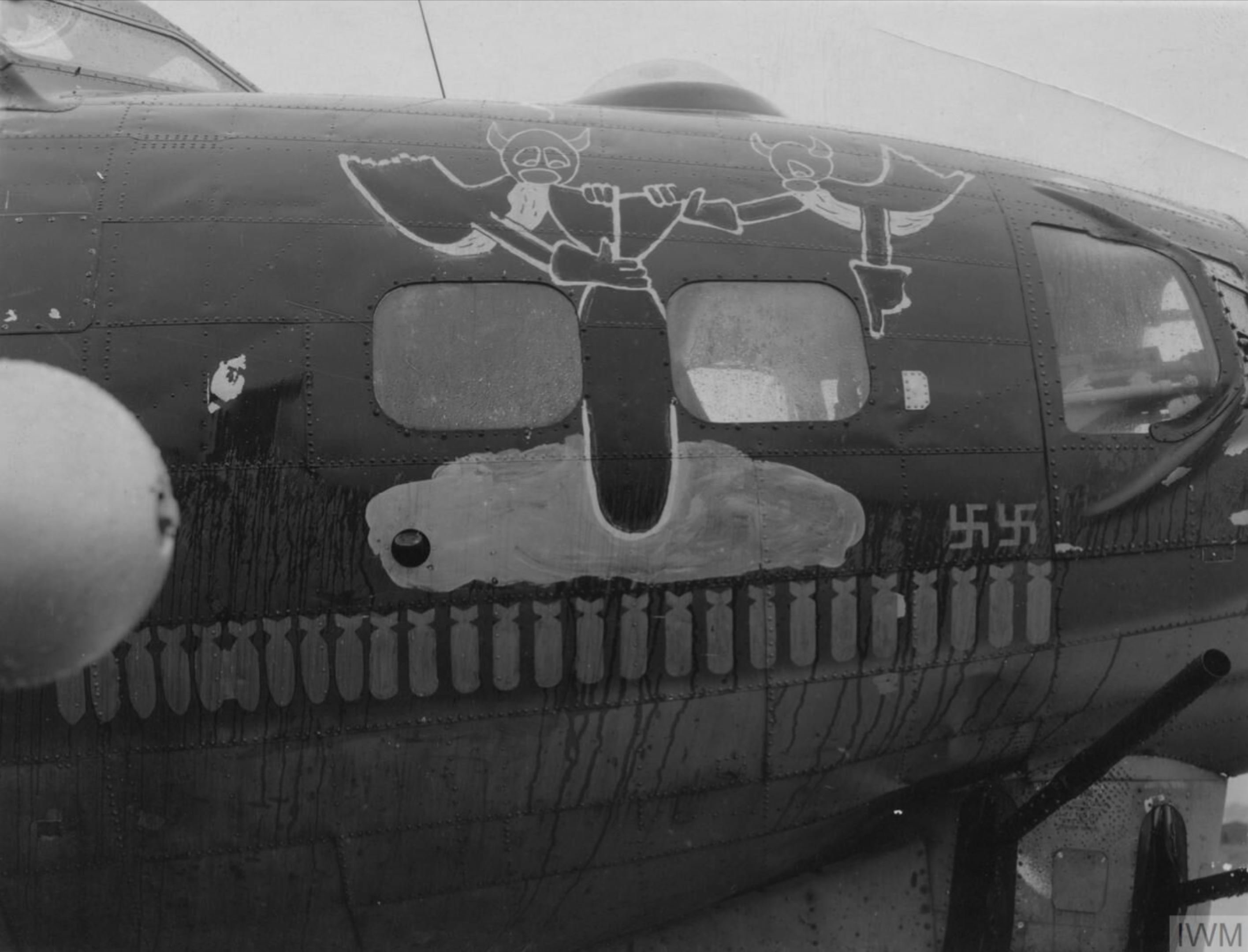
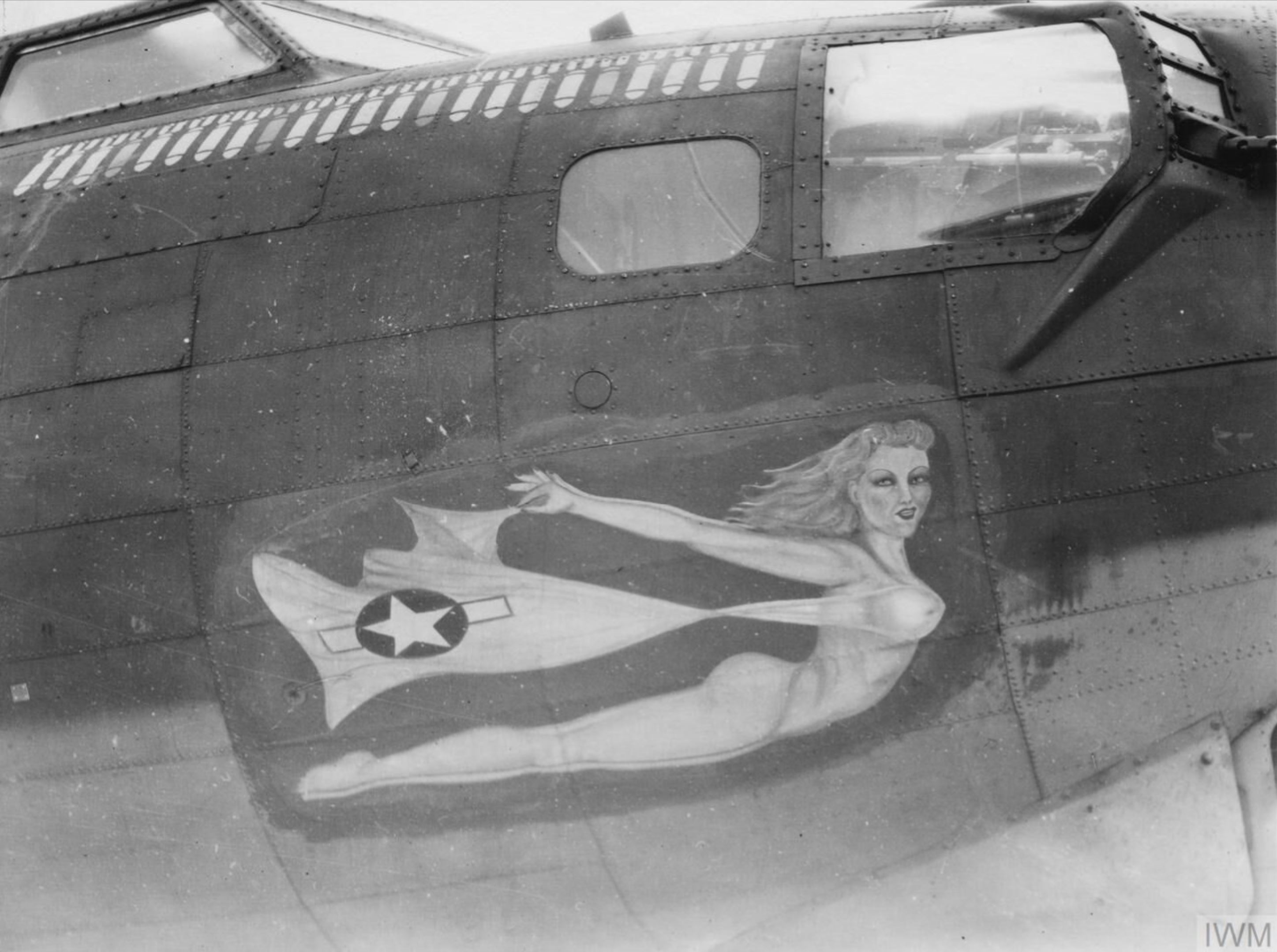
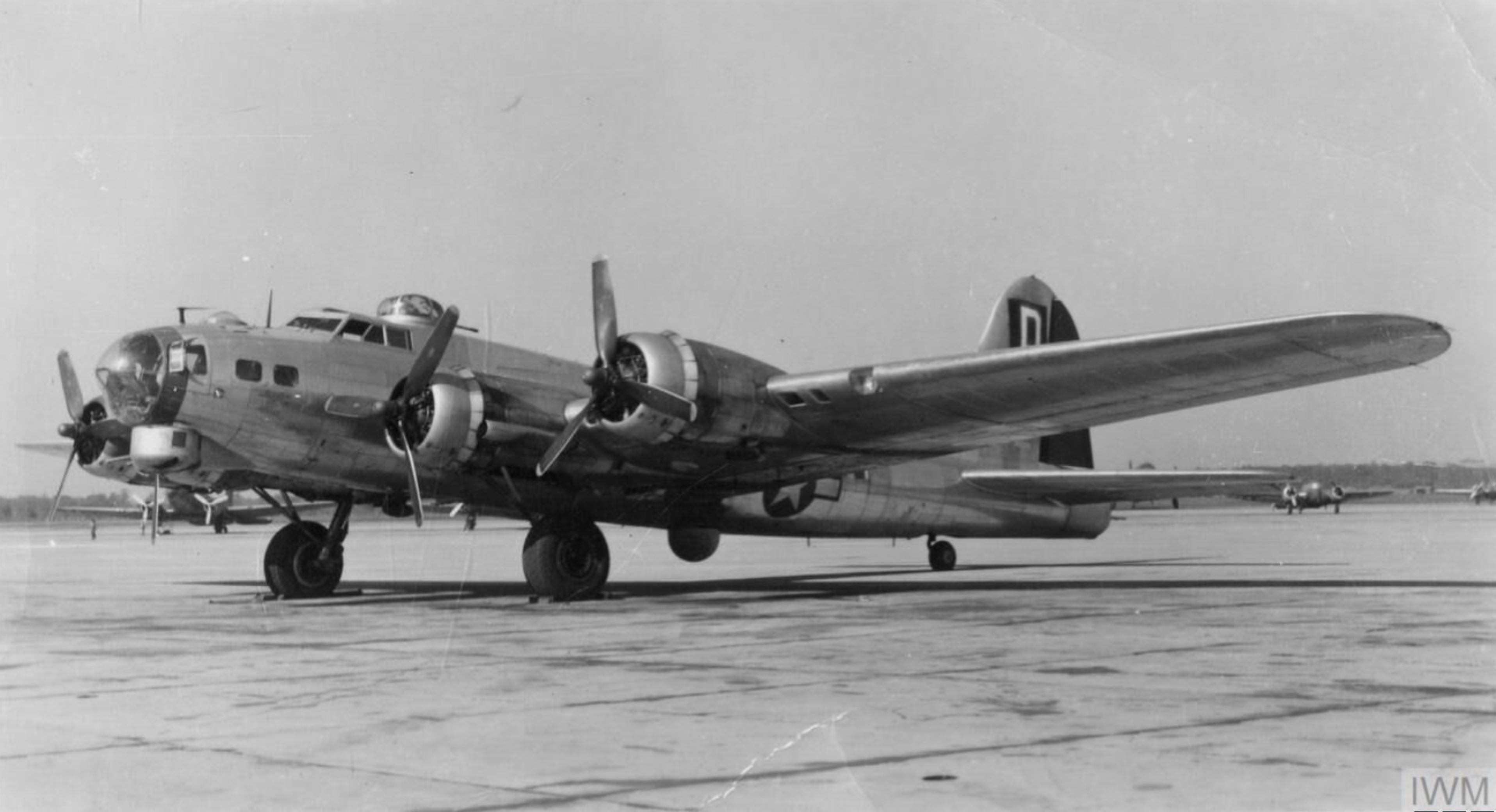
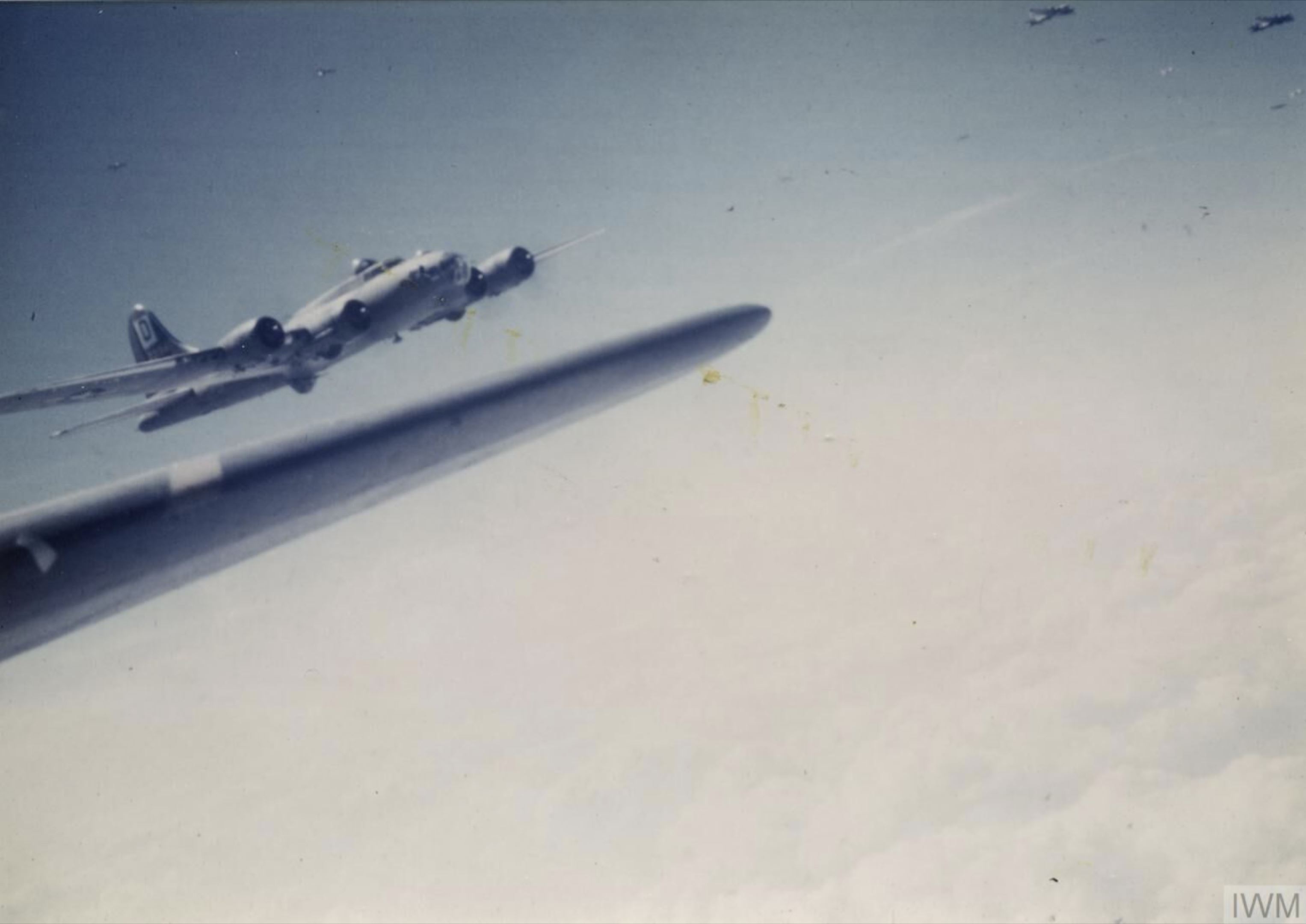
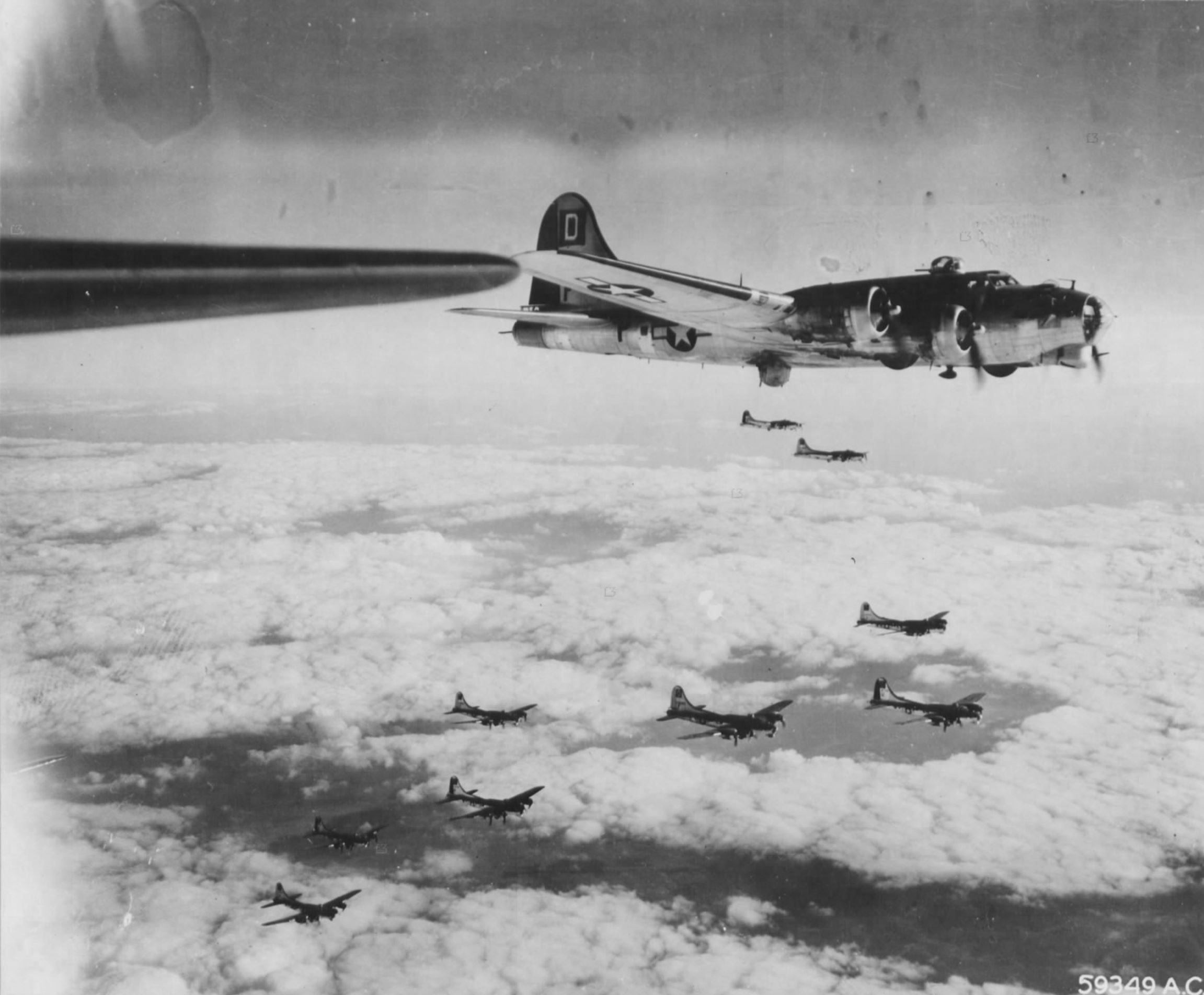
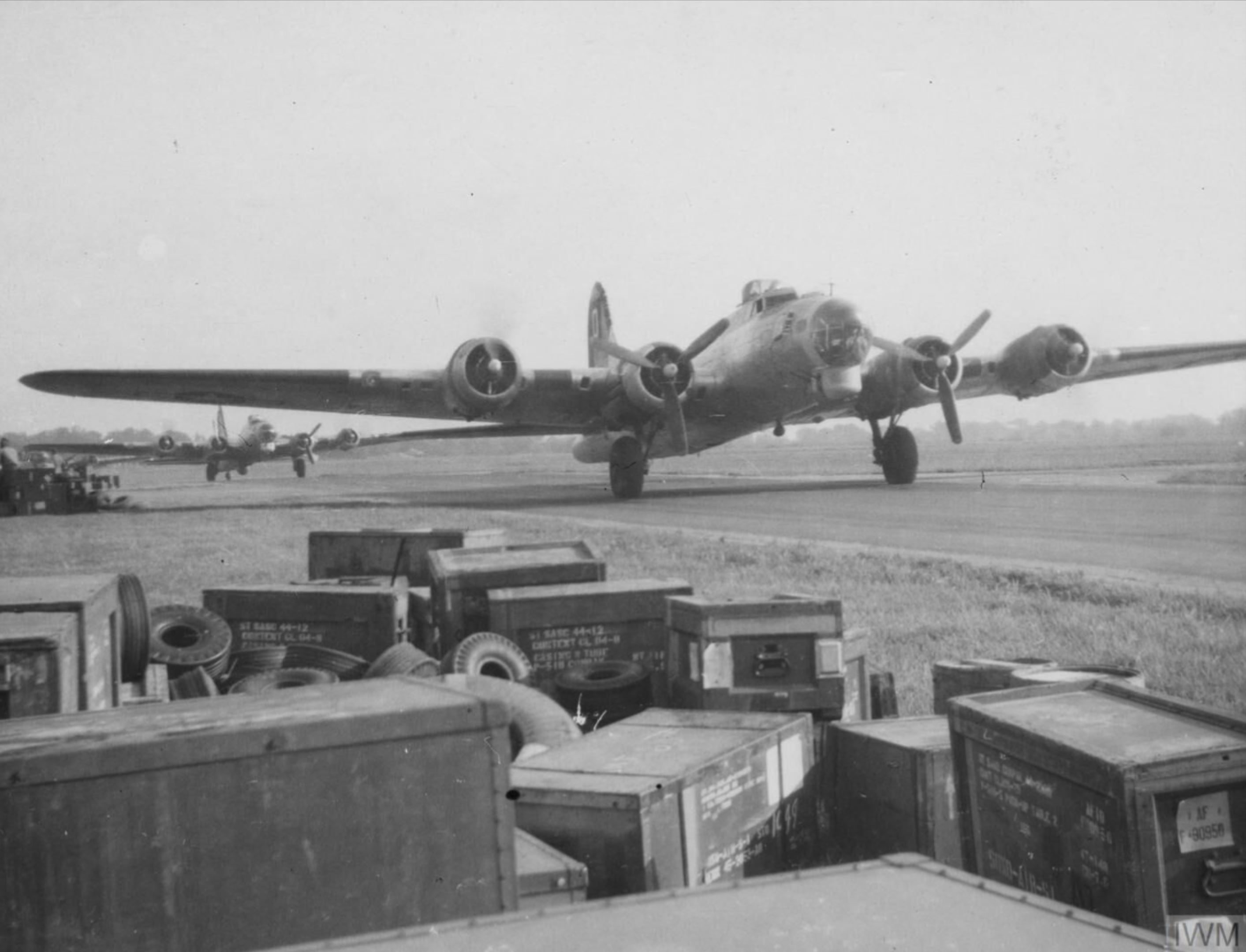
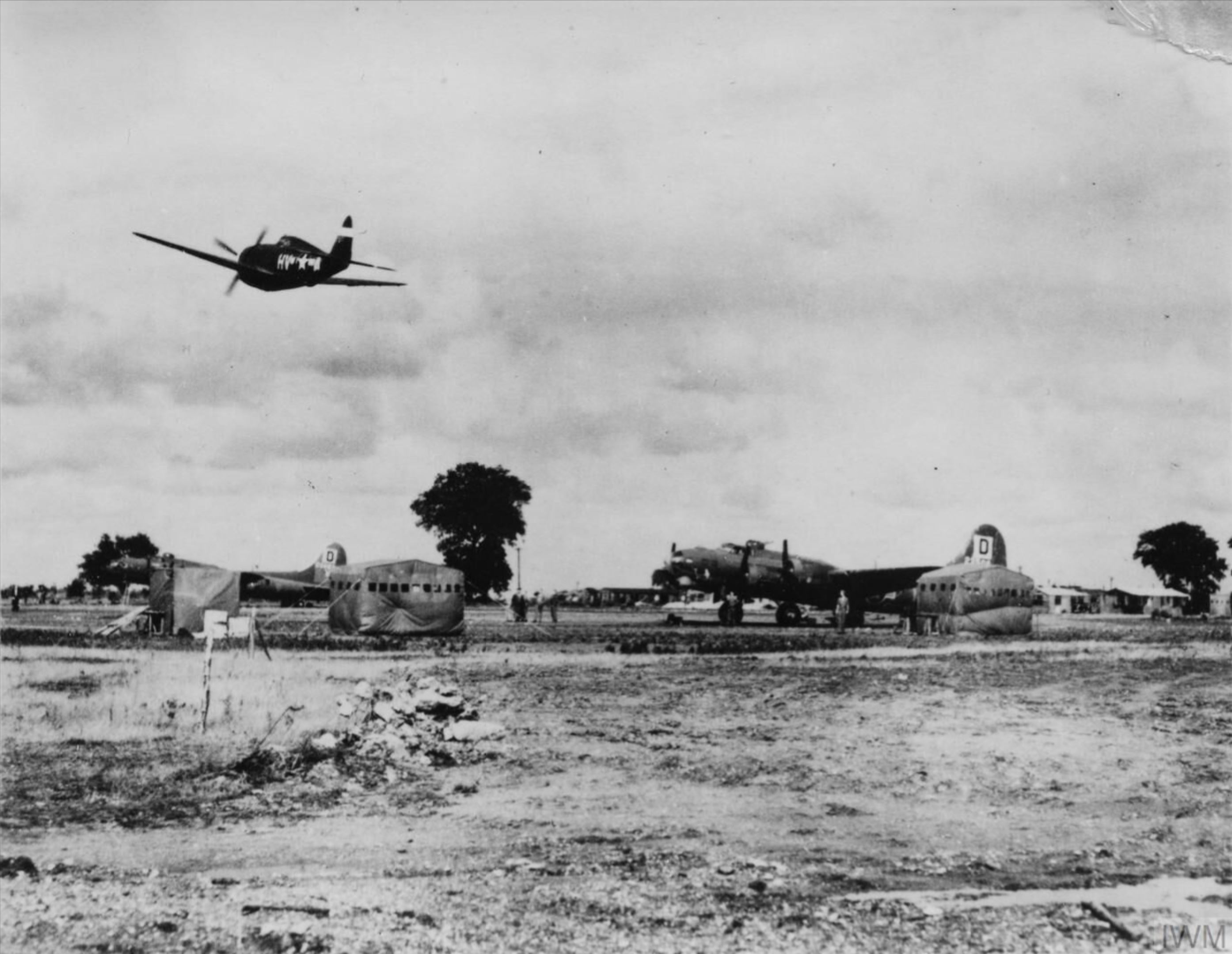
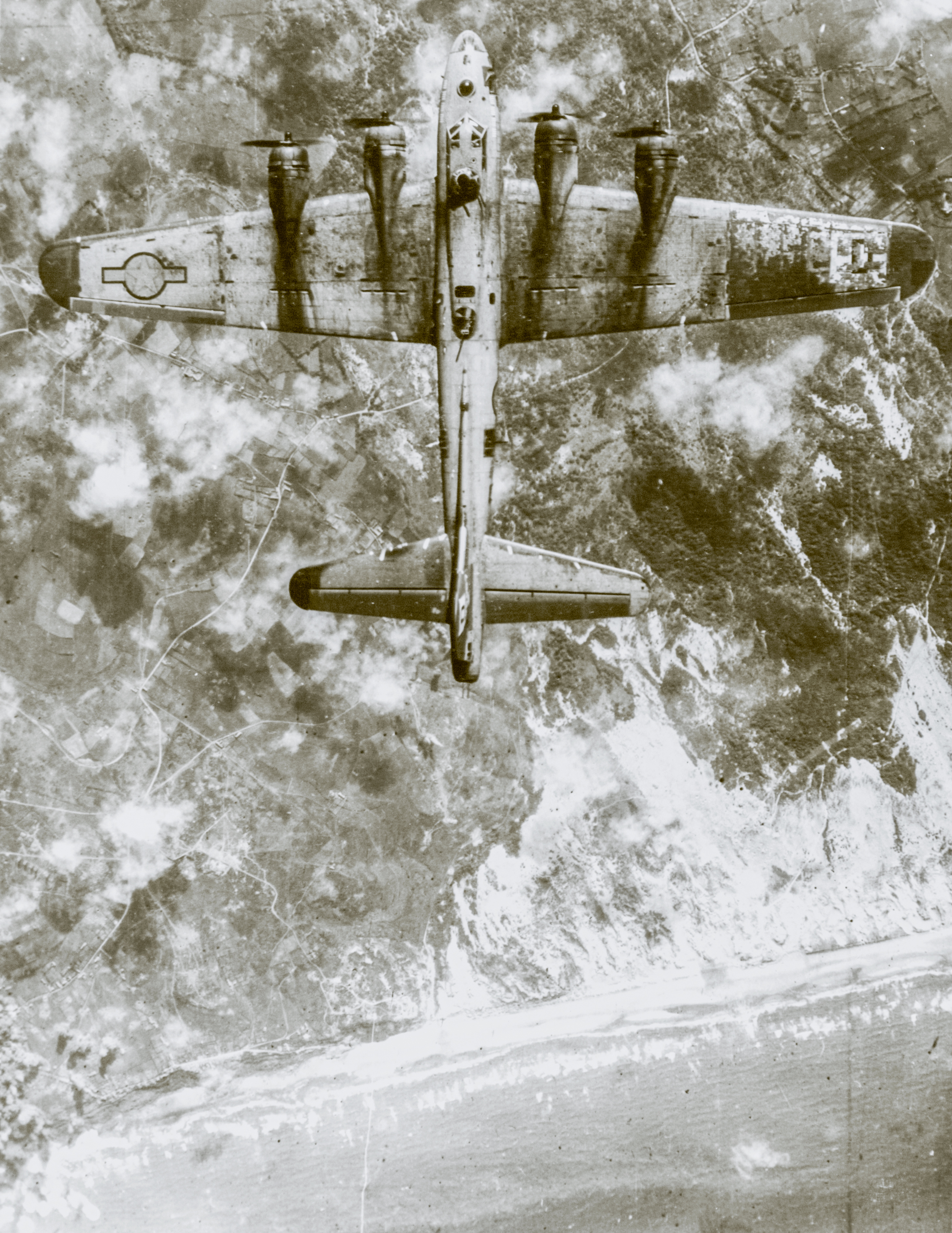
100th Bombardment Group known as the Bloody 100 worst missions chart 0A 100th Bombardment Group leaders 01 42-102649 B-17G Fortress 8AF 100BG418BS LDS Lady Geraldine also 350BS LNS FRE5903 42-102649 B-17G Fortress 8AF 100BG418BS LDS Lady Geraldine FRE5922 42-102657 B-17G Fortress 8AF 100BG350BS LNY Boss Lady in formation 01 42-102657 B-17G Fortress 8AF 100BG350BS LNY Boss Lady Schmiederberg Czech 5KIA 4POW 11th Sep 1944 MARC8820 FRE4106 42-102657 B-17G Fortress 8AF 100BG350BS LNY Boss Lady sd by fighters 11th Sep 1944 MACR8820 FRE5900 42-30042 B-17F Fortress 8AF 100BG349BS XRF Oh Nausea belly landed in Switzerland 17th Aug 1943 FRE4095 42-30088 B-17F Fortress 8AF 100BG349BS XRE Squawkin Hawk at Thorpe Abbotts 17th May 1944 FRE4124 42-30725 B-17F Fortress 8AF 100BG350BS LNZ Aw R Go at Honington FRE4122 42-30758 B-17F Fortress 8AF 100BG418BS Rosie's Riveters nose art right side 01 42-30818 B-17F Fortress 8AF 100BG350BS LNS Salvo Sal aka My Gal Sal at Honington FRE4122 42-31035 B-17G Fortress 8AF 100BG351BS EPE Hang the Expense crashed Thorpe Abbotts 29th Nov 1943 FRE4125 42-31035 B-17G Fortress 8AF 100BG351BS EPE Hang the Expense crashed Thorpe Abbotts 29th Nov 1943 FRE4126 42-31035 B-17G Fortress 8AF 100BG351BS EPE Hang the Expense crashed Thorpe Abbotts 29th Nov 1943 FRE4127 42-31066 B-17G Fortress 8AF 100BG351BS EPH nose art right side 01 42-31220 B-17G Fortress 8AF 100BG350BS LNP Fletcher's Castoria II FRE5917 42-31347 B-17G Fortress 8AF 100BG349BS XRK mission to Swinemunde Germany Mar 12 1945 42-31723 B-17G Fortress 8AF 100BG349BS XRR Sparky with battle damage 19th May 1944 FRE4086 42-31767 B-17G Fortress 8AF 100BG351BS EPE Our Gal Sal Kingman 1945 FRE4105 42-31767 B-17G Fortress 8AF 100BG351BS EPE Our Gal Sal over 100 missions and two enemy fighters FRE5902 42-31767 B-17G Fortress 8AF 100BG351BS EPE Our Gal Sal over 100 missions and two enemy fighters FRE5905 42-31767 B-17G Fortress 8AF 100BG351BS EPE Our Gal Sal over 100 missions and two enemy fighters FRE5915 42-31968 B-17G Fortress 8AF 100BG350BS LND Miss Irish Marquise aka Mimoyecques 20th Mar 1944 FRE4088 42-31968 B-17G Fortress 8AF 100BG350BS LND Miss Irish Marquise aka Mimoyecques 20th Mar 1944 FRE4089 42-31968 B-17G Fortress 8AF 100BG350BS LND Miss Irish Marquise aka Mimoyecques 20th Mar 1944 FRE4090 42-31968 B-17G Fortress 8AF 100BG350BS LND Miss Irish Marquise aka Mimoyecques 20th Mar 1944 FRE4091 42-31981 B-17G Fortress 8AF 100BG350BS LNE belly landed Honington 15th May 1944 FRE4093 42-31987 B-17G Fortress 8AF 100BG350BS LN Shilaylee at Mount Farm FRE5921 42-32090 B-17G Fortress 8AF 100BG418BS LDR Silver Dollar In God We Trust FRE5916 42-3271 B-17G Fortress 8AF 100BG351BS EPL Nine Little Yanks and a Jerk nose art FRE4083 42-3413 B-17F Fortress 8AF 100BG350BS LNV Hard Luck in formation 01 42-37796 B-17G Fortress 8AF 100BG350BS LNT Fletcher's Castoria II belly landed Holland 21st Feb 1944 FRE14205 42-37796 B-17G Fortress 8AF 100BG350BS LNT Fletcher's Castoria II belly landed Holland 21st Feb 1944 FRE4098 42-37796 B-17G Fortress 8AF 100BG350BS LNT Fletcher's Castoria II belly landed Holland 21st Feb 1944 FRE4099 42-37800 B-17G Fortress 8AF 100BG351BS EPA Piccadilly Lilly II flew 39 missions FRE5904 42-37800 B-17G Fortress 8AF 100BG351BS EPA Piccadilly Lilly II nose art FRE4079 42-37936 B-17G Fortress 8AF 100BG351BS EPM The All American Girl FRE5912 42-37972 B-17G Fortress 8AF 100BG349BS XRH Gold Brick being repaired with 42 31100 1945 01 42-37972 B-17G Fortress 8AF 100BG349BS XRH Gold Brick belly landed Honington 30th Jan 1944 FRE4093 42-38017 B-17G Fortress 8AF 100BG349BS XRO One Mission LuLu force landed at Schleswig Germany 3rd Mar 1944 FRE4100 42-38047 B-17G Fortress 8AF 100BG351BS EPO Fever Bever 125 missions FRE5901 42-39867 B-17G Fortress 8AF 100BG351BS EPE Hang the Expense after losing their TG 01 42-39867 B-17G Fortress 8AF 100BG351BS EPE Hang the Expense after losing their TG 02 42-39867 B-17G Fortress 8AF 100BG351BS EPE Hang the Expense at Eastchurch FRE4104 42-39867 B-17G Fortress 8AF 100BG351BS EPE Hang the Expense belly landed at Thorpe Abbotts FRE4084 42-39867 B-17G Fortress 8AF 100BG351BS EPE Hang the Expense bogged down at Eastchurch 26th Jan 1944 FRE4096 42-39994 B-17G Fortress 8AF 100BG418BS LDD Barrick's Bag Snort Stuff interned Sweden 1944 FRE5692 42-6087 B-17F Fortress 8AF 100BG418BS shot down over Villacoublay 11th Aug 1944 01 42-97126 B-17G Fortress 8AF 100BG351BS EPD Silver Dollar 2 trips to Russia flew 106 missions FRE5919 42-97696 B-17G Fortress 8AF 100BG349BS XRW Terrible Termite FRE5871 43-37521 B-17G Fortress 8AF 100BG351BS EPK Skyway Chariot graphic artwork 0A 43-37686 B-17G Fortress 8AF 100BG350BS LNG Josephine ground collision 21st Jun 1944 FRE4087 43-38011 B-17G Fortress 8AF 100BG349BS XRH The Reluctant Dragon FRE5918 43-38397 B-17G Fortress 8AF 100BG349BS XRD Scrooges Stooges landed at Chalon sur Saone Burgundy 6th Feb 1945 01 43-38397 B-17G Fortress 8AF 100BG349BS XRD Scrooges Stooges landed at Chalon sur Saone Burgundy 6th Feb 1945 FRE4101 43-38397 B-17G Fortress 8AF 100BG349BS XRD Scrooges Stooges landed at Chalon sur Saone Burgundy 6th Feb 1945 FRE4102 43-38397 B-17G Fortress 8AF 100BG349BS XRD Scrooges Stooges landed at Chalon sur Saone Burgundy 6th Feb 1945 FRE4103 43-38852 B-17G Fortress 8AF 100BG351BS EPN Humpty Dumpty II landing with flak damaage 14th Mar 1945 FRE14228 43-38865 B-17G Fortress 490BG Goin' My Way at Eye previously from 8AF 100BG349BS XRO FRE6807 43-38865 B-17G Fortress 8AF 490BG Goin' My Way at Eye previously from 8AF 100BG349BS XRO FRE6800 44-6010 B-17G Fortress 8AF 100BG418BS LDW ground collision 43 37686 LNG 21st Jun 1944 FRE4087 44-6608 B-17G Fortress 8AF 100BG349BS XRA Strange Cargo over the DZ at Swinemunde 12th Mar 1945 01 44-8532 B-17G Fortress 8AF 100BG349BS XRG Kleen Sweep in Greenland FRE5911 Air battle over the Ore Mountains map 11th Sep 1944 0A Air battle over the Ore Mountains units 11th Sep 1944 0A Aircrew USAAF 8AF 100BG airman tries to free his dead comrade a TG killed by a falling bomb FRE4097 Boeing B-17 Fortress 8AF 100BG mission board at Thorpe Abbotts FRE4118 Boeing B-17 Fortress 8AF 100BG salvaged by the Germans and used as a part source Paris 11th Sep 1944 FRE4116 Boeing B-17 Fortress 8AF 100th Bomb Group that has crashed in Felixstowe FRE4129 Boeing B-17 Fortress 8AF 1100th Bomb Group that has crashed in Felixstowe FRE4130 Boeing B-17G Fortress 8AF 100BG at Thorpe Abbotts FRE4122 Boeing B-17G Fortress 8AF 100BG lands at Thorpe Abbotts FRE5913 Boeing B-17G Fortress 8AF 100BG nose art FRE4081 Boeing B-17G Fortress 8AF 100BG nose art FRE4082 Boeing B-17G Fortress 8AF 100BG parked USA FRE9502 Boeing B-17G Fortress 8AF 100th Bomb Group in flight FRE4114 Boeing B-17G Fortresses 8AF 100BG on their way to Germany 28th Feb 1945 01 Boeing B-17G Fortresses 8AF 100BG taxi past boxes of aircraft parts FRE4078 P 47 Thunderbolt 56FG61FS HVA Gabreski buzzes 100BG B-17 Fortresses 18th Mar 1944 FRE4077 Target 8AF B-17 Fortress 100BG bombed Boulogue France 5th Jun 1944 01 USAAF B-17F Fortress 8AF 100BG351BS being escorted with a flight of little friends 1945 NA1353

100th Bombarment Group photo gallery

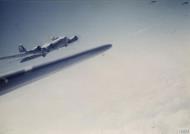
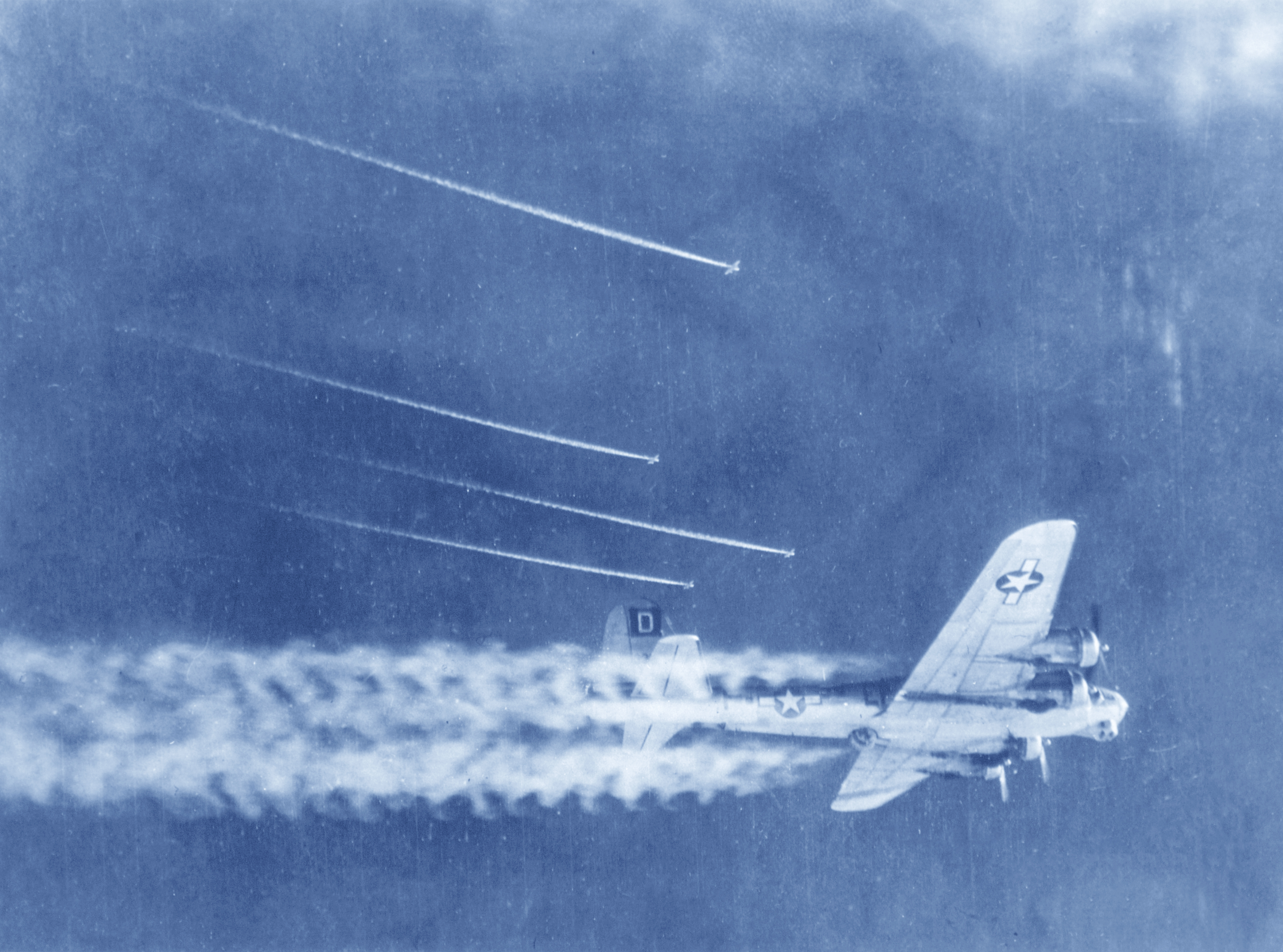
 USAAF B-17F Fortress 8AF 100BG351BS EPF being escorted with a flight of little friends 1945 NA1353

Photo description: Four North American P-51 Mustang fighter planes of the U.S. 8th Air Force wing high overhead, protecting a bomber formation on the way to bomb targets deep inside Germany.

Photo Source: National Archives Identifier NAID: 204898836 Local ID: 342-FH-3A19863-56631AC


100th Bombarment Group

100th Bombardment Group

Constituted as 100th Bombardment Group (Heavy) on 28 Jan 1942. Activated on 1 Jun 1942. Used B-17's to prepare for duty overseas. Moved to England, May-Jun 1943, and assigned to Eighth AF. Operated chiefly as a strategic bombardment organization until the war ended. From Jun 1943 to Jan 1944, concentrated its efforts against airfields in France and naval facilities and industries in France and Germany. Received a DUC for seriously disrupting German fighter plane production with an attack on an aircraft factory at Regensburg on 17 Aug 1943. Bombed airfields, industries, marshalling yards, and missile sites in western Europe, Jan-May 1944. Operations in this period included participation in the Allied campaign against enemy aircraft factories during Big Week, 20-25 Feb 1944. Completed a series of attacks against Berlin in Mar 1944 and received a DUC for the missions. Beginning in the summer of 1944, oil installations became major targets. In addition to strategic operations, the group engaged in support and interdictory missions, hitting bridges and gun positions in support of the Normandy invasion in Jun 1944; bombing enemy positions at St Lo in Jul and at Brest in Aug and Sep; striking transportation and ground defenses in the drive against the Siegfried Line, Oct-Dec 1944; attacking marshalling yards, defended villages, and communications in the Ardennes sector during the Battle of the Bulge, Dec 1944-Jan 1945; and covering the airborne assault across the Rhine in Mar 1945. Received the French Croix de Guerre with Palm for attacking heavily defended installations in Germany and for dropping supplies to French Forces of the Interior, Jun-Dec 1944. Returned to the US in Dec 1945. Inactivated on 21 Dec 1945.

Redesignated 100th Bombardment Group (Very Heavy). Allotted to the reserve. Activated on 29 May 1947. Inactivated on 27 Jun 1949.

Squadrons. 349th: 1942-1945; 1947-1949. 350th: 1942-1945; 1947-1949. 351st: 1942-1945; 1947-1949. 418th: 1942-1945; 1947-1949.

Stations. Orlando AB, Fla, 1 Jun 1942; Barksdale Field, La, c. 18 Jun 1942; Pendleton Field, Ore, c. 26 Jun 1942; Gowen Field, Idaho, 28 Aug 1942; Walla Walla, Wash, c. 1 Nov 1942; Wendover Field, Utah, c. 30 Nov 1942; Sioux City AAB, Iowa, c. 28 Dec 1942; Kearney AAFld, Neb, c. 30 Jan-May 1943; Thorpe Abbotts, England, 9 Jun 1943-Dec 1945; Camp Kilmer, NJ, c. 20-21 Dec 1945. Miami AAFld, Fla, 29 May 1947-27 Jun 1949.

Commanders. Unkn, Jun-Nov 1942; Col Darr H Alkire, c. 14 Nov 1942; Col Howard M Turner, c. 28 Apr 1943; Col Harold Q Huglin, Jun 1943; Col Neil B Harding, c. Jul 1943; Col Robert H Kelly, 19 Apr 1944; Col Thomas S Jeffery, c. 9 May 1944; Col Frederick Sutterlin, 2 Feb 1945; Lt Col John B Wallace, 23 Jun 1945-unkn.

Campaigns. Air Offensive, Europe; Normandy; Northern France; Rhineland; Ardennes-Alsace; Central Europe.

Decorations. Distinguished Unit Citations: Germany, 17 Aug 1943; Berlin, Germany, 4, 6, 8 Mar 1944. French Croix de Guerre with Palm, 25 Jun-31 Dec 1944.

Insigne Shield: Gray, issuing from a base nebuly azure bearing in fess arched reversed six mullets argent, nine billets in chevron sable, surmounted by two lions respectant or langued gules, grasping in saltire a palm branch bend sinisterwise vert and a lightning flash of the sixth. Motto: Peace Through Strength. (Approved 22 Nov 1957.)

100th Bombardment Group

Web Reference: https://www.historynet.com/the-bloody-100th/

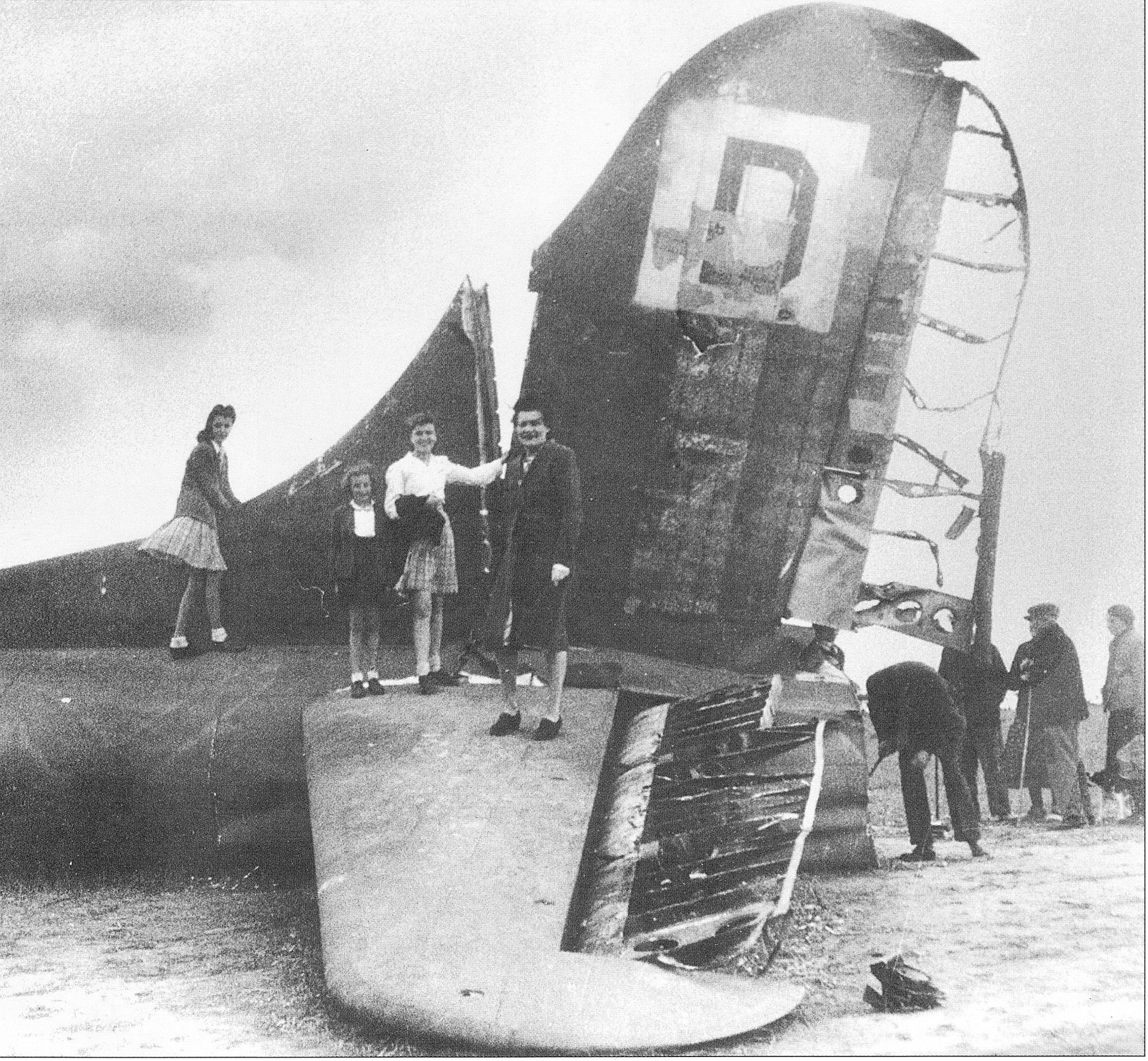
The 100th was constituted as a heavy bomber group inside the Eighth Air Force, which, at peak strength on D-Day, June 6, 1944, fielded 40 groups of Boeing B-17s and Consolidated B-24s. The 100th’s tail marking of a bold “D” on a square background was rendered on the vertical stabilizers of its B-17s, whose big, parabolic-shaped tail fins made for an effective if utilitarian canvas. In 2018 the Square D still adorns a Boeing aircraft—the KC-135R—though the 100th is now an aerial refueling wing. Even still, the Square D carries with it the heroic, bloody history of the 100th Bomb Group.

In November 1942, Colonel Darr Alkire was the first commander assigned to head up the 100th. By December, several hundred men formed the initial flying cadre of the group’s four bomb squadrons—the 349th, 350th, 351st and 418th—along with the requisite administrative, engineering and ground support units. While each unit was actively training, the Army Air Forces identified leaders who could forge the ungainly mass of civilians into airmen.

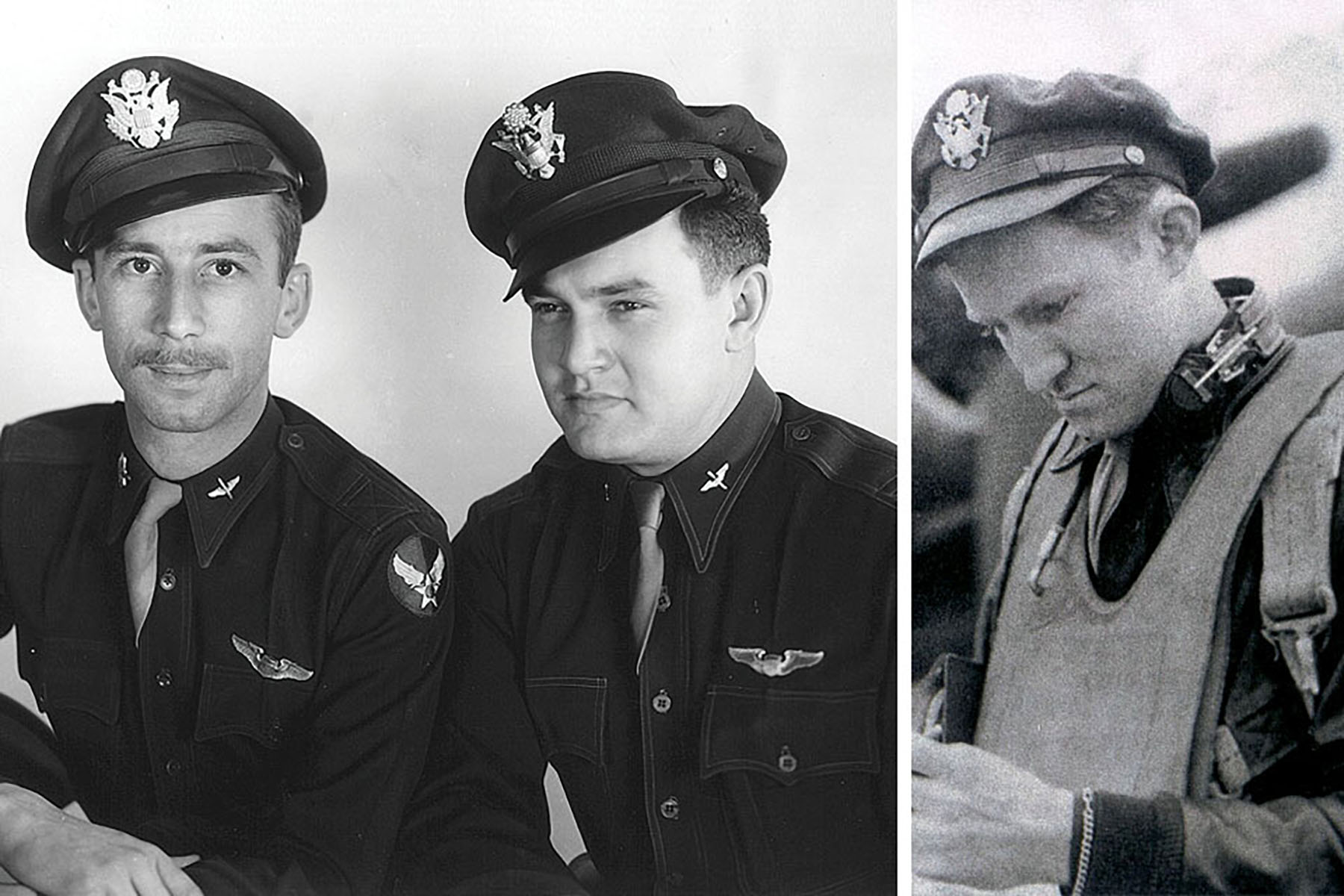
Among the commanders serving under Colonel Alkire were two officers who became synonymous with the unit’s early dashing, devil-may-care notoriety. John “Bucky” Egan was originally the 100th operations officer, and Gale “Bucky” Cleven was the initial commander of the 350th Bomb Squadron. Just two of the several Bucks or Buckys who would serve with the 100th, Egan and Cleven were excellent pilots and charismatic men. More than a few of the 100th’s young airmen came to view the two Buckys as inspirational figures, modeling their own behavior on that of these older leaders.

Left: Majors John Egan (left) and Gale Cleven were among the 100th’s inspirational leaders. Right: Harry Crosby, a 418th Bomb Squadron navigator, later wrote a book about his service in the “Bloody 100th.” (100th Bomb Group Foundation Archives)

On the way to operational readiness, the group trained in Walla Walla, Wash., and, by the end of November, in Wendover, Utah. The third phase of training occurred in Sioux City, Iowa, where the crews focused on formation flying and navigation. In February 1943, the fliers were dispersed throughout the western United States and relegated to the role of instructors for new units. Ground personnel were assigned to the air base at Kearny, Neb. While in limbo, the group’s airmen regressed in their march toward combat readiness.

In April the lack of preparation and three months spent apart manifested in a training mission gone badly awry. Of 21 aircraft scheduled to make the 1,300-mile run between Kearney and Hamilton Field in California, three landed in Las Vegas (including Alkire’s ship) and one flew the opposite direction to Tennessee. The whole group, sans Alkire, who lost this command over the debacle (though he would later lead a B-24 unit), was sent back to Wendover for a much-needed refresher.

One of the more intriguing outcomes of continuing to keep the 100th Stateside for more training was the decision to replace all the group’s copilots with a recently graduated class of multi-engine pilots from Moody Field in Valdosta, Ga. In a recent interview, a member of that class, John “Lucky” Luckadoo, said that breaking up crews who had worked for months to establish camaraderie and trust had a profoundly negative impact on morale. The 96-year-old Luckadoo called the decision “ludicrous” because it forced him and his classmates, who were sitting in the right seat of a B-17 for the first time, to undergo a difficult “learn-on-the-job” experience. Luckadoo recalled that he had accrued less than 20 hours of B-17 flight time prior to making the transatlantic crossing to Britain.

The 100th Bomb Group arrived in England in early June 1943, just one of the dozens of heavy bomber groups comprising the Eighth Air Force’s 1st, 2nd and 3rd air divisions. After a brief stay at an incomplete airbase in Podington, the 100th set up shop at Thorpe Abbotts airfield in East Anglia. The group’s airmen began flying over England and the Channel to get the lay of the land as they prepared for their first mission over enemy territory.

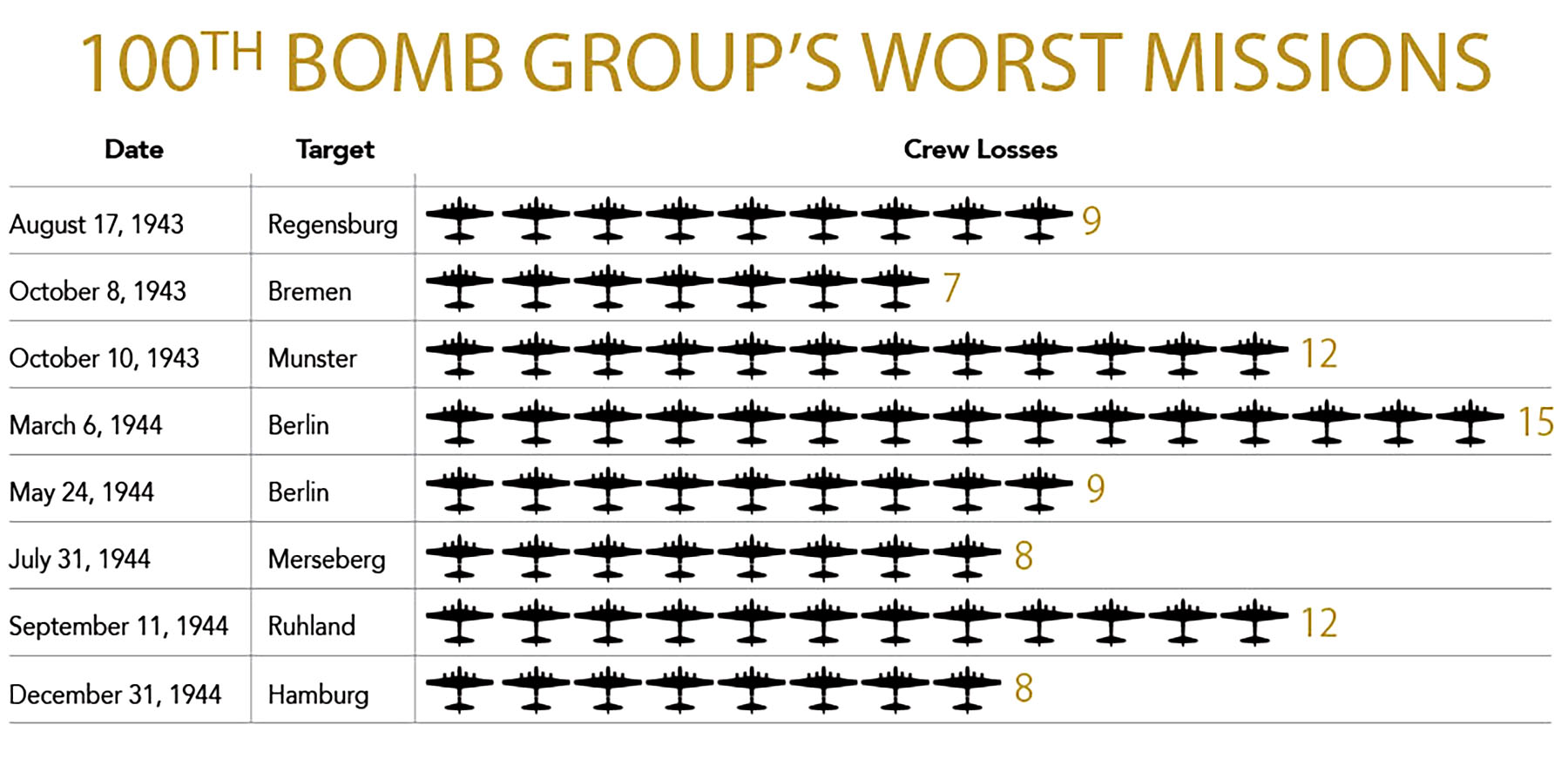
That first mission came on the morning of June 25, 1943, when 30 B-17s took off from Thorpe Abbotts for a raid on the submarine pens at Bremen, Germany. By the end of the day, the group had lost three Flying Fortresses and 30 crewmen, including pilot Oran Petrich and his crew, one of the first assigned to the 100th. The group acquired its reputation as a hard-luck unit very early in its operational history, and it would go on to become known as the “Bloody 100th,” a nickname laden with the weight of sacrifice.

On August 17, less than two months after its initial foray over enemy soil, the 100th flew to Regensburg for the first time. The raid was in the men’s self-interest, for it targeted a factory where Messerschmitt Me-109s—fighters that would torment them in the months to come—were assembled. It was a complex mission, requiring the coordination of two separate masses of Eighth Air Force bombers (the second was headed to Schweinfurt and its ball-bearing works) and Republic P-47 escorts. Ultimately it required the Regensburg-bound bombers to shuttle to North Africa, with a planned return to England at a later date. In the end, the 100th, located at the tail end of a 15-mile bomber stream, was left unescorted when one of the P-47 units never appeared.

As they approached Regensburg, “what seemed to be the whole German Air Force came up and began to riddle our whole task force,” wrote 418th Bomb Squadron navigator Harry H. Crosby in A Wing and a Prayer. “As other planes were hit, we had to fly through their debris. I instinctively ducked as we almost hit an escape hatch from a plane ahead. When a plane blew up, we saw their parts all over the sky. We smashed into some of the pieces. One plane hit a body which tumbled out of a plane ahead.”

The B-17G “Hang the Expense II” returned from Frankfurt on January 24, 1944, in spite of a flak hit that blew tail gunner Staff Sgt. Roy Urich from the plane. He survived to become a prisoner of war. (National Archives)

Of the 24 American bombers lost that day over Regensburg, more than a third bore the 100th’s Square D on their tails. The 100th put up 220 fliers in 22 B-17s, and 90 of those men and nine Fortresses didn’t make the return trip to Thorpe Abbotts.

The group’s reputation as a hard-luck unit was sealed in the second week of October 1943, during missions to Bremen and Munster. On October 8, Lucky Luckadoo put his nickname to the test over Bremen. That day, he was flying in a combat formation position with the darkly humorous nickname of “Purple Heart corner,” the low plane in the low group.

Luckadoo noted that the Luftwaffe favored head-on attacks during those first months of combat flying by the 100th. The German fighters would “get out in front of our formation—in line abreast of 25 or 30 Focke-Wulfs or Messerschmitts—and spray the formation with cannon fire, rockets and .30-caliber machine guns.” As a result, he said, “We suffered tremendous fatalities.” Anti-aircraft artillery also took a toll, and Crosby noted that as they approached Bremen, the group encountered “Flak, a whole, mean sky full of it.” Luckadoo and his crewmates returned to Thorpe Abbots that day, but seven B-17s were lost and 72 aircrew died on the Bremen mission.

Crosby’s shot-up B-17 barely made it back on three engines to crash-land at an abandoned RAF airfield. After catching a ride in a lorry to Thorpe Abbotts, Crosby and his fellow crewmen, who were presumed lost, found their beds stripped and personal possessions removed. “On the bare cot were two clean sheets and two pillowcases, two blankets, one pillow, all neatly folded,” he wrote. “Ready for the next crew.”

Two days later, 21 Forts departed Thorpe Abbotts for Munster, but just 13 reached the target. The losses on the Munster mission were devastating: 12 aircraft and 121 men. A single B-17, Rosie’s Riveters, piloted by Lieutenant Robert Rosenthal, bombed the target and returned to Thorpe Abbotts that day.

The perceived impact of the losses was compounded by the attrition in squadron leadership: 350th Bomb Squadron commander Major Bucky Cleven was shot down over Bremen, and Major Bucky Egan, CO of the 418th Squadron, was downed over Munster on October 10 while trying to exact revenge for his best friend Cleven. The two commanders found themselves at the same POW camp. Legend has it that when Egan arrived, Cleven said, “What the hell took you so long?” The loss of the two Buckys, seen by the rank and file as exemplars of everything that a flier should be, was crushing.

Several days after these disastrous missions, the 100th was able to muster only eight aircraft for a raid that nearly broke the back of the Eighth Air Force. October 14, 1943, became known as “Black Thursday.” On that autumn day, 291 B-17s assembled to make a second raid on the ball-bearing factories at Schweinfurt. American losses were appalling: 60 aircraft shot down, 17 written off and more than 100 others damaged. The loss of more than a quarter of the aircraft participating in the raid was clearly unsustainable, both in the eyes of VIII Bomber Command and, perhaps more important, the American people.

In a twist of fate that served to highlight the randomness inherent in warfare, the 100th Bomb Group emerged comparatively unscathed that dreadful day. All eight B-17s that it contributed to the mission returned to Thorpe Abbots.

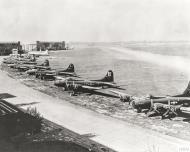
A mixed squadron of 100th Group Flying Fortresses includes a veteran B-17F (foreground) among the newer camouflaged and bare-metal B-17Gs. (National Archives)

The October 1943 missions wound up being among the last bombing raids deep into German airspace that the Eighth Air Force flew without end-to-end fighter escort. Though the bombers bristled with .50-caliber machine guns (ultimately 13 in the B-17G, with its added chin turret to counter frontal attacks) and adhered rigorously to combat box formation flying to provide mutually supportive defensive fire, it was obvious that the B-17s in the European theater were vulnerable to Luftwaffe hunters. In the end, the primary tool for redressing the imbalance of power between the hunters and the hunted was to import a newer, more capable long-range fighter, the North American P-51 Mustang.

Though the fuel burn of aircraft is typically measured in gallons per hour, it’s also instructive to think in the traditional earthbound measure of miles per gallon. The P-51 was a pilot’s dream in terms of speed and maneuverability, but its real superiority was that it could eke out twice as many miles from a gallon of 100-octane avgas as could a P-47. With the Mustang, Army Air Forces planners finally had a fighter that could stay with the bomb groups all the way to Berlin and back.

Commander of the Luftwaffe Hermann Göring had once pompously bragged that Allied bombers would never be seen in the skies over Germany. By March 4, 1944, Allied bombers weren’t just flying over Germany, they flew all the way to Berlin. On that date, the 100th and their mates in the 95th Bomb Group became the first fliers to successfully bomb the German capital. For its efforts, the 100th was awarded a Presidential Unit Citation.

The ability to provide fighter escorts end-to-end on bombing missions had a profound effect on bomber losses suffered over Germany. The Eighth Air Force had lost nearly 30 percent of the bombers that took part in raids during the second week of October 1943. During what became known as the “Big Week” in February 1944, Eighth Air Force bombers suffered losses of only about 2 percent.

German flak and fighters weren’t the only dangers the heavy bomber crews faced. Flying in the foul English weather along the coast on instruments could be a formidable challenge. John Clark, a copilot in the 418th Bomb Squadron, flew the bulk of his combat missions in the depths of the wet and cold winter of 1944-45. He described instrument flying as “something you’re doing with the aircraft that was unique and important, to get this big device [bomber] through impenetrable fog or night…and bring it down to the ground.”

Danger wasn’t found only in the skies. Simply repairing and maintaining the massive B-17s could be hazardous to one’s health. At a recent gathering of 100th veterans, Master Sgt. Dewey Christopher, a crew chief in the 351st Bomb Squadron, recounted how a live magneto combined with the necessary act of hand-propping a Wright Cyclone R-1820 led to his being tossed 30 feet through the air by a suddenly active propeller as the engine tried to start. He landed on his head and then in the infirmary with a broken shoulder.

While the 100th lost only a single bomber on the first Berlin mission, the use of P-51s to provide air cover over Germany didn’t completely eliminate the group’s propensity for bad days. Two days later, on March 6, the 100th suffered its worst losses of the war—15 aircraft and 150 crewmen—on the second mission to Berlin.

The 100th Bomb Group flew its final combat mission on April 20, 1945, just days before the cessation of hostilities in Europe. As the war in Europe wound down, the 100th and numerous other Eighth Air Force bomber groups celebrated the weeks leading up to V-E Day on May 8 by exchanging their 500-pound general purpose bombs for containers of food, medical supplies, clothing, candy and cigarettes. The so-called “Chowhound” missions dropped thousands of tons of supplies to the long-suffering people of the Netherlands and France. So many 100th fliers wanted to be a part of the humanitarian efforts that the oxygen systems, unnecessary at low level, were removed from the B-17s, freeing up room for as many as four extra crewmen on each plane. The missions helped the 100th put a positive spin on what had been a harrowing experience.

“Did we deserve to be called the ‘Bloody 100th’? Other outfits lost more planes and crews than we did. What marked us was that when we lost, we lost big. These eight missions gave us our notoriety.” –Harry H. Crosby, “A Wing and a Prayer”

Over the course of 22 months of aerial combat, the aircrews of the 100th had served a deadly apprenticeship as they honed their skills and tactics. In an unemotional analysis of the raw numbers, the Bloody 100th’s wartime losses were not the worst suffered by the Eighth Air Force, though they were in the top three of losses by heavy bomber groups. The official history from the 100th Bomb Group Foundation cites 184 missing aircrew reports on 306 missions. In his memoir An Eighth Air Force Combat Diary, 100th copilot John Clark pointed out that “50% of the Group’s losses occurred in only 3% of its missions.” Like a gambler whose luck has gone cold, when the crews of the 100th had a bad day, they had a very bad day.

More than 26,000 Eighth Air Force personnel sacrificed their lives in service to the war effort. The total number killed or missing in action was slightly more than that suffered by the U.S. Marine Corps, and a little less than half the losses sustained by the entire U.S. Navy. Comparisons such as these do nothing to diminish the contributions of other military branches, but rather point out the gargantuan scale of the Eighth Air Force’s effort. The 100th Bomb Group’s portion of those losses was 785 men killed outright or missing in action and 229 aircraft destroyed or rendered unsuitable for flight.


100th Bombarment Group and USAAF 8AF Mission 623: 11 September 1944.

Air battle over the Ore Mountains

ETO - AIRBORNE OPERATIONS (IX Troop Carrier Command): HQ 440th Troop Carrier Group moves from Exeter, England to Reims.

ETO - EUROPEAN THEATER OF OPERATIONS (8AF): Two missions are flown.

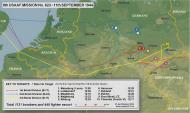
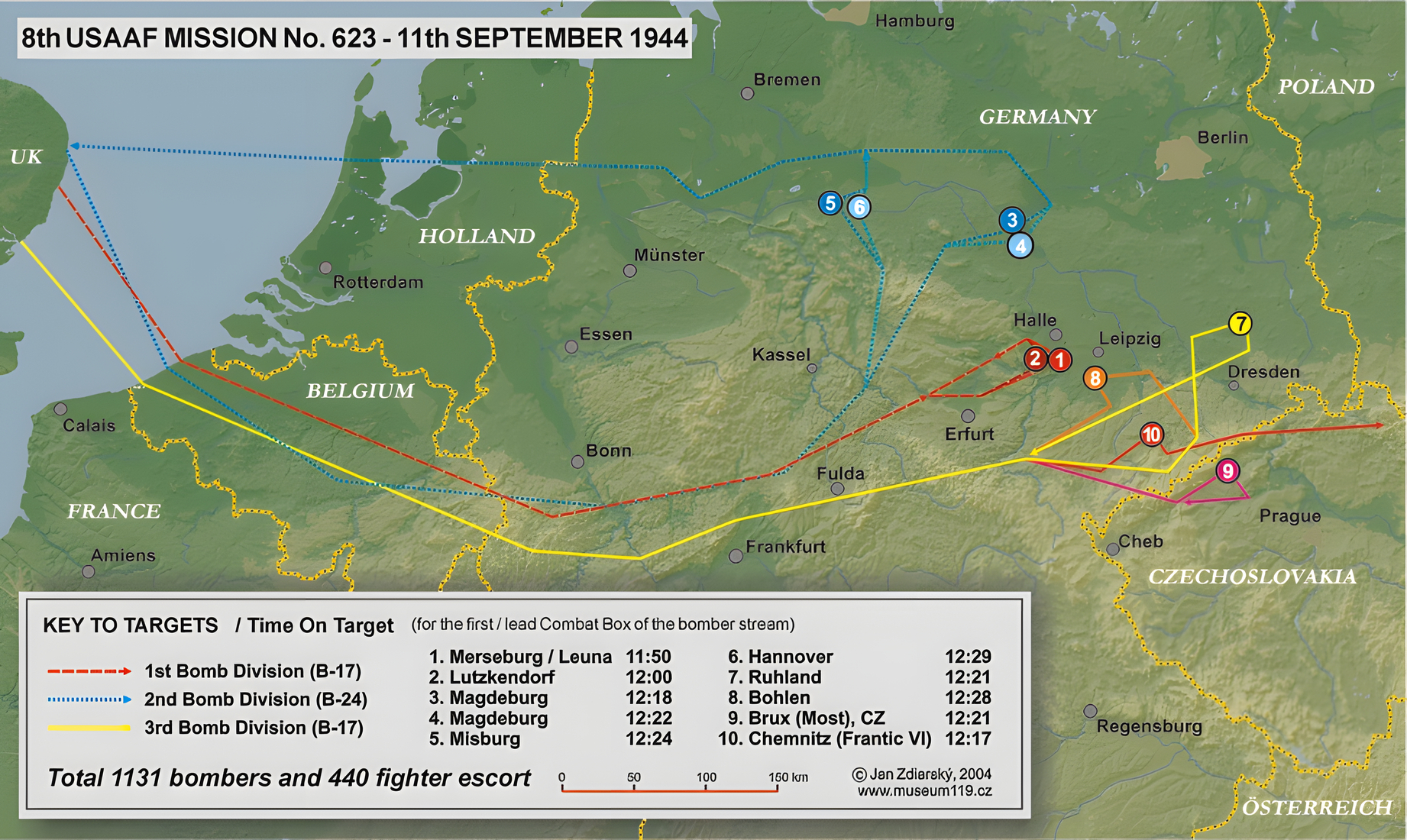
Mission 623: 1,131bombers and 440 fighters are dispatched to hit synthetic oil plants and refineries in Germany; AAF encounters an estimated 525 Luftwaffe fighters; 40 bombers and 17 fighters are lost; AAF claim 115-7-23 aircraft in the air and 42-0-43 on the ground: 1. 384 B-17s are dispatched to hit oil refineries at Bohlen (75), Chemnitz (75), Brux (39) and Ruhland (22); the Chemnitz force is an Operation FRANTIC force that along with 64 P-51s, continues on and lands in the USSR; targets of opportunity are a tire plant at Fulda (66), a marshalling yard at Fulda (40) and 16 others; they claim 12-16-1 aircraft; 16 B-17s are lost, 3 damaged beyond repair and 94 damaged; 2 airmen are KIA, 4 WIA and 153 MIA. Escort is provided by 252 of 275 P-51s; they claim 57-2-12 aircraft in the air and 26-0-25 on the ground; 4 P-51s are lost, 2 damaged beyond repair and 5 damaged; 4 pilots are MIA. 2. 351 B-17s are dispatched to hit oil refineries at Merseburg (111) and Lutzkendorf (96); targets of opportunity hit are Eisennach (71), Labejum (12), Rossla (6) and 25 others; they claim 1-1-2 aircraft; 13 B-17s are lost, 2 damaged beyond repair and 106 damaged; 2 airmen are KIA, 21 WIA and 120 MIA. Escort is provided by 247 P-47s and P-51s; they claim 13-0-1 aircraft in the air and 4-0-2 on the ground; 3 P-51s are lost, 2 damaged beyond repair and 2 P-47s and 4 P-51s damaged; 3 pilots are MIA. 3. 396 B-24s are dispatched to hit an engine factory at Hannover (88), oil refineries at Misburg (87) and Magdeburg (33) and an ordinance depot at Magdeburg (27); targets of opportunity hit are Magdeburg (70), Stendal (45), Diepholz (9) and 3 others; they claim 4-8-1 aircraft; 10 B-24s are lost, 2 damaged beyond repair and 179 damaged; 1airman is KIA, 13 WIA and 102 MIA. Escort is provided by 164 P-38s and P-51s; they claim 45-5-10 aircraft in the air and 12-0-16 on the ground; 10 P-51s are lost, 4 damaged beyond repair and 7 damaged; 14 pilots are MIA.

Mission 625: 6 of 6 B-17s drop leaflets on France and Germany during the night. 38 B-24s fly CARPETBAGGER missions during the night.

ETO - EUROPEAN TACTICAL OPERATIONS (9AF): In France, 358 B-26s and A-20s, escorted by fighters, in support of the US Third Army, hit gun positions and strongpoints in the Metz area; in Germany, fighters fly armed reconnaissance over the Lissendorf and Duren areas, and support Third Army ground forces in the Metz area; armored reconnaissance elements of this Army cross into Germany, the first Allied unit to do so; fighters also support ground forces in the Brest, France area; HQ IX Tactical Air Command moves from Versailles to Janoulx, Belgium; HQ 363Tactical RG and the 161 TRS move from Azeville to Le Mans and Montrevil respectively with F-6s; HQ 368FG and the 395th, 396th and 397FSs move from Chartres to Laon/Athies with P-47s; HQ 370th FG and the 402 and 485FSs move from Lonray to Roye/Amy with P-38s; HQ 397BG(M) moves from Gorges to Dreux; the 386th and 388FSs, 365FG, move from Bretigny to Juvincourt with P-47s; the 394FS, 367th Fighter Group, moves from Pera to Clastres with P-38s; the 425th Night Fighter Squadron, IX Air Defense Command, moves from Le Moustoiris to Coulommiers with P-61s; the 506FS, 404FG, moves from Bretigny to Juvincourt with P-47s; and the 510FS, 405th FG, moves from Picauville to St Dizier with P-47s.

The Air battle over the Ore Mountains[n1] (German: Luftschlacht über dem Erzgebirge) took place around midday on 11 September 1944 between German and American air forces over the crest of the Ore Mountains near the village of Oberwiesenthal, above the Bohemian market town of Schmiedeberg (today Kovářská in the Czech Republic).

Course of the battle

In 1944 many Allied air raids had the aim of destroying the synthetic oil manufacturing facilities of the German oil industry where important military fuels were manufactured for aircraft and vehicles from coal. On 11 September 1944, the Americans launched Mission 623. This had ten primary targets, including Leuna (Merseburg), Lützkendorf, Magdeburg, Misburg (the Deurag-Nerag factory), Hanover, Böhlen, Brüx, Ruhland and Chemnitz.[n2] The bombing of Chemnitz was also part of Operation Frantic. In case of bad weather many other alternative targets were chosen. In all, 1,131 bombers were deployed, accompanied by 440 fighter aircraft for protection.[n3]

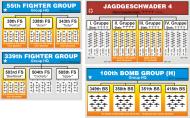
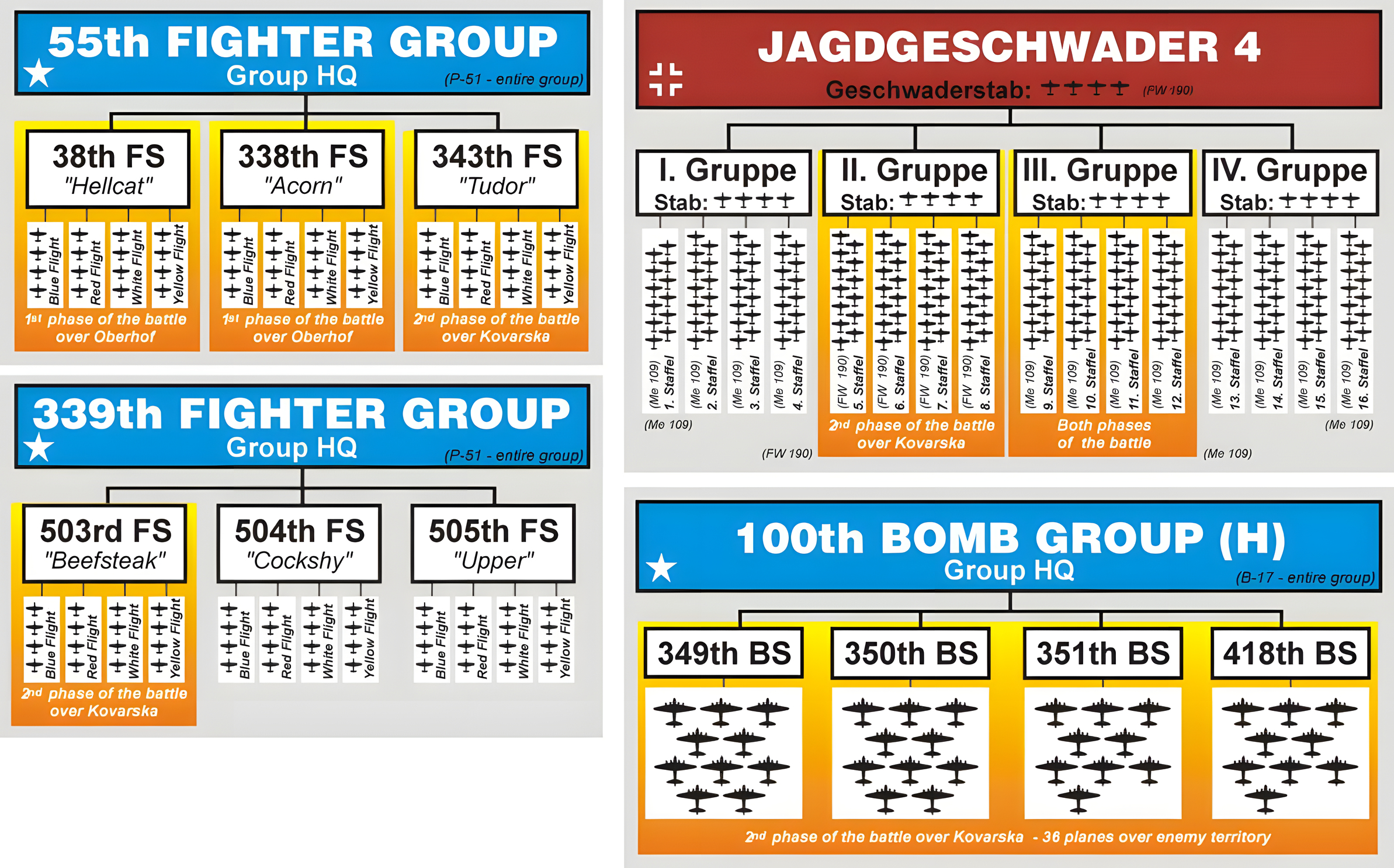
The Schwarzheide Synthesis Factory (Synthesewerk Schwarzheide or Hydrierwerk BRABAG) in Ruhland-Schwarzheide was Target No. 7. It was assigned to the 100th Bomber Group, known as the "Bloody Hundredth" due to its heavy losses. It was part of the US Eighth Air Force and was stationed at RAF Thorpe Abbotts near Diss in England. They flew in a formation of 36, four-engined, B-17G Flying Fortress heavy bombers, belonging to the 349th, 350th, 351st and 418th Bomber Squadrons.[n4] The bomber group approached from the west and flew at great height over Germany and initially without fighter escort. However, the plan was that they would rendezvous with US P-51D Mustang fighters of the 55th and 339th Fighter Groups over the crest of the Ore Mountains. The US Mustangs had taken off from RAF Horham.

The Germans were alerted to the incoming American aircraft and scrambled a formation of 60 Focke-Wulf Fw 190A and Messerschmitt Bf 109G fighter aircraft from the airfields at Alteno and Welzow. These were II and III Group of Jagdgeschwader 4. By 11:40 hours, US and German fighters were engaged in heavy dogfighting south of Oberhof in Thuringia, in which 6 Germans and 2 Americans died. One of the dead, Lt. William Lewis, was not discovered until 2002 following an intensive search.[n5][n6][n7]

The main battle then took place east of the Fichtelberg on the Bohemian side of the mountains. The Ore Mountain area had, until this point, been relatively unaffected by the fighting.[n8] Over Schmiedeberg the German Jagdgeschwader struck before the rendezvous took place and surprised the bombers in the middle of their long-distance flight. Within a very short space of time they shot down 14 US bombers and damaged others. Shortly thereafter the US fighters reached the area. They engaged the mainly young and inexperienced German fighter pilots – many on their operational first sortie – in aggressive battles. The ensuing dogfights between the fighters allowed the remaining bombers to escape. Four US pilots were shot down against 37 German fighter pilots.

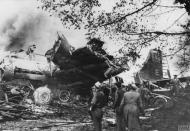
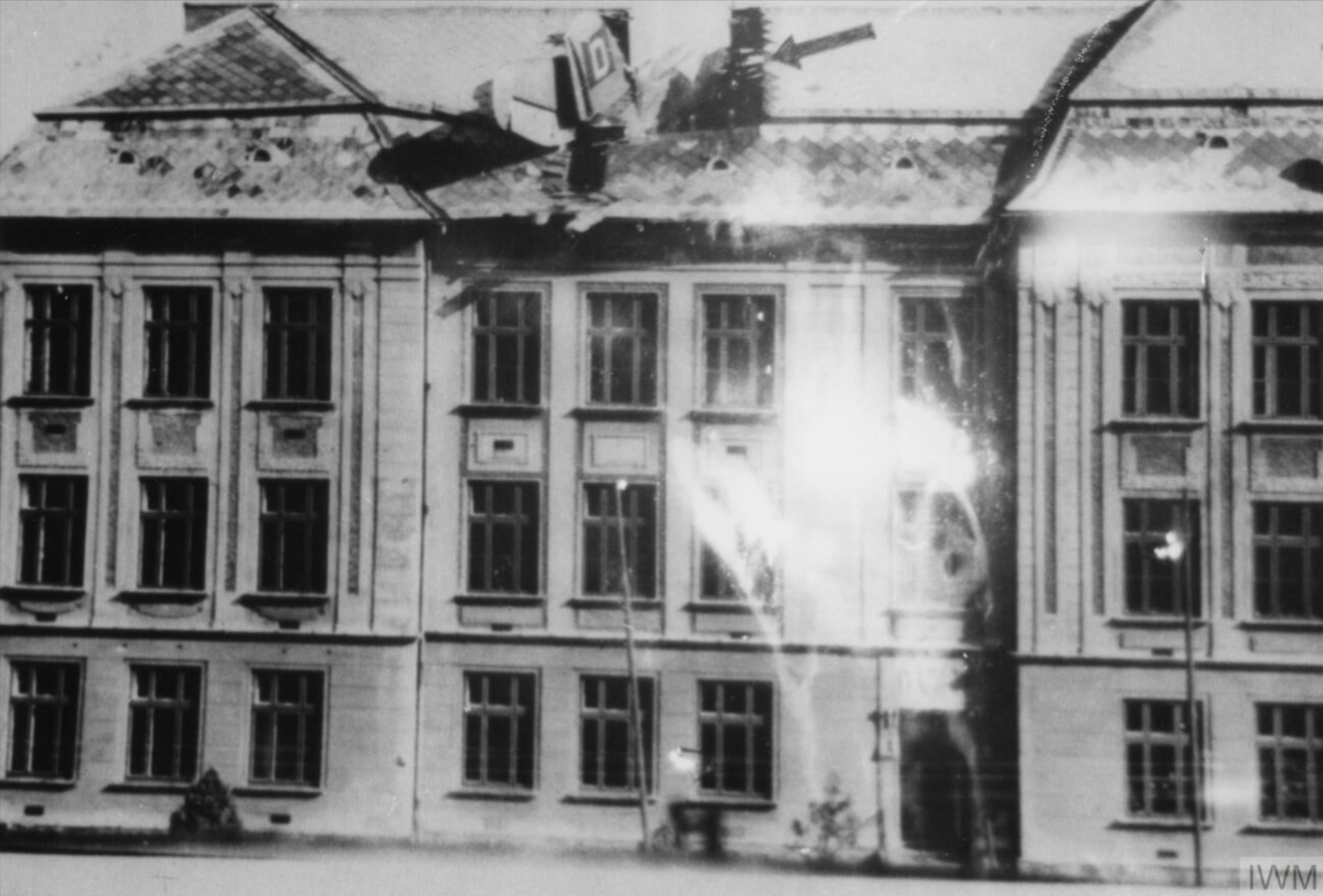
Four US bombers blew up and crashed, burning, in and near Schmiedeberg. Boss Lady broke up in the air, its tail falling onto the roof of the girls' school during lessons, where it stayed embedded.[n9] Other bomber crash sites were near Crottendorf, Kretscham-Rothensehma, Neudorf, Gottesgab (Boží Dar), Tellerhäuser and Schmalzgrube. Even more scattered were the fighter crash sites. Four near Schmiedeberg, five near Weipert (Vejprty), but also at Bärenstein, Mildenau, Zschopau, Grumbach, Sehma, Reitzenhain, Kühnhaide, Grießbach and Börnichen/Erzgeb.

The remaining US bombers were able to reach their target and drop 53 t (58 short tons) of bombs on the synthesis factory.

Losses

  • 19 US aircraft lost (15 B-17G, 4 P-51D)
  • 37 German fighters lost (18 Fw 190A, 19 BF 109G)
  • 50 Americans killed, 54 captured
  • 29 German pilots killed, 11 seriously injured[n10]
  • Web Reference: https://en.wikipedia.org/wiki/Air_battle_over_the_Ore_Mountains

    History of the air battle on September 11th, 1944

    On September 11, 1944, high above the Ore Mountains, on the Czech-German frontier, a formation of B-17G Flying Fortresses of the 100th Bomb Group, 3rd Bomb Division ('The Bloody Hundredth'), escorted by P-51 Mustang fighters of the 55th and 339th Fighter Group 8th USAAF clashed with a formation of German Me109 and FW190 intercept fighters of the II.(Sturm) and III. Gruppe Jagdgeschwader 4. More then 50 airplanes were shot down during the battle. Due to furiousness of the combat, most of the shot down aircraft fell in a very small region of the Czech and German Ore Mountains. This sunny September day entered the history as a Black Monday over the Ore Mountains.

    The 100th BG, otherwise known as “The Bloody Hundredth”, had lost more then one third of its bombers in the battle, which the Group had sent out to this mission. The JG4 sustained a casualty rate of over 50 percent … Solely in the Kovarska region, four B-17Gs and at least five Luftwaffe fighters crashed. Further three B-17Gs and three Geraman fighters fell in a close vicinity of German towns of Crottendorfu and Neudorfu. Many others returned damaged to their home bases.

    American bombers departed from their base in Thorpe Abbotts and their fighter escort took-off from Fowlmere and Wormingford bases in East England. The intercept fighters of the JG4 departed from bases in Welzow and Alteno. The refinery in the German town of Ruhland was the target for the 100th Bomb Group.

    The 95th Bomb Group, which departed from the English base in Horham, also played a part in the battle. The BG lost a number of aircraft, but at the same time scored a number of victories.

    Web Reference: https://new.museum119.cz/battle-history/

    B-17 Flying Fortress units of the United States Army Air Forces

    This is a list of United States Army Air Forces B-17 Flying Fortress units of the United States Army Air Forces, including variants and other historical information. Heavy bomber training organizations primarily under II Bomber Command in the United States and non-combat units are not included.

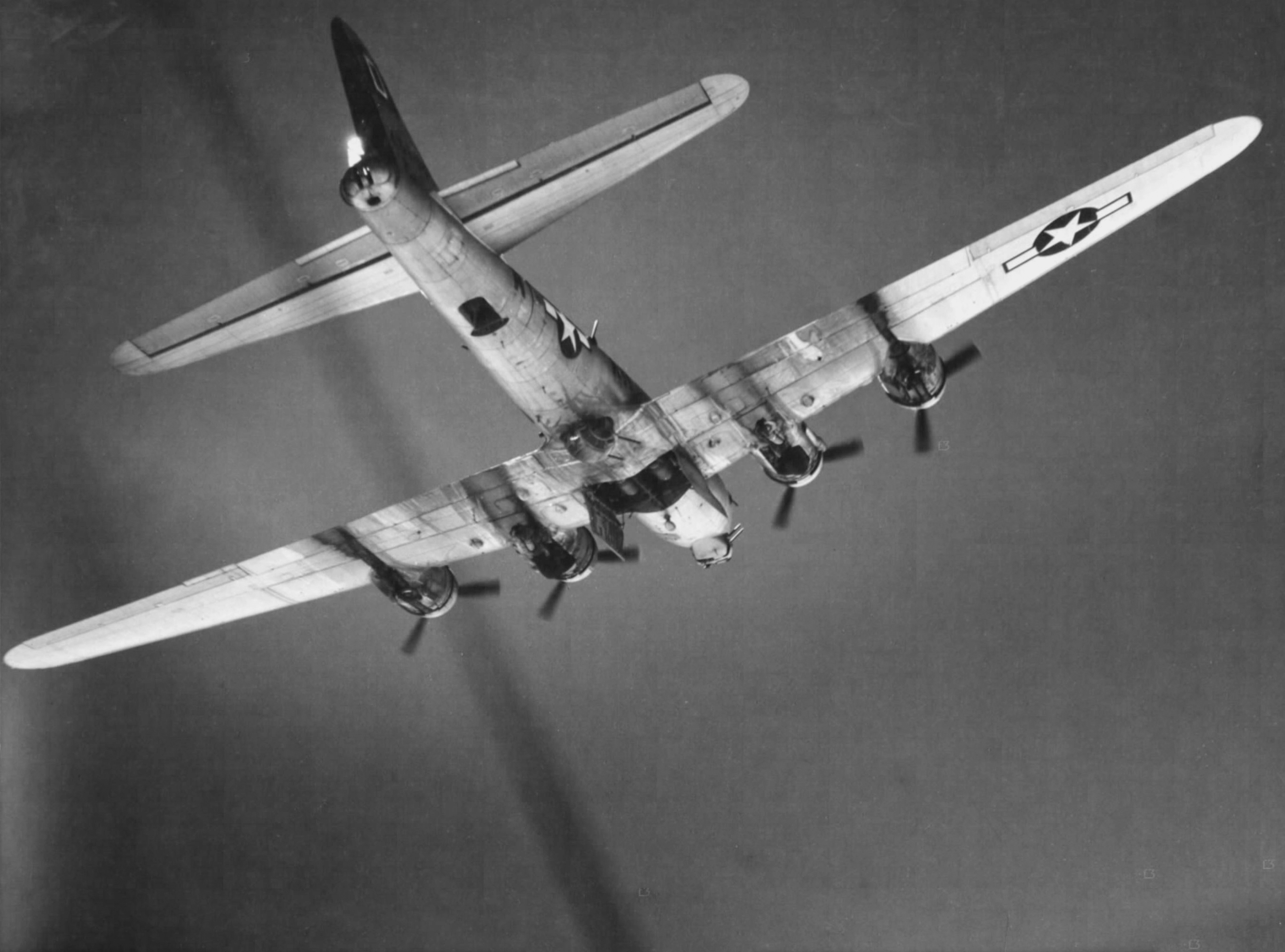
    The B-17 Flying Fortress was perhaps the most well-known American heavy bomber of the Second World War (1939/41-1945). It achieved a fame far beyond that of its more-numerous contemporary, the Consolidated B-24 Liberator. The first pre-production Y1B-17 Fortress was delivered to the 2d Bombardment Group, Langley Field, Virginia on 11 January 1936; the first production B-17B was delivered on 29 March 1939, also to the 2nd Bombardment Group. A total of 12,677 production Fortresses was built before production came to an end. In August 1944, the Boeing B-17 equipped no less than 33 overseas combat groups.

    The last Boeing-built B-17G was delivered to the USAAF on 13 April 1945. Following the end of World War II, the Flying Fortress was rapidly withdrawn from USAAF service, being replaced by the B-29 Superfortress. Literally thousands of Fortresses used in combat in Europe by Eighth or Fifteenth Air Force or in the United States by II Bomber Command training units were flown to various disposal units. A few were sold to private owners, but the vast majority were cut up for scrap.

    Aircraft in the final early 1945 production manufacturing block by Boeing or Lockheed-Vega (Block 110) were converted to the B-17H search and rescue model, being modified to carry a lifeboat under the fuselage. Postwar B-17s were used by the Military Air Transport Service Air Rescue Service, in 1948 being re-designated SB-17G. Some RB-17Gs were also used by the MATS Air Photographic and Charting Service (APCS). A few SB-17s were used by the Air Rescue Service in Japan during the Korean War (1950–1953), but all of the postwar B-17s were retired from MATS by the mid-1950s, becoming Air Proving Ground Command QB-17 Drones or DB-17 Drone directors. The drones were operated primarily by the 3205th Drone Group, Eglin AFB, Florida.

    The last operational USAF B-17 mission was on 6 August 1959, when DB-17P 44-83684 (Originally a Douglas/Long Beach B-17G-90-DL) directed QB-17G 44-83717 which was expended as a target for an AIM-4 Falcon air-to-air missile fired from an F-101 Voodoo, near Holloman AFB, New Mexico. 44-83684 arrived at Davis-Monthan AFB for storage a few days later. The few DB-17P remaining operational drone controllers remaining on Air Force rolls afterward were transferred to various museums in 1960.

    Combat Organizations

    Fifth Air Force

    Prior to the Japanese Attack on Pearl Harbor on Sunday, 7 December 1941, the 19th Bombardment Group had 35 B-17s in the Philippines. By 14 December, only 14 remained. Beginning on 17 December, the surviving B-17s based there began to be evacuated south to Australia, and were then sent to Singosari Airfield, Java in the Dutch East Indies (modern Indonesia) on 30 December 1941.

    The 7th Bomb Group was originally scheduled to reinforce the Philippines in December 1941 from Fort Douglas, Utah, and the ground echelon had already left by ship from San Francisco. The unexpected Pearl Harbor Attack led to the ground echelon being returned to United States and the air echelon remained at Hamilton Field, California, flying antisubmarine patrols over the West Coast along the Pacific Ocean. 9th Bomb Squadron deployed to the Southwest Pacific in mid-December, traveling the long way around by flying east via Florida, Brazil, across the South Atlantic Ocean to central Africa then to the Middle East. The unit continued around the northern coasts of the Indian Ocean via Arabia to Karachi, India via Singapore to Singosari Airfield on Java, joining the 19th BG on 14 January.

    Both units would remain on Java until March 1942, taking part in the brave, but ultimately futile, attempts to defend the Philippines on the Bataan peninsula and the island fortress of Corregidor, along with the Netherlands colony in Southeast Asia of the Dutch East Indies. The B-17s were never present in large enough numbers to make any real difference, however, to the course of the campaign. The 19th BG withdrew to Australia with the B-17 survivors of the 9th Bomb Squadron, which was re-equipped with Liberator B-24s in India as part of the Tenth Air Force. Nine of the survivors were eventually sent to the Middle East in July to defend Egypt against the advancing German Afrika Corps in North Africa.

    The 19th BG received some replacement aircraft and was joined by the 43d Bomb Group in Australia in March. The two units took part in the campaign on Papua New Guinea, before the 19th BG was moved back to the United States at the end of 1942, transferring its assets to the 43d. The 43d BG flew combat missions with B-17s until August 1943, when they were replaced by B-24s.

    7th Bombardment Group

    Received B-17Bs, 1939 at Hamilton Field, California (USAAC)
    Deployed to Netherlands East Indies, Jan–Mar 1942 with 7 B-17Es
    • 9th Bombardment Squadron operated from Java until withdrawn in Mar 1942.
    Squadron reassigned to Tenth Air Force in India.

    19th Bombardment Group

    Received B-17Bs, 1939 at March Field, California (USAAC)
    Deployed to Clark Field, Philippines Oct 1941 with B-17Cs
    Operated from Philippines, Australia, Netherlands East Indies, Oct 1941 – Dec 1942
    • 14th Bombardment Squadron (Del Monte Field)*
    Designated as Non-Operational, Mar 1942
    • 28th Bombardment Squadron (Clark Field)*
    • 30th Bombardment Squadron (Clark Field)*
    • 93d Bombardment Squadron (Del Monte Field)*
    • 40th Reconnaissance Squadron (Formed Mar 1942 in Australia)**
    Redesignated: 435th Bombardment Squadron (Apr–Dec 1942)
    Returned to United States as B-17 OTU, B-17s to 43d BG Dec 1942

    43d Bombardment Group

    Received B-17Bs at Langley Field, Virginia, Jan 1941 (USAAC)
    Flew Coastal patrols, Jan 1941 – Feb 1942 under First Air Force (USAAC)
    Deployed to Australia, Mar 1942 with B-17Es
    Operated from Australia, New Guinea, Mar 1942 – Aug 1943
    Converted to B-24 Liberators, Aug 1943
    • 63d Bombardment Squadron
    • 64th Bombardment Squadron
    • 65th Bombardment Squadron
    • 403d Bombardment Squadron

    Note* Personnel of squadron not required for flight operations transferred to V Interceptor Command, 24 December 1941. Fought as infantry during Battle of Bataan.

    Note** Formed with 7th BG B-17E aircraft and personnel that arrived in Australia, Mar 1942 and 10 Sierra Bombardment Group B-17Es, arrived in Australia c 20 January.

    Sixth Air Force

    About thirty B-17s (B/D/E/F) served in the Caribbean and Antilles Air Commands during World War II, the first (B-17D 40-3058) arriving in Panama Canal Zone during March 1941. However, usually less ten were operational at any one time. They were mostly R- (Restricted from combat) RB-17Bs and Ds stationed at Río Hato Field, but some were at Albrook Field. Later E and F models no longer suitable for training were obtained as replacement aircraft. Some were based at Waller Field, Trinidad. B-17s were used for long-range antisubmarine patrols over the Caribbean, South Atlantic and Eastern Pacific approaches to the Panama Canal, and for long-distance transport flights to Ecuador, Peru, British Guiana and Brazil. In addition to the Sixth Air Force B-17s, F-9 photo-mapping Fortresses of the 1st Photographic Group were frequently in the command's AOR, as well as in South America on aerial survey and mapping missions.

    6th Bombardment Group

    Río Hato Field, Panama, 1941 – May 1942
    Reassigned to Galapagos Islands, May 1942
    • 3d Bombardment Squadron

    9th Bombardment Group

    Waller Field, Trinidad, 1941 – May 1942
    Reassigned to Army Air Forces School of Applied Tactics, May 1942
    • 430th Bombardment Squadron

    40th Bombardment Group

    Albrook Field, Canal Zone, 1941 – Jul 1943
    Reassigned for B-29 Transition Training, Jul 1943
    • 44th Bombardment Squadron

    Seventh/Thirteenth Air Force

    The B-17 was to achieve its first taste of combat during the Pearl Harbor Attack, when the 5th Bombardment Group based at Hickam Field, Hawaii had 12 B-17Ds parked on the ramp. Five of these B-17s were destroyed, and eight were damaged in the attack. On 7 December, The 38th Reconnaissance Squadron (Heavy), 11th Bombardment Group, with four B-17Cs and two new B-17Es was inbound from Hamilton Field, California to Hickam on their way to the Philippines to reinforce the American forces there. They arrived at Hickam at the height of the attack. One was destroyed, three others badly damaged. Remaining in Hawaii after the attack, in June 1942, B-17s from the 5th and 11th Bomb Groups were used in the Battle of Midway, but with little effectiveness.

    Both the 5th and 11th Bombardment Groups joined the Thirteenth Air Force during 1942 and took part in the American campaign in the south west Pacific, fighting during the campaigns in the Solomon Islands (including the battle for Guadalcanal) and the return campaign to the Philippines. By the middle of 1943 both units had replaced their B-17s with B-24 Liberators

    5th Bombardment Group

    Hawaii, Solomon Islands, Nov 1941 – Aug 1943
    Converted to B-24 Liberators, Aug 1943
    • 23d Bombardment Squadron
    • 31st Bombardment Squadron
    • 72d Bombardment Squadron
    • 394th Bombardment Squadron

    11th Bombardment Group

    Hawaii, New Hebrides, Nov 1941 – Aug 1943
    Converted to B-24 Liberators, Aug 1943
    • 26th Bombardment Squadron
    • 42d Bombardment Squadron
    • 98th Bombardment Squadron
    • 431st Bombardment Squadron

    Eighth Air Force

    Was primary operator of B-17 Flying Fortresses in overseas combat theaters during World War II. The B-17 may have first seen combat in American markings in the Philippines, but it would earn its enduring fame with the Eighth Air Force, based in England and fighting over Occupied Europe. The story of the B-17 would become the story of the VIII Bomber Command (later Eighth Air Force) strategic heavy bombardment campaign of the European Theater of Operations (ETO) during World War II

    Initially equipped with B-17Es in 1942, the Eighth Air Force received B-17Fs in Jan 1943 and B-17Gs in Nov 1943. Flying Fortresses were employed in long-range strategic bombardment operations over Occupied Europe and Nazi Germany, August 1942 – May 1945 attacking enemy military, transportation and industrial targets as part of the United States' air offensive against Nazi Germany.

    34th Bombardment Group

    Coastal patrol B-17s, Jan 1941 – May 1942 under First Air Force
    Deployed to ETO May 1944 with B-24s; transitioned to B-17s Sep 1944
    RAF Mendlesham (AAF-156), Sep 1944 – Aug 1945 -Inactivated Aug 1945
    • 4th Bombardment Squadron
    • 7th Bombardment Squadron
    • 18th Bombardment Squadron
    • 391st Bombardment Squadron

    91st Bombardment Group

    RAF Bassingbourn (AAF-121), Oct 1942 – Jun 1945 - Inactivated Nov 1945
    • 322d Bombardment Squadron
    • 323d Bombardment Squadron
    • 324th Bombardment Squadron
    • 401st Bombardment Squadron

    92d Bombardment Group

    RAF Bovingdon (AAF-112), Aug 1942 – Jan 1943; RAF Alconbury (AAF-102), Jan–Sep 1943; RAF Podington (AAF-109), Sep 1943 – Jun 1945
    To: Air Transport Command, Jun 1945, Absorbed into 306th BG, Feb 1946
    • 325th Bombardment Squadron
    • 326th Bombardment Squadron
    • 327th Bombardment Squadron (May–Jul 1943 YB-40 Testing)
    • 407th Bombardment Squadron

    94th Bombardment Group

    RAF Bury St. Edmunds (AAF-468), May 1943 – Dec 1945 - Inactivated Dec 1945
    • 331st Bombardment Squadron
    • 332d Bombardment Squadron
    • 333d Bombardment Squadron
    • 410th Bombardment Squadron

    95th Bombardment Group

    RAF Horham (AAF-119), May 1943 – Jun 1945 Inactivated Aug 1945
    • 334th Bombardment Squadron
    • 335th Bombardment Squadron
    • 336th Bombardment Squadron
    • 412th Bombardment Squadron

    96th Bombardment Group

    RAF Snetterton Heath (AAF-138), Apr 1943 – Dec 1945 Inactivated Dec 1945
    • 337th Bombardment Squadron
    • 338th Bombardment Squadron
    • 339th Bombardment Squadron
    • 413th Bombardment Squadron

    100th Bombardment Group

    RAF Thorpe Abbotts (AAF-139), Jun 1943 – Dec 1945 Inactivated Dec 1945
    • 349th Bombardment Squadron
    • 350th Bombardment Squadron
    • 351st Bombardment Squadron
    • 418th Bombardment Squadron

    303d Bombardment Group

    RAF Molesworth (AAF-107), Sep 1942 – May 1945 Inactivated Jul 1945
    • 358th Bombardment Squadron
    • 359th Bombardment Squadron
    • 360th Bombardment Squadron
    • 427th Bombardment Squadron

    305th Bombardment Group

    RAF Chelveston (AAF-105), Sep 1942 – Jul 1945 Inactivated Dec 1946
    • 364th Bombardment Squadron
    • 365th Bombardment Squadron
    • 366th Bombardment Squadron
    • 422d Bombardment Squadron

    306th Bombardment Group

    RAF Thurleigh (AAF-111), Sep 1942 – Dec 1945 Inactivated Dec 1946
    • 367th Bombardment Squadron
    • 368th Bombardment Squadron
    • 369th Bombardment Squadron
    • 423d Bombardment Squadron

    351st Bombardment Group

    RAF Polebrook (AAF-110), May 1943 – Jun 1945 Inactivated Aug 1945
    • 508th Bombardment Squadron
    • 509th Bombardment Squadron
    • 510th Bombardment Squadron
    • 511th Bombardment Squadron

    379th Bombardment Group

    RAF Kimbolton (AAF-117), May 1943 – Jun 1945 Inactivated Jul 1945
    • 524th Bombardment Squadron
    • 525th Bombardment Squadron
    • 526th Bombardment Squadron
    • 527th Bombardment Squadron

    381st Bombardment Group

    RAF Ridgewell (AAF-167), Jun 1943 – Jun 1945 Inactivated Aug 1945
    • 532d Bombardment Squadron
    • 533d Bombardment Squadron
    • 534th Bombardment Squadron
    • 535th Bombardment Squadron

    384th Bombardment Group

    RAF Grafton Underwood (AAF-106), Jun 1943 – Jun 1945 Inactivated Feb 1946
    • 544th Bombardment Squadron
    • 545th Bombardment Squadron
    • 546th Bombardment Squadron
    • 547th Bombardment Squadron

    385th Bombardment Group

    RAF Great Ashfield (AAF-155), Jun 1943 – Aug 1945 Inactivated Aug 1945
    • 548th Bombardment Squadron
    • 549th Bombardment Squadron
    • 550th Bombardment Squadron
    • 551st Bombardment Squadron

    388th Bombardment Group

    RAF Knettishall (AAF-136), Jun 1943 – Aug 1945 Inactivated Sep 1945
    • 560th Bombardment Squadron
    • 561st Bombardment Squadron
    • 562d Bombardment Squadron
    • 563d Bombardment Squadron

    390th Bombardment Group

    RAF Framlingham (AAF-153), Jul 1943 – Aug 1945 Inactivated Aug 1945
    • 568th Bombardment Squadron
    • 569th Bombardment Squadron
    • 570th Bombardment Squadron
    • 571st Bombardment Squadron

    398th Bombardment Group

    RAF Nuthampstead (AAF-131), Apr 1944 – May 1945 Inactivated Sep 1945
    • 600th Bombardment Squadron
    • 601st Bombardment Squadron
    • 602d Bombardment Squadron
    • 603d Bombardment Squadron

    401st Bombardment Group

    RAF Deenethorpe (AAF-128), Nov 1943 – May 1945 Inactivated Aug 1945
    • 612th Bombardment Squadron
    • 613th Bombardment Squadron
    • 614th Bombardment Squadron
    • 615th Bombardment Squadron

    447th Bombardment Group

    RAF Rattlesden (AAF-126), Nov 1943 – Aug 1945 Inactivated Nov 1945
    • 708th Bombardment Squadron
    • 709th Bombardment Squadron
    • 710th Bombardment Squadron
    • 711th Bombardment Squadron

    452d Bombardment Group

    RAF Deopham Green (AAF-142), Jan 1944 – Aug 1945 Inactivated Aug 1945
    • 728th Bombardment Squadron
    • 729th Bombardment Squadron
    • 730th Bombardment Squadron
    • 731st Bombardment Squadron

    457th Bombardment Group

    RAF Glatton (AAF-130), Jan 1944 – Jun 1945 Inactivated Aug 1945
    • 748th Bombardment Squadron
    • 749th Bombardment Squadron
    • 750th Bombardment Squadron
    • 751st Bombardment Squadron

    482d Bombardment Group

    Aug 1943 – May 1945 RAF Alconbury (AAF-102)
    Attached to: VIII Composite Command, Feb 1944 – Jan 1945
    Composite group with 2 squadrons of B-17s and one of B-24s
    Conducted Pathfinder missions using H2X radar Inactivated Sep 1945
    • 812th Bombardment Squadron (B-17)
    • 813th Bombardment Squadron (B-17)
    • 814th Bombardment Squadron (B-24)

    486th Bombardment Group

    RAF Sudbury (AAF-158), Aug 1944 – Aug 1945
    Deployed to ETO, April 1944 with B-24s; Converted to B-17s, Aug 1944 Inactivated Nov 1945
    • 832d Bombardment Squadron
    • 833d Bombardment Squadron
    • 834th Bombardment Squadron
    • 835th Bombardment Squadron

    487th Bombardment Group

    RAF Lavenham (AAF-137), Jul 1944 – Aug 1945
    Deployed to ETO, April 1944 with B-24s; Converted to B-17s, Jul 1944 Inactivated Nov 1945
    • 836th Bombardment Squadron
    • 837th Bombardment Squadron
    • 838th Bombardment Squadron
    • 839th Bombardment Squadron

    490th Bombardment Group

    Aug 1944 – Aug 1945
    RAF Eye (AAF-134), Aug 1944 – Aug 1945
    Deployed to ETO, April 1944 with B-24s; Converted to B-17s, Aug 1944 Inactivated Nov 1945
    • 848th Bombardment Squadron
    • 849th Bombardment Squadron
    • 850th Bombardment Squadron
    • 851st Bombardment Squadron

    493d Bombardment Group

    RAF Wormingford (AAF-159); RAF Debach (AAF-152), May 1944 – Aug 1945
    Deployed to ETO, April 1944 with B-24s; Converted to B-17s, May 1944 Inactivated Aug 1945
    • 860th Bombardment Squadron
    • 861st Bombardment Squadron
    • 862d Bombardment Squadron
    • 863d Bombardment Squadron

    Twelfth/Fifteenth Air Force

    Although less important than the B-24 Liberator in the Mediterranean Theater of Operations (MTO), six B-17 Groups did serve in North Africa and Italy, two of them serving from 1942 until the end of the war. Two B-17E groups (97th and 301st) deployed to Morocco and Algeria from VIII Bomber Command in England during November 1942. These were two of the most experienced B-17 units, and their departure from England slowed down the development of the Eighth Air Force's offensive. Later, two newly trained II Bomber Command groups (2d, 99th) deployed from the United States. The four B-17E groups formed the heavy bomber component of XII Bomber Command (and Northwest African Strategic Air Force).

    In North Africa Flying Fortresses were used against German and Italian military targets in Algeria and Tunisia, and to attack German shipping in the Mediterranean. Flying Fortresses took part in the bombardment of the Italian stronghold of Pantelleria, the invasion of Sicily and the invasion of Italy.

    Once the Allies were firmly established on the Italian mainland, the B-17 squadrons moved Italy, joining the Fifteenth Air Force in November 1943 and were upgraded to B-17Gs. They were joined by two more groups (463d, 483d) in the spring of 1944, bringing the total up to six. At their peak there were 669 B-17 crews stationed in the Mediterranean theater. From bases around Foggia, the Fortresses engaged in long-range strategic bombardment of enemy military, transportation and industrial targets in the Balkans, Italy, Austria, France and southern Germany as part of the United States' air offensive against Nazi Germany. B-17s were also employed in tactical missions, supporting Fifth Army's campaign in Italy itself, most famously bombarding the monastery at Monte Cassino, and also took part in the invasion of southern France.

    2d Bombardment Group

    Coastal patrol B-17Bs, Jul 1939 Jan 1941 – Oct 1942 under First Air Force
    Deployed to North Africa with B-17Fs, Apr 1943
    Transferred to Amendola Airfield, Italy (MTO), Oct 1943 – Feb 1946 (B-17G) Inactivated Feb 1946
    • 20th Bombardment Squadron
    • 49th Bombardment Squadron
    • 96th Bombardment Squadron
    • 429th Bombardment Squadron

    97th Bombardment Group

    Deployed to ETO, RAF Polebrook (B-3/AAF-110), Jun–Nov 1942
    Deployed to North Africa with B-17Fs, Nov 1942
    Transferred to Amendola Airfield, Italy (MTO), Oct 1943 – Oct 1945 (B-17G) Inactivated Oct 1945
    • 340th Bombardment Squadron
    • 341st Bombardment Squadron
    • 342d Bombardment Squadron
    • 414th Bombardment Squadron

    99th Bombardment Group

    Deployed to North Africa with B-17Fs, Feb 1943
    Transferred to Tortorella Airfield, Italy (MTO), Oct 1943 – Nov 1945 (B-17G) Inactivated Nov 1945
    • 346th Bombardment Squadron
    • 347th Bombardment Squadron
    • 348th Bombardment Squadron
    • 416th Bombardment Squadron

    301st Bombardment Group

    Deployed to ETO, RAF Chelveston (B-6/AAF-105), Aug–Nov 1942
    Deployed to North Africa with B-17Fs, Nov 1942
    Transferred to Southern Italy (MTO), Oct 1943 – Jul 1945 (B-17G)
    Assigned to Second Air Force for B-29 training, Aug 1945 Inactivated Oct 1945
    • 32d Bombardment Squadron
    • 352d Bombardment Squadron
    • 353d Bombardment Squadron
    • 419th Bombardment Squadron

    463d Bombardment Group

    Deployed to Celone Airfield, Italy (MTO), Mar 1944 – Sep 1945 (B-17G) Inactivated Oct 1945
    • 772d Bombardment Squadron
    • 773d Bombardment Squadron
    • 774th Bombardment Squadron
    • 775th Bombardment Squadron

    483d Bombardment Group

    Deployed to Sterparone Airfield, Italy (MTO), Mar 1944 – Sep 1945 (B-17G) Inactivated Sep 1945
    • 815th Bombardment Squadron
    • 816th Bombardment Squadron
    • 817th Bombardment Squadron
    • 840th Bombardment Squadron

    US Army, Middle East Air Force (USAMEAF)/Ninth Air Force

    USAMEAF was a provisional organization formed at RAF Lydda, BritishPalestine on 1 July 1942. It consisted of nine B-17Es and nineteen B-24 Liberators formerly of the 9th Bombardment and 88th Reconnaissance Squadrons, 7th Bombardment Group which arrived from Allahabad Airfield, India to aid British Forces in Egypt after General Erwin Rommel advanced the Afrika Corps toward the Suez Canal. The B-17s transferred to the Middle East were older aircraft that had escaped from the Philippines or were sent from the United States in January 1942 that had fought in the Netherlands East Indies with Fifth Air Force. They would be organized into the 1st Provisional Bombardment Group on 20 July. It was the core of what would eventually become the 376th Bombardment Group, Ninth Air Force, which was transferred to RAF Abu Sueir, Egypt on 12 November.

    B-17s would be flown on combat missions from RAF Lyddia and RAF El Fayid, Egypt, attacking the harbor at Tobruk, Libya seven times with day and night raids throughout July, continually raiding the harbor shipping and disrupting Axis storage areas. It is believed that the Fortresses were sent to the secret Gura Army Air Base, Eritrea (Project 19) 15°1′13.764″N 39°02′7.62″E in August for depot-level maintenance, which was not possible at the British bases and had which been deferred since the beginning of the war in December.

    The B-17Es would not engaged in combat again until mid-October, when raids on Tobruk began again on 12 October, and attacking a coastal road near Bardia, Libya on 20 October after a mission against Tobruk was canceled due to cloud cover. They were also engaged in attacking harbor facilities and Axis naval targets on Crete and Benghazi, Libya through which Afrika Korps supplies were landed. The B-17s made a final raid against installations at Sousse, Tunisia before being taken out of front-line service with the arrival of newer B-24 and B-25 units from the United States.

    United States Army Forces in the Middle East (USAFIME) was a unified United States Army command during World War II established in August, 1942 by order of General George C. Marshall, the Chief of Staff of the United States Army, to oversee the Egypt-Libya campaign.

    The small USAFIME was headquartered in Cairo—which simplified liaison with its much larger British counterpart, Middle East Command. USAFIME had command over all United States Army forces in North Africa and the Middle East, except the Army Air Forces Ferrying Command. It was composed of:

    Iran-Iraq Service Command, later renamed the Persian Gulf Service Command (PGSC) and then finally the Persian Gulf Command; this was the successor to the original US Iranian Mission and was responsible for US troops manning the Persian Corridor. It was originally commanded by Col. Don G. Shingler, who was replaced late in 1942 by Brig. Gen. Donald H. Connolly.

    The North African Mission.

    U.S. Army Forces in Liberia, established from June 1942 to build the Robertsfield Airfield and the Freeport of Monrovia, came under control of U.S. Army Forces in the Middle East on 12 September 1943, but continued as a semi-autonomous command for the entire war.

    The first commander of the USAFIME was Maj. Gen. Russell L. Maxwell. He was replaced in November 1942 by Lt. Gen. Frank M. Andrews of the United States Army Air Forces (USAAF), and in January 1943 by Maj. Gen. Lewis H. Brereton.

    Maxwell was an army general because at the time he was appointed it was expected that the Americans would contribute ground troops to assist in the Allied Western Desert campaign. Initially the only US combat forces which were allocated to the Mediterranean Theatre of War were USAAF squadrons. As plans for Operation Torch began to take shape the it became clear that the Americans would not contribute ground troops to the Western Desert Campaign. This was reflected in Maxwell's replacement by Andrews. One of Andrew's first acts was to establish the Ninth Air Force to replace the United States Army Middle East Air Force (USAMEAF). The non-air force administrative functions of USAFIME were taken over by the North African Theater of Operations United States Army (NATOUSA) when the Egypt-Libya campaign ended on 12 February 1943.

    7th Bombardment Group

    9th Bombardment Squadron operated from Java until withdrawn in Mar 1942.
    Squadron reassigned to Tenth Air Force in India.

    Specifications (Boeing B-17G Flying Fortress)

    Data from The Encyclopedia of World Aircraft[37]

    General characteristics

    Crew: 10: Pilot, co-pilot, navigator, bombardier/nose gunner, flight engineer/top turret gunner, radio operator, waist gunners (2), ball turret gunner, tail gunner[218]
    Length: 74 ft 4 in (22.66 m)
    Wingspan: 103 ft 9 in (31.62 m)
    Height: 19 ft 1 in (5.82 m)
    Wing area: 1,420 sq ft (131.92 m2)
    Airfoil: NACA 0018 / NACA 0010
    Empty weight: 36,135 lb (16,391 kg)
    Gross weight: 54,000 lb (24,500 kg)
    Max takeoff weight: 65,500 lb (29,700 kg)
    Aspect ratio: 7.57
    Powerplant: 4 × Wright R-1820-97 "Cyclone" turbosupercharged radial engines, 1,200 hp (895 kW) each
    Propellers: 3-bladed Hamilton-Standard constant-speed propeller

    Performance

    Maximum speed: 287 mph (462 km/h, 249 kn)
    Cruise speed: 182 mph (293 km/h, 158 kn)
    Range: 2,000 mi (3,219 km, 1,738 nmi) with 6,000 lb (2,700 kg) bombload
    Ferry range: 3,750 mi (6,040 km, 3,260 nmi)
    Service ceiling: 35,600 ft (10,850 m)
    Rate of climb: 900 ft/min (4.6 m/s)
    Wing loading: 38.0 lb/sq ft (185.7 kg/m2)
    Power/mass: 0.089 hp/lb (150 W/kg)

    Armament

    Guns:
    13 × .50 in (12.7 mm) M2 Browning machine guns in 9 positions (2 in the Bendix chin turret, 2 on nose cheeks, 2 staggered waist guns, 2 in upper Sperry turret, 2 in Sperry ball turret in belly, 2 in the tail and one firing upwards from radio compartment behind bomb bay)
    Bombs:
    Short range missions; Internal load only (less than 400 mi): 8,000 lb (3,600 kg)
    Long range missions; Internal load only (≈800 mi): 4,500 lb (2,000 kg)
    Max Internal and External load: 17,600 lb (7,800 kg)

    Avionics

    not known

     Flight Simulators
     

       IL-2 Sturmovik 'Cliff's of Dover' Blitz - has no 3D model

       IL-2 Great Battles Series IL-2 - has no 3D model

       DCS World - has no 3D model


     Thorpe Abbotts, England Map


        Air battle over the Ore Mountains

    1. Air Battle over the Ore Mountains at new.museum119.cz. Accessed on 7 Feb 2011.
    2. Map and flight routes of Mission 623
    3. 445th Bombardment Group, Sep. 1944". Archived from the original on 2018-01-27
    4. Order of battle of the participating units
    5. Matthias Leich lebt im thüringischen Oberhof. Tagsüber arbeitet er bei einem Versandhandel. Danach sucht er Kriegsgefallene in den Wäldern „Ich kann den Mann doch nicht draußen liegen lassen“ In: Berliner Zeitung. 6 November 2002 (Online)
    6. Kenneth Breaux: Courtesies of the Heart. Trafford, 2005, ISBN 978-1-4120-1165-5 (Google books preview)
    7. Esther Schrader: The Final Mission is Completed. In: Los Angeles Times, 2 November 2002 (Online)
    8. Karl-Heinz Melzer: Die große Luftschlacht über dem Erzgebirge, in: Erzgebirgische Heimatblätter, 24 (2002), Issue 2, pp. 19–22. ISSN 0232-6078
    9. Aircraft: 2102657 (Website of the 100th Bomber Group Foundation)
    10. Ortsgeschichte Herold. In: Stadtbote (Thum), 16(2014)9, 1 September 2014, p. 8 (pdf Archived 2017-04-06 at the Wayback Machine)

        Boeing B-17 Flying Fortress Citations

    1. 'The Boeing Logbook: 1933–1938.' Archived 8 December 2006 at the Wayback Machine Boeing.
    2. Yenne 2006, p. 8.
    3. Angelucci and Matricardi 1988, p. 46.
    4. Parker 2013, pp. 35, 40–48.
    5. Herman 2012, pp. 292–299, 305, 333.
    6. Carey 1998, p. 4.
    7. Parker 2013, p. 41.
    8. Yenne 2005, p. 46.
    9. Tate 1998, p. 164.
    10. Swanborough and Bowers 1963, p. 74.
    11. Hess and Winchester Wings of Fame 1997, p. 41.
    12. Bowers 1989, pp. 291–92.
    13. Salecker 2001, p. 46.
    14. Freeman 1993, p. 8.
    15. 'Army's Biggest Bomber Has Rotating Nose.' Popular Science Monthly, August 1937.
    16. 'Giant Bomber Flies Four Miles Per Minute.' Popular Mechanics, October 1935.
    17. 'Army Bomber Flies 2,300 Miles In 9 Hours, or 252 Miles an Hour; New All-Metal Monoplane Sets a World Record on Non-Stop Flight From Seattle to Dayton, Ohio.' The New York Times, 21 August 1935.
    18. Zamzow 2008, p. 33.
    19. Tate 1998, p. 165.
    20. Zamzow 2008, p. 34.
    21. 'Model 299 Crash, 15 November 1935.' Archived 16 May 2007 at the Wayback Machine
    22. Schamel, John. 'How the Pilot's Checklist Came About.' Flight Service History.
    23. Salecker 2001, p. 48.
    24. Francillon 1979, pp. 201–02.
    25. Bowers 1976, p. 37.
    26. Erickson, Mark St. John 'Langley B-17s paved way for independent Air Force' Daily Press, 1 March 2017.
    27. Meilinger, Phillip S. 'When the Fortress Went Down.' Air Force Magazine (Air Force Association), Volume 87, Issue 10, October 2004.
    28. Bowers 1976, p. 12.
    29. Swanborough and Bowers 1963, p. 75.
    30. Schamel, John 'How the Pilot's Checklist Came About.' Flight Service History.
    31. 'B-17 checklist.' Life, 24 August 1942.
    32. Zamzow 2008, p. 47.
    33. Maurer 1987, pp. 406–08.
    34. 'Intercepting The 'Rex'.' Archived 13 September 2007 at the Wayback Machine National Museum of the United States Air Force.
    35. 'Boeing Y1B-17.' Archived 16 May 2007 at the Wayback Machine National Museum of the United States Air Force.
    36. 'World War II – General Electric Turbosupercharges'. aviationshoppe.com.
    37. Donald 1997, p. 155.
    38. Bowers 1989, pp. 293–94.
    39. Wixley 1998, p. 23.
    40. Caidin, Martin (1968). Flying Forts: The B-17 in World War II. New York: Bantam Books. pp. 80, 95–99. ISBN 9780553287806.
    41. 'Boeing B-17B.' Archived 14 September 2007 at the Wayback Machine National Museum of the United States Air Force.
    42. Ethell, Jeff. 'Our Still-Flying Fortress.' Popular Mechanics, Volume 162, Issue 1, January 1985, pp. 124–29.
    43. Serling 1992, p. 55.
    44. Yenne 2006, p. 6.
    45. Herman, Arthur. Freedom's Forge: How American Business Produced Victory in World War II, pp. 292–99, 305, Random House, New York, 2012. ISBN 978-1-4000-6964-4.
    46. Parker 2013, pp. 35, 40–48, 59, 74.
    47. Borth 1945, pp. 70–71, 83, 92, 256, 268–69.
    48. Bowers 1989, p. 292.
    49. Bowers 1989, p. 294.
    50. Bowers 1989, p. 295.
    51. Swanborough and Bowers 1963, p. 76.
    52. Bowers 1989, p. 297.
    53. Bowers 1989, p. 299.
    54. Swanborough and Bowers 1963, p. 78.
    55. Yenne, Bill, 'B-17 at War': p. 16; Zenith Press; 2006: ISBN 978-0-7603-2522-3
    56. 'Flying Fortress (B-17G): A Survey of the Hard-hitting American Heavy Weight.' Flight, 4 May 1944, pp. 473–76.
    57. 'Boeing Model 307 Stratoliner'. Archives - This Day in Aviation.
    58. 'B-17E page'. B-17 Queen of the Sky.
    59. B-17 Erection and Maintenance Manual 01-20EE-2
    60. Hess and Winchester Wings of Fame 1997, pp. 56–57.
    61. Francillon 1982, pp. 213–15.
    62. Hess and Winchester Wings of Fame 1997, p. 66.
    63. Hess and Winchester Wings of Fame 1997, pp. 62–63, 65.
    64. Francillon 1982, p. 212.
    65. Bowers 1989, pp. 307–08.
    66. Lyman, Troy (12 May 2003). 'B17 – Queen of the Sky – The B-17F'. b17queenofthesky.com. Troy Lyman's B-17 Flying Fortress Site.
    67. Hess and Winchester Wings of Fame 1997, pp. 63–64.
    68. Francillon 1982, p. 211.
    69. Bowers 1989, pp. 286–87.
    70. Bowers 1989, pp. 303–04.
    71. Ramsey, Winston G. 'The V-Weapons'. London: After the Battle, Number 6, 1974, pp. 20–21.
    72. Edmonds, Walter. They Fought With They Had. 1951, pp. 1–314.[page needed]
    73. Kenney, George C. General Kenney Reports. New York: Duell, Sloan and Pierce, 1949.
    74. Cravens, Wesley Army Air Forces in WW II. Washington, D.C.: Office of Air Force History, 1956.
    75. Baugher, Joe. 'B-17 Squadron Assignments.' Encyclopedia of American Aircraft, Last revised 9 August 1999.
    76. 'Handley Page Halifax'. RAF.mod.uk. Archived from the original on 30 May 2008.
    77. Andrews and Morgan 1988, p. 340.
    78. Yenne 2006, p. 23.
    79. Chant 1996, pp. 61–62.
    80. Chorlton Aeroplane January 2013, p. 38.
    81. Richards 1995, pp. 122–23.
    82. Garzke & Dulin, pp. 159–60.
    83. Weigley 1977, p. 338.
    84. Stitt 2010, p. 1.
    85. Wynn 1998, p. 93.
    86. 'Obituaries: John Hereford'. The Daily Telegraph. 13 December 2007. Archived from the original on 14 December 2007.
    87. 'Second-Generation Norden Bombsight Vault'. National Park Service.
    88. 'Blue Ox.' National Geographic Magazine, Vol. LXXXIII, Number One, January 1943, p. 7, Ad(i).
    89. Peterson, Paul. Ludington Daily News, 16 April 1994, p. 1.
    90. Baugher, Joe. 'Boeing B-17B Fortress.' Encyclopedia of American Aircraft, 22 May 2010.
    91. 'Aviation Photography: B-17 Flying Fortress.' Northstar Gallery, 16 January 2007.
    92. Hess and Winchester Wings of Fame 1997, pp. 59–60.
    93. 'AAF Enters Combat from England.' Archived 4 November 2013 at the Wayback Machine National Museum of the United States Air Force.
    94. Arthur B. Gerguson, 'Chapter 18: Rouen-Sotteville, No. 1, 17 August 1942', in Craven W; Cate, J (eds.), The Army Air Forces in WWII, vol. I: Plans & Early Operations, January 1939 to August 1942, pp. 662–63
    95. Bowman 2002, p. 7.
    96. Weigley 1977, p. 339.
    97. November 1998, Brian Todd Carey (12 June 2006). 'How Allied Air Attacks Evolved During World War II'. HistoryNet.
    98. Bowman 2002, p. 8.
    99. Hess 1994, pp. 59–60.
    100. Hess 1994, pp. 65–67.
    101. Bowman 2002, p. 22.
    102. Price, Alfred. 'Against Regensburg and Schweinfurt.' Air Force Magazine, Volume 76, Issue 9, September 1993.
    103. Hess 1994, p. 64.
    104. Weigley 1977, p. 341.
    105. Hess 1994, p. 67.
    106. Hess 1994, pp. 69–71.
    107. Caldwell and Muller 2007, pp. 151–52.
    108. Weigley 1977, pp. 340–41.
    109. Weigley 1977, p. 342.
    110. Caldwell and Muller 2007, p. 162.
    111. McKillop, Jack. 'Combat Chronology of the U.S. Army Air Forces: April 1945.' Archived 7 March 2010 at the Wayback Machine usaaf.net, 17 January 2007.
    112. Arakaki and Kuborn 1991, pp. 73–75, 158–59.
    113. Arakaki and Kuborn 1991, pp. 73, 158–59.
    114. Shores, Cull and Izawa 1992, pp. 55–56.
    115. Shores, Cull and Izawa 1992, p. 163.
    116. Shores, Cull and Izawa 1992, pp. 166–67.
    117. Salecker 2001, pp. 64–71.
    118. Sakai et al. 1996, pp. 68–72.
    119. Hess and Winchester Wings of Fame 1997, p. 96.
    120. Parshall and Tulley 2005, pp. 180, 329.
    121. Gillison, pp. 692–93
    122. Spinetta, Lawrence (November 2007). 'Battle of the Bismarck Sea'. World War II. ISSN 0898-4204.
    123. Watson, pp. 144–45
    124. Gamble, pp. 313
    125. 'Anniversary talks: Battle of the Bismarck Sea, 2–4 March 1943 [Australian War Memorial]'. Archived from the original on 24 August 2003.
    126. Frisbee 1990
    127. Morison 1950, p. 61
    128. Kenney, George C. General Kenney Reports. New York: Duall, Sloan and Pearce, 1949.
    129. Jacobson 1945[page needed]
    130. 'The B-17H 'Flying Dutchman''. www.pbyrescue.com. Archived from the original on 20 April 2017.
    131. A-1 lifeboat
    132. 'History:B-17 Flying Fortress.' Archived 7 January 2007 at the Wayback Machine Boeing.
    133. 'Formation.' b17flyingfortress, 8 April 2007.
    134. 'B-17 Pilot Training Manual (Formation).' Headquarters, AAF, Office of Flying Safety.
    135. 'Why Use Colourful Camouflage in World War 2? – Assembly Ships'. Youtube. Military Aviation History. Archived from the original on 23 November 2021.
    136. 'Polka Dot Warriors - Vintage Wings of Canada'. www.vintagewings.ca. Vintage Wings. Archived from the original on 1 December 2019.
    137. 'Excerpts from B-17 Pilot Training Manual (The Story of the B-17).' Headquarters, AAF, Office of Flying Safety.
    138. Browne, Robert W. 'The Rugged Fortress: Life-Saving B-17 Remembered.' Flight Journal: WW II Bombers, Winter 2001.
    139. Johnsen, Frederick A. 'The Making of an Iconic Bomber.' Air Force Magazine, Volume 89, Issue 10, 2006.
    140. Hoffman, Wally. 'We Get Our Feet Wet.' Magweb.com, 2006.
    141. Caidin 1960, p. 86.
    142. Wright, James G. 'Durable B-17s hard for pilots to forget: Love for plane outweighs bitter memories of war' (requires subscription). Colorado Springs Gazette, 8 June 1994.
    143. Benitez, Nannette. 'World War II War Production – Why Were the B-17 and B-24 Produced in Parallel?' Archived 5 November 2016 at the Wayback Machine Defense Technical Information Center, 1997.
    144. '43-38172.' 398th.org.
    145. Bowers 1976, p. 177.
    146. Schollars, Todd J. 'German wonder weapons: degraded production and effectiveness.' Archived 19 June 2006 at the Wayback Machine Air Force Journal of Logistics, Fall 2003.
    147. Thomas, Geoffrey J., and Ketley, Barry, 'KG 200 – The Luftwaffe's Most Secret Unit', Hikoku Publications Ltd., Crowborough, East Sussex, UK, 2003, ISBN 1-902109-33-3, pp. 57–58, 66.
    148. Hess and Winchester Wings of Fame 1997, p. 89.
    149. Donald 1995, p. 23.
    150. Wixley 1998, p. 30.
    151. Richardson, Wilbur (26 May 2012). Aluminum Castles: WWII from a gunner's view. Cantemos. pp. 29–30. We also reported seeing a B17 flying at a safe distance from the formation. This mystery fortress shadowed the formation inbound from the Rhine river and we were informed others had seen it back across Belgium on the way out. A fortress manned by the enemy created an unsettling feeling in all of us.
    152. Gordon 2008, p. 479.
    153. 'Swiss Morane'. WW2 in color.
    154. 'The Surprising Story of Japan's B-17 Fleet'.
    155. Bowers 1989, p. 314.
    156. Swanborough and Bowers 1963, p. 80.
    157. Bowers 1989, p. 290.
    158. Bowers 1989, pp. 310–11.
    159. Knaack 1988, p. 465.
    160. Hess and Winchester Wings of Fame 1997, p. 86.
    161. Hess and Winchester Wings of Fame 1997, pp. 89–90.
    162. Hess and Winchester Wings of Fame 1997, p. 91.
    163. 'Sperry's RPV Background.' Flight International, 17 April 1976, p. 1006.
    164. 'Warbird Registry – Boeing B-17 Flying Fortress'. warbirdregistry.org.
    165. 'Boeing B-17F Memphis Belle.' Archived 8 June 2010 at the Wayback Machine National Museum of the United States Air Force.
    166. Swanborough and Bowers 1976, pp. 66–67.
    167. Roberts 2000, p. 661.
    168. 'US Coast Guard Aviation History: Boeing PB-1G 'Flying Fortress'.' United States Coast Guard/
    169. Pocock, Chris. The Black Bats: CIA Spy Flights Over China From Taiwan, 1951–1969. Atglen, Pennsylvania: Schiffer Military History, 2010. ISBN 978-0-7643-3513-6.
    170. 'The Boeing B-17s.' Archived 28 September 2010 at the Wayback Machine utdallas.edu.
    171. 'B-17 Flying Fortress to join CF - the Collings Foundation'.
    172. 'OY Reg - OY-DFA'.
    173. Zamzow 2008, pp. 42–43.
    174. Hess and Winchester Wings of Fame 1997, pp. 46–47.
    175. Correll, John T. ' Rendezvous With the 'Rex'.' Air Force Magazine, Volume 91. Issue 12, December 2008, p. 56.
    176. Levine, Alan J. (1992). The Strategic Bombing of Germany, 1940–1945. Westport, Connecticut: Praeger. pp. 14–15. ISBN 0-275-94319-4.
    177. Birdsall 1968, p. 3.
    178. 'B-17: Best Airplane.' B-17 Flying Fortress: Queen of the Skies.
    179. 'WWII's B-17 All American: Separating Fact and Fiction'. Warbirds News. 27 June 2013. Archived from the original on 5 April 2016.
    180. Nose art photos clearly shows 'Chief Seattle', but often incorrectly reported as 'Chief of Seattle'
    181. B-17E SN# 41-2656 at PacificWrecks.com or MACR report at Fold3.org
    182. '414th Squadron Planes and Crews circa 1943'. reddog1944.com.
    183. 'Trivia'. IMDb. 28 May 2013.
    184. Preuss, Andreas (17 May 2018). 'Memphis Belle bomber newly restored and unveiled at US Air Force museum'. CNN.
    185. Choate, Trish. 'Going from lucky in love to lucky to be alive in 1943'. timesrecordnews.com.
    186. Williams, Kenneth Daniel. 'The Saga of Murder, Inc.' World War II – Prisoners of War – Stalag Luft I.
    187. Hayes, Clint (23 February 2014). ''Old 666'/'Lucy' – A History'. Zeamer's Eager Beavers.
    188. 'LT COL Robert ROSENTHAL'. 100th Bomber Group.
    189. Powell, Hickman. 'Another Triumph for Yankee 'Know-How''. Popular Science.
    190. Kulick, Harold W. (May 1945). 'Crash Landing'. Flying. Vol. 36, no. 5. pp. 39–42.
    191. Parke, Sarah. 'The Swoose comes home to roost at the National Museum of the U.S. Air Force'. National Museum of the U.S. Air Force. Archived from the original on 12 October 2012.
    192. 'A Higher Call: autographed by JG 27 Bf-109 ace Franz Stigler and Charlie Brown of the B-17 'Ye Olde Pub''. www.valorstudios.com. Archived from the original on 17 August 2019.
    193. Air Classics magazine, July 2004, pp. 66–74
    194. 'Biography of Nancy Harkness Love.' Archived 31 August 2007 at the Wayback Machine National Museum of the United States Air Force.
    195. Eylanbekov, Zaur. 'Airpower Classics: B-17 Flying Fortress.' Air Force Magazine, February 2006.
    196. Frisbee, John L. 'Valor: The Quiet Hero.' Air Force Magazine, Volume 68, Issue 5, May 1998.
    197. Frisbee, John L. 'Valor: 'I Am the Captain of My Soul''. Air Force Magazine Volume 68, Issue 5, May 1985.
    198. Frisbee, John L. 'Valor: 'Valor at its Highest''. Air Force Magazine Volume 72, Issue 6, June 1989.
    199. Frisbee, John L. 'Valor: A Rather Special Award.' Air Force Magazine Volume 73, Issue 8, August 1990.
    200. Frisbee, John L. 'Valor: One Turning and One Burning.' Air Force Magazine Volume 82, Issue 6, June 1999.
    201. Frisbee, John L. 'Valor: A Point of Honor.' Air Force Magazine Volume 68, Issue 8, August 1985.
    202. Frisbee, John L. 'Valor: A Tale of Two Texans.' Air Force Magazine Volume 69, Issue 3, March 1986.
    203. Frisbee, John L. 'Valor: Gauntlet of Fire'. Air Force Magazine Volume 68, Issue 8, August 1985.
    204. Frisbee, John L. 'Valor: Crisis in the Cockpit'. Air Force Magazine Volume 67, Issue 1, January 1984.
    205. Frisbee, John L. 'Valor: Rabaul on a Wing and a Prayer'. Air Force Magazine Volume 73, Issue 7, July 1990.
    206. 'MOH citation of Sarnoski, Joseph R.' Archived 23 June 2006 at the Wayback Machine Home of Heroes.
    207. Frisbee, John L. 'Valor: First of the Few'. Air Force Magazine Volume 67, Issue 4, April 1984.
    208. Frisbee, John L. 'Valor: The Right Touch'. Air Force Magazine Volume 81, Issue 9, September 1998.
    209. Half a Wing, Three Engines and a Prayer. Chapter 25, 'Jeffrey Bounce Jr.'
    210. Frisbee, John L. 'Valor: Courage and Conviction'. Air Force Magazine Volume 73, Issue 10, October 1990.
    211. Frisbee, John L. 'Valor: Battle Over Bougainville'. Air Force Magazine Volume 68, Issue 12, December 1985.
    212. Holley, Joe (28 November 2008). 'WWII gunner 'Babe' Broyhill dies: Set record for downing Nazi jets'. The Washington Post.
    213. 'Major General Allison C. Brooks'. United States Air Force. Archived from the original on 10 February 2004.
    214. Freeman 1993, pp. 497–500.
    215. Frisbee, John L. 'Valor: Colin Kelly (He was a Hero in Legend and in Fact).' Air Force Magazine Volume 77, Issue 6, June 1994.
    216. '100th Bomb Group Foundation – Personnel – LT COL Robert ROSENTHAL'. 100thbg.com. 100th Bomb Group Foundation.
    217. Miller, G. Wayne. 'Bruce at 86: A different kind of man.' Archived 14 September 2011 at the Wayback Machine Providence Journal, 2006.
    218. 'B-17 Flying Fortress Crew Positions.' Archived 2 February 2007 at the Wayback Machine Arizona Wing CAF Museum.
    219. 'Twelve O'Clock High (1949).' Internet Movie Database (IMDb).
    220. 'The Memphis Belle: A Story of a Flying Fortress (1944).'Internet Movie Database (IMDb).
    221. Philo, Tom. 'Eighth Air force Combat Losses.' Archived 31 January 2010 at the Wayback Machine taphilo.com.
    222. Vargas, John. 'Question How many bomber flight crews completed their 25 missions to go home?' Archived 3 February 2012 at the Wayback Machine allexperts.com, 9 November 2010.
    223. McCormick, Ken. Images of War: The Artist's Vision of World War II. London: Orion Press, 1990. ISBN 978-0-517-57065-4.
    224. Mitgang, Herbert. 'Books of The Times; How Both Sides' Artists Saw World War II' (review). The New York Times, 3 November 1990.

        Boeing B-17 Flying Fortress Bibliography:

    • Andrews, C.F and E.B. Morgan. Vickers Aircraft since 1908. London: Putnam, 1988. ISBN 0-85177-815-1.
    • Angelucci, Enzo and Paolo Matricardi. Combat Aircraft of World War II, 1940–1941. Westoning, Bedfordshire, UK: Military Press, 1988. ISBN 978-0-517-64179-8.
    • Arakaki, Leatrice R. and John R. Kuborn. 7 December 1941: The Air Force Story. Hickam Air Force Base, Hawaii: Pacific Air Forces, Office of History, 1991. ISBN 978-0-16-050430-3.
    • Birdsall, Steve. The B-24 Liberator. New York: Arco Publishing Company, Inc., 1968. ISBN 0-668-01695-7.
    • Bowers, Peter M. Boeing Aircraft Since 1916. London: Putnam, 1989. ISBN 0-85177-804-6.
    • Borth, Christy. Masters of Mass Production. Indianapolis, Indiana: Bobbs-Merrill Co., 1945. OCLC 940290450.
    • Bowers, Peter M. Fortress in the Sky, Granada Hills, California: Sentry Books, 1976. ISBN 0-913194-04-2.
    • Bowman, Martin W. Castles in the Air: The Story of the B-17 Flying Fortress Crews of the U.S. 8th Air Force. Dulles, Virginia: Potomac Books, 2000, ISBN 1-57488-320-8.
    • Bowman, Martin W. B-17 Flying Fortress Units of the Eighth Air Force, Volume 2. Oxford, UK: Osprey Publishing, 2002. ISBN 1-84176-434-5.
    • Caidin, Martin. Black Thursday. New York: E.P. Dutton n Company, 1960. ISBN 0-553-26729-9.
    • Caldwell, Donald and Richard Muller. The Luftwaffe over Germany: Defense of the Reich. London: Greenhill Books Publications, 2007. ISBN 978-1-85367-712-0.
    • 'Carey, Brian Todd. ''Operation Pointblank: Evolution of Allied Air Doctrine During World War II''. historynet.com, 12 June 2006. archived version 19 October 2014.'
    • Chant, Christopher. Warplanes of the 20th century. London: Tiger Books International, 1996. ISBN 1-85501-807-1.
    • Cora, Paul B. Diamondbacks Over Europe: B-17s of the 99th Bomb Group, Part Two. Air Enthusiast 111, May/June 2004, pp. 66–73. ISSN 0143-5450
    • 'Craven, Wesley Frank, James Lea Cate and Richard L. Watson, eds. ''The Battle of the Bismarck Sea'', pp. 129–62; The Pacific: Guadalcanal to Saipan, August 1942 to July 1944 (The Army Air Forces in World War II, Volume IV. Chicago: University of Chicago Press, 1950.'
    • Donald, David, ed. American Warplanes of World War Two. London: Aerospace Publishing, 1995. ISBN 1-874023-72-7.
    • 'Donald, David. ''Boeing Model 299 (B-17 Flying Fortress).'' The Encyclopedia of World Aircraft. Etobicoke, Ontario, Canada: Prospero Books, 1997. ISBN 1-85605-375-X.'
    • Francillon, René J. McDonnell Douglas Aircraft since 1920. London: Putnam, 1979. ISBN 0-370-00050-1.
    • Francillon, René J. Lockheed Aircraft since 1913. London: Putnam, 1982. ISBN 0-370-30329-6.
    • Freeman, Roger A. B-17 Fortress at War. New York: Charles Scribner's Sons, 1977. ISBN 0-684-14872-2.
    • 'Gardner, Brian (1984). ''Flight Refuelling... The Wartime Story''. Air Enthusiast. No. 25. pp. 34–43, 80. ISSN 0143-5450.'
    • Gamble, Bruce. Fortress Rabaul: The Battle for the Southwest Pacific, January 1942 – April 1943. Minneapolis, Minnesota: Zenith Press, 2010. ISBN 978-0-7603-2350-2.
    • Garzke, William H.; Dulin, Robert O. (1985). Battleships: Axis and Neutral Battleships in World War II. Annapolis: Naval Institute Press. ISBN 978-0-87021-101-0.
    • Gillison, Douglas. Australia in the War of 1939–1945: Series 3 – Air, Volume 1. Canberra, Australia: Australian War Memorial, 1962. OCLC 2000369.
    • Gordon, Yefim. Soviet Air Power in World War 2. Hinckley, Lancashire, UK: Midland, Ian Allan Publishing, 2008. ISBN 978-1-85780-304-4.
    • Herman, Arthur. Freedom's Forge: How American Business Produced Victory in World War II New York: Random House, 2012. ISBN 978-1-4000-6964-4.
    • Hess, William N. B-17 Flying Fortress: Combat and Development History of the Flying Fortress. St. Paul, Minnesota: Motorbook International, 1994. ISBN 0-87938-881-1.
    • Hess, William N. B-17 Flying Fortress Units of the MTO. Botley, Oxford, UK: Osprey Publishing Limited, 2003. ISBN 1-84176-580-5.
    • Hess, William N. Big Bombers of WWII. Ann Arbor, Michigan: Lowe & B. Hould, 1998. ISBN 0-681-07570-8.
    • 'Hess, William N. and Jim Winchester. ''Boeing B-17 Flying Fortress: Queen of the Skies''. Wings of Fame. Volume 6, 1997, pp. 38–103. London: Aerospace Publishing. ISBN 1-874023-93-X. ISSN 1361-2034.'
    • Hoffman, Wally and Philippe Rouyer. La guerre à 30 000 pieds[Available only in French]. Louviers, France: Ysec Editions, 2008. ISBN 978-2-84673-109-6.
    • Jacobson, Capt. Richard S., ed. Moresby to Manila Via Troop Carrier: True Story of 54th Troop Carrier Wing, the Third Tactical Arm of the U.S. Army, Air Forces in the Southwest Pacific. Sydney, Australia: Angus and Robertson, 1945. OCLC 220194939
    • 'Johnsen, Frederick A. ''The Making of an Iconic Bomber.'' Archived 19 February 2012 at the Wayback Machine Air Force Magazine, Volume 89, Issue 10, October 2006. Retrieved: 14 September 2012.'
    • Knaack, Marcelle Size. Encyclopedia of U.S. Air Force Aircraft and Missile Systems: Volume II: Post-World War II Bombers, 1945–1973. Washington, D.C.: Office of Air Force History, 1988. ISBN 0-16-002260-6.
    • 'Ledet, Michel (April 2002). ''Des avions alliés aux couleurs japonais'' [Allied Aircraft in Japanese Colors]. Avions: Toute l'Aéronautique et son histoire (in French) (109): 17–21. ISSN 1243-8650.'
    • 'Ledet, Michel (May 2002). ''Des avions alliés aux couleurs japonais''. Avions: Toute l'Aéronautique et son histoire (in French) (110): 16–23. ISSN 1243-8650.'
    • Listemann, Phil H. Allied Wings No. 7, Boeing Fortress Mk. I. www.raf-in-combat.com, 2009. First edition. ISBN 978-2-9532544-2-6.
    • Maurer, Maurer. Aviation in the U.S. Army, 1919–1939. Washington, D.C.: United States Air Force Historical Research Center, Office of Air Force History, 1987, pp. 406–08. ISBN 0-912799-38-2.
    • Morison, Samuel Eliot (1950). Breaking the Bismarcks Barrier. History of United States Naval Operations in World War II. Vol. 6. Boston: Little Brown and Company. ISBN 0-7858-1307-1. OCLC 10310299.
    • Parker, Dana T. Building Victory: Aircraft Manufacturing in the Los Angeles Area in World War II. Cypress, California, Dana Parker Enterprises, 2013. ISBN 978-0-9897906-0-4.
    • Parshall, Jonathon and Anthony Tulley. Shattered Sword: The Untold Story of the Battle of Midway. Dulles, Virginia: Potomac Books, 2005. ISBN 1-57488-923-0.
    • Ramsey, Winston G. The V-Weapons. London, United Kingdom: After The Battle, Number 6, 1974.
    • Roberts, Michael D. Dictionary of American Naval Aviation Squadrons: Volume 2: The History of VP, VPB, VP(HL) and VP(AM) Squadrons. Washington, D.C.: Naval Historical Center, 2000.
    • Sakai, Saburo with Martin Caidin and Fred Saito. Samurai!. Annapolis, Maryland: Naval Institute Press, 1996. ISBN 978-0-671-56310-3.
    • Salecker, Gene Eric. Fortress Against The Sun: The B-17 Flying Fortress in the Pacific. Conshohocken, Pennsylvania: Combined Publishing, 2001. ISBN 1-58097-049-4.
    • Serling, Robert J. Legend & Legacy: The Story of Boeing and its People. New York: St. Martin's Press, 1992. ISBN 0-312-05890-X.
    • Shores, Christopher, Brian Cull and Yasuho Izawa. Bloody Shambles: Volume One: The Drift to War to The Fall of Singapore. London: Grub Street, 1992. ISBN 0-948817-50-X.
    • Stitt, Robert M. Boeing B-17 Fortress in RAF Coastal Command Service. Sandomierz, Poland: STRATUS sp.j., 2010 (second edition 2019). ISBN 978-83-65281-54-8.
    • Swanborough, F. G. and Peter M. Bowers. United States Military aircraft since 1909. London: Putnam, 1963. OCLC 846651845
    • Swanborough, Gordon and Peter M. Bowers. United States Navy Aircraft since 1911. London: Putnam, Second edition, 1976. ISBN 0-370-10054-9.
    • Tate, Dr. James P. The Army and its Air Corps: Army Policy toward Aviation 1919–1941. Maxwell Air Force Base, Alabama: Air University Press, 1998. ISBN 1-4289-1257-6. Retrieved: 1 August 2008.
    • 'Trescott, Jacqueline. ''Smithsonian Panel Backs Transfer of Famed B-17 Bomber.'' The Washington Post Volume 130, Issue 333, 3 November 2007.'
    • Weigley, Russell Frank. The American Way of War: A History of United States Military Strategy and Policy. Bloomington, Indiana: Indiana University Press, 1977. ISBN 0-253-28029-X.
    • 'Wixley, Ken. ''Boeing's Battle Wagon: The B-17 Flying Fortress – An Outline History''. Air Enthusiast, No. 78, November/December 1998, pp. 20–33. Stamford, UK: Key Publishing. ISSN 0143-5450.'
    • Wynn, Kenneth G. U-boat Operations of the Second World War: Career Histories, U511-UIT25. Annapolis, MD: Naval Institute Press, 1998. ISBN 1-55750-862-3.
    • Yenne, Bill. B-17 at War. St. Paul, Minnesota: Zenith Imprint, 2006. ISBN 0-7603-2522-7.
    • Yenne, Bill. The Story of the Boeing Company. St. Paul, Minnesota: Zenith Imprint, 2005. ISBN 0-7603-2333-X.
    • Zamzow, S. L. (2012). Ambassador of American Airpower: Major General Robert Olds. Biblioscholar. ISBN 978-1-28834434-5.; originally issued as an academic thesis OCLC 405724149.
    • Baugher, J Boeing B-17 Fortress, 1999, American Military Aircraft
    • Baugher, Joe (May 13, 2007), 'Boeing B-17G Fortress', American Military Aircraft
    • Baugher, Joe, 'Boeing B-17 Fortress', American Military Aircraft, archived from the original on January 29, 2010
    • Boeing Model 299, Boeing Y1B-17, Boeing Y1B-17A/B-17A, Boeing B-17B Fortress, B-17C, Fortress , Boeing B-17D Fortress, Boeing B-17F Fortress, BQ-7 accessed on January 12, 2005, B-17E, Fortress IIA, Vega XB-38, Boeing YB-40, Boeing C-108, BQ-7, F-9 Photographic Reconnaissance
    • 'B-17G Variants factsheet'. USAF Museum. Archived from the original on April 11, 2008.
    • Model 299 Crash, Army press release, Intercepting the Rex, Y1B-17, Y1B-17A, B-17B, B-17C, B-17D, B-17D 'The Swoose', B-17F, B-17G, B-17E, XB-38, XB-40
    • Freeman, Roger. The Mighty Eighth War Manual (1991) pp. 148–153. ISBN 0-87938-513-8
    • Bishop, Cliff T. Fortresses of the Big Triangle First (1986) p. 51, ISBN 1-869987-00-4
    • Bowers, Peter M. Boeing Aircraft Since 1916. London: Putnam, 1989. ISBN 0-85177-804-6.
    • Hess, William N. Big Bombers of WWII. Ann Arbor, Michigan: Lowe & B. Hould, 1998. ISBN 0-681-07570-8.
    • Hess, William N. and Jim Winchester. 'Boeing B-17 Flying Fortress: Queen of the Skies' Wings Of Fame. Volume 6, 1997, pp. 38–103. London: Aerospace Publishing. ISBN 1-874023-93-X. ISSN 1361-2034.
    • Hickey, Lawrence J. (with Birdsall, Steve; Jonas, Madison D.; Rogers, Edwards M.; and Tagaya, Osamu). Ken’s Men Against the Empire: The Illustrated History of the 43rd Bombardment Group During World War II (Volume I: Prewar to October 1943, The B-17 Era). International Historical Research Associates, 2016. ISBN 978-0-9135-1107-7.
    • Jablonski, Edward. Flying Fortress. New York: Doubleday, 1965. ISBN 0-385-03855-0.
    • Johnson, Frederick A. Boeing B-17 Flying Fortress (Warbird Tech Series, Volume 7). Stillwater, Minnesota: Voyageur Press, 2001. ISBN 1-58007-052-3.
    • Listemann, Phil H. Allied Wings No. 7 Boeing Fortress Mk. I. www.raf-in-combat.com, 2009. First edition. ISBN 978-2-9532544-2-6.
    • Lloyd, Alwyn T. B-17 Flying Fortress in Detail and Scale. Fallbrook, California: Aero Publishers, 1986. ISBN 0-8168-5029-1.
    • O'Leary, Michael. Boeing B-17 Flying Fortress (Osprey Production Line to Frontline 2). Botley, Oxford, United Kingdom: Osprey Publishing, 1999. ISBN 1-85532-814-3.
    • B-17E 41-2595 History and Restoration
    • Andrade, John M. . U.S Military Aircraft Designations and Serials since 1909. Leicester: Midland Counties Publications, First edition 1979. ISBN 0 904597 22 9.
    • Swanborough, Gordon and Peter M. Bowers. United States Navy Aircraft since 1911. London: Putnam, Second edition 1976. ISBN 0-370-10054-9.
    • Swanborough, F. G. and Peter M. Bowers. United States Military aircraft since 1909. London: Putnam, 1963

        Boeing B-17 Flying Fortress further reading:

    • Birdsall, Steve. The B-17 Flying Fortress. Dallas, Texas: Morgan Aviation Books, 1965. OCLC 752618401.
    • Calegari, Robert (December 1976). "A vendre: B-17G" [For Sale: B-17G]. Le Fana de l'Aviation (in French) (85): 34–36. ISSN 0757-4169.
    • Davis, Larry. B-17 in Action. Carrollton, Texas: Squadron/Signal Publications, 1984. ISBN 0-89747-152-0.
    • Jablonski, Edward. Flying Fortress. New York: Doubleday, 1965. ISBN 0-385-03855-0.
    • Johnsen, Frederick A. Boeing B-17 Flying Fortress. Stillwater, Minnesota: Voyageur Press, 2001. ISBN 1-58007-052-3.
    • Gansz, David M. B-17 Production - Boeing Aircraft: 4 January 1944 - 26 February 1944 B-17G-35 to G-45 42-31932 - 42-32116 and 42-97058 - 42-97407. New Jersey: First Mountain Belgians, 2020. ISBN 978-1734380606.
    • Gansz, David M. B-17 Production - Boeing Aircraft: 26 February 1944 - 25 April 1944 B-17G-50 to G-60 42-102379 - 42-102978. New Jersey: First Mountain Belgians, 2013. ISBN 978-0692365465.
    • Gansz, David M. B-17 Production - Boeing Aircraft: 25 April 1944 - 22 June 1944 B-17G-65 to G-75 43-37509 - 43-38073. New Jersey: First Mountain Belgians, 2017. ISBN 978-0692859841.
    • Lloyd, Alwyn T. B-17 Flying Fortress in Detail and Scale, Vol. 11: Derivatives, Part 2. Fallbrook, California: Aero Publishers, 1983. ISBN 0-8168-5021-6.
    • Lloyd, Alwyn T. B-17 Flying Fortress in Detail and Scale, Vol. 20: More derivatives, Part 3. Blue Ridge Summit, Pennsylvania: Tab Books, 1986. ISBN 0-8168-5029-1.
    • Lloyd, Alwyn T. and Terry D. Moore. B-17 Flying Fortress in Detail and Scale, Vol. 1: Production Versions, Part 1. Fallbrook, California: Aero Publishers, 1981. ISBN 0-8168-5012-7.
    • O'Leary, Michael. Boeing B-17 Flying Fortress (Osprey Production Line to Frontline 2). Botley, Oxford, UK: Osprey Publishing, 1999. ISBN 1-85532-814-3.
    • Stitt, Robert M. & Olson, Janice L. (July–August 2002). "Brothers in Arms: A Boeing B-17 Flying Fortress Crew in New Guinea, Part 1". Air Enthusiast (100): 2–11. ISSN 0143-5450.
    • Thompson, Scott A. Final Cut: The Post War B-17 Flying Fortress, The Survivors: Revised and Updated Edition. Highland County, Ohio: Pictorial Histories Publishing Company, 2000. ISBN 1-57510-077-0.
    • Wagner, Ray, "American Combat Planes of the 20th Century", Reno, Nevada, 2004, Jack Bacon & Company, ISBN 0-930083-17-2.
    • Willmott, H.P. B-17 Flying Fortress. London: Bison Books, 1980. ISBN 0-85368-444-8.
    • Wisker Thomas J. "Talkback". Air Enthusiast, No. 10, July–September 1979, p. 79. ISSN 0143-5450

        Magazine References: +

    • Airfix Magazines (English) - http://www.airfix.com/
    • Avions (French) - http://www.aerostories.org/~aerobiblio/rubrique10.html
    • FlyPast (English) - http://www.flypast.com/
    • Flugzeug Publikations GmbH (German) - http://vdmedien.com/flugzeug-publikations-gmbh-hersteller_verlag-vdm-heinz-nickel-33.html
    • Flugzeug Classic (German) - http://www.flugzeugclassic.de/
    • Klassiker (German) - http://shop.flugrevue.de/abo/klassiker-der-luftfahrt
    • Le Fana de L'Aviation (French) - http://boutique.editions-lariviere.fr/site/abonnement-le-fana-de-l-aviation-626-4-6.html
    • Le Fana de L'Aviation (French) - http://www.pdfmagazines.org/tags/Le+Fana+De+L+Aviation/
    • Osprey (English) - http://www.ospreypublishing.com/
    • Revi Magazines (Czech) - http://www.revi.cz/

        Web References: +

    • Wikipedia, the free encyclopedia: http://en.wikipedia.org/
    • Wikipedia, the free encyclopedia: https://en.wikipedia.org/wiki/Boeing_B-17_Flying_Fortress

    Visit our site for a tarot reading!
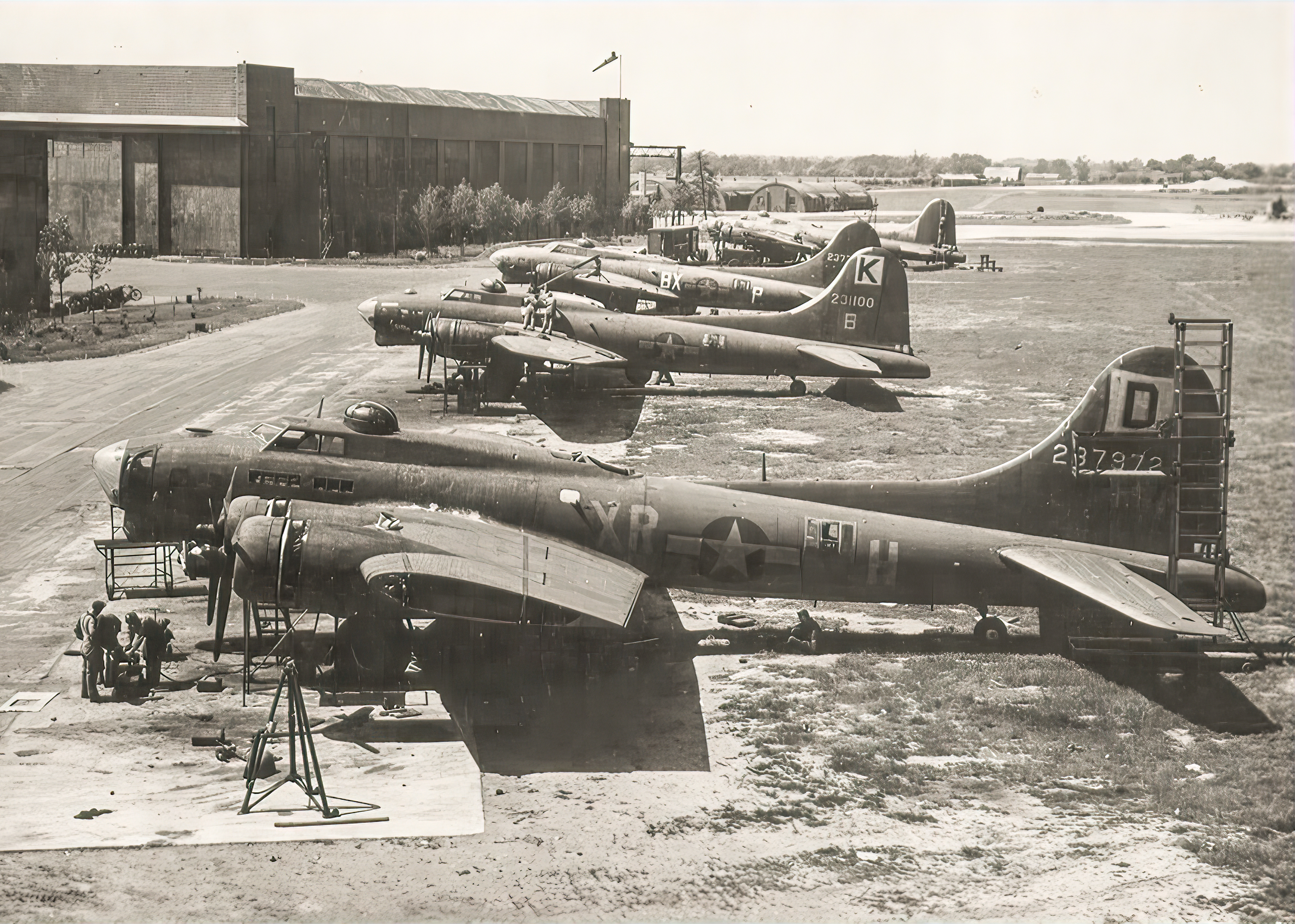
    This webpage was updated 17th September 2025

    -xxx-